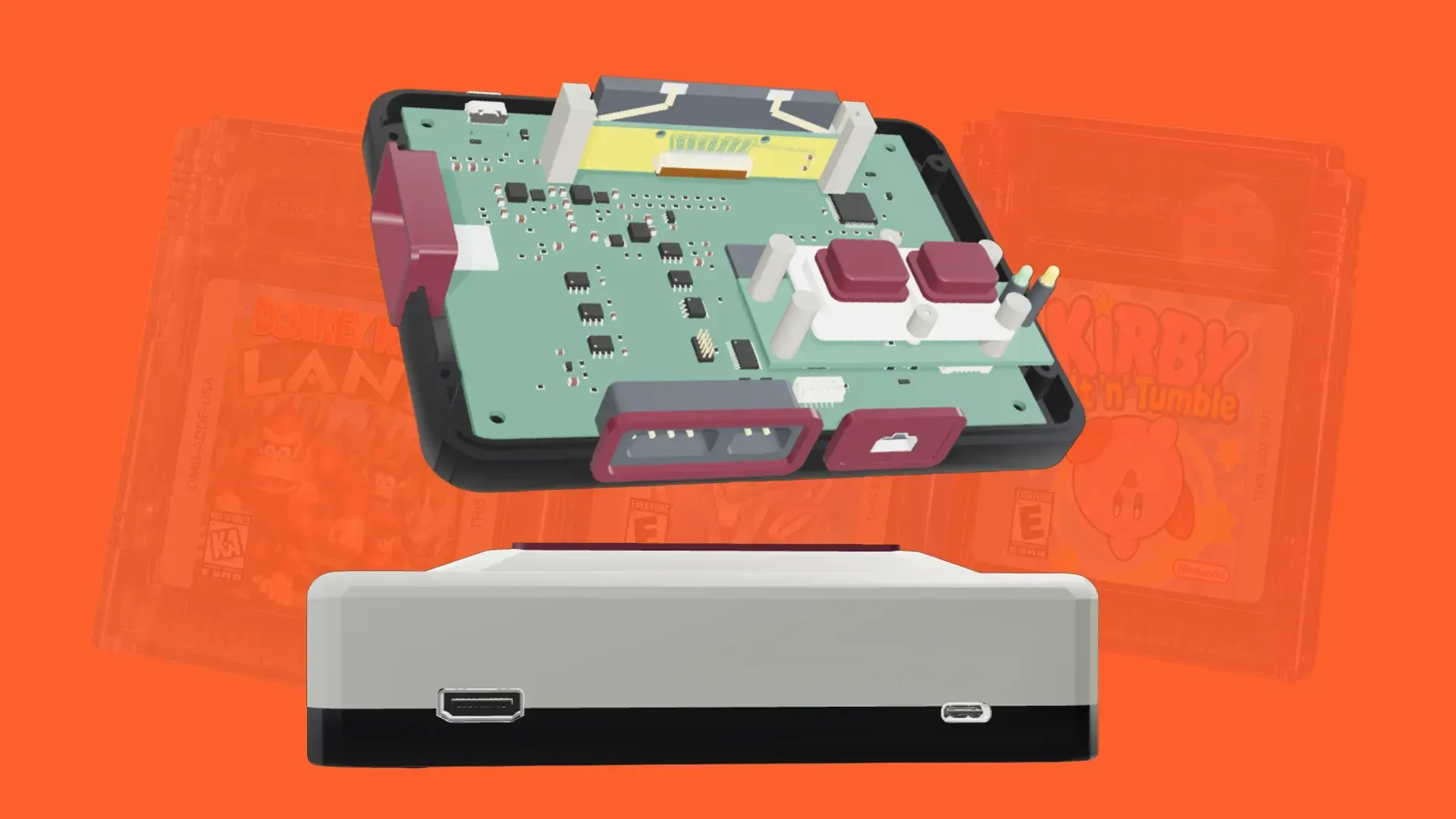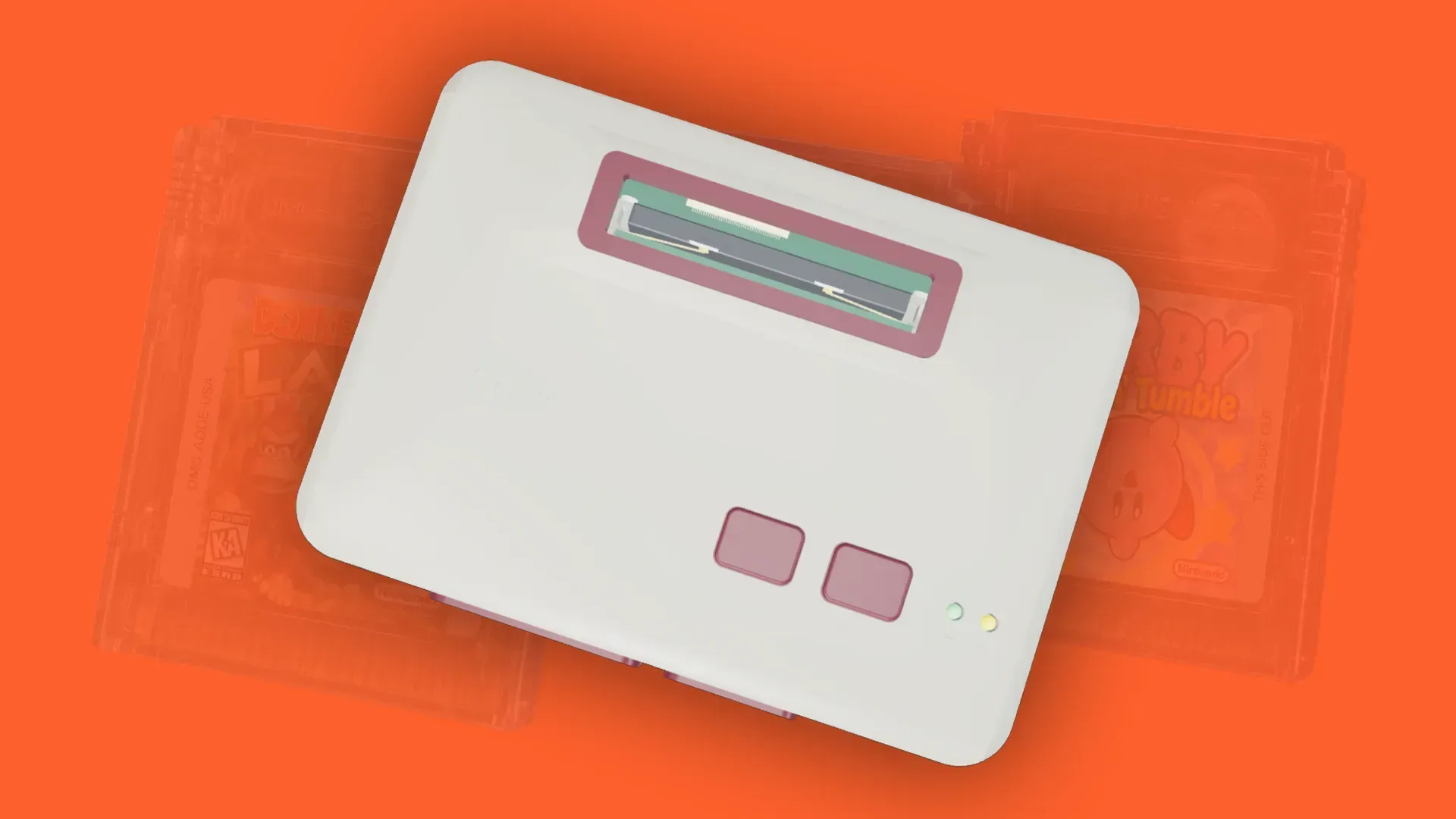
An independent FPGA console called the SGBC is being developed to bring original Game Boy-family cartridges to a television. The project is intended to support Game Boy, Game Boy Color and Game Boy Advance games, combining cartridge playback with a 1080p HDMI output, whole-number image scaling and several planned modern conveniences.
Created by French electronics engineer Thomas Sanfourche, who is studying in Taiwan, the SGBC began as a university graduation project. It has since grown beyond that initial scope following interest from a local retro-gaming community. At this stage, the practical way to follow the project is through the SGBC’s official notification mailing list; no release date, price or final availability details have been provided here.
What the SGBC is trying to do
The basic pitch is straightforward: insert a compatible original cartridge, connect the compact console to a television, and play with an image designed for a modern display rather than an aging handheld screen. That puts the SGBC in the expanding field of FPGA-based retro hardware, alongside other recent efforts aimed at preserving the cartridge-based console experience while making it easier to use on current TVs.
FPGA stands for field-programmable gate array. In this context, it describes configurable hardware that can be set up to reproduce the behavior of older console components. It is distinct from simply running a game through software emulation on a general-purpose device. That distinction matters to enthusiasts because an FPGA system’s goal is to recreate the original machine’s hardware logic closely, though the actual experience still depends on the quality and maturity of the implementation.
The SGBC’s stated cartridge coverage is notable because it spans three closely related but technically distinct handheld platforms. Game Boy and Game Boy Color cartridges represent the earlier portion of Nintendo’s handheld lineage, while Game Boy Advance is a later and substantially different platform. A single living-room box that accepts all three cartridge families would offer a tidy alternative for people who keep games in physical form but want to play them on a larger screen.
1080p HDMI and why integer scaling matters
The console is planned to output over HDMI at 1080p. That is only part of the picture-quality story. The stated plan also includes integer scaling, sometimes called whole-number scaling. Rather than stretching a low-resolution game image by an uneven amount, integer scaling enlarges each original pixel by an exact multiple.
In practical terms, the objective is to keep pixels proportionate and avoid the uneven-looking artifacts that can appear when a game designed for a small screen is enlarged arbitrarily for a television. For pixel art, where individual pixels form deliberate edges, character details and interface elements, this can be an especially valuable presentation choice. The SGBC is intended to upscale in whole numbers so those pixels remain visually intact.
That does not mean every game will fill every television screen edge to edge. Preserving the source image’s proportions can leave unused space around the picture, depending on the game’s native resolution and the display. For many retro players, that compromise is preferable to distortion. The important promise is not merely “HD graphics,” but a cleaner way to present the original game image on an HD television.
Related coverage includes SGBC FPGA Console Aims to Bring Game Boy Cartridges to the TV.
Link-port support could preserve a social feature
The SGBC is also planned to include link-port connectivity. The original handheld link cable was central to multiplayer sessions and, in the Pokémon games, trading between systems. Bringing that connection to a TV-based FPGA console potentially gives the hardware a role beyond solo play: players could connect compatible hardware and use the original cable-driven interaction on a larger display.
The detail is meaningful because link functionality is part of the character of many handheld-era games, not an optional extra invented for modern retro hardware. Still, anyone considering the SGBC should read the feature narrowly until further specifics are available. A link port is planned, and users will need to supply a link cable; compatibility particulars beyond that have not been detailed.
For Pokémon players in particular, the prospect of trading on a television adds a nice bit of period-appropriate ceremony to cartridge play. It is also a reminder that original-game preservation includes connections between devices, not solely the ability to boot a single cartridge.
Planned speed modes, microSD functions and firmware updates
Several quality-of-life features are also on the table. Sanfourche has indicated that the SGBC will offer speed modes, including fast-forward functionality for moving more quickly through familiar sections. This is a convenience feature rather than an original-hardware behavior, but one that can be useful in games with repeated battles, lengthy dialogue or frequently revisited areas.
A built-in microSD slot is planned for two distinct purposes. One is access to a ROM library through the SGBC’s menus. The other is firmware updating. Firmware is the low-level software that helps hardware operate. A user-updatable firmware path can be important for a developing FPGA platform because refinements, fixes and improvements may be delivered after the physical console exists.
Those functions should also be considered separately from cartridge support. The central appeal described for SGBC is original Game Boy, Game Boy Color and Game Boy Advance cartridge playback. The microSD capability broadens how the device may be used, while firmware updates provide a route for its operating behavior to improve over time. Specific details about the menu, file support, save handling or the scope of future firmware changes have not been provided.
A deliberately familiar physical design
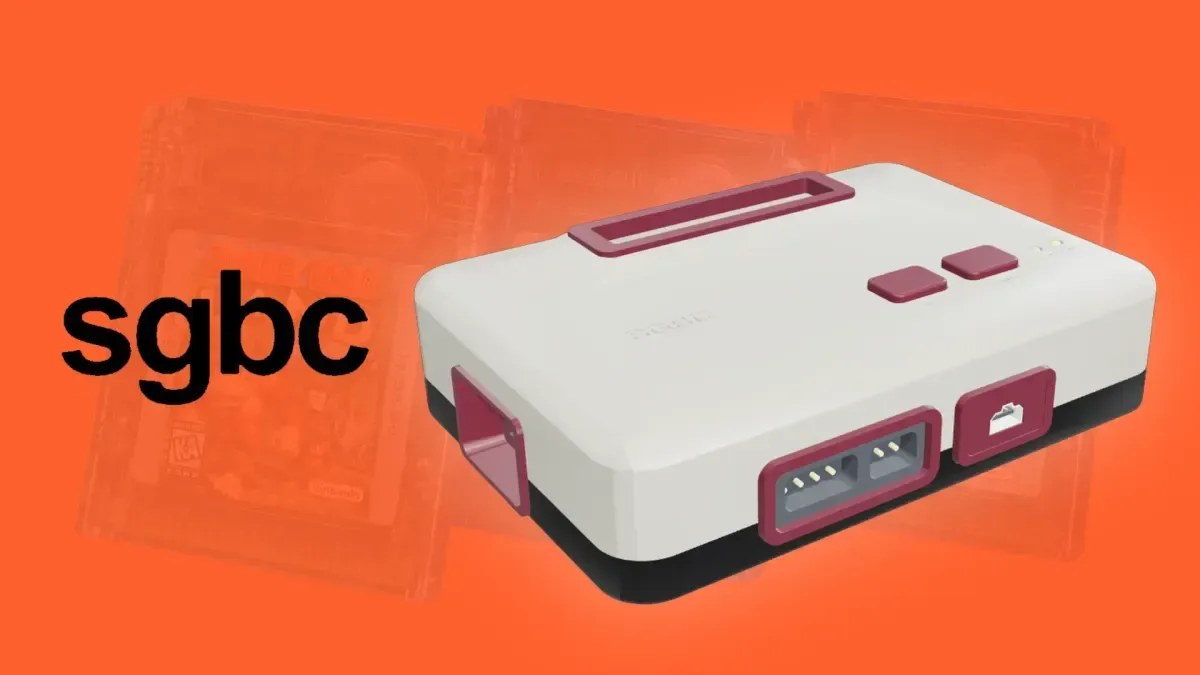
Visually, the SGBC draws from the original Game Boy DMG aesthetic. Its design uses a warm gray upper shell, black underneath and burgundy details on the controls, echoing the chunky handheld that established the Game Boy look. The cartridge remains the centerpiece rather than being hidden away: the machine is designed as a compact home-console setting for cartridges people have kept.
An SNES controller port is visible on the design as well, aimed at players who want to use legitimate Nintendo controllers. That choice makes sense for a device that moves traditionally handheld games into a living-room setup. It also suggests the SGBC’s priorities are not exclusively technical. The project is trying to make old cartridges feel at home beside a television, with a controller format that is more natural for couch play.
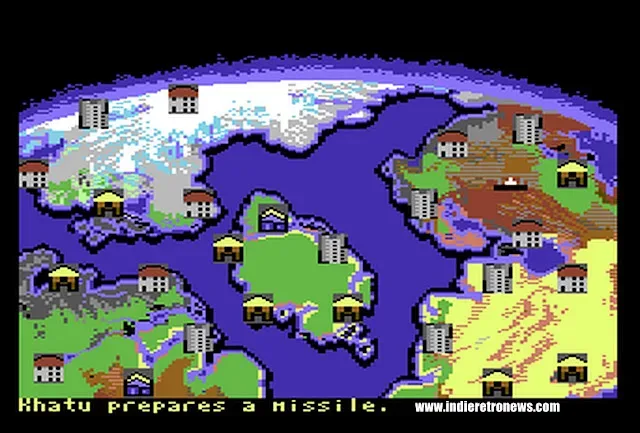
Independent projects such as this add another dimension to retro gaming’s current hardware wave. The SGBC is not framed simply as a replacement for original handhelds: it has a different use case, focused on physical cartridges, television output, link connectivity and adjustable speed. Meanwhile, the retro scene continues to find new ways to support older formats, from new hardware to new software such as a recently highlighted turn-based strategy release for Commodore 64.
What remains unknown
The SGBC has an appealingly focused feature set, but it remains a project with significant unanswered questions. There is no stated retail price, launch date, manufacturing timetable or detailed compatibility list in the available information. There are also no supplied technical specifics on areas such as controller behavior, video settings, save management, exact link configurations or firmware-update cadence.
That uncertainty is normal for a project moving from a graduation build toward a possible consumer product, but it is worth keeping front of mind. The strongest claims at present are the intended support for Game Boy, Game Boy Color and Game Boy Advance cartridges; 1080p HDMI output with integer scaling; link-port connectivity; planned speed modes; microSD functionality; and a firmware-update route.
For collectors and players with shelves of handheld cartridges, the SGBC’s appeal is easy to understand. It aims to retain the physical act of choosing and inserting a cartridge while offering a living-room-friendly display and modern control over image scaling and playback speed. Whether it becomes a broadly available product will depend on the project’s next steps, but its direction is clear: a compact FPGA-based bridge between Nintendo’s portable cartridge history and the modern television.