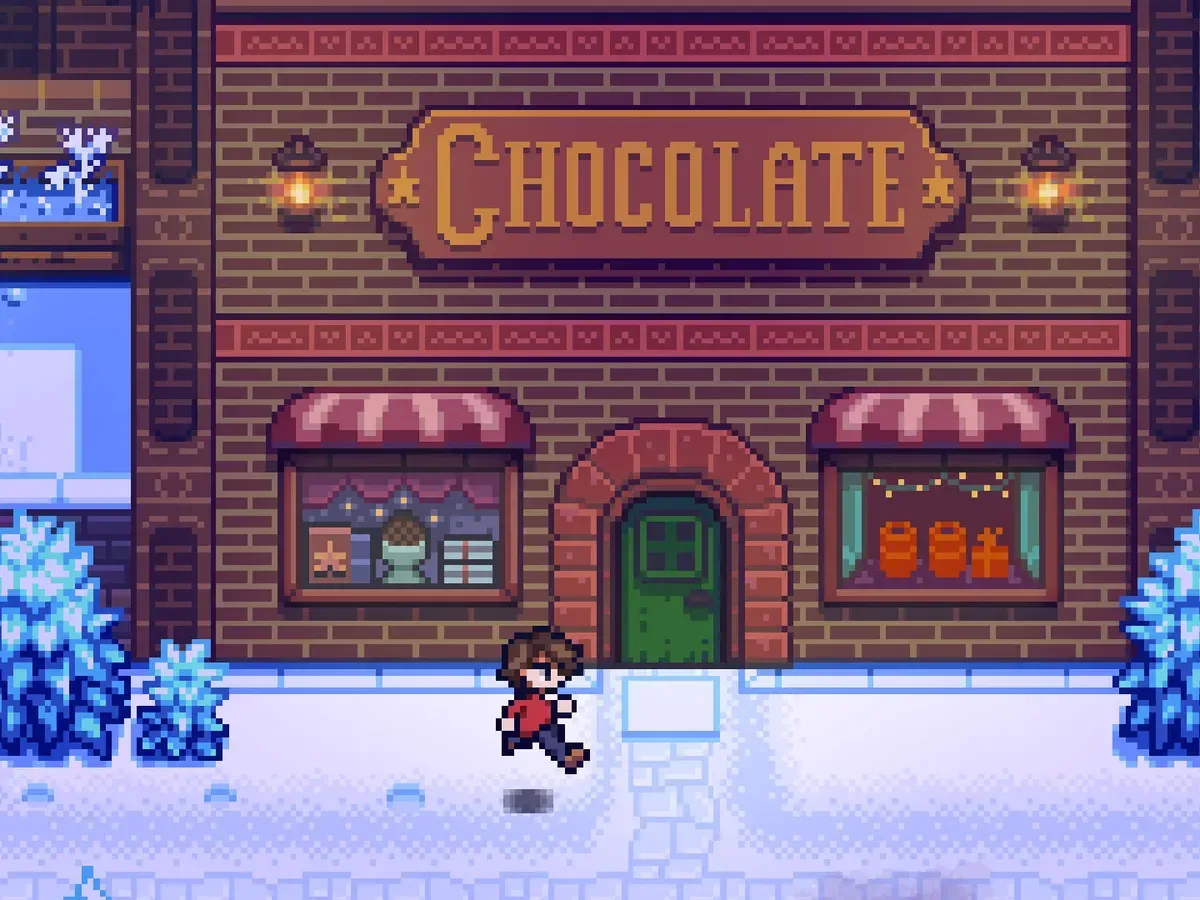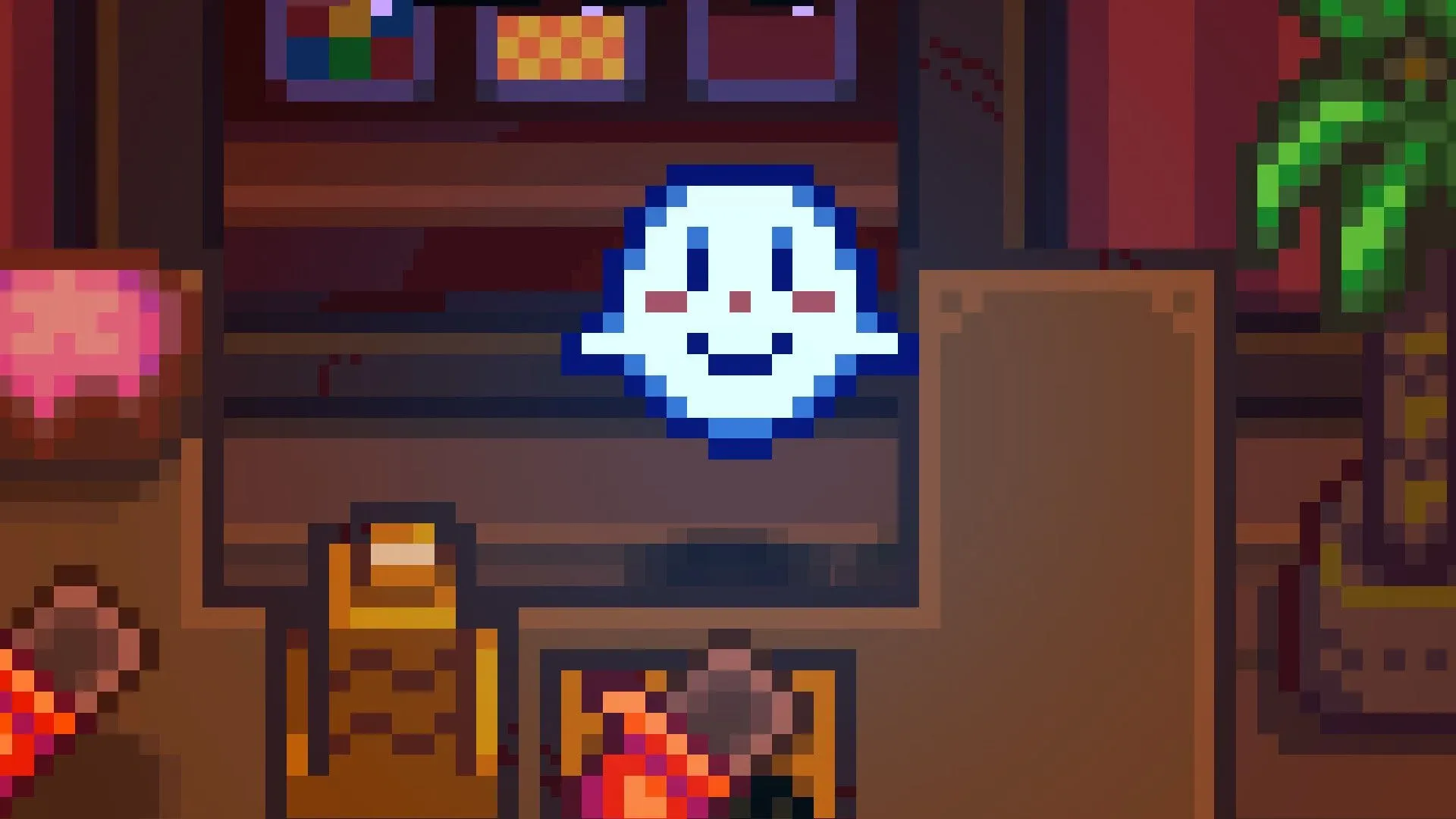
Eric “ConcernedApe” Barone has described the unusual burden facing Haunted Chocolatier: it is being made by the same person who once built Stardew Valley without an audience waiting to judge every decision.
That contrast is central to why the upcoming game has taken time. Barone says he is struggling to recapture the creative feeling he had while making Stardew Valley, when there was no established fanbase and no prior hit setting expectations. Now, he says, millions of people may be disappointed if he does not approach the new game in the way they expect.
“I really want to recapture that feeling that I had when I was making Stardew Valley,” Barone said. “Back then, there was no audience, there was no precedent. Everyone's watching me, and if I don't do things a certain way, it might disappoint millions of people.”
It is an unusually direct explanation of sequel pressure, even though Haunted Chocolatier is not being presented as Stardew Valley 2. The issue is less a numbered continuation than a creative expectation: players know Barone’s previous work, attach particular feelings and systems to it, and naturally bring those hopes to the next project.
For fans, the practical message remains straightforward. Haunted Chocolatier is still taking shape, and its creator is choosing the pace rather than accelerating toward a release simply because demand is high. Barone has apologized for the wait while stating that he will not sacrifice quality by hurrying the game or putting it out before it is ready.
A project that no longer has the luxury of invisibility
Barone has looked back on Stardew Valley as a small personal project, one he started partly to improve his programming skills while he could not find work. At the time, the project did not come with an established audience, a legacy to maintain, or the constant public question of whether the finished game would meet a vast community’s wishes.
That freedom matters. In development terms, an audience can be encouraging, but it can also create a powerful form of self-editing. A creator may begin to assess an idea not only on whether it serves the game, but on whether it resembles what people loved last time. That is the tension Barone is describing when he talks about precedent.
Precedent, in this context, means the standard set by previous work. Stardew Valley is no longer merely an earlier game in Barone’s catalogue; it is a reference point used by players to imagine what Haunted Chocolatier ought to be. The new project has to exist beside that reference point whether it tries to resemble it closely or deliberately takes a different direction.
Related coverage includes Eric Barone Says Haunted Chocolatier Faces the Weight of Stardew Valley's Enormous Legacy.
Barone has also said it is difficult to fully grasp the scale of Stardew Valley’s reach and the impact it has had, because that scale was never part of the original plan. That observation gives the current caution some needed context. Expectations were not something the project began with; they emerged after the game connected with a huge number of people.
What is actually known about Haunted Chocolatier
There are limits to what can responsibly be inferred from Barone’s comments. They do not establish a release date, platforms, price, or a full feature list for Haunted Chocolatier. They also do not mean development has stopped or that a delay has been formally defined against a previously announced launch window.
What has been communicated is narrower but meaningful:
- Haunted Chocolatier was initially announced five years ago.
- Barone says the game is progressing at a pace he is setting himself.
- He does not intend to rush or release it early at the expense of quality.
- He has characterized it as a game that may appeal to Stardew Valley players who especially enjoy that game’s mines.
That last description is perhaps the most useful clue for anyone trying to understand the game’s broad creative direction. The mines in Stardew Valley point toward exploration and the more adventurous side of its overall balance. Barone’s framing should not be treated as a complete genre label or a promise of exact mechanics, but it does suggest that players drawn to mining-focused excursions may find a familiar kind of appeal in the new project.
Importantly, “for players who yearn for the mines” does not mean every aspect of Stardew Valley will return, nor does it establish that Haunted Chocolatier must reproduce the earlier game’s structure. It is a useful creative shorthand, not a substitute for a formal breakdown of systems.
Why a slower pace can be the more honest answer
“Don’t rush it” is an easy phrase to repeat, but it is not a neutral request when the project is connected to one person’s creative work and public reputation. A lengthy wait can invite speculation, demands for certainty, and the assumption that visibility should produce a faster outcome. Barone’s comments push in the opposite direction: a larger audience does not automatically make the act of making a game simpler.
There is also a distinction between a release timetable and a quality threshold. A timetable answers when something should arrive. A quality threshold answers what must be true before it does. Barone’s stated position puts the latter first. He has apologized for how long Haunted Chocolatier is taking, while making clear that he does not consider an earlier launch worthwhile if it requires compromise.
That approach will not remove the uncertainty for people eagerly awaiting the game. It does, however, set a clearer expectation than a vague implication that a launch is imminent. Fans currently have a reason for the long development period, but not a date that resolves it.
The broader games business often turns anticipation into a cycle of constant demands for new information. That environment can be particularly awkward for a creator whose earlier project became a phenomenon beyond its original ambitions. The success that gives a follow-up its extraordinary audience can simultaneously make it harder to create with the same sense of experimentation.
That is separate from any argument that audiences are wrong to be excited. Interest is a sign of the connection people formed with Stardew Valley. But excitement becomes a source of pressure when every departure from an imagined successor is judged before the new game has had the chance to define itself on its own terms.
Not a promise to repeat Stardew Valley
The risk for any anticipated follow-up is that “more of what worked” becomes the only acceptable outcome. For Haunted Chocolatier, Barone’s own comments suggest the more interesting question is whether he can carry forward the personal creative spark he associates with Stardew Valley while working under radically different circumstances.
That does not require the new game to be a duplicate. In fact, treating it as an obligation to recreate every beloved element could be the very constraint Barone is trying to work through. A predecessor’s impact can guide a creator, but it can also crowd out the room needed for a new work to develop its own identity.
Players will ultimately decide how closely they want to compare the two games. For now, the clearest reading is that Barone recognizes the comparison is inevitable and is trying not to let it dictate an unfinished project. The game’s long development is therefore not presented as an empty wait for its own sake; it is linked to a conscious refusal to ship before he believes its quality is where it needs to be.
What players should take from the update
The immediate takeaway is patience, but not blind optimism or invented certainty. There is no newly established release date in these remarks, and fans should be wary of treating general discussion of progress as a launch signal. The confirmed position is simply that the work continues and that Barone will not compromise the game to shorten the wait.
It is also a reminder that a beloved hit changes the conditions around its creator. Stardew Valley began as a programming exercise and a modest personal undertaking. Its success created a legacy. Haunted Chocolatier now has to be made in the presence of that legacy, with millions of people aware of the person making it and the game that came before.
For a contrasting example of how questions of promises and player expectations can become public flashpoints, see the discussion around Sonic Racing: CrossWorlds Deluxe and its “all future paid DLC” promotion. The circumstances are different, but both stories show how quickly a game’s audience can scrutinize the gap between its expectations and its eventual direction.
Barone’s comments leave Haunted Chocolatier in a familiar state for followers: anticipated, unfinished, and deliberately protected from being rushed. The difference is that he has plainly articulated why the process feels harder this time. He is no longer working in the quiet space that produced Stardew Valley. He is trying to make something new while carrying the weight of what that earlier game came to mean to so many people.