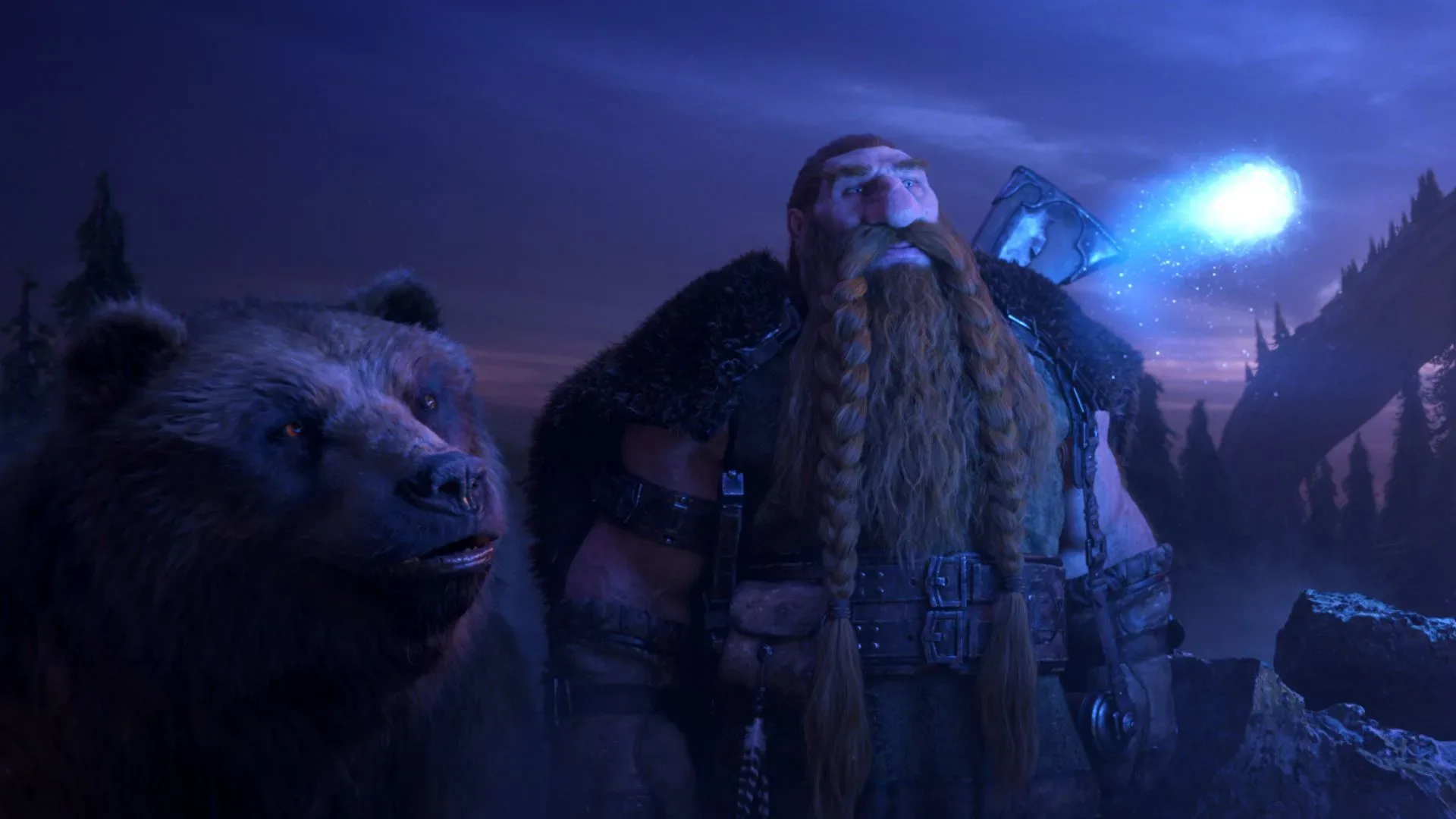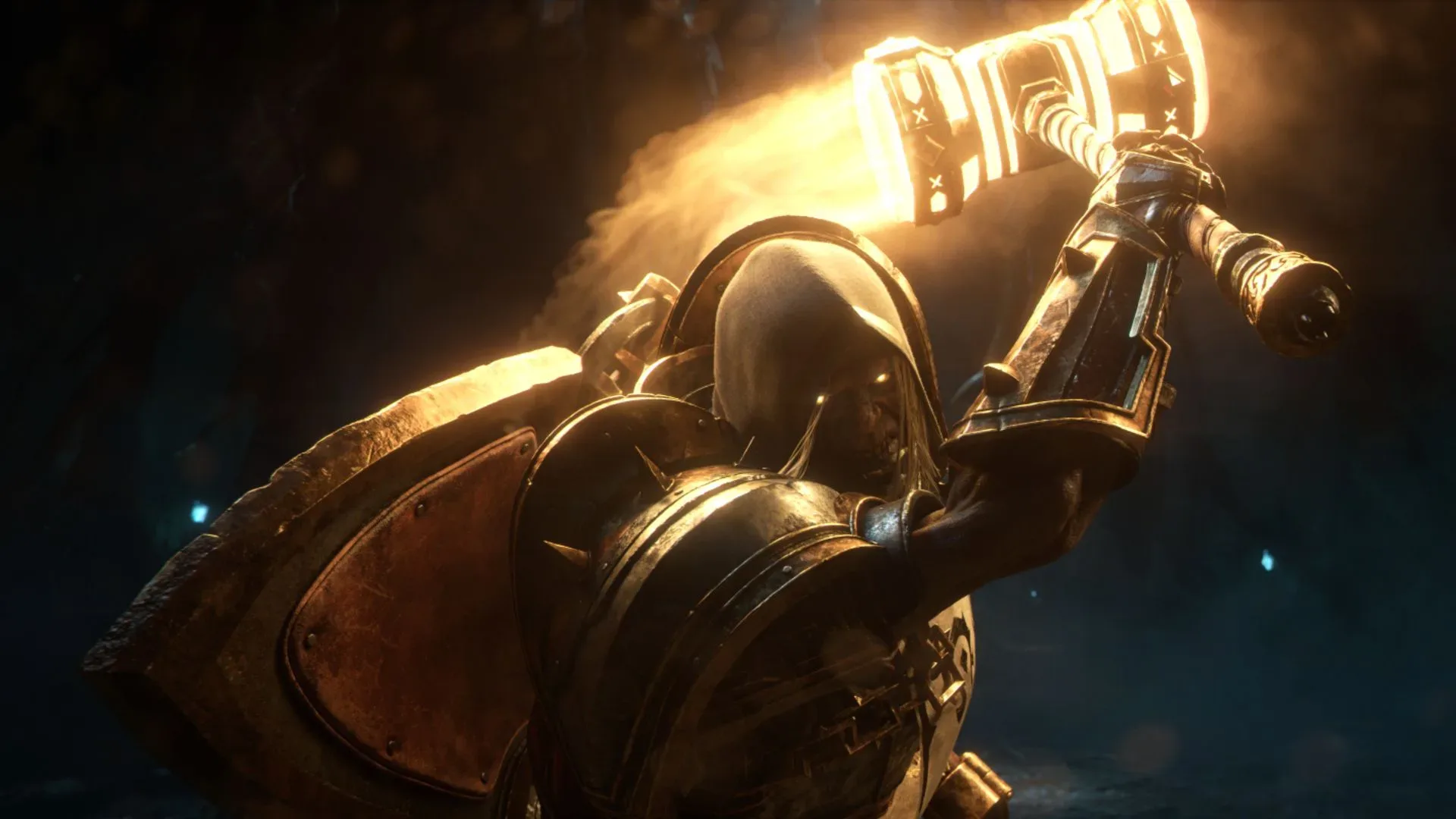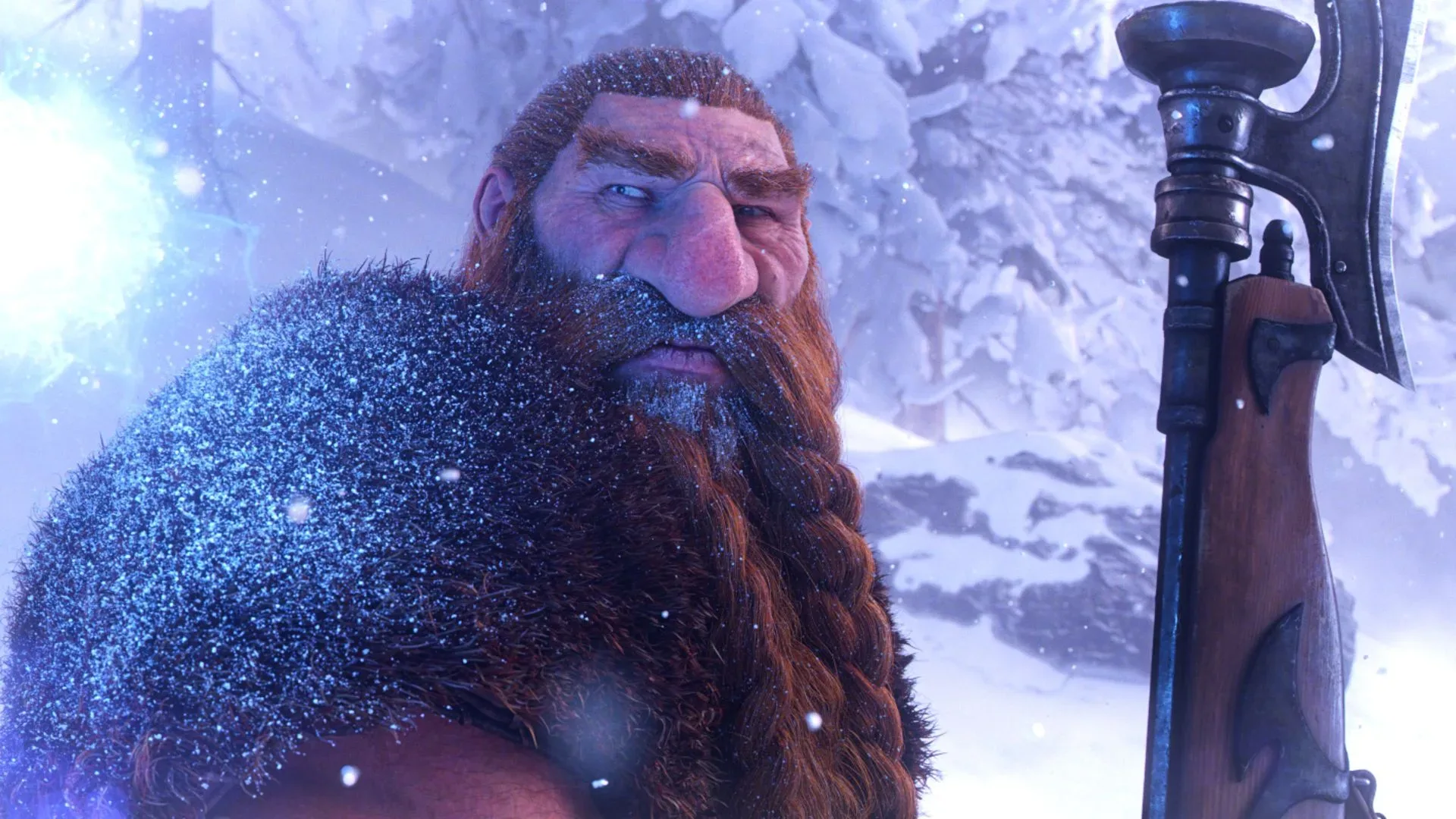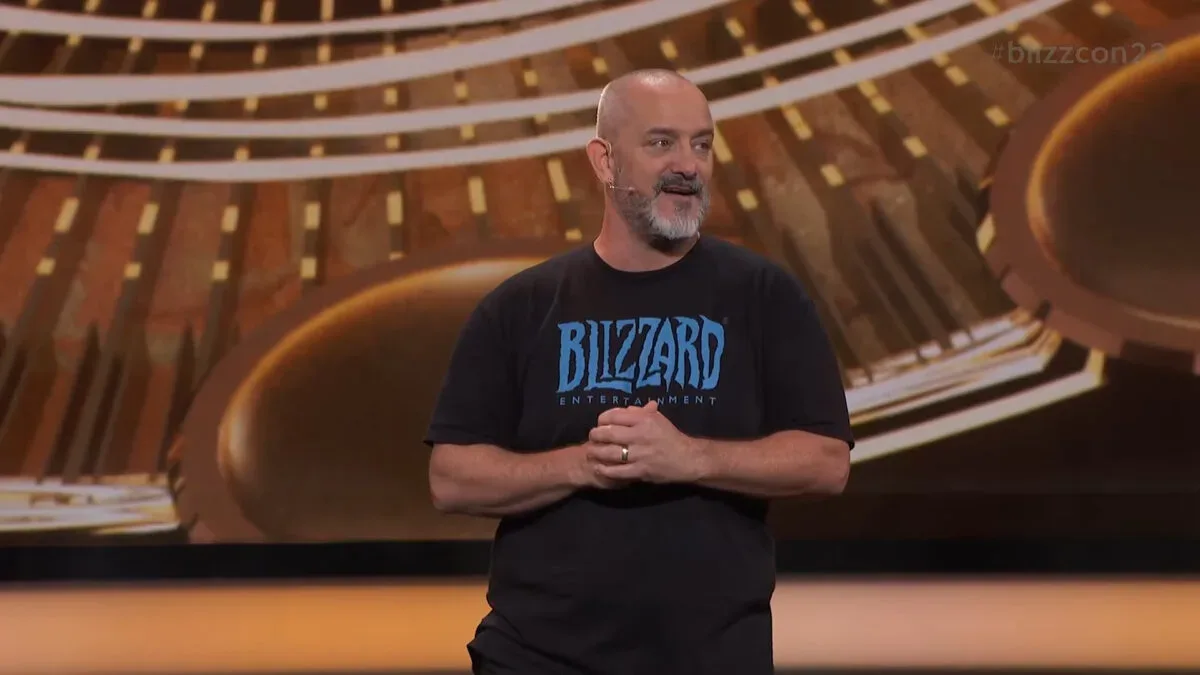
Chris Metzen’s absence from BlizzCon 2026 became one of the convention’s loudest offstage talking points. A creator closely associated with Warcraft’s identity, Metzen did not appear in World of Warcraft panels or Q&As for Midnight, The Last Titan, or World of Warcraft: Forever. Nor was he publicly spotted on the show floor. For a community that connects Metzen with pivotal Warcraft stories, Thrall’s voice, and BlizzCon’s biggest moments, that silence was enough to start speculation.
It should not be treated as a verdict on the state of World of Warcraft, or as proof that Metzen has exited the team. There is no supplied confirmation that he has left, and a developer’s absence from a public presentation is not the same thing as an absence from a project. The available signs instead point to continued creative involvement: Metzen’s voice is heard in the World of Warcraft: Forever gameplay trailer, and he has reportedly been instrumental in developing Forever’s new Skyborne race.
The more useful lesson is bigger than one convention appearance. Modern games, especially MMORPGs, are collective works. A stage presentation can make a single person look like the keeper of a franchise’s fate. Development does not work that way.
Why Metzen’s absence drew attention
Metzen has an unusually visible history within Blizzard’s fantasy worlds. He is an artist, writer, and voice actor whose work has been central to Warcraft and Diablo. Warcraft players know him especially as the voice of Thrall, but his importance reaches beyond a single character. He supplied creative and artistic direction for many elements, stories, and locations across Warcraft III and World of Warcraft.
He also became a recognizable convention presence. His 2011 onstage introduction of Mists of Pandaria remains the sort of event memory fans attach to a person as much as to an expansion. That history makes it understandable that audiences expected him to return for another milestone: the public focus on The Last Titan, positioned as the culmination of the three-part Worldsoul Saga.
The timeline further encouraged that expectation. Metzen retired in 2016, returned in 2022 as a creative advisor, and took on the role of Warcraft executive creative director in 2023. That same year, he appeared at BlizzCon to introduce the Worldsoul Saga, a multi-expansion arc designed to bring together longstanding narrative threads. It is easy to see why some fans read that appearance as personal ownership of the entire plan.
But an announcement is not a guarantee that its presenter will headline every subsequent showcase. The connection is emotional rather than operational. A franchise can benefit from a familiar creative face without making its future dependent on that face.
What the BlizzCon absence does and does not tell players
What it tells players is narrow: Metzen was not part of BlizzCon 2026’s visible program. It does not, on its own, establish why. It does not establish a change in employment, a diminished role, a disagreement over Warcraft’s direction, or trouble with the expansions discussed at the event.
Related coverage includes Chris Metzen's BlizzCon Absence Does Not Signal Trouble for World of Warcraft.
That distinction matters because convention stages are communications tools, not organization charts. Presenters are selected for many reasons: the specific subject of a panel, preparation time, a desire to give other leaders a platform, and individual willingness to appear before a crowd. A creator can be deeply involved in design and narrative decisions while never taking the microphone. Conversely, a compelling presenter may represent work completed by a much larger group.
There is also direct reason to avoid assuming that a public event is an effortless obligation for someone who has previously discussed the difficulty of public exposure. In comments made after his 2016 retirement, Metzen described anxiety, panic attacks, and doubt that had built over years. He characterized himself as an introvert and homebody, while also acknowledging that the outgoing version of himself seen at events was real. The strain, he explained, came from the growing difficulty of reconciling that public-facing role with what he was experiencing internally.
Metzen has previously described anxiety that could make the prospect of large public spaces and major appearances feel overwhelming.
That history should be handled with restraint. It is not evidence that anxiety explains his 2026 absence; nobody outside Metzen can responsibly diagnose his reasons or speak for his present wellbeing. It does, however, demonstrate why fans should resist the idea that a beloved public appearance is something they are owed. A person can love a game, respect its audience, and still choose work that happens behind the scenes.
The visible voice is not the whole creative team
The mythology around a single “savior” creator is particularly tempting when a long-running game has uneven periods. Metzen’s return generated substantial enthusiasm because players hoped a familiar steward could solve every lingering complaint. That hope is relatable, but it sets an impossible standard for one individual.
An MMORPG—short for massively multiplayer online role-playing game—is built and maintained by overlapping disciplines. Narrative staff shape plot and characters. Artists build visual identity. Designers make systems and encounters. Engineers support the technology that keeps a persistent online world running. Audio teams, quality assurance, production, community staff, and many others contribute to what players finally experience. Expansions also change after feedback, technical constraints, scheduling decisions, and work across teams.
That does not erase the influence of a creative leader. Metzen’s body of Warcraft work plainly gives his contribution weight, and his involvement can shape the texture and priorities of the stories ahead. But influence is different from sole authorship. It is neither fair to credit one person for every good outcome nor useful to blame one person for every unpopular one.
Players evaluating the Worldsoul Saga should therefore focus on the work itself: how clearly the story is told, how satisfying its characters and conflicts are, and whether its game systems land with the community. The War Within was well received in the supplied material, while Midnight has had a more mixed but broadly acceptable response so far. Those reactions are more meaningful than trying to read corporate or creative upheaval into one empty place on a convention stage.
Forever offers a concrete sign of continuing contribution
World of Warcraft: Forever is the clearest project-specific counterweight to the panic. Metzen can be heard in its gameplay trailer, and the available reporting connects him to the development of the Skyborne, a new race planned for the game. That is not a complete account of his work, nor does it answer every question fans might have about his responsibilities. It is, however, meaningful evidence that public visibility and creative participation are not interchangeable.
The Skyborne detail also illustrates the kind of contribution that may never fit neatly into a stage slot. Designing a race involves lore, visual identity, worldbuilding, characterization, and coordination with broader game needs. The audience might see the finished race, an announcement trailer, and perhaps a few interview answers. Much of the work that makes the idea coherent happens far from a spotlight.
Metzen is also working on a newly announced 5E campaign setting. “5E” refers to the fifth edition rules framework of Dungeons & Dragons, and the project underlines another uncomplicated possibility: a veteran creator can have several interests and commitments without any one of them being a coded message about another job.
A healthier way to read convention coverage
BlizzCon remains a celebration designed around excitement, reveals, and personalities. A charismatic presenter can give an announcement a memorable human voice. But communities are better served when they do not turn that voice into a single point of failure.
Blizzard has other prominent communicators, including Holly Longdale and Ion Hazzikostas. More importantly, conventions can make room for a wider range of developers: the people leading a specific system, building an art direction, writing a questline, or solving a technical problem. Not every developer wants to be a public speaker, and no one should be pushed into being one. Yet sharing the stage more broadly can better reflect how games are actually made.
That approach gives audiences richer context, too. It moves discussion beyond a recurring question—“Where is the famous person?”—and toward the details that should decide whether a project earns enthusiasm. What is the story trying to accomplish? Which teams are responsible for its major systems? What changes will affect the players who spend time in the world every week?
For now, the responsible reading of Metzen’s BlizzCon 2026 nonappearance is simple: it is an absence from the public program, not a reliable signal of Warcraft’s health or of his standing. There is no need to manufacture certainty where none has been provided. Fans can remain curious about The Last Titan and World of Warcraft: Forever while allowing the people making them to decide whether their work, rather than their stage presence, does the talking.
For another look at how games are judged through the ideas behind them rather than the hype around them, read our examination of why an original Resident Evil movie story could offer a stronger adaptation blueprint.