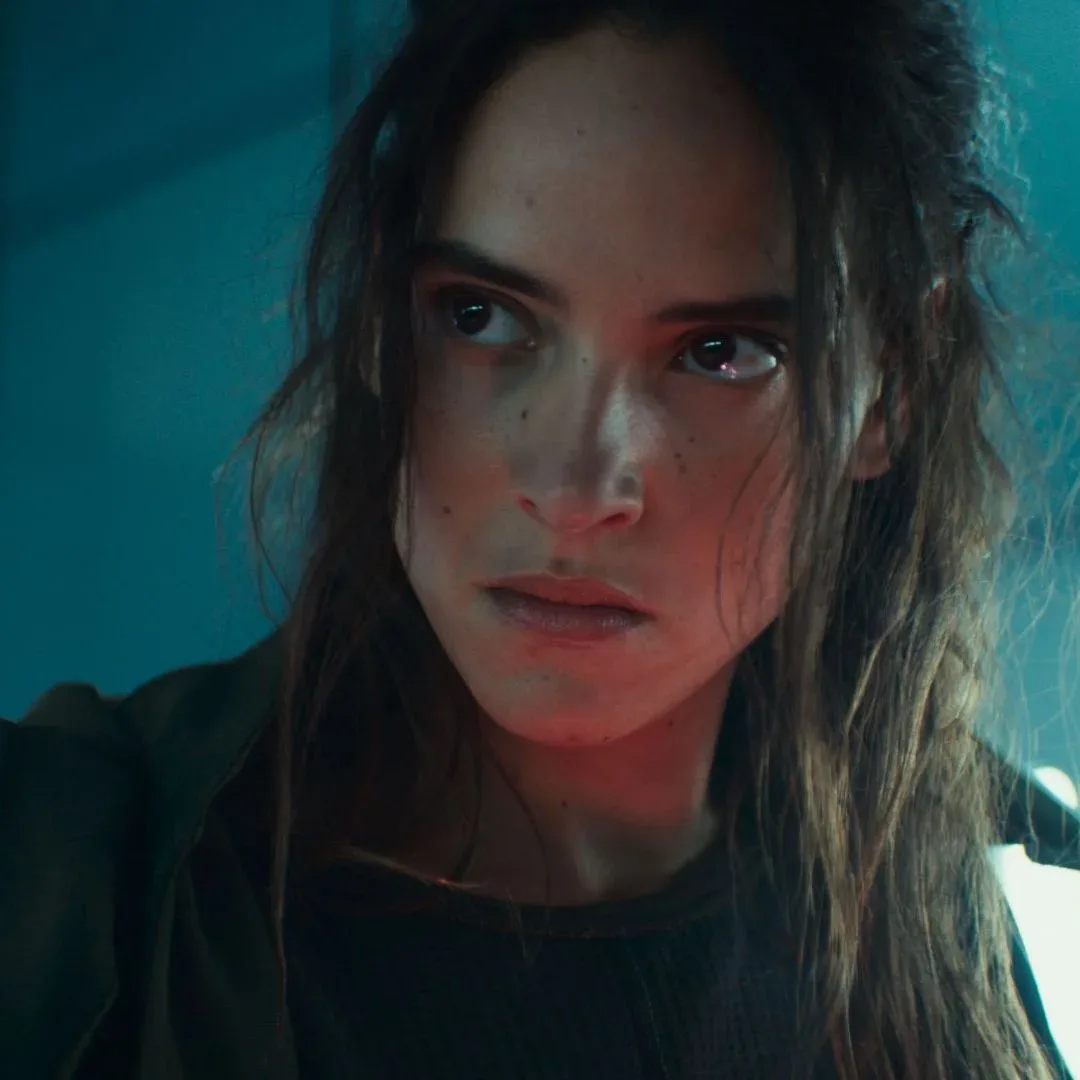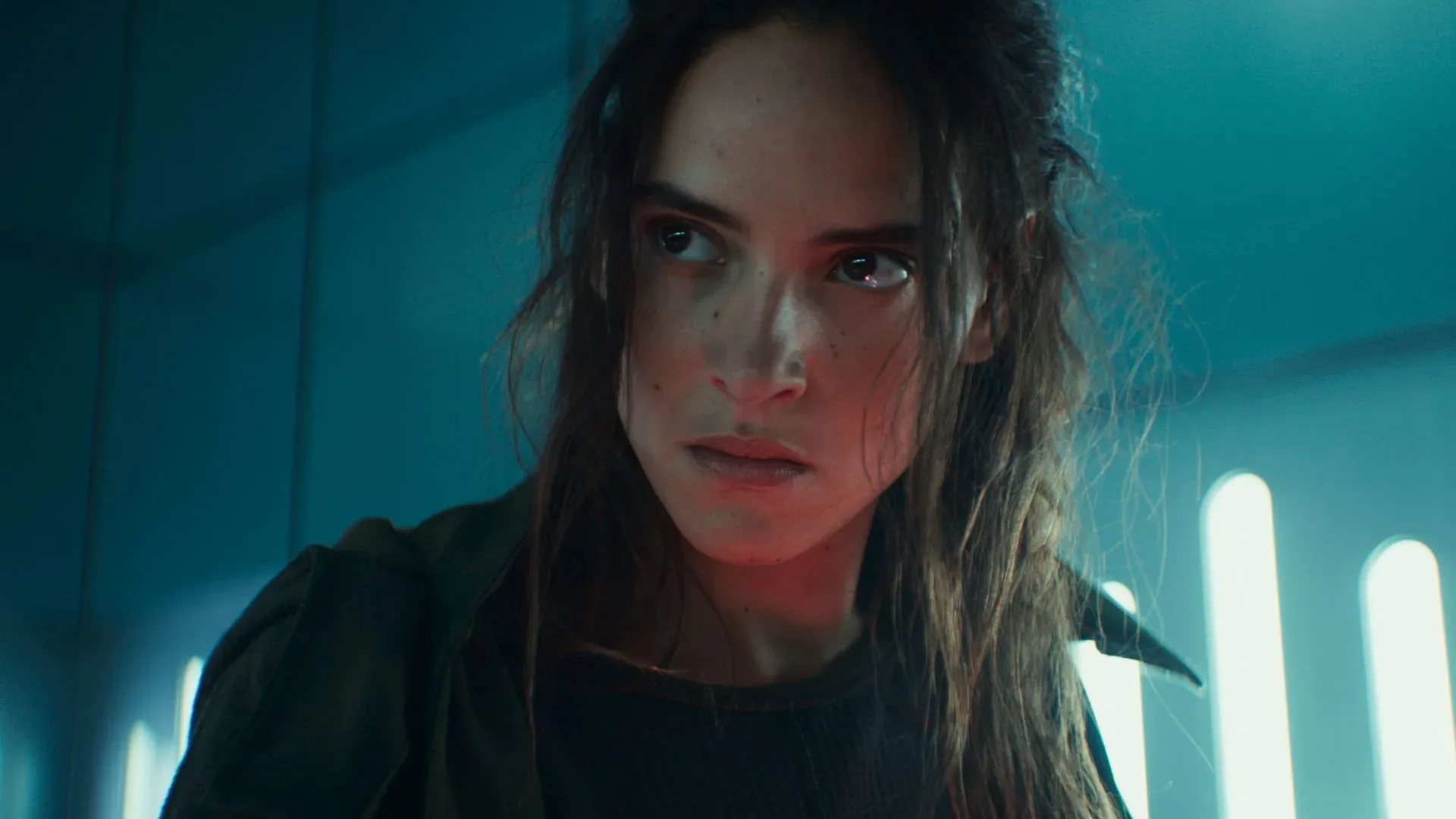
There is a special kind of confidence required to ring up the person steering one of Star Wars’ most carefully engineered stories and say, in effect, “I have notes.” Adria Arjona had that confidence. Better still, she had a creative reason for it: after collaborating on the screenplay for Hit Man with Richard Linklater and Glen Powell, the actor had ideas she wanted to bring to Tony Gilroy for Andor season 2.
Gilroy’s response, as Arjona recounts it, was not hostile, mysterious, or delivered via a holocron guarded by three Imperial lawyers. It was simply decisive: “Not this movie, baby.”
That compact reply is both funny and revealing. It captures the unusual discipline behind Andor, a series built around the slow, costly assembly of rebellion rather than a weekly hunt for the loudest possible space battle. Arjona plays Bix Caleen, a character whose second-season story contains major emotional weight even when the audience is not following every mission or movement directly. Her wish to explore possible paths for Bix makes complete sense. Gilroy’s refusal, meanwhile, speaks to a production with a fiercely guarded sense of structure, rhythm, and purpose.
Bix Caleen’s story was not designed as an action checklist
Arjona has said she was not frustrated that much of Bix’s operational work happened away from the camera in season 2. The challenge Gilroy offered was different: stepping into separate, complicated periods of Bix’s life and making the emotional transitions register. That is a useful distinction for viewers who equate importance with screen time spent holding a blaster, sprinting through a corridor, or surviving an explosion with hair that remains contractually perfect.
Bix has never functioned merely as a mission-delivery system. Her connection to Cassian Andor, played by Diego Luna, gives the broader rebellion a human cost. The character has endured trauma, separation, fear, and the pressures of a world where the Empire can turn ordinary lives into collateral damage without ever bothering to learn a name. In that framework, an unseen assignment is not necessarily an absent story. It can be part of the distance, secrecy, and instability that define the lives of people pulled into resistance.
Arjona’s comments suggest she understood the trade-off. She knew she could handle a conventional action sequence, but found the quieter emotional material especially demanding. That reflects one of Andor’s central strengths: its tension often comes not from whether somebody can win a fight, but from what survival, compromise, grief, or commitment has done to them between scenes.
For a franchise frequently associated with galaxy-scale spectacle, that is a stubbornly intimate approach. Andor makes room for meetings, waiting, grief, factory labor, surveillance, anxiety, and people trying to look normal while their entire political order is collapsing around them. The show’s characters do not always get the dignity of a complete on-screen account of their work. Neither, historically speaking, do most people doing the difficult work.
A writer in the cast, and a showrunner with a map
Arjona’s pitch is also interesting because it came after her work as a co-writer on Hit Man. Collaborating with Linklater and Powell gave her direct screenwriting experience, which naturally can sharpen an actor’s interest in character construction and narrative possibility. An actor bringing ideas to a showrunner is not unusual; television is collaborative, and performers often know their characters’ emotional textures exceptionally well.
But collaboration does not mean every good idea belongs in every story. Gilroy’s playful shutdown appears to have been about the boundaries of this particular project rather than a dismissal of Arjona’s instincts. The phrase itself sounds almost like a creative-room traffic sign: excellent enthusiasm, wrong lane.
That distinction matters. The temptation around a popular supporting character is often to expand, explain, and equip them with more visible plot activity. Sometimes that produces a richer story. Sometimes it turns an ensemble drama into a collection of miniature spin-off pilots, each begging for a special mission, a personal nemesis, and at least one fashionable cape. Andor has generally resisted that impulse. Its effectiveness depends on how individual lives feed a larger political machine, not on making every character the protagonist of a separate adventure.
Arjona’s account makes Gilroy’s method sound firm but legible. She has expressed respect for his writing and for the cadence of his storytelling, even while acknowledging that she came armed with ideas. That combination is reassuring rather than disappointing: a performer invested enough to think beyond the page, paired with a creator committed enough to protect the shape of the finished work.
Why the unseen can still matter
Season 2’s use of time and off-screen action asks the audience to infer a great deal about the characters’ lives. That can be frustrating in a lesser show, where gaps feel like missing material. Here, the gaps can reinforce the story’s atmosphere. Rebels do not file detailed progress reports for the audience. They disappear, compartmentalize, protect information, and sometimes return changed by events nobody else saw.
For Bix, that approach puts emphasis on aftermath and interiority. What matters is not only what she has done, but what those experiences have required her to carry. Arjona’s remarks frame those leaps in time as an acting challenge rather than an exclusion from the action. A scene can have enormous dramatic force precisely because it arrives after an unseen ordeal and asks the viewer to read the consequence in a face, a hesitation, or a changed relationship.
That approach will not satisfy everyone who wanted a more mission-forward Bix story, and it does not need to pretend otherwise. The desire is understandable. Bix is compelling, Arjona is clearly eager to engage creatively with the character, and the series has established a world full of dangerous work happening outside its immediate focus. But a character being compelling does not obligate a show to show every chapter. In a narrative about rebellion, secrecy is not just a plot device; it is part of the emotional weather.
The door appears open, but no return is confirmed
The ending of Andor season 2 leaves room for Bix to return. That is possibility, not confirmation. There is no announced future project for the character in the information currently available, and fans should keep that line bright rather than treating an open narrative door as a signed contract and a newly commissioned starship parking spot.
Still, the prospect is easy to understand. Bix’s relationship to Cassian and to the rebellion remains fertile territory, and Arjona’s interest in the character is obvious. If she does reappear, the important question may not be whether she gets a bigger action set piece. It may be whether the next story has a reason to revisit her that is as specific and emotionally grounded as the work already done.
There is also a broader lesson for franchise speculation. “Could return” is one of the most potent phrases in fandom: it contains hope, analysis, twelve browser tabs, and the immediate manufacture of a poster by someone who owns a very determined laptop. But it remains a conditional. Until something is officially confirmed, Bix’s future beyond the current ending is open rather than scheduled.
Arjona’s next comic-book stop is DC
While the future of Bix is unconfirmed, Arjona is set to make her DC Universe debut in next year’s Man of Tomorrow as Maxima. Some fans have speculated that she may actually be playing Wonder Woman, but that has not been confirmed. For now, Maxima is the stated role, and the Wonder Woman chatter belongs in the large, lively box marked “fan theory, handle carefully.”
It is an intriguing next step for an actor whose recent work has moved between sharp genre material and character-focused drama. It also means audiences may soon see Arjona enter another enormous fictional universe—one with its own mythology, its own expectations, and undoubtedly its own invisible committee of people ready to debate whether a cape has the correct emotional silhouette.
For now, Andor remains available to stream on Disney Plus, and its second season arrived in 2025 to extraordinary critical acclaim. It has been described as the most critically acclaimed live-action Star Wars project to date, a status that reflects how thoroughly its grounded political drama connected with critics. Whether Bix’s next chapter is eventually told or left as a purposeful blank space, Arjona’s story about pitching Gilroy gives viewers a charming glimpse of the creative tension behind that precision: even a terrific character idea has to serve the movie—or, in this case, the series—that is actually being made.
And sometimes the answer from the person holding the map is a fond, final, extremely quotable no.
For more screen-storytelling discussion with a taste for ambitious adaptation, read how The Idiot(s) makes a messy Dostoevsky biopic feel surprisingly alive. If you are more interested in where immersive narrative is heading, explore Venice Immersive’s evolving push toward shared spaces and better storytelling.