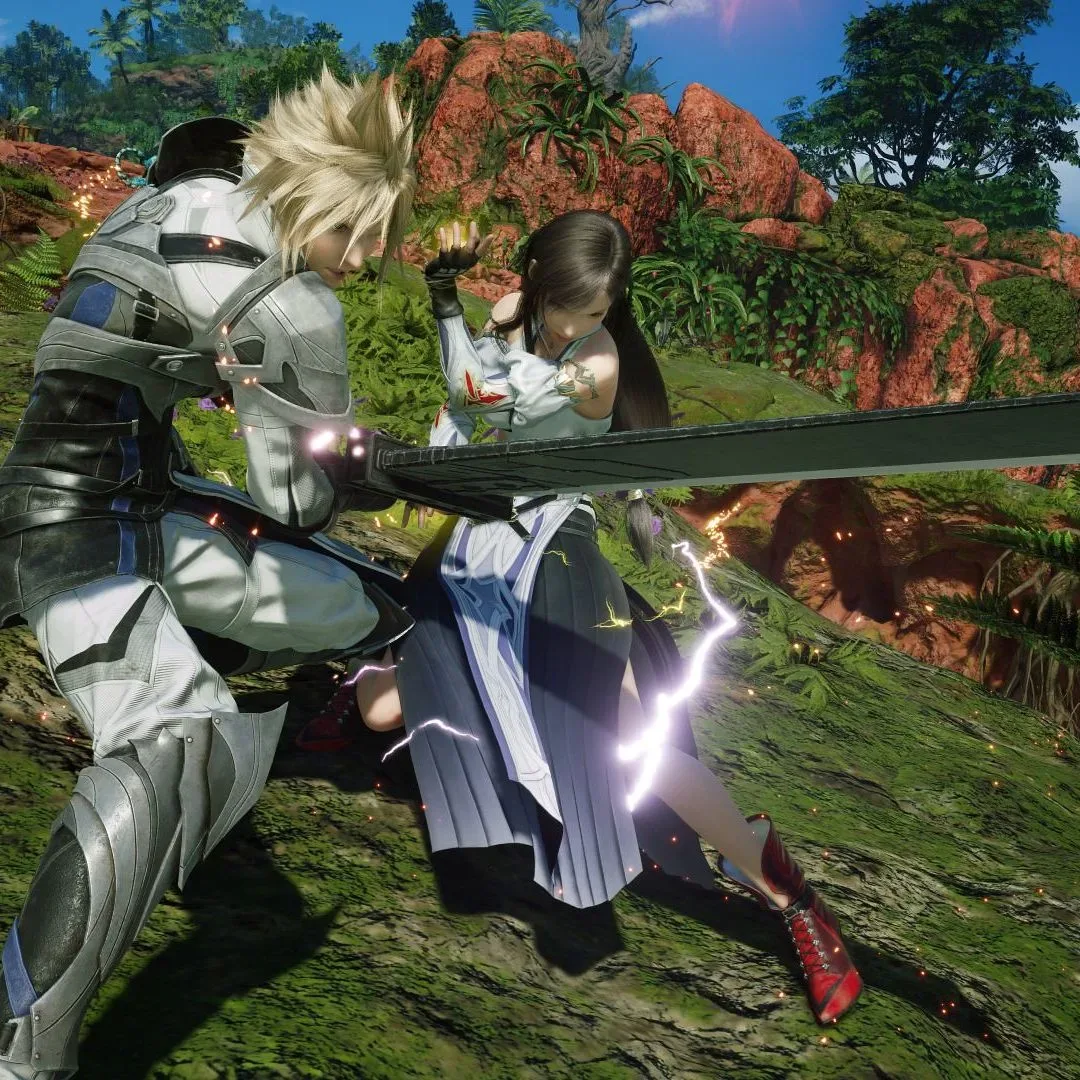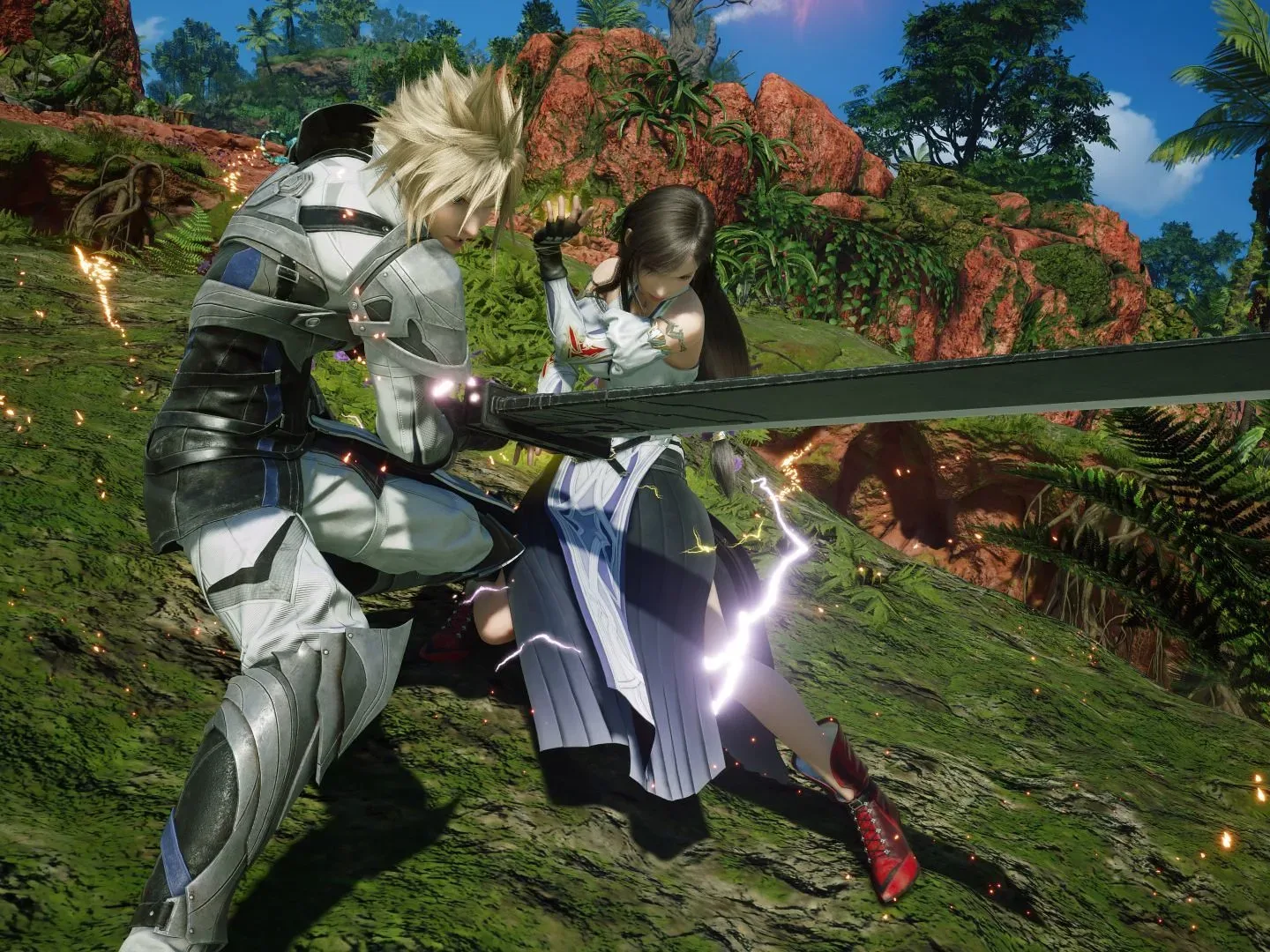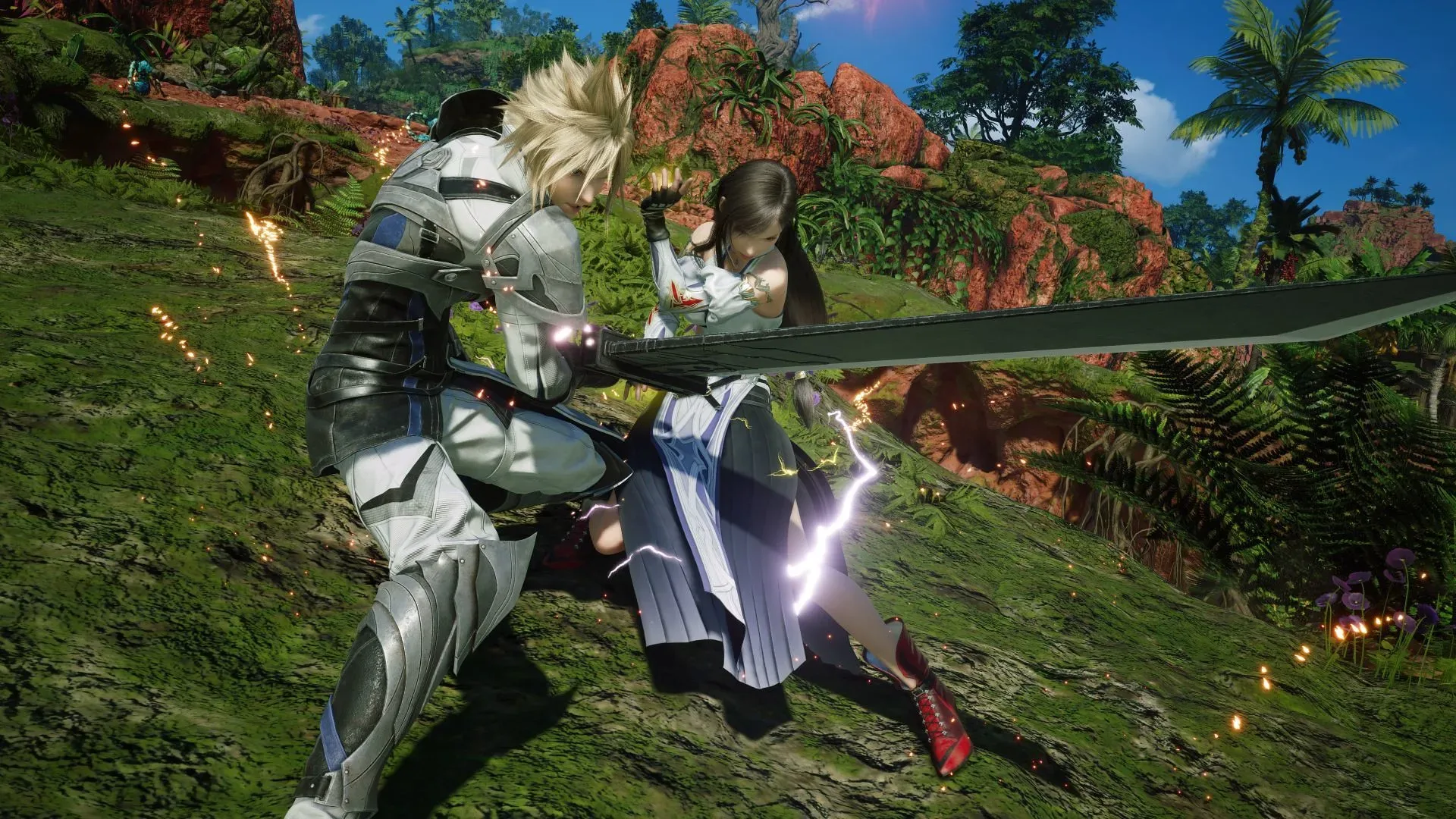
Final Fantasy 7 Revelation will allow players to select Hard Mode from the beginning of the game, a notable change for the remake trilogy’s final entry. Producer Naoki Hamaguchi has also indicated that the setting is being redesigned rather than simply carried forward from Final Fantasy 7 Remake and Final Fantasy 7 Rebirth.
That matters because Hard Mode in the first two games was not an opening choice. Players had to complete the main game before accessing it, placing the series’ most demanding combat rules inside a replay or post-completion experience. Revelation’s approach should instead let people make their first journey through the story as punishing as they want it to be.
Hamaguchi said the team has “reimagined” the high-difficulty experience around Revelation’s new design, cautioning that it will not operate in exactly the same way as Hard Mode did in the earlier games. The announcement establishes the direction, but it does not yet spell out every rule, restriction, or balance adjustment players will encounter.
Hard Mode is no longer reserved for a second run
The most direct change is access. A player who wants the highest available challenge will no longer need to first finish the story at another difficulty. That is a meaningful quality-of-life decision for an RPG of this scale: it respects people who prefer to learn demanding systems under pressure from the outset, rather than treating their preferred setting as a reward after dozens of hours.
For more context, explore MAPPA CEO Manabu Otsuka Says AI Can Aid Animation Workflows, but Creativity Must Remain Human.
It also changes what a first playthrough can mean. In the prior games, a normal initial run and a Hard Mode replay could feel like two separate engagements with the combat system. The first was built around progression and discovering abilities; the second asked players to revisit encounters with a more developed understanding of builds, enemy behavior, party composition, Materia, and resource use.
Starting on Hard Mode will not erase the appeal of replaying the game, but it removes the requirement to do so just to access the tougher ruleset. For players who enjoy difficult RPG combat but do not routinely replay very long games, that is likely the biggest practical implication of the news.
Why Revelation’s Hard Mode needs a different balance
Hamaguchi’s explanation points to a key design problem: Revelation gives players substantially more options than its predecessors. In a combat-heavy RPG, “player options” can encompass the tools available for building a party and approaching fights. The more solutions the game gives a player, the harder it becomes to create difficulty that feels demanding without becoming narrow, arbitrary, or easily bypassed by one overwhelmingly effective tactic.
Related coverage includes Final Fantasy 7 Revelation Will Let Players Choose Hard Mode From the Start.
For that reason, the team concluded that merely prohibiting item use would not create the intended high-difficulty experience. That detail is especially important because it suggests the new mode is not being framed as a simple checklist of restrictions. The developers are looking at the wider balance between the player’s expanded toolkit and the opposition that toolkit faces.
That does not confirm a particular new Hard Mode rule. There is no detailed list yet of what changes to items, healing, damage, enemy patterns, party resources, or other systems. But Hamaguchi’s comments do establish that Revelation’s version is being built around more than one familiar limitation.
In practical terms, a well-designed high-difficulty setting should make choices matter. A player should be encouraged to pay attention to team setup, timing, defensive options, and the role of each character rather than simply relying on a single all-purpose answer. The challenge for Revelation will be preserving that strategic pressure while maintaining the broad freedom that Hamaguchi says has expanded.
Enemy Strength adds a separate tuning choice
Revelation’s difficulty menu will also include an Enemy Strength setting. Players can choose between the returning Dynamic option and static enemies.
Dynamic enemy strength is a scaling approach: in broad terms, it adjusts the opposition in response to player progression or power. Static enemies, by contrast, retain a fixed level of strength rather than moving with the player. The confirmation does not provide the precise formulas or thresholds for Revelation’s system, so it would be premature to assume exactly how either setting calculates enemy power.
Still, the distinction is useful. Scaling systems can help preserve tension when players become more powerful or explore progression routes at a different pace. Fixed enemy strength can appeal to players who want a more stable relationship between a specific area, boss, or encounter and their own party’s development. Offering both acknowledges that “difficulty” is not one preference.
Some players want opponents to remain close to their current capability; others prefer the certainty of static benchmarks. A static setup may let a player deliberately outgrow a barrier through preparation, while a Dynamic setup may reduce the effectiveness of overpowering an encounter through raw progression alone. Neither approach is automatically harder in every situation. Their value depends on the game’s tuning and on what kind of RPG experience a player is seeking.
The important point is that Enemy Strength appears to be a choice alongside the broader difficulty selection, not merely a different label for Hard Mode. That potentially gives Revelation more room to serve different audiences: someone can seek a demanding first run, while another player may be more interested in controlling whether enemies scale with their advancement.
End-game content changes the role of challenge
Hamaguchi also said Revelation will contain a wide range of end-game content after the main story is complete. The stated goal is to provide new material and challenges beyond the credits rather than treating story completion as the absolute endpoint.
“End-game” generally describes activities intended for a completed or highly developed save file. In an RPG, that can be a natural home for the toughest encounters, deeper optimization, and experiments with builds that took a full story to assemble. No specific end-game activities have been named in these comments, so players should avoid reading a particular mode or challenge structure into the statement.
What can be said is that the revised Hard Mode and the promised post-story content are part of the same broader shift. Revelation seems to be aiming for more than a one-and-done narrative playthrough followed only by a replay under tighter conditions. Its structure is intended to give invested players challenges after completion as well.
That makes the decision to unlock Hard Mode immediately more interesting, not less. Players who begin on Hard can make that their primary story experience and still have further content awaiting them afterward. Meanwhile, players who start at a lower difficulty are not shut out of post-story challenges simply because they chose a more accessible first pass.
What is confirmed—and what remains unknown
At this stage, the clearest confirmed points are straightforward:
- Hard Mode can be selected from the start of Final Fantasy 7 Revelation.
- Its structure will differ from Hard Mode in Final Fantasy 7 Remake and Final Fantasy 7 Rebirth.
- The redesign is connected to a significant expansion in player options.
- The team does not view an item ban alone as sufficient for its desired high-difficulty balance.
- Enemy Strength will let players choose Dynamic or static enemy behavior.
- Revelation is planned to have varied end-game content after the main story.
Equally important are the open questions. The current information does not establish the full Hard Mode rules, whether all difficulty settings can be changed freely during a save, what Dynamic scaling specifically measures, or what end-game challenges will involve. Those details will determine how flexible and satisfying the system is in practice.
For now, the message is encouragingly player-focused. Revelation is not presenting challenge as a single locked lane: it is offering an immediate high-difficulty route, a separate way to tune enemy scaling, and additional challenges intended to survive the end credits. Players may still hit a wall and lower the setting after an especially stubborn fight, but at least the wall will be available on day one rather than waiting behind a completed save.