MAPPA CEO Manabu Otsuka has drawn a clear line in the continuing debate over artificial intelligence in anime: AI may be considered as a tool, but it should not be treated as the origin of creative work.
Otsuka’s position is not an outright rejection of technology. Instead, he places AI in the same broad category as other production methods, including digital tools and 3D techniques. The crucial distinction, in his view, is between making a workflow more efficient and replacing the people responsible for artistic judgment, expression, and emotion.
“Whether it’s digital tools, 3D, or indeed AI – to me, all of these are ultimately tools, and nothing more than tools,” Otsuka said.
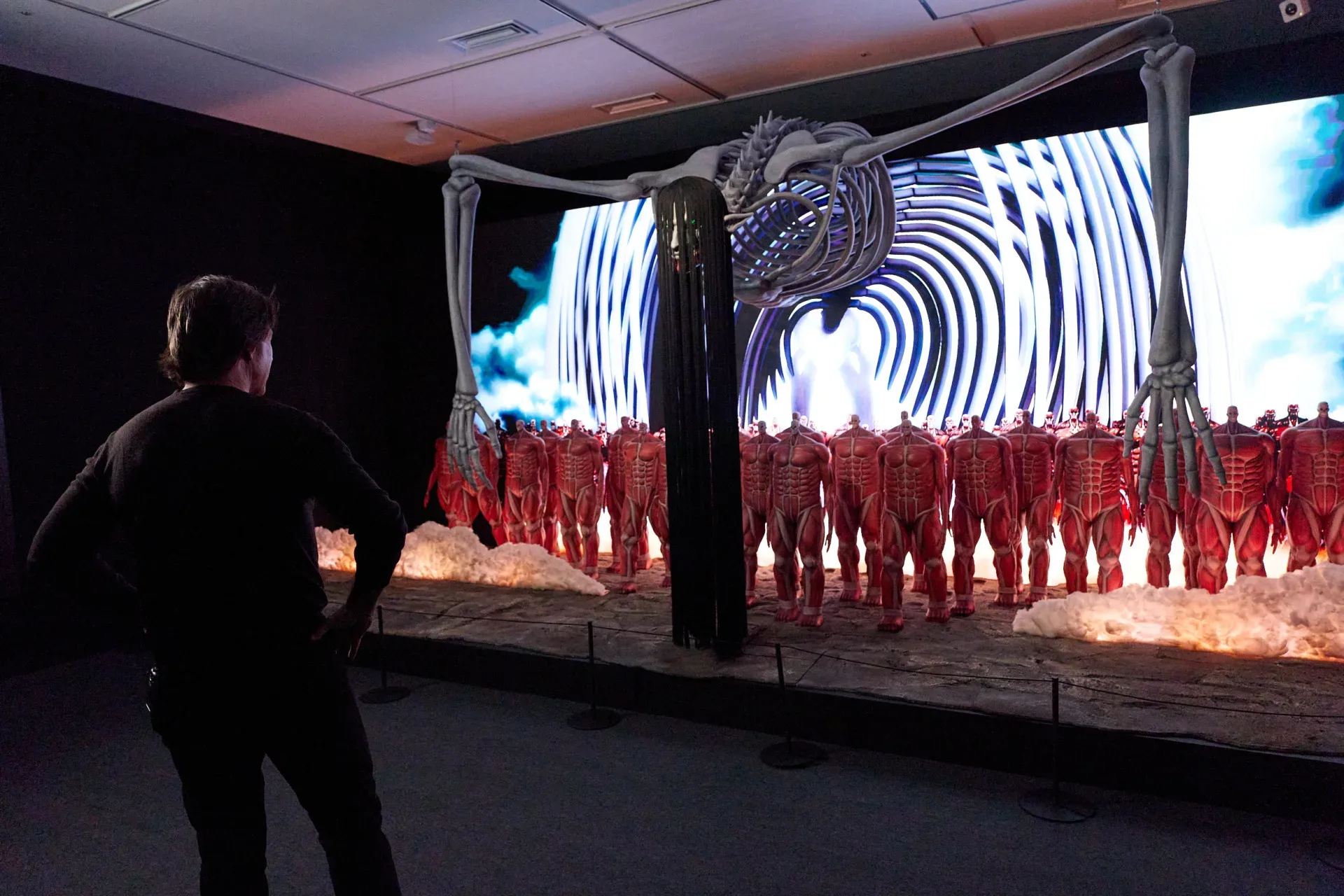
For a studio associated with Chainsaw Man, Attack on Titan, and Jujutsu Kaisen, the comments matter because they frame AI less as a single yes-or-no decision and more as a question of boundaries. Otsuka did not rule out using AI. He said the ongoing task is deciding which tools to use, how to use them, and to what extent.
Efficiency is not the same thing as authorship
The core of Otsuka’s argument is that production efficiency and creative authorship are separate things. A tool can reduce the time spent on a task, assist with an operational step, or fit into a digital workflow. That does not automatically make it the source of a work’s emotional impact or artistic intent.
That distinction is especially relevant to animation, where viewers tend to discuss the finished image as if it were one unified act of creation. In practice, a finished animated project involves many decisions: what is emphasized, how a moment is paced, how characters are presented, and what the audience is meant to feel. Otsuka’s stated belief is that the quality capable of emotionally moving viewers must come from human beings.
“Quality that moves people emotionally can only come from human beings – it has to be people who create it. That is my fundamental belief,” Otsuka said.
His language does not suggest that a production must avoid all software-driven assistance to retain a human identity. Rather, it argues that tools must remain subordinate to the people making the creative decisions. That is a meaningful difference from describing AI as a substitute for creators.
What “workflow” means in this discussion
A workflow is the sequence of steps used to take a project from planning to finished delivery. Otsuka’s comments place AI within that operational chain, not above it. His stated ceiling for such tools is efficiency: they can potentially make workflows more efficient, but the creative process itself has to be led by people.
This is a deliberately narrower claim than “AI has no place in animation.” It leaves room for continued evaluation while preserving a principle about agency. Agency, in this context, means the ability of human creators to make the meaningful choices behind the work rather than merely approving output generated in their place.
That framing may be useful for audiences trying to parse broad claims about “AI-made” entertainment. The phrase can obscure whether someone is talking about a tool used at one stage of a workflow or a system being positioned as the creative driver. Otsuka’s remarks focus on who drives the process, not simply whether a technology appears somewhere in it.
MAPPA’s approach is pragmatic, not an unconditional endorsement
Otsuka’s comments are careful because they resist two easy interpretations. They are not a promise that MAPPA will never evaluate AI tools, and they are not a declaration that efficiency alone justifies every use. The standard he lays out is appropriateness: which tools are being used, in what way, and to what degree.
“So the real question is simply: which tools do you use, how, and to what appropriate degree? That’s something we’ll keep exploring continuously,” Otsuka said. “Tools can, at most, serve to make workflows more efficient, but the creative process has to come from people.”
There is an important practical implication in that wording. It treats technology policy as something that requires ongoing judgment, rather than a one-time verdict. New tools may create new questions about their role, and a studio’s choices can depend on how those tools interact with human labor and creative control.
It also puts the focus back on the people whose contributions are often flattened into a final credit roll. Under Otsuka’s formulation, the value of a tool is not that it can imitate the outward appearance of an artistic result. Its value lies in whether it can serve a human-directed process without displacing the human foundation he considers essential.
Generative AI has become a central anime-industry question
The debate has intensified alongside the wider emergence and growth of generative AI models and chatbots, including Claude and ChatGPT. Generative AI generally refers to systems that produce new output from prompts or other inputs. In entertainment discussions, that output can include text, images, audio, or other material. The concern is not only technical capability; it is also what role generated output should have in a creative field built around artists, performers, directors, and production teams.
Anime has already seen public scrutiny around AI use. Banana Fish faced criticism over an AI dub that was later removed. That episode is part of the context behind the sharper public attention now paid to how AI is used and how clearly its use is communicated.
Other industry voices have taken notably cautious positions. Crunchyroll CEO Rahul Purini said earlier this year that avoiding AI in anime was “not that difficult.” Director Toma Kimura, meanwhile, said that no generative AI was used in his Ghost in the Shell remake. Taken together with Otsuka’s comments, these positions show that the conversation is not limited to abstract predictions about technology. It is increasingly about production choices and the values studios and creators attach to those choices.
None of these statements establishes a single industry-wide policy. They do, however, demonstrate why broad labels can be unhelpful. One person may argue for avoiding generative AI entirely; another may be willing to assess tools while insisting that human creators retain control. Both responses are shaped by the same larger concern: whether technology is serving art or being asked to replace the people who make it.
Why the human-creative-process claim matters to viewers
For viewers, Otsuka’s position offers a straightforward principle by which to understand future discussions: a production tool and a creator are not interchangeable. A tool may affect how work gets done, but his view is that it cannot supply the human origin of emotionally resonant work.
That may sound philosophical, but it has a practical side. When a studio says it is assessing tools for efficiency, the next meaningful question is not merely whether the tool is “AI.” It is whether creators are still setting the artistic direction and whether the technology is being used within limits that preserve their role.
The distinction also helps avoid treating every digital process as equivalent. Otsuka explicitly grouped AI with digital tools and 3D as tools, while refusing to elevate any of them into the source of creativity. In other words, the presence of technology does not settle the question of authorship. The human decision-making behind its use does.
That focus mirrors a broader tension also visible in games and tech conversations, where strong claims about AI-generated production have drawn skepticism and debate. For a related example, see this report on pushback surrounding a game-development AI claim. Across media, the recurring issue is not simply whether an output can be produced quickly, but what gets lost if speed is treated as the only measure of value.
What this means for MAPPA’s upcoming work
MAPPA has major projects in production, including Chainsaw Man season 2 and Jujutsu Kaisen season 4. Otsuka’s remarks do not announce a specific AI implementation, a ban, or a production change for either project. It would be inaccurate to read them as confirmation of any particular use on those shows.
What they do provide is the studio leader’s stated framework: continuing consideration of tools, an emphasis on efficiency rather than creative replacement, and a firm belief that people must remain responsible for the creative process. As debates over generative AI continue, that is a more substantive position than a blanket slogan. It accepts that technology will keep evolving while asserting that the emotional and artistic core of animation should remain human.
For fans watching developments around MAPPA and the wider anime business, the most useful takeaway is also the simplest: Otsuka sees AI as a means, not an author. The question for any future use, by his own standard, will be whether it supports the people making the work rather than taking their place.