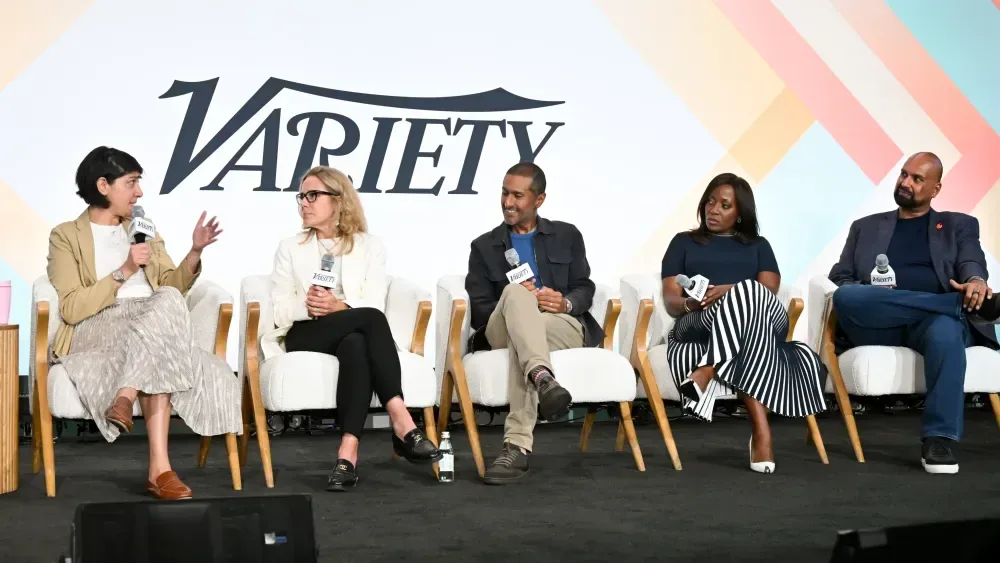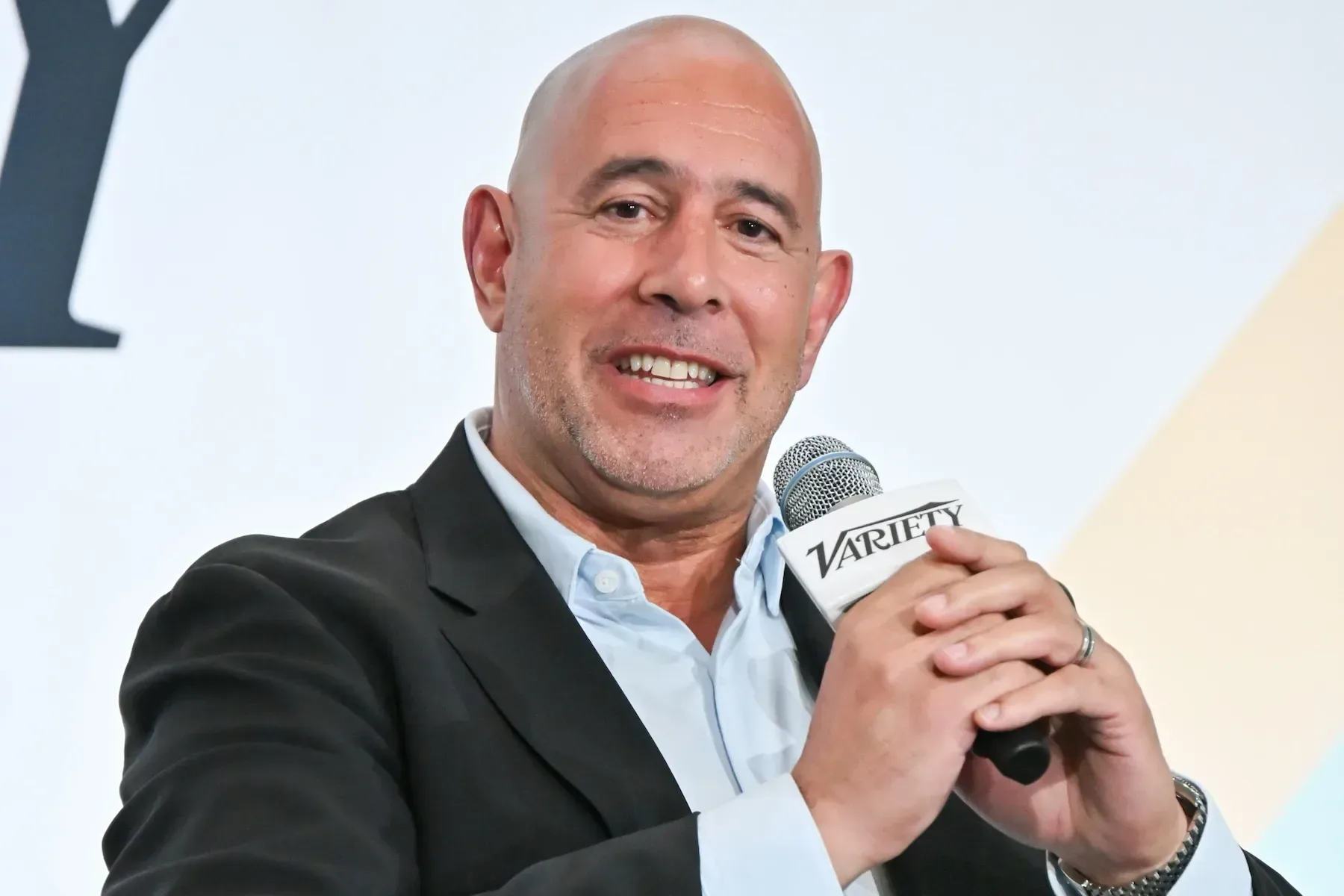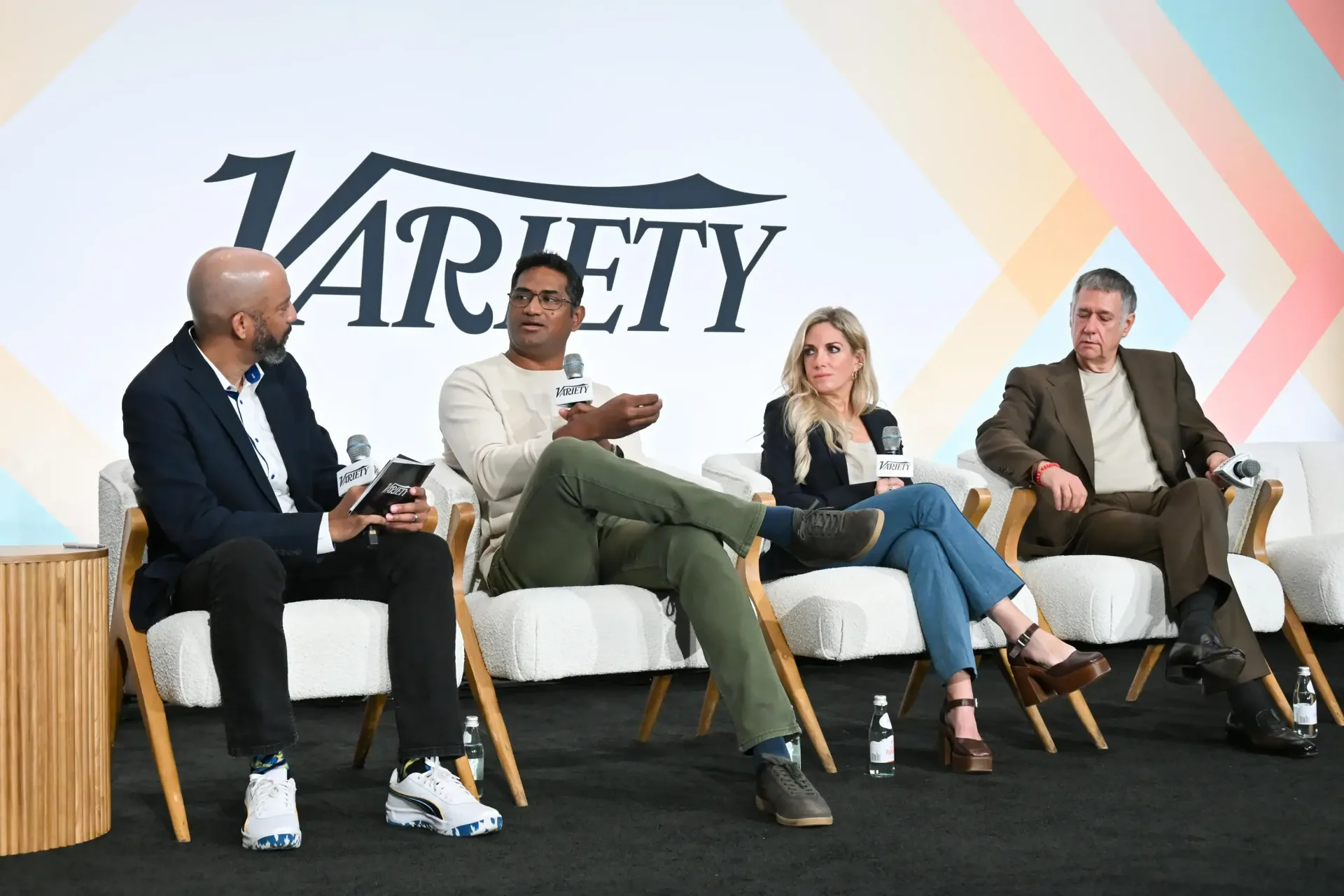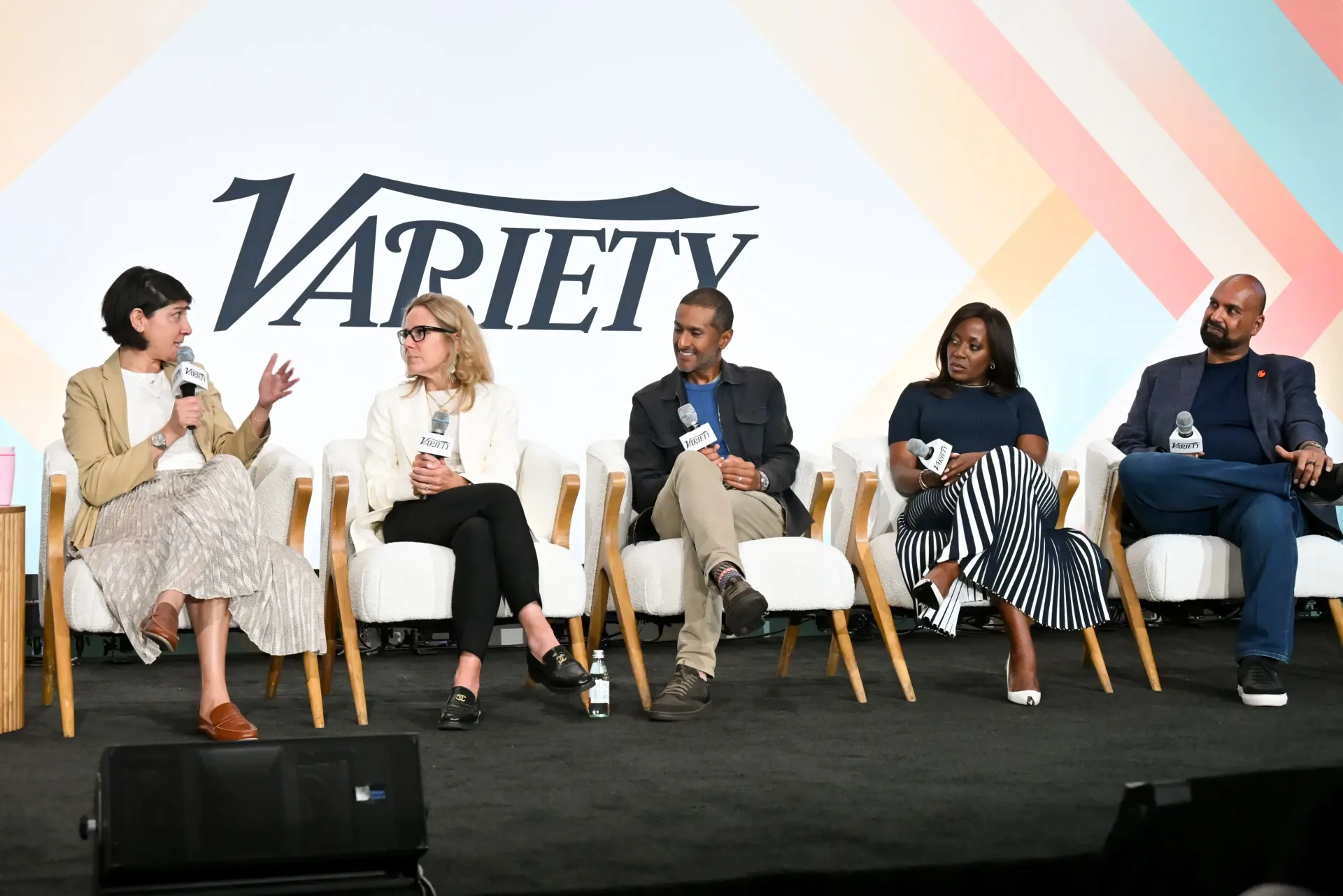
Entertainment leaders are describing a business less interested in sheer volume and more concerned with purpose: which audience a show serves, how long it has to find that audience, and whether the work leaves an emotional mark. That was the central thread in a Los Angeles discussion featuring executives from television studios, streaming, broadcast, horror films and anime.
The argument is not that streaming, broadcast television, theaters, creator platforms and fandom services now operate as one identical market. It is nearly the opposite. Each can have a distinct role, and a project’s route to viewers can be as important as the project itself. The common challenge is resisting an old reflex to treat “more content” as the same thing as a stronger entertainment offering.
The post-peak-TV correction is about selectivity
Liz Jenkins, chief business officer for NBCUniversal Entertainment, characterized the peak-TV period as an era in which television economics became unsustainable and supply likely surpassed demand. That assessment frames the current shift plainly: companies are trying to be much more exact about their priority audiences before attempting broader growth.
“Peak TV” is a useful term here because it does not merely mean that there were many shows. It describes a production environment where the abundance of programming itself became a competitive strategy. The practical problem is that a larger catalog does not automatically create attention. Viewers still have finite time, and a service or network still has to give them a reason to choose one title over another.
Jenkins distinguished between “capital C” content and “lowercase c” content. The terminology is informal, but the meaning is clear: entertainment cannot be judged solely as tonnage. Capital-C content is the work that connects emotionally, is driven by strong stories and storytellers, and makes an audience feel something. The point is not that every program needs to be enormous or prestigious. It is that a production should have a recognizable reason to exist beyond filling a release calendar.
For viewers, this may mean a smaller number of productions receiving clearer positioning. For creators, it suggests that an idea’s emotional hook and specificity can matter at least as much as its ability to fit a familiar volume-driven pipeline. For companies, it changes the question from “How much can we deliver?” to “Who is this for, and why will they return?”
Streaming and linear TV are not necessarily rivals for the same person
Simran Sethi, who oversees scripted programming for Hulu Originals and ABC Entertainment at Disney, said the company found that streaming through Hulu and Disney+ and linear television do not necessarily cannibalize one another. In this context, cannibalization means one distribution method taking viewers away from another offering owned by the same company.
The key observation is behavioral. People who make a habit of watching live television are not automatically the same people who primarily stream online. A show made available across those habits can therefore expand its reachable audience, while streaming also gives people an opportunity to catch up and return.
That matters because the old framing of television distribution often asks which window “wins.” The more useful framing is what each window does. Linear viewing can serve an established live-viewing routine. Streaming can provide flexibility and an on-ramp for someone who missed an episode. Neither function guarantees success, but they are not interchangeable.
Clancy Collins White, president of creative affairs at Warner Bros. Television, similarly described a diminishing distinction between programming for streaming services and linear television. The studio’s stated mission is to sell to as many outlets as possible, and Collins White said it has 30 shows across 10 platforms. Flexibility in where a series can be sold, in that model, is part of the offer to creators as well as a commercial advantage for the studio.
This is a meaningful backdrop for anyone watching the television business: a show’s label as “streaming” or “broadcast” may be less revealing than its actual audience, release plan and availability. The platform remains important, but it is no longer the entire identity of the program.
Why the weekly episode is gaining fresh value
Several panelists pointed to weekly releases as a format that viewers are responding to, in contrast to the full-season binge drop generally associated with Netflix. A weekly release does not make a series better on its own. What it can do is create time: time for viewers to discuss an episode, time for curiosity to travel between episodes, and time for a show to become part of a shared routine.
Sethi connected that schedule to television’s collective experience. For younger audiences in particular, “watercooler television” can sound like a concept from an earlier media era. Yet the underlying appeal is straightforward. People watch an installment, have something specific to talk about, and know that other people are having a similar encounter with the same story at roughly the same time.
Collins White cited the response to the weekly rollout of The Pitt, an original series that won seven 2026 Emmys, including best drama series and lead drama actor for Noah Wyle. She emphasized that it is a compelling original idea rather than a major reinvention of an existing property. That pairing is notable: a familiar release rhythm can support an original premise rather than only serving franchise material.
There is also a business implication. A binge release gives a title one concentrated opening moment. A weekly release can provide multiple opportunities to sustain attention. That is not a promise that every show will grow, and it should not be confused with an automatic cure for a weak fit between a series and its audience. But a weekly model gives a program room to build a conversation instead of asking all momentum to arrive at once.
Jenkins’s example was Peacock’s Love Island USA. Some shows, she said, need time to show “green shoots” — early indications that a program is finding the audience it is meant to reach. She identified Season 6, and the addition of Ariana Madix following a high-profile season of Vanderpump Rules, as the tipping point. The example illustrates an important distinction between instant scale and developing traction. A show can need a moment, a recognizable connection to a fan base, and enough patience to demonstrate whether that connection is taking hold.
AI anxiety meets a demand for human-made cultural events
Artificial intelligence was one of the discussion’s sharpest fault lines. Abhijay Prakash, president of Blumhouse Atomic Monster, said short-form and potentially lower-production-value creator material may be the most vulnerable to what has been labeled “AI slop.” The phrase generally refers to a flood of cheap, generic or low-quality AI-generated media. It is a critique of the output and its volume, not a technical category with a fixed definition.
Prakash’s larger point was that the creative work behind Obsession and Backrooms — summer box-office horror hits from YouTube creators — was not the kind of thing that could simply be generated from an AI prompt by algorithms or large language models. A large language model is an AI system trained to generate and transform language; in popular discussion, the label is often used more broadly when people debate generative AI tools. The distinction matters because a prompt is an instruction to a system, while a finished creative project involves authorship, judgment, craft and the accumulated sensibility of the people making it.
That does not settle every future question around AI and entertainment. The discussion did not present a complete technical forecast, nor did it claim that all short-form work will be replaced. Instead, it highlighted a risk of commoditized material while arguing that culturally distinct creator voices cannot be reduced to an automated request.
The two horror films also offered a more optimistic lesson for theatrical distribution. Prakash said a scary theatrical event can still persuade people to leave home for an experience. The theatrical value in that description is not only the film itself; it is the occasion of seeing it with an audience and responding together.
That perspective aligns with the renewed interest in weekly TV. In both cases, the audience is being offered more than passive access. It is being offered a reason to show up now: either to participate in an in-person genre event or to join an ongoing public conversation.
YouTube is not just a trailer destination
Prakash argued that the film business needs to do more than market through YouTube with trailers and featurettes. It needs a genuine consumer offering on the platform, which he described as probably the No. 1 place for watching filmed entertainment. His experience with Obsession and Backrooms showed that popular YouTube creators can still seek the theatrical format, rather than treating online and theatrical storytelling as mutually exclusive paths.
The practical message is not simply “put everything on YouTube.” It is that industries should recognize where younger audiences are already discovering creators, building taste and spending attention. A platform-native offering means work designed with that environment and its audience relationship in mind, rather than using the platform only as an advertising funnel toward somewhere else.
For readers following the overlap between screens and platforms, Sony’s effort to make television available through a console is another example of distribution becoming less siloed. Sony’s PS5 live-TV plans reflect the same broad reality: entertainment companies are looking for audiences in the devices and services people already use, instead of assuming every viewing habit begins in a dedicated TV app.
Anime’s global audience is built on stories that feel different
Rahul Purini, president of Sony’s Crunchyroll service, said company research estimates that 650 million people outside Japan and China watch anime regularly each week, with global growth expected to continue. The figure underscores the scale of an audience that cannot be explained by visual style alone.
Purini said fans point to themes including grief, fame and found family, as well as characters and stories that feel relatable but distinct from the rest of their entertainment choices. “Found family” is a storytelling term for relationships in which people create familial bonds outside their biological or legal relatives. It has become a recurring point of connection across many genres, but Purini’s argument was that anime’s particular treatment of such themes helps make it feel different.
That is another rebuttal to a content-by-volume mentality. A large global audience does not emerge merely because a category has a recognizable art style. It grows when people find stories that speak to them and offer something they do not feel they are receiving elsewhere.
The through line: audience connection over distribution dogma
The strongest shared message from this group is not that there is one winning format. Weekly episodes can work; so can flexible access across streaming and linear TV. YouTube creators can move toward theaters. Anime can travel globally through themes that feel personal and unusual. A show may require time to find its audience, while another may thrive as a concentrated event.
The more durable lesson is to avoid treating distribution formulas as a substitute for an audience relationship. The people making programming are being pushed toward sharper choices: identify priority viewers, meet them in the places they actually use, allow the right projects time to develop, and protect the human distinctiveness that makes a story worth discussing.
In an entertainment market crowded with platforms, formats and rapid AI development, the question is becoming remarkably simple: does the work give people a reason to care, return and tell someone else about it? The panel’s answers differed by business, but they consistently returned to that standard.