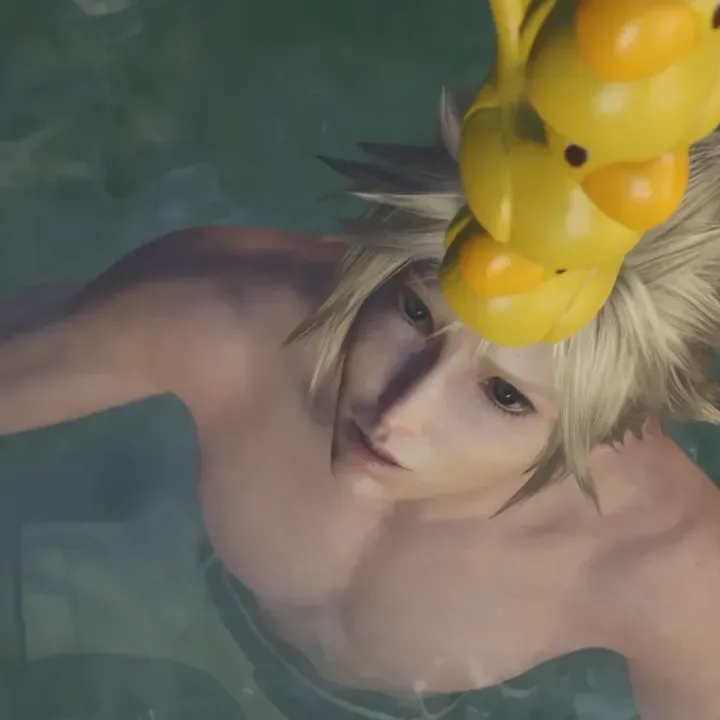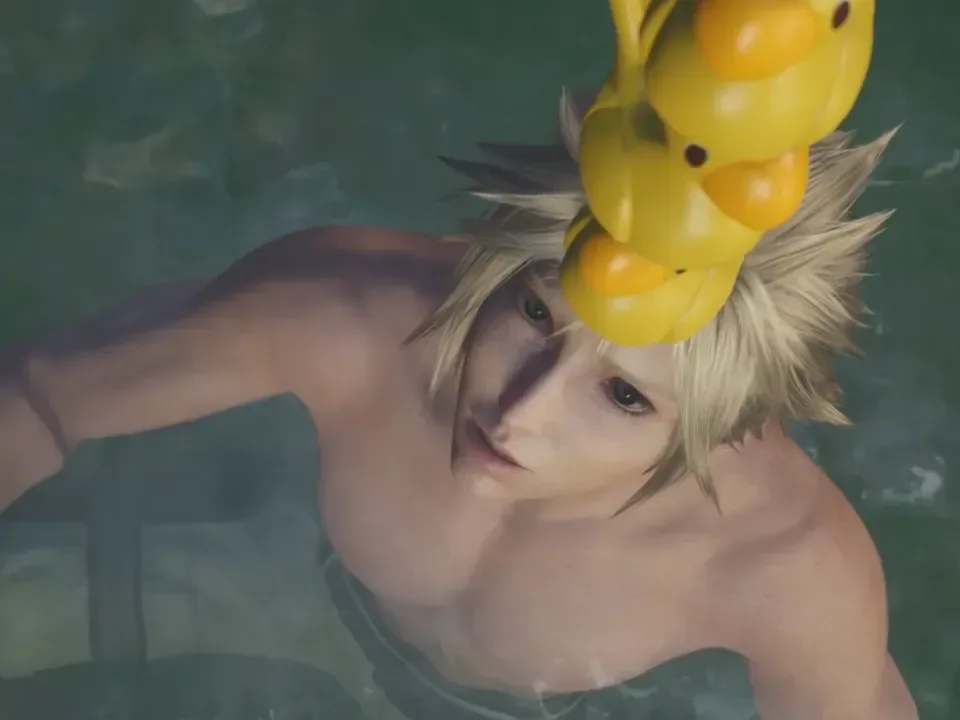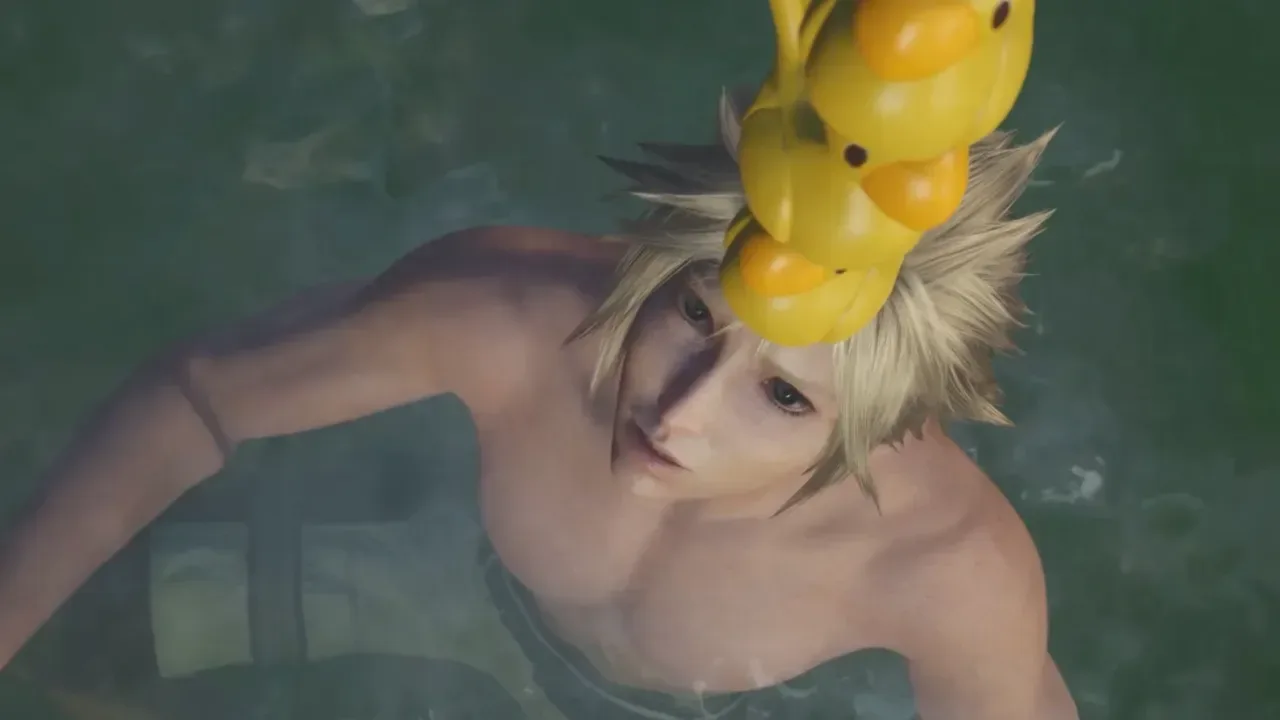
Final Fantasy 7 Revelation is adding hot springs to Cloud and company’s trip across the world, and they are more than a scenic excuse for the party to temporarily stop saving the planet. Newly shown footage indicates that each spring grants a permanent increase to the party’s maximum HP, presents a character-focused event, and can unlock the bathing suit outfits seen in those scenes as cosmetic skins.
It is a compact feature with three distinct purposes: exploration has a tangible combat reward, the cast gets quieter everyday-life moments, and players can bring the visual reward back into the wider game. For a series built around an enormous threat from Sephiroth, it is also a reminder that the remake trilogy has made space for the group to be people as well as heroes.
The hot springs were shown during an SDCC Málaga stage presentation and in footage subsequently shared online. Director Naoki Hamaguchi described the locations as places that offer different looks at the characters’ everyday lives, while encouraging players to explore the world and find them.
What the hot springs do in Revelation
The clearest mechanical benefit is a permanent maximum-HP increase. HP, or hit points, is a character’s health pool: when it reaches zero in battle, that character is incapacitated. A boost to maximum HP therefore is not merely a refill at the moment the party visits a spring. It raises the amount of damage the party can absorb thereafter.
That distinction matters. A temporary recovery point is useful after a hard encounter, but a permanent stat increase makes a discovered location part of a player’s long-term progression. It could be meaningful both to players who want extra survivability for difficult fights and to completion-minded players who want their party’s underlying stats as high as possible. The currently available information does not specify the size of each HP bonus, whether every party member receives the same amount, or how many springs exist, so those details remain unknown.
The springs also function as character-event locations. Hamaguchi has said that each one offers a different glimpse into the cast’s ordinary lives. That wording sets reasonable expectations: these scenes appear designed to add texture to relationships and personalities rather than to replace the game’s central story. The footage has shown the group relaxing and mingling, with the distinctly odd activity of balancing rubber Chocobos included among the hot-spring antics.
Finally, the outfits featured in these events can be unlocked as skins. In this context, a skin is a cosmetic appearance option. It changes how a character looks without being presented as a separate weapon, ability, or combat-stat upgrade. That separation is useful: the hot spring itself gives a gameplay benefit through HP, while the bathing suit is a visual prize players can use after the scene is over.
Who has been shown with new looks
The clips released so far show bathing suit skins for Cloud, Barret and Cid. They establish the basic premise: outfits associated with hot-spring events will not be confined to a single cutscene. Instead, they can be selected as skins after being unlocked.
Red XIII is shown taking part in the relaxation, too. Since he is not normally dressed in clothing, any cosmetic adjustment for him may naturally look less dramatic than a wardrobe change for the human characters. No specific Red XIII skin has been confirmed in the material shown.
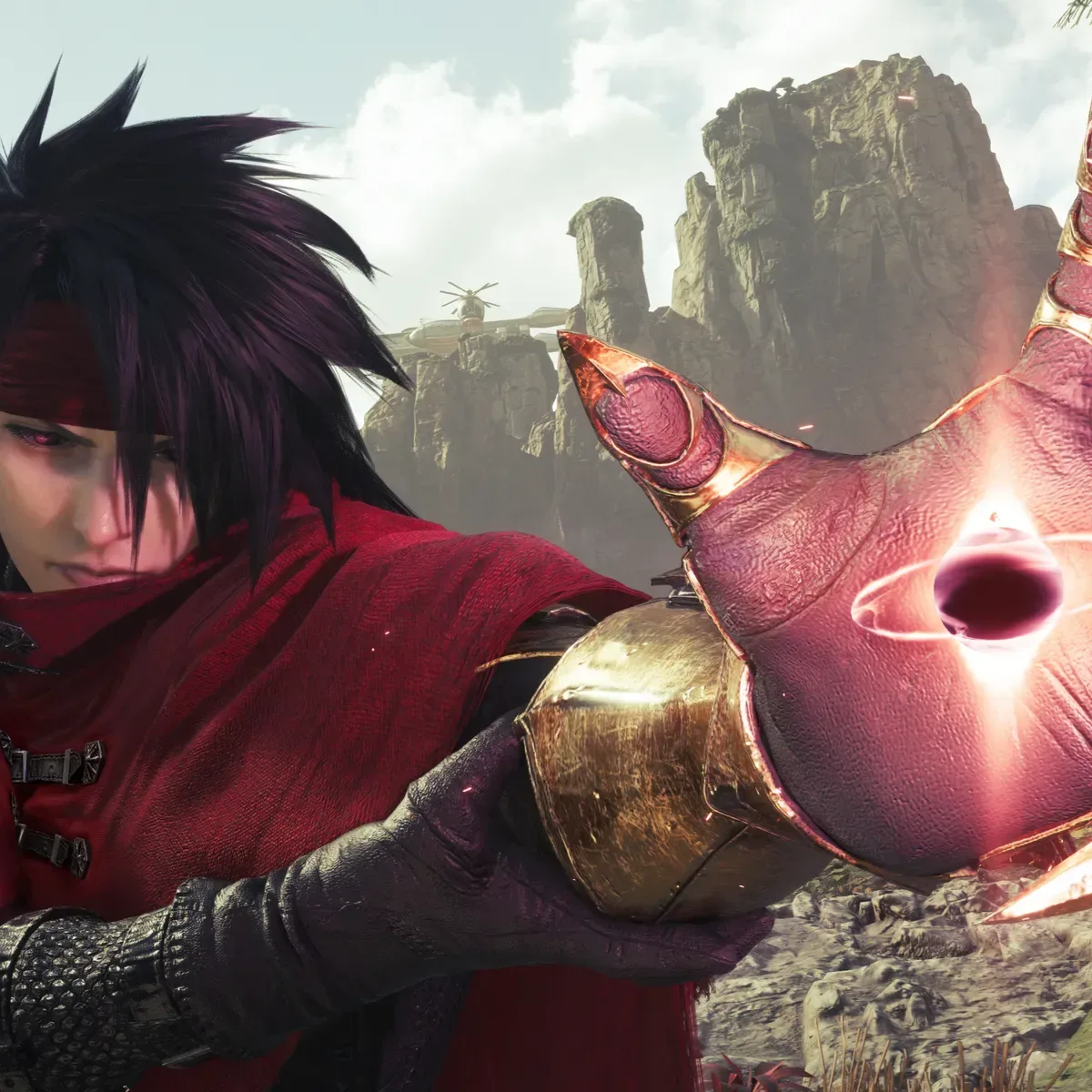
Vincent Valentine, meanwhile, is playable in Revelation and is shown bathing in the same distinctive attire he wears while fighting monsters. The presentation is a fitting bit of character comedy, but it should not be read as confirmation that Vincent has no unlockable cosmetic alternatives. The footage only establishes what he is wearing in that particular hot-spring scene.
The currently revealed set is also not a complete party-outfit list. Players should avoid assuming that every character has been confirmed to receive a bathing suit skin, or that all outfits will be earned from one identical activity. The confirmed point is narrower: outfits featured in hot-spring events can be unlocked as skins, and Cloud, Barret and Cid have been visibly shown with such looks.
Why permanent HP gives exploration real weight
Open-area exploration often asks players to choose between following the critical path and checking what lies off it. A permanent health increase is a straightforward answer to the question of why detours matter. Even when players are not especially interested in costume collecting, an enduring survivability bonus is an incentive to investigate a new point of interest.
There is an important practical implication for different play styles. Someone primarily concerned with the story may encounter springs naturally and come away with a stronger party. Someone who expects difficult combat can treat them as optional preparation. And someone who enjoys cosmetics has a second reason to seek them out. One activity therefore supports story pacing, combat preparation and personalization without requiring those goals to be exactly the same thing.
It also makes the hot springs a gentler alternative to pure grinding. Hamaguchi has previously said Revelation will include an option to automatically level up characters for people who want to skip the grind. Leveling is a conventional way to grow stronger through repeated combat; automatic leveling, as described, gives players a route around that repetition. Permanent exploration rewards such as HP boosts represent a separate form of progression, tied to finding places in the world rather than replaying battles.
That does not mean the springs will be mandatory, nor does it confirm how the automatic-leveling option works. The relationship between the two systems has not been detailed. Still, the combination suggests an approach that can accommodate people who enjoy methodical party building and people who would rather maintain narrative momentum.
For a broader example of why players scrutinize progression systems and automation, see this look at an add-on’s limits when interpreting in-game activity. Revelation’s announced option is much simpler in concept, but the same basic point applies: players benefit from knowing exactly what a system does, and what it does not do.
Character downtime is part of the remake trilogy’s identity
Revelation is the concluding entry in the remake trilogy, but the available footage continues a pattern of allowing the party room to breathe during a high-stakes journey. The prior installment, Final Fantasy 7 Rebirth, included a beach day. Revelation’s hot springs appear to carry that spirit forward, mixing camaraderie, light comedy and an optional gameplay reward.
These pauses can be more useful than they first appear. A party-based role-playing game depends on players caring how its members relate to one another. Combat banter and dramatic confrontations do some of that work, but informal scenes can reveal different dimensions: who loosens up, who refuses to change their routine, or what a group does when nobody is immediately swinging a sword. The rubber-Chocobo balancing alone signals that Revelation is willing to puncture tension with silliness.
Hamaguchi’s emphasis on “everyday lives” is especially notable because the characters are traveling under extraordinary circumstances. A bathhouse event cannot resolve the central conflict, but it can make the party feel like companions on a long road instead of a lineup of combat roles. The permanent HP bonus then ensures these moments are not disconnected from the game around them.
What is still unconfirmed
The footage answers the broad question of what hot springs are for, but not every implementation detail. Nothing shown so far establishes a complete spring count, a map structure, a required order, or whether all of them are missable. It also does not confirm the exact HP increase attached to a visit, whether the reward can be repeated, or how skins are selected in menus.
Likewise, a bathing suit shown in a hot-spring event should not be treated as proof of a corresponding costume for every character. More outfits may exist, but that is not confirmed by the current material. The same caution applies to Red XIII and Vincent: their appearances in the clips illustrate the events, not an exhaustive breakdown of cosmetic options.
Hamaguchi has said players could spend more than 100 hours working through Revelation’s story, while also suggesting that the Platinum Trophy itself will not be especially difficult. Those comments provide a sense of intended scale and trophy difficulty, but they do not say whether visiting every hot spring is needed for trophies, side content, or any particular ending. Until further details arrive, the safest expectation is simply that the springs are exploration points with permanent HP gains, character scenes and cosmetic unlocks.
Release date and platforms
Final Fantasy 7 Revelation is scheduled to launch on April 8, 2027 for PC, Nintendo Switch 2, PlayStation 5 and Xbox Series X/S. Its multi-platform release gives the final remake-trilogy chapter a broad audience from day one, while the hot-spring feature gives that audience an early example of how exploration, party interactions and cosmetic customization will intersect.
For now, the essential message is pleasantly uncomplicated: look for hot springs, get a lasting health increase, spend time with the party, and unlock the outfits that come with those moments. In a game about pursuing Sephiroth, that is a remarkably civilized itinerary.