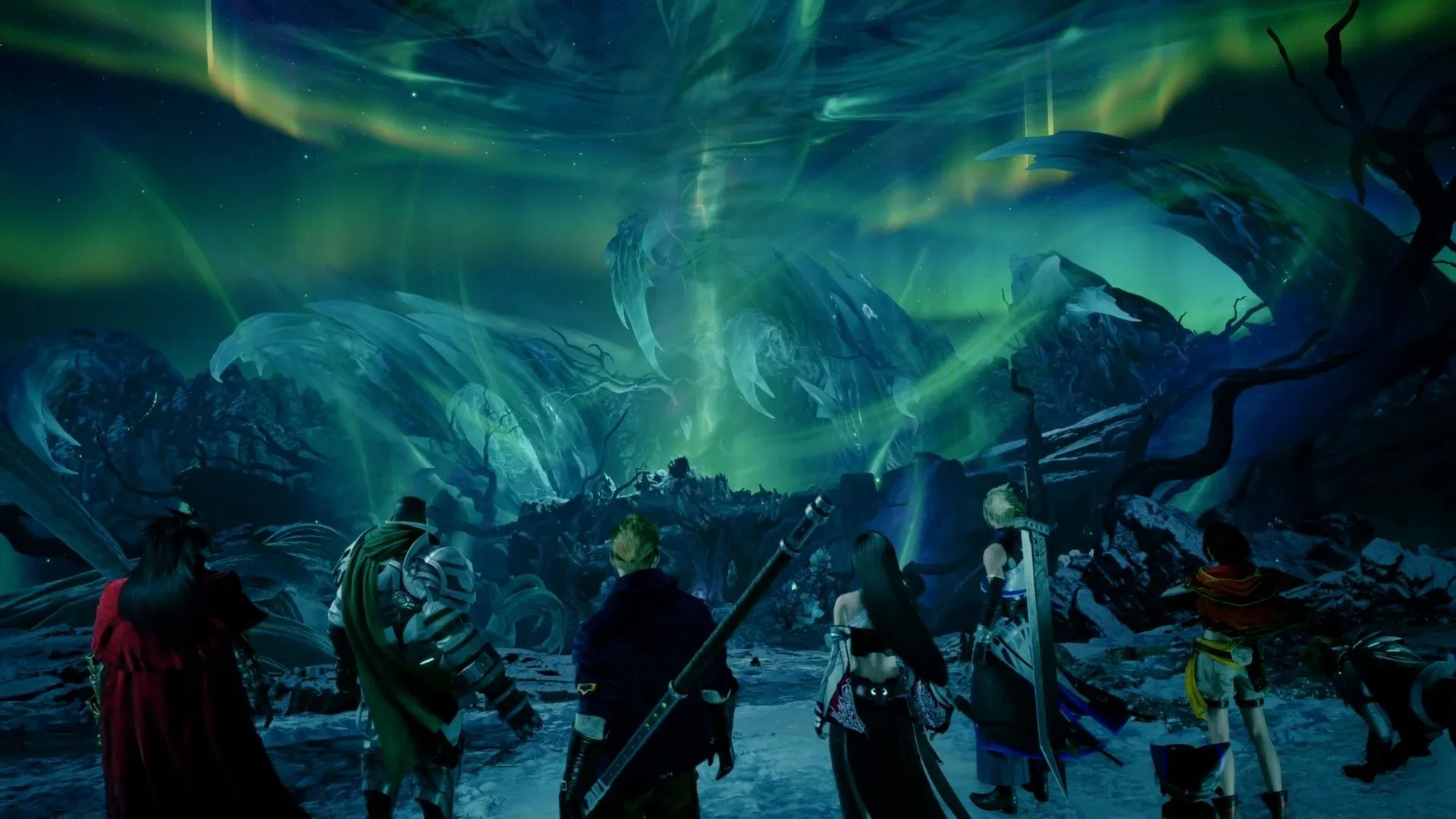

Final Fantasy 7 Revelation has so far been positioned as a large-scale adventure full of open-world activities, map markers and the chatter of robotic companion MAI. But a newly shown early chapter suggests the final entry in the remake trilogy will not treat size as its only trick. A roughly 45-minute section set in the North Crater narrows the path, puts Cloud’s increasingly unstable condition at the center of events, and uses that focused setting to introduce playable versions of Cid Highwind and Vincent Valentine.
That is promising for a finale with a great deal to resolve. Open spaces can support optional exploration and diversions, but a linear dungeon can give a major story beat its own pace. The North Crater segment is built around urgency: Aerith’s loss remains raw, the party is intent on reaching Sephiroth, and the route forward runs through dangerous, Mako-infused caverns and roads. Rather than asking players to scan a horizon for the next icon, this slice appears concerned with driving the group toward the crater’s center.
The result is not evidence that the wider game has abandoned its sandbox ambitions. It is evidence that Revelation may be structured to shift deliberately between them. That flexibility matters. A game can make room for optional activity while still recognizing when its characters need a corridor, a boss arena and enough quiet between encounters for the plot to land.
A North Crater chapter built around pressure
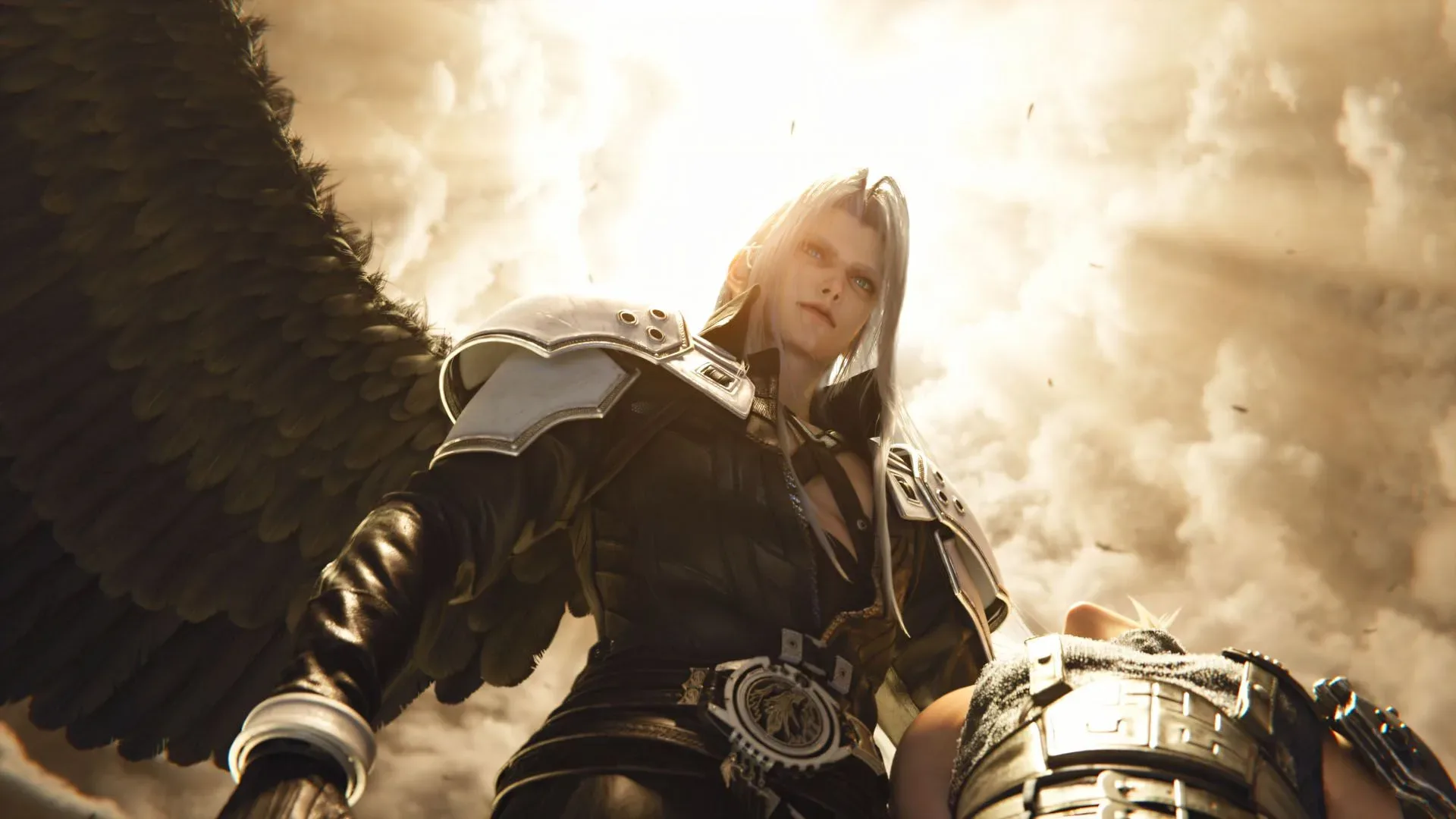
The dungeon’s dramatic throughline is Cloud. Sephiroth continues pressing on Cloud’s fractured sense of self, appearing in intermittent scenes to urge him to remember his SOLDIER number and his origins. Those interruptions turn traversal into more than a route between combat encounters: the crater becomes a place where Cloud cannot simply outpace the questions following him.
Sephiroth’s influence and Cloud’s mental decline are familiar pillars of this story, but the immediate presentation sounds notably direct. The party is moving with purpose, and the villain’s prompts are aimed at the most sensitive parts of Cloud’s identity. It is a useful fit for an opening chapter, where the game needs to establish both its stakes and the emotional consequences of what came before.
The preview ultimately moves from the crater toward Nibelheim, the site tied to the events that set this conflict in motion. Sephiroth leads the group to a dark portal, while Zack Fair is seen frozen in place. The demonstration stops as Cloud steps through. That is a tease rather than an explanation, so players should resist treating it as confirmation of what the sequence means or where it leads. Still, it plainly places identity, memory and the relationship between Cloud, Sephiroth and Zack at the front of Revelation’s mystery.
FITS is a new combat layer, not a replacement for every character’s identity
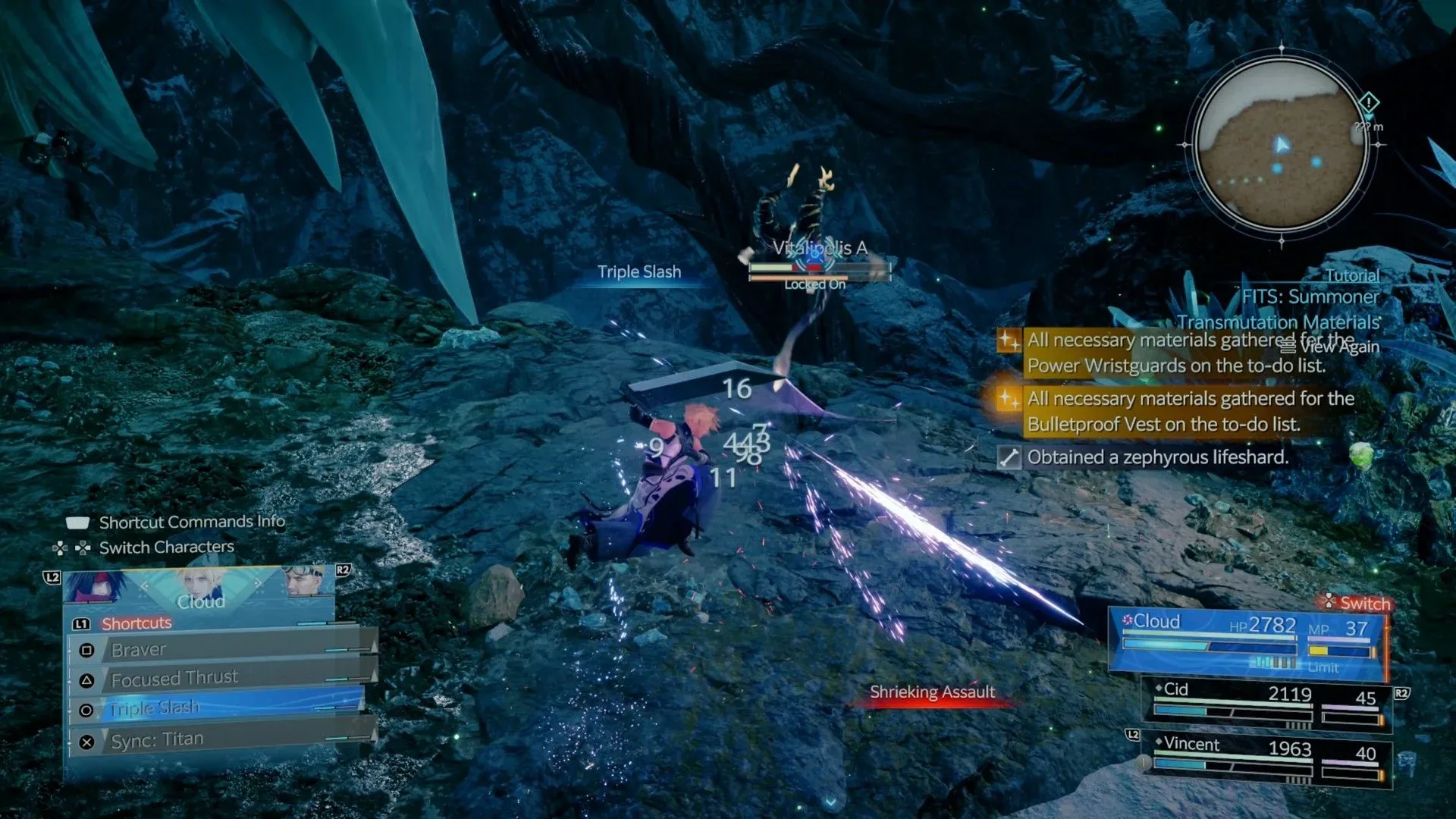
The dungeon also introduces Function-Integrated Tactical Suitwear, shortened to FITS. The system is described as a more compact take on a traditional Final Fantasy job system. In role-playing games, a job system generally lets a character take on a combat role defined by a distinct group of skills. Here, FITS appears to give each party member another ability set designed to complement what they already do rather than erase their established specialties.
Cloud’s shown example is the Summoner FIT. It grants access to familiar summon creatures including Shiva and Ifrit. These actions require ATB, short for Active Time Battle gauge, the resource used to activate abilities in the remake series’ hybrid real-time combat. The summon powers sit in their own tactical-menu slot and can also be assigned to one of four shortcuts.
Related coverage includes Final Fantasy 7 Revelation's North Crater Demo Highlights Cid, Vincent and a New Combat Layer.
That interface detail is more meaningful than it initially sounds. A tactical menu keeps abilities available without requiring every player to memorize a dense collection of button combinations. Shortcuts, meanwhile, let someone who has settled on a preferred build call for the same actions more immediately. Having both paths suggests the system could accommodate players who want to make decisions in the slowed-down tactical layer and those who prefer quick execution in a hectic battle.
Shiva can fight alongside the team and respond in sync with player inputs, creating a striking visual payoff. However, the short fights in this preview did not reveal the full strategic depth of the system. That limitation is important. A new loadout mechanic can sound flexible on paper, but the practical questions are still open: how consequential will FIT selections be across the full party, how difficult will it be to swap or improve them, and whether particular combinations reshape encounters rather than merely adding more spectacular attacks.
For now, FITS looks like a potential answer to a difficult design problem. Revelation needs to let its large cast feel distinct while also giving players room to tailor a team. If it succeeds, the system could add experimentation without making Cloud, Cid, Vincent and the rest feel interchangeable.
Cid turns precision into momentum
Cid joins the active roster with a lance and a Dragoon-inspired style built around movement. His attacks allow him to jump and dash around the battlefield, which should make him a natural choice for players who want to stay mobile rather than hold position at close range.
His most interesting wrinkle is timing. Blue aura flashes create openings for stronger attacks when inputs are made with precision. The payoff includes broad sweeping strikes and a whirlwind-like flurry, but the point is not merely to make Cid look flashy. It asks the player to watch for a visual cue and maintain timing amid enemy attacks, positioning and the usual ATB choices.
That makes Cid’s kit sound accessible at the surface and more demanding once players chase its best results. A basic combo can still move the fight along, while accurate timing raises the ceiling. The comparison to rhythm is apt in a limited sense: not because combat becomes a music game, but because success relies on finding a cadence within the action instead of treating every button press as identical.
For team-building, his mobility could give him a clear purpose even before the complete system is known. Characters that can rapidly reposition are often useful when an arena changes shape, a foe creates danger zones, or a player needs to preserve offense while moving. Whether Revelation’s encounters consistently require that flexibility remains to be seen, but Cid arrives with a readable role and a mechanic that rewards learning it.
Vincent makes transformation a risk-reward decision
Vincent’s pistols let him contribute from range, spinning through an arena while applying pressure to enemies. In this combat context, applying pressure refers to pushing an opponent toward a vulnerable state that can help open the way to a stagger. Stagger is the temporary condition in which enemies take increased damage, making it a central objective in many encounters.
Vincent can spend ATB to become Galian Beast, bringing out his more monstrous power. The transformation is not presented as an automatic upgrade with no drawback. Staying in Galian Beast form builds Chaos Levels, and each level lowers Vincent’s maximum HP. Maximum HP is the full amount of health a character can have, so reducing it makes every subsequent hit potentially more dangerous even if the character has not yet been defeated.
That creates a clear risk-reward loop. Vincent can pursue heightened power, but the player must consider how long that power is worth maintaining. In a brief demo, the accumulating Chaos Levels did not force an exit from the form, so the exact limits and counters are not yet known. But the basic premise is compelling: transformation becomes a resource-management choice, not just a dramatic animation to activate whenever an ATB bar fills.
Both newcomers reportedly have straightforward combo strings at first glance, then reveal more complexity through timing and combat rhythm. That is an encouraging direction for a party-based action RPG. A character should be usable quickly after joining, particularly in a game with a large roster, but should continue rewarding practice. Cid’s aura timing and Vincent’s Chaos trade-off provide two different ways to build that extra layer.
A spectacle-heavy boss, with questions still intact
The dungeon culminates in a battle against another form of Jenova. The encounter is described as comparatively simple in structure: attack a largely stationary target, build stagger and capitalize on the resulting damage opportunity. Tentacles surrounding the arena supply the visual scale expected from the remake trilogy, even if this particular fight does not appear to expose all the nuance available in party composition or FITS customization.
That distinction is worth keeping in mind when interpreting a preview. A set-piece boss can prove that the game still knows how to stage a striking confrontation; it cannot, on its own, prove that its entire combat system is balanced or that every party combination will be equally rewarding. The same caution applies to the new characters. Cid and Vincent make a strong early case for themselves, but their full place within a seven-member team and the surrounding progression systems will need more than a short dungeon to establish.
What the North Crater segment does demonstrate is a welcome sense of focus. Revelation seemingly has room for the huge zones already shown, yet it can also move into a tighter narrative mode where Cloud’s condition, Sephiroth’s manipulation and a small set of combat mechanics take precedence. For a trilogy finale, that balance may be more valuable than another pile of map markers.
Final Fantasy 7 Revelation is listed for PC, PlayStation 5, Xbox Series X and Nintendo Switch 2 on April 7, 2027. For the wider release context, see our coverage of Revelation’s April 2027 launch and its role as the remake trilogy’s finale.