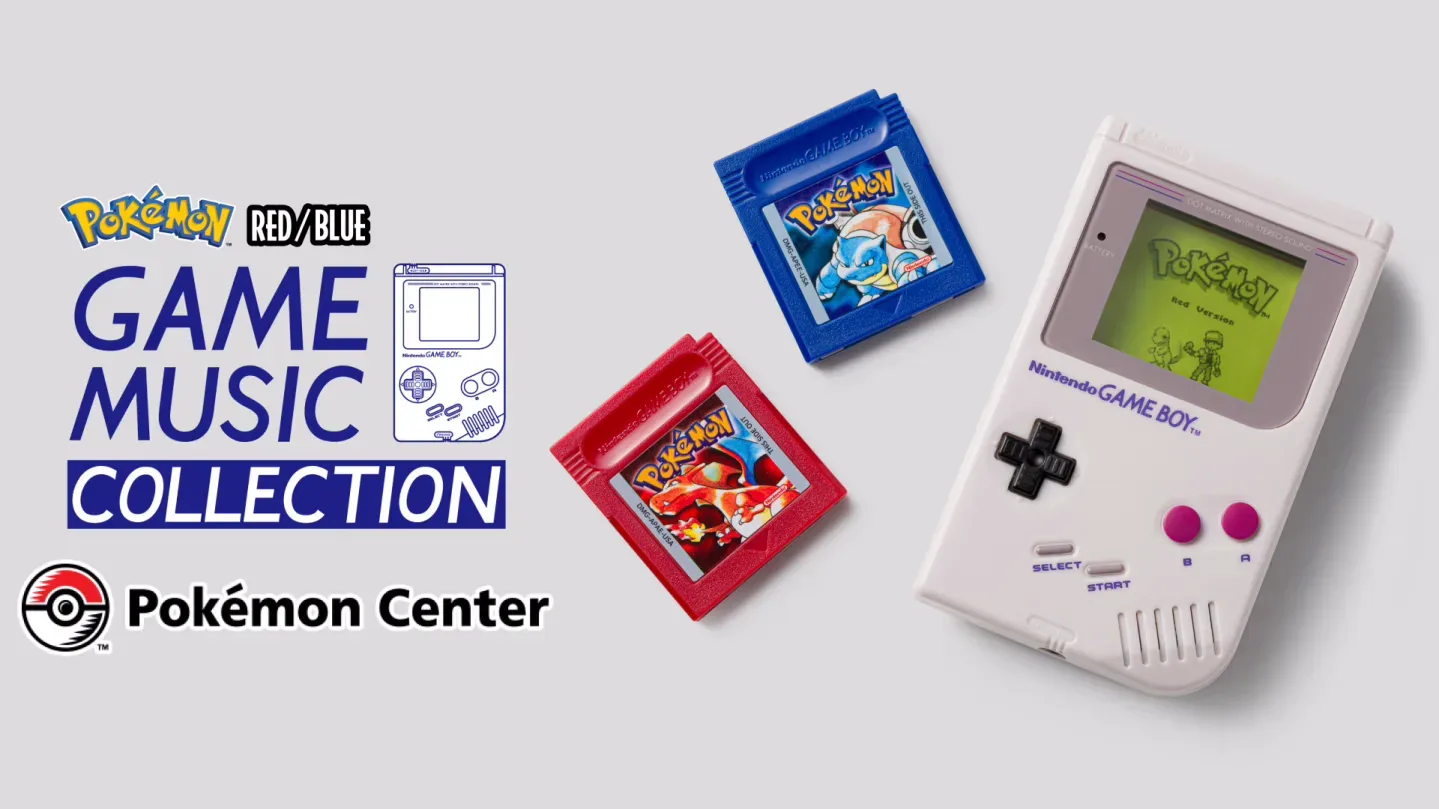
The Pokémon Red & Pokémon Blue Game Music Collection: Game Boy Jukebox is back in stock at Pokémon Center. It is a physical music-focused collectible built around the sounds of the original Kanto games, with 45 individual cartridges containing familiar melodies or sound effects from Pokémon Red and Pokémon Blue.
That cartridge count is the clearest reason this is more than a simple piece of display merchandise. The collection is structured around a selection of distinct audio moments: the title-screen music, the cue for leaving Pallet Town on the road to Viridian City, the music of Mt. Moon’s caves, and the unmistakably eerie Lavender Town theme are among the named selections. Rather than reducing the games to one emblematic tune, the jukebox spans multiple places and moods from a Kanto journey.
For collectors, the restock matters because the product is designed to make game audio tangible. Players often remember the original adventures through tiny visual sprites, routes, menus, battles, and melodies. This release isolates the audio portion of that memory in a cartridge-based format that deliberately echoes the era associated with the games.
A Kanto soundtrack in cartridge form
The word jukebox generally describes an object intended to select and play music. In this case, that idea is combined with a set of 45 cartridges. Each cartridge is associated with one melody or sound effect from the two games, turning track selection into a physical collecting and organizing experience rather than a purely digital playlist.
For more context, explore Gigi Alayah Rejects Pregnancy Rumors After Appearing With Kai Cenat at ComplexCon.
Only a handful of the included selections have been identified by name, but they show why the format suits this particular pair of games. “Title Screen” is the opening musical calling card: a brief sound that immediately signals the beginning of an adventure. “Road to Viridian City: Leaving Pallet Town” represents movement outward from the player’s starting point. “Caves of Mt. Moon” shifts the setting into an enclosed exploration area, while “Lavender Town Theme” carries the colder, stranger atmosphere for which that location is known.
Those examples also underline an important distinction. A game soundtrack is not simply background music. In a role-playing game, particular cues can become tied to specific places, transitions, and feelings. Hearing them outside the game can bring back the sense of setting even when there is no screen, battle, or map in front of the listener.
What the 45-cartridge format means
The available details state that the Game Boy Jukebox includes 45 cartridges, each holding a familiar piece of music or a sound effect. That means the collection is not described as containing 45 full games, expansions, or random trading-card-style pulls. Its cartridges are audio selections, and the appeal is rooted in recognizable sound design from Pokémon Red and Pokémon Blue.
- 45 cartridges: The collection’s stated total number of audio pieces.
- Melodies and sound effects: The set is not limited to conventional songs; it also includes game sounds.
- Kanto focus: The audio comes from the region associated with Pokémon Red and Pokémon Blue.
- Physical selection: The cartridges make the act of choosing a sound or track part of the product’s identity.
That last point is especially relevant to gaming-memorabilia collectors. A conventional soundtrack release emphasizes listening from start to finish or selecting tracks from a list. The jukebox’s cartridge format instead places the focus on individual game moments. It makes the unit of collection a particular piece of remembered audio: a location cue, a title theme, or a sound effect.
Why these specific games remain a natural fit for a nostalgia collectible
Pokémon Red and Pokémon Blue are strongly associated with a portable, cartridge-based gaming experience. A music collection that uses cartridges therefore connects its subject matter and physical form. The result is not a claim that the product recreates the original games; it is a collectible presentation centered on their soundscape.
That distinction is useful for prospective buyers. This is not presented as replacement game software, a modern remake, or a hardware announcement. It is a music collection with a themed format. Its value proposition is the recognizable selection of Kanto audio and the way that selection has been packaged.
There is also an element of curation. The named tracks cover several stages of an imaginary return trip through the games: beginning at the title screen, leaving Pallet Town, entering Mt. Moon, and arriving at Lavender Town. Those places represent sharply different tones, which suggests a collection meant to recall the breadth of the original journey rather than repeat one upbeat theme in multiple forms.
The Lavender Town inclusion is particularly notable because its theme carries a mood very different from a starting-area or travel cue. Its presence signals that the set embraces the odd and unsettling side of Kanto as well as the bright sense of departure associated with Pallet Town and Viridian City. The Mt. Moon selection similarly points toward exploration and caves, giving the audio lineup location-based texture.
Practical considerations for collectors
The key confirmed detail is straightforward: the Game Boy Jukebox is back in stock at Pokémon Center. Anyone considering it should approach it as a collectible audio product, with the 45-cartridge count and Kanto music-and-effects theme as its defining characteristics.
It is sensible to confirm the listing details at the time of purchase, especially when stock status can change. The supplied information does not specify a price, a production quantity, regional shipping terms, cartridge materials, technical playback specifications, or whether the set is numbered. Those details should not be assumed from the cartridge aesthetic alone.
Collectors who organize gaming items by platform association may also want to distinguish between a Game Boy-themed music collectible and original Game Boy software. The two are connected by the legacy of Pokémon Red and Pokémon Blue, but they serve different purposes. Original game cartridges are software; this jukebox collection is centered on the music and sound effects that helped define those games’ atmosphere.
For anyone who primarily collects by franchise rather than hardware, the release has a different appeal. The 45 cartridges let a Pokémon collection represent places and sounds as well as characters, cards, plush, or other merchandise. Audio is often one of the less visible ways games create lasting associations, and this product gives that element a dedicated physical form.
The broader appeal is memory, not just track count
Forty-five cartridges is a substantial number, but the number alone is not the whole story. The significance lies in what the cartridges represent. The title screen is a beginning. The road away from Pallet Town is a first step into the wider region. Mt. Moon evokes cave exploration. Lavender Town changes the emotional temperature. These are compact pieces of game identity.
That is why sound effects are meaningful alongside melodies. A sound effect may be short, but in game design it can be inseparable from an action, a menu, a discovery, or a location. Including both forms of audio gives the collection room to reflect the games as interactive experiences rather than treating them solely as albums.
More coverage of the restock is available here. For the product itself, the confirmed takeaway is simple: the Pokémon Red & Pokémon Blue Game Music Collection: Game Boy Jukebox has returned to stock, bringing 45 cartridge-based selections from Kanto’s classic music and sound effects back to Pokémon Center.