The original PlayStation has entered its brick-building era. LEGO Insiders can now purchase the LEGO PlayStation set for $179.99, ahead of a wider release scheduled for October 4. Early access requires membership in the free LEGO Insiders program, while the standard release will not require that membership.
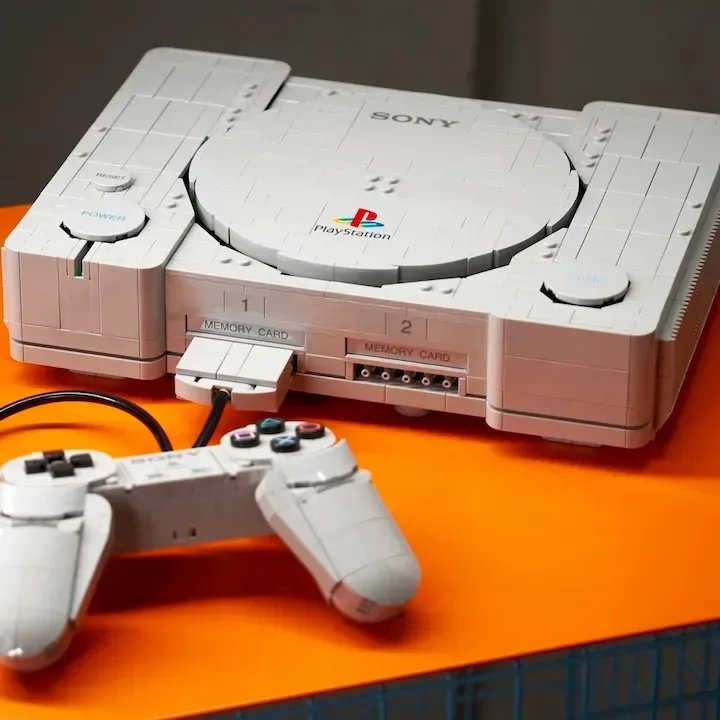
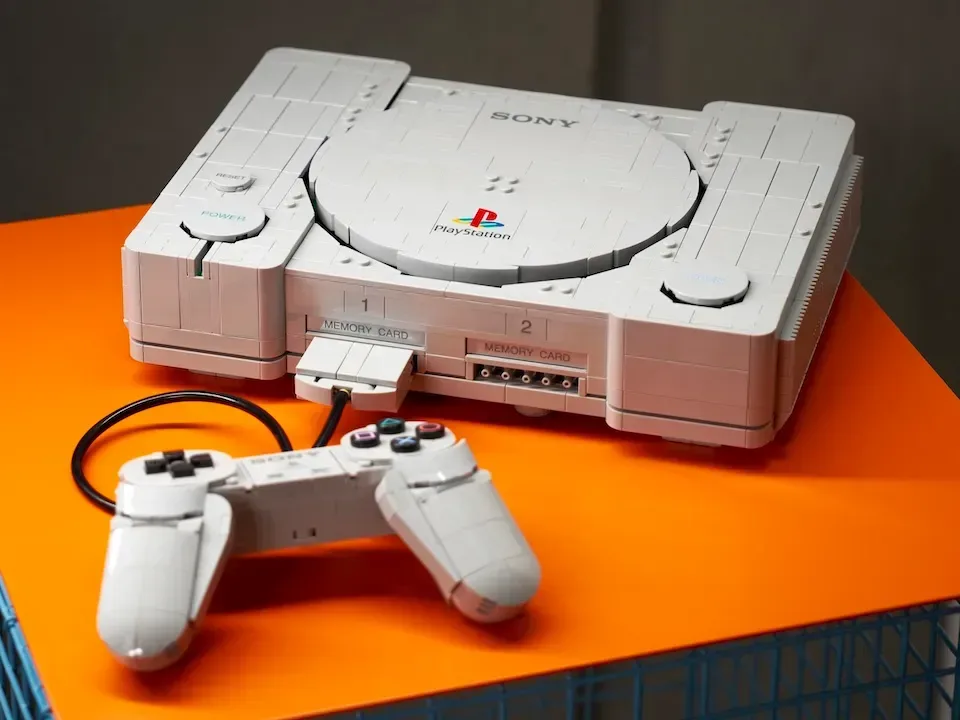
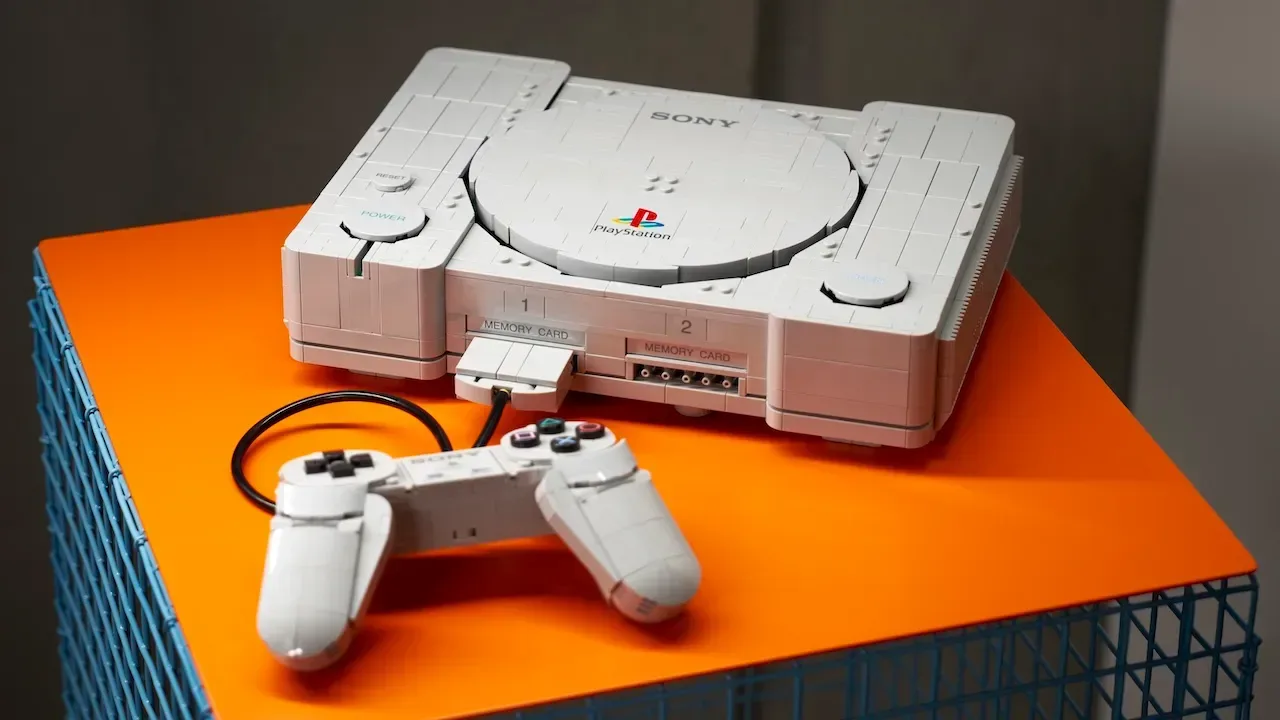
It is a display-focused recreation of Sony’s first PlayStation console at near 1:1 scale, rather than a small tribute model. The package includes a brick-built console and the original PlayStation controller design—the version without analog sticks. That distinction is a particularly deliberate bit of period detail: the original PlayStation launched in Japan in 1994 and the US in 1995, while the DualShock controller arrived three years later.
There is also an immediate extra for buyers during the Insider window: LEGO Astro Bot is included as a free gift with purchase. The Astro Bot build is also expected to be sold separately through PlayStation Direct for $24.99. Availability may be a factor for anyone weighing up whether to wait for the October 4 general release, as both the main set and the gift are described as potentially selling out.
A PlayStation model built around recognizable hardware details
The attraction of the LEGO PlayStation is not simply that it carries a famous logo. Its appeal rests on identifying the physical details of the original machine well enough that the model reads as a PlayStation even before a visitor notices the branding.
LEGO has aimed that recognition at the form of the first console: the broad, low, gray body, the circular disc-cover area, and a controller based on the original no-analog-stick pad. This is important because “original PlayStation” can mean several things depending on the audience. It can refer to the launch-era hardware, to the broader PlayStation platform, or to later revisions of the console. The controller choice makes the target especially clear. This set is recalling the early version of the machine, before the DualShock’s analog controls became a defining PlayStation image for many players.
The packaging also participates in that nostalgia. The set’s box is designed as a callback to the original PlayStation retail box. For physical collectors, that matters because the box is part of the display proposition, not merely the container that gets discarded after assembly. It links the finished LEGO object to the retail experience of the 1990s console without requiring the set itself to imitate a sealed vintage product.
That approach fits a broader pattern in gaming culture, where a piece of hardware can be remembered as much through its buttons, packaging, and controller silhouette as through the software played on it. Gaming crossovers are not limited to static collector items either; for another recent example of game brands meeting in a different format, Sonic’s Fortnite crossover turned familiar iconography into an in-game event. The LEGO PlayStation applies the same basic recognition value to a shelf display, with the console itself as the central character.
The interactive parts are more than decorative
The build includes working Power and Open buttons. Here, “working” does not mean the set powers electronics or plays games. It means the mechanisms physically change parts of the LEGO model in a way that echoes the functions of the real console.
Related coverage includes LEGO PlayStation Set Opens Early Access for Insiders With Free Astro Bot Gift.
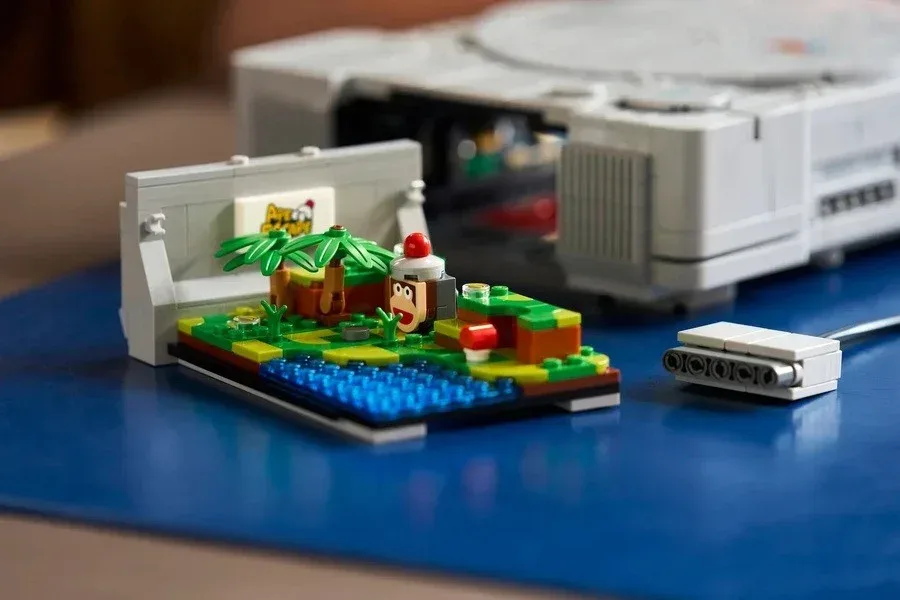
Pressing the Power button flips a green LEGO element into view beneath it, creating a visual suggestion of the console turning on. The Open button releases the disc cover. That lid then reveals the model’s biggest hidden feature: two small dioramas housed inside the console.
A diorama is a miniature three-dimensional scene arranged for viewing. Rather than leaving the disc area as an empty mechanical reference, the set uses it to place two PlayStation game nods inside the hardware. One is based on Gran Turismo, released in 1997, and the other on Ape Escape, released in 1999.
Those selections add a useful layer to the model’s timeframe. The console and controller establish the launch-era PlayStation identity, but the scenes point to games that arrived later in the system’s life. It makes the set feel less like a single frozen moment from 1994 or 1995 and more like a compact celebration of the original platform’s early years.
The dioramas can be removed and displayed separately. That gives owners a choice between presenting the PlayStation as a complete hardware replica with hidden surprises, or putting the game references forward as individual miniature displays. There is a practical tradeoff: removing them leaves an opening on each side of the main console model. Buyers who prefer a seamless console silhouette may keep them installed, while those who want several smaller display pieces can separate them.
Why Gran Turismo and Ape Escape fit the concept
The two hidden scenes do more than supply extra bricks. They connect the model to distinct parts of the original PlayStation’s game identity.
Gran Turismo is represented as a 1997 game, while Ape Escape is represented as a 1999 game. Together, they give the interior feature a varied pair of references instead of concentrating only on one type of PlayStation nostalgia. The distinction is especially helpful in a set whose exterior is deliberately hardware-first: the console can be recognized at a glance, then opened to find references to software associated with the platform.
For collectors, this creates several layers of value without changing the set’s central premise. There is the recognizable console shell, the controller recreation, the packaging callback, the functional button mechanisms, and the two removable scenes. Someone drawn mainly to the PS1 hardware can leave the model intact. Someone more interested in game-specific memorabilia can spotlight the removable inserts. Neither mode changes the fact that this is first and foremost a LEGO display set, not an operational replica console.
Astro Bot is a separate reason to pay attention to the early window
The LEGO Astro Bot gift is the other key part of the early-access offer. Astro Bot is not described as being permanently exclusive to this purchase; it will be available separately from PlayStation Direct for $24.99. Still, receiving it with the $179.99 LEGO PlayStation set may be meaningful to buyers who want both items and do not want to make a separate purchase later.
Its inclusion also creates a bridge between PlayStation’s original hardware legacy and a much newer PlayStation character. The main model looks back to the company’s first console and its early software library, while the gift shifts the focus to Astro Bot. That gives the purchase a wider PlayStation theme than a purely 1990s replica would have had.
The important caveat is availability. The early-access route offers no guarantee that either item will remain in stock, and the wider October 4 launch similarly may not be a safe option for buyers who specifically want the gift included. Anyone who wants the promotional pairing rather than only the console model has a straightforward decision: free Insider membership provides access before the general release.
What prospective buyers should know
- Price: The LEGO PlayStation costs $179.99.
- Early access: It is currently available to free LEGO Insiders members.
- General availability: The set is scheduled to become available to non-members on October 4.
- Scale and contents: It is a near-1:1 build of the original PlayStation with an original-style controller that has no analog sticks.
- Interactive features: The Power button reveals a green element, and the Open button releases the disc cover.
- Hidden displays: The disc area holds removable Gran Turismo and Ape Escape dioramas.
- Purchase bonus: LEGO Astro Bot is included as a free gift with purchase; it is also slated for separate sale through PlayStation Direct for $24.99.
At $179.99, the set is positioned as a substantial adult-oriented display piece rather than a casual impulse buy. Its strongest selling point is specificity: it does not just use PlayStation branding on a generic build. It reproduces the first console, chooses the correct early controller style, gives the buttons mechanical responses, and turns the disc compartment into a home for two game references.
For retro PlayStation fans, LEGO collectors, and anyone who appreciates gaming hardware as an object of design, that combination may be the point. It is a model of a console that once sat beneath televisions, now engineered to sit conspicuously on a shelf—with a green “power” flourish and a pair of miniature secrets under the lid.