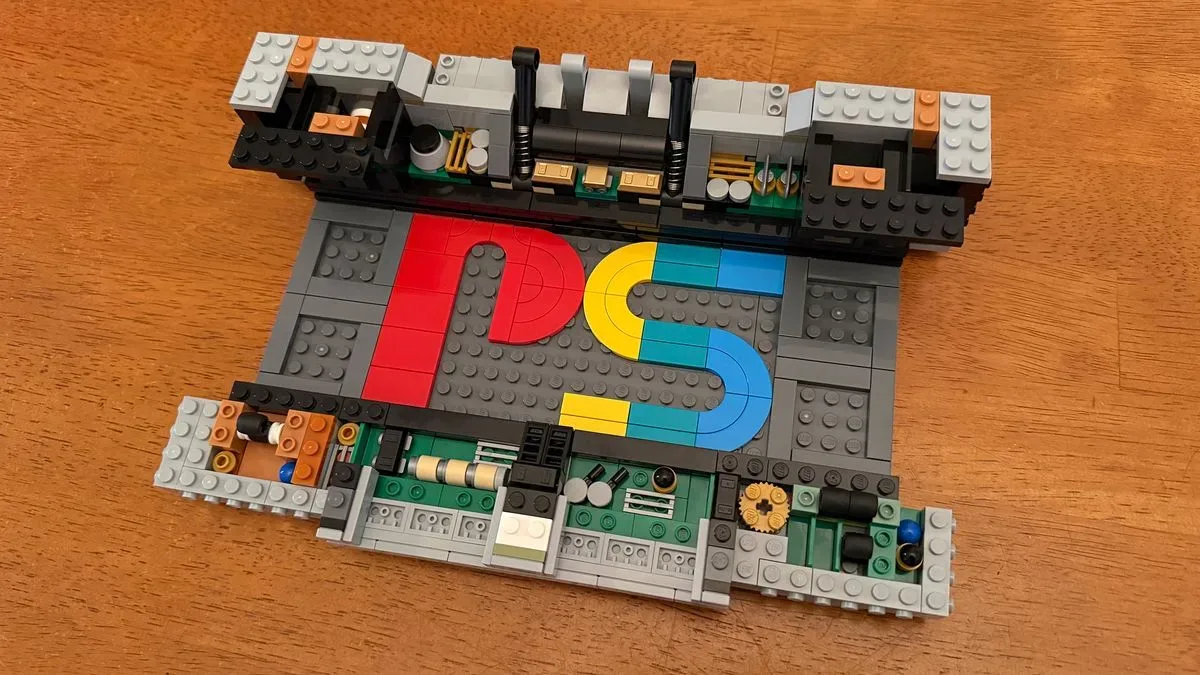
There are grander ways to mark the legacy of the original PlayStation. A museum exhibit, perhaps. A lovingly restored CRT television humming in the corner. A tiny plastic monkey wearing a helmet and fleeing from a net, if the universe has any sense of justice. LEGO has instead chosen a route that is both more expensive and much easier to display on a shelf: a 1,911-piece recreation of Sony’s first home console.
The LEGO Sony PlayStation is scheduled for LEGO Insider ordering on October 1, followed by general orders on October 4. It is priced at €159.99 / $179.99 and classified as an 18+ set. That positioning is not subtle. This is a model aimed at adults who remember the original grey box arriving in the mid-1990s, and who may now possess enough disposable income to construct a tribute to the machine that once made loading screens feel like a personality trait.
For retro-gaming collectors, it sits in an appealingly strange space. It is neither an original console nor a functional miniature system. It cannot run discs, produce boot-up music or reveal whether a memory card has been left at a friend’s house since 1999. What it can do is turn one of gaming’s most recognisable industrial designs into a buildable display object, complete with several tactile details and nods to games closely associated with the platform.
A console built for the shelf, not the television
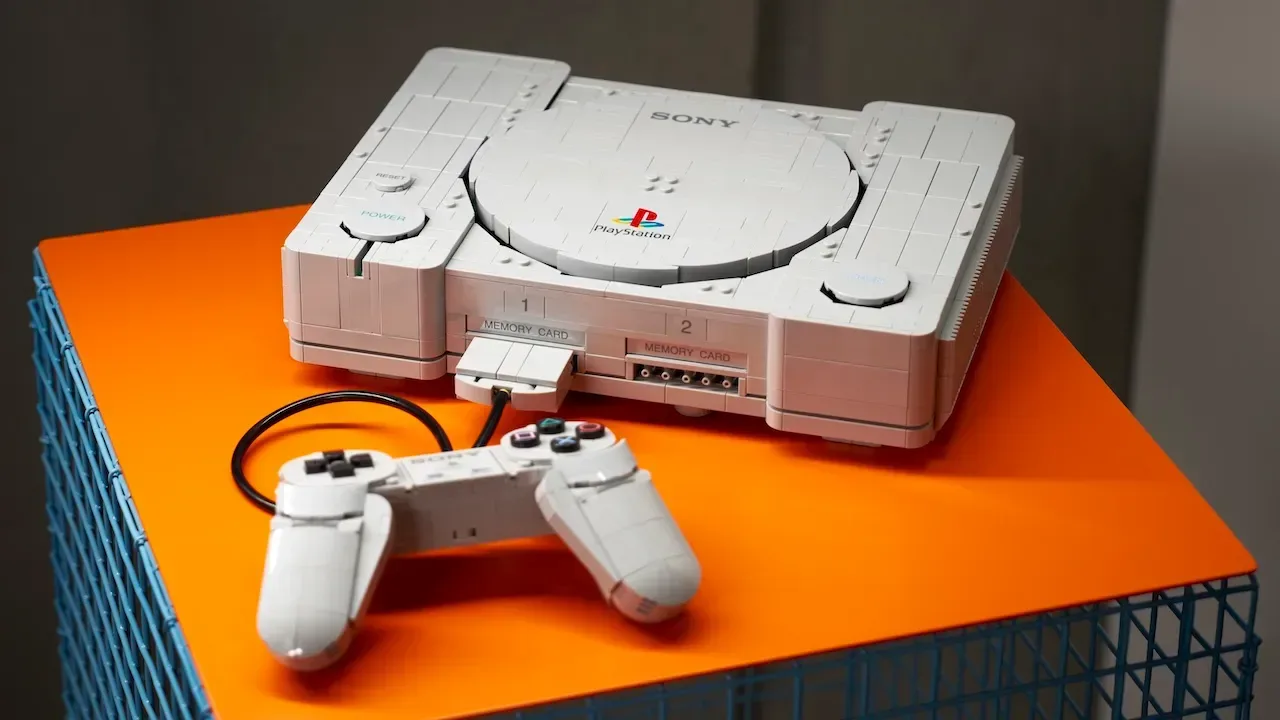
The completed LEGO PlayStation measures 10.5 inches wide. That puts it close to the footprint of the first PlayStation, the console that originally launched in December 1994 and helped reshape the home-console market. LEGO has reproduced the familiar low-slung form, the circular disc lid, the front controller ports and the subdued grey look that could make a living-room entertainment centre feel vaguely like medical equipment—in the most nostalgic possible way.
The set includes a brick-built version of the original PlayStation controller, specifically the pre-DualShock design. That is a worthwhile detail for anyone who remembers that the first PlayStation pad did not yet have analogue sticks. Sony’s controller history is easy to flatten in hindsight, but the early pad represented a very specific moment before the DualShock became the dominant image of PlayStation control.
The console model also has interactive Power and Eject buttons, along with a flip-top disc cover. These are small mechanical touches, but they matter to a display set based on hardware. The original machine was full of physical rituals: press a button, lift the lid, place a disc, close it carefully, and hope the system is in the mood to cooperate. A static grey rectangle would have communicated the silhouette. Movable components give the LEGO version more of the object’s character.
The packaging is also designed as a nostalgia play. Its artwork recreates the look of the original console’s first Western release box. For collectors who appreciate packaging almost as much as the item inside it—which is to say, collectors who have absolutely stared at a box corner and whispered “near mint”—that choice makes this feel more deliberately archival than a generic LEGO presentation.
Gran Turismo gets the garage; Ape Escape gets the feelings
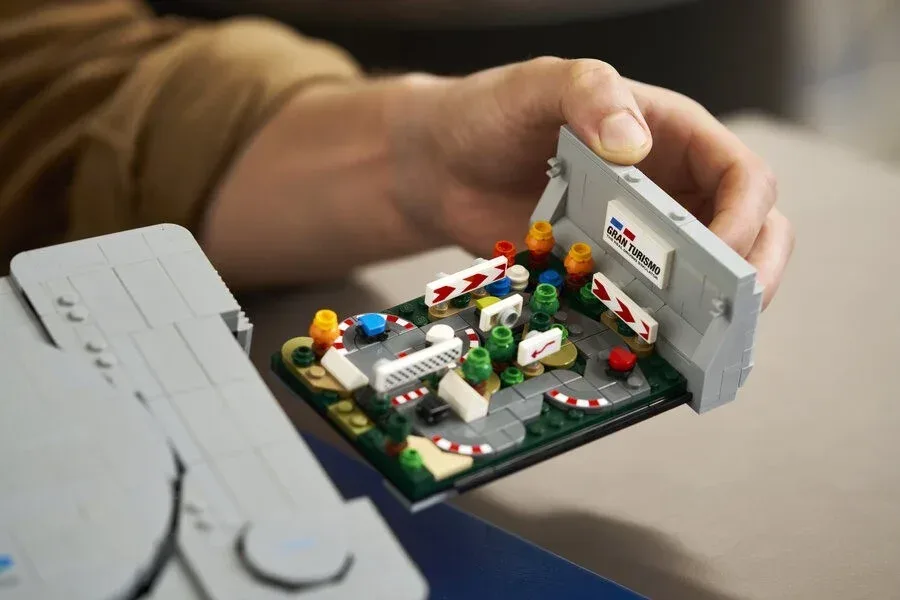
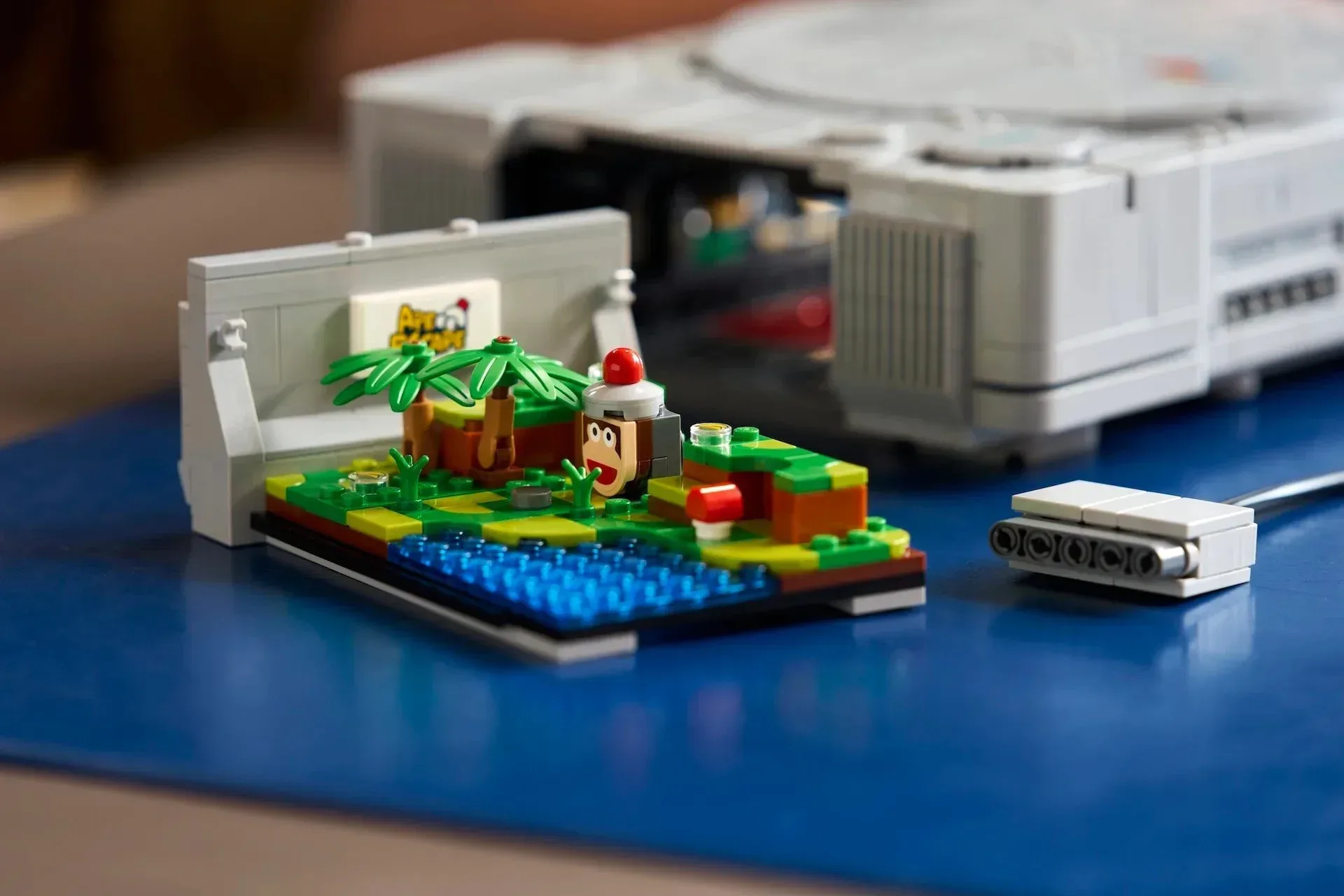
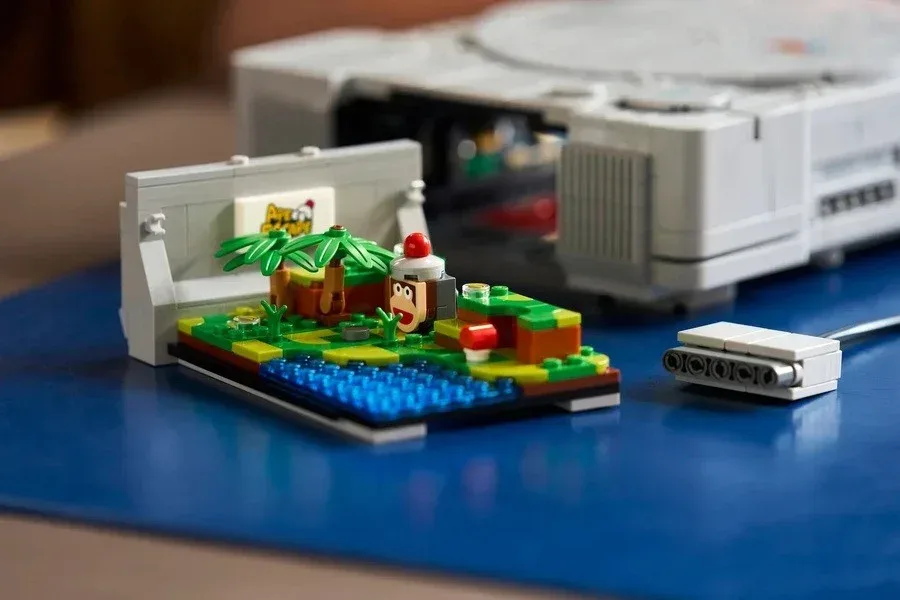
The biggest gaming-specific flourish is a pair of interchangeable dioramas. One represents Gran Turismo, the polished racing series that became synonymous with PlayStation’s drive toward automotive detail and console-scale simulation. The other is based on Ape Escape, the colourful platformer about catching mischievous apes with an expanding set of gadgets.
Those are very different selections, and that contrast is part of the appeal. Gran Turismo recalls the PlayStation as a destination for serious-looking racing machinery, precise handling ambitions and cars that deserved to be examined from several angles. Ape Escape represents the platform’s more mischievous side: bright worlds, offbeat ideas and an entire mission structure built around pursuing monkeys that had no intention of making the process dignified.
There is a particularly funny bit of historical friction in the controller choice. The LEGO set recreates the original non-DualShock pad, while Ape Escape is famously tied to the DualShock controller and its analogue sticks. The game was built around that control scheme rather than merely treating it as an optional luxury. So the display presents a tiny monument to an era-spanning platform with one hand holding its earliest controller and the other waving a little flag for one of the games that helped define what came next. It is not wrong. It is just wonderfully, deeply PlayStation.
For fans of Ape Escape, the diorama is likely to prompt a familiar reaction: delight followed by a hopeful glance toward the door, waiting for a new game that may or may not ever arrive. The series has been absent for a long time despite continued affection for its inventive platforming, playful presentation and distinctive use of analogue control. This LEGO cameo is not evidence of a revival, remake or new entry. It is simply a charming official acknowledgement that the monkey-catching chaos still has a place in PlayStation’s history.
And, to be fair, a brick-built Ape Escape vignette may be the closest thing to a new instalment available at the moment. It is not the comeback anyone would have sketched on a wish list, unless that wish list was written by a minifigure with unusually strong feelings about injection-moulded plastic. But it is an affectionate reminder of a series many players have not forgotten.
Another entry in LEGO’s hardware museum
The PlayStation set joins a growing group of LEGO creations based on classic gaming hardware. The range already includes an NES, a Game Boy, an Atari 2600 and a Sega Mega Drive controller. The shared idea is straightforward: these devices were not just machines people used; they became visual symbols of particular generations of games. Their buttons, proportions and even their colour palettes can trigger memories before a single game is mentioned.
LEGO is especially well suited to that kind of object nostalgia. The medium turns familiar consumer electronics into visible construction projects. The finished display says, “I remember this,” while the build itself says, “I was willing to sort 1,911 pieces to prove it.” The latter is arguably the more powerful declaration.
That does not mean every prospective buyer needs to sprint toward an October order window. At €159.99 / $179.99, this is a premium collectible, and its value will depend heavily on how much a person cares about the original PlayStation as an object. Someone seeking an inexpensive way to play older games will not find it here. Someone building a retro game room, preserving a PlayStation-focused display or collecting unusual pieces of gaming memorabilia may see it very differently.
It is also sensible to resist treating any modern collectible as a guaranteed investment. Some earlier prestige LEGO releases have later been retired and have appeared on the resale market at substantially higher prices. That pattern can make a set feel urgent, but it does not establish what will happen with this particular PlayStation model. Retirement timing, production numbers, demand, condition and the unpredictable mood of collectors all affect the aftermarket. Buy it because the model belongs on your shelf, not because you have calculated your future fortune in grey bricks.
What buyers should know before the order dates
- Set: LEGO Sony PlayStation
- Piece count: 1,911 pieces
- Age rating: 18+
- Finished width: 10.5 inches
- Price: €159.99 / $179.99
- LEGO Insider ordering: October 1
- General orders: October 4
- Included features: original-style non-DualShock controller replica, functioning-style Power and Eject buttons, flip-top disc cover, and interchangeable Gran Turismo and Ape Escape dioramas
Collectors considering the set should also think about where it will live after construction. At 10.5 inches wide, it is not enormous, but a finished LEGO console has more visual presence than its dimensions suggest, particularly once the controller and diorama elements are arranged around it. A shelf with reasonable depth, a stable surface and an absence of curious pets or relatives are all helpful accessories. LEGO does not list “defensive perimeter” in the parts count, but it may be implied.
For a broader look at why seemingly modest collectibles can become emotionally complicated acquisitions, see The Collector’s Five Stages of Buying One Small Thing. The PlayStation model may be made of bricks, but the familiar collecting calculus remains: affection, space, budget, timing and the increasingly suspicious feeling that one more shelf might solve everything.
The LEGO PlayStation ultimately works because it does more than reproduce a console shell. It gathers several layers of PlayStation memory into one display: the early controller, the lid-opening ritual, the first Western box art, precision racing and a cameo from gaming’s most conspicuously uncaught primates. It cannot provide a new Ape Escape, and no one should confuse it with that. But as a physical celebration of an era, it seems determined to make the shelf feel a little more 1994.