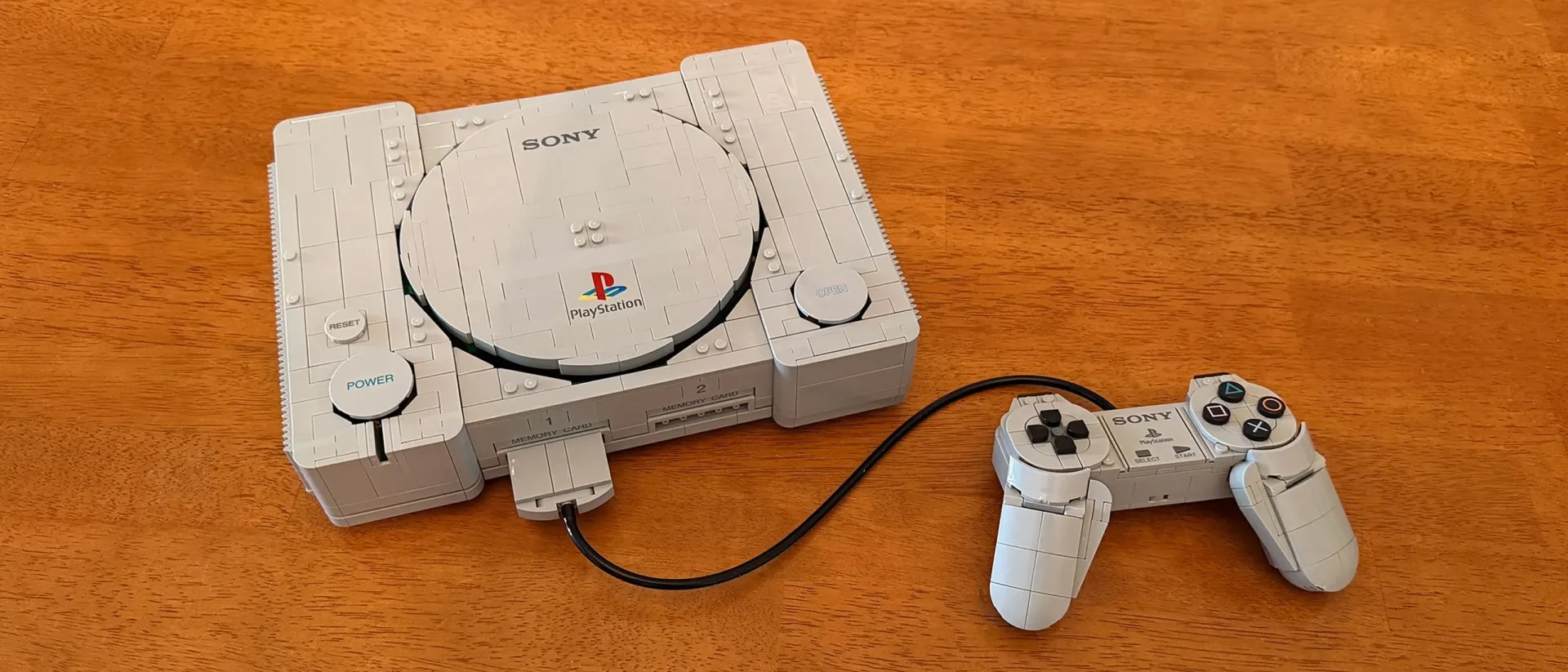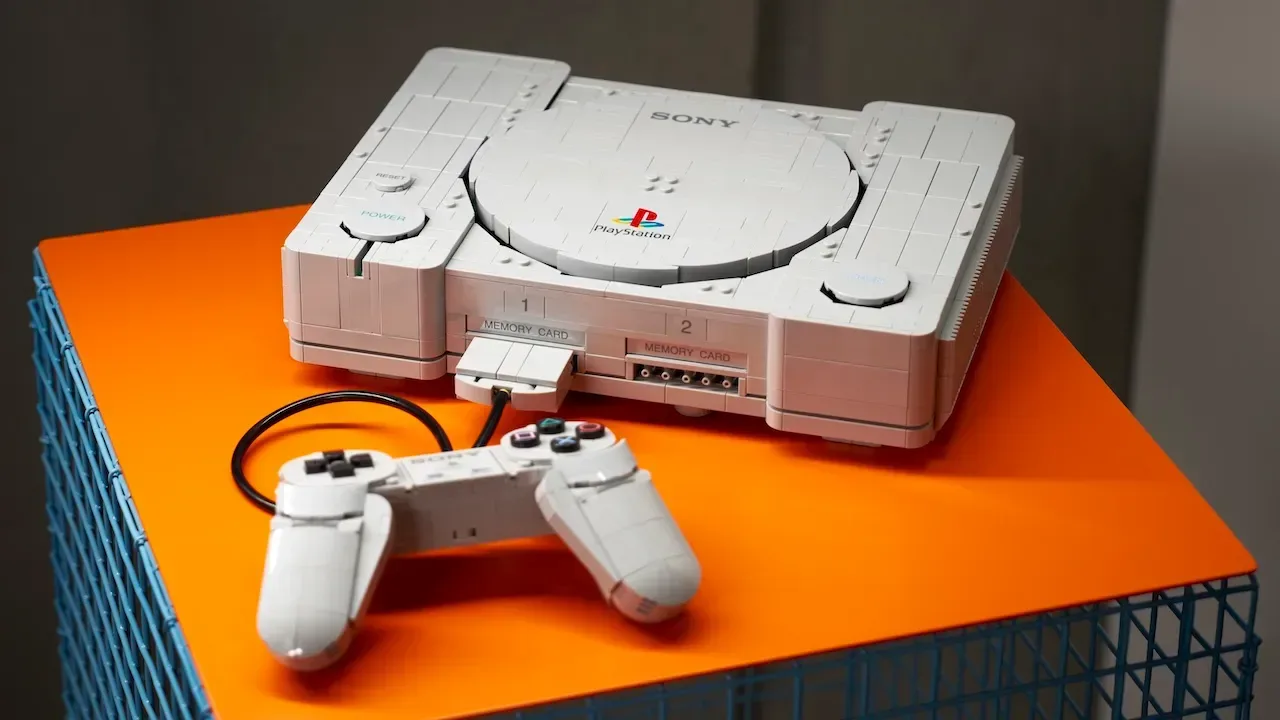
Lego is putting the original PlayStation on the shelf in brick form with set 72306, a 1,911-piece display model aimed at adult builders and retro-game fans. It is priced at $179.99 / £139.99, carries an 18+ age recommendation, and takes the unusual route of recreating the console at an almost 1:1 scale rather than shrinking it into a stylized desk ornament.
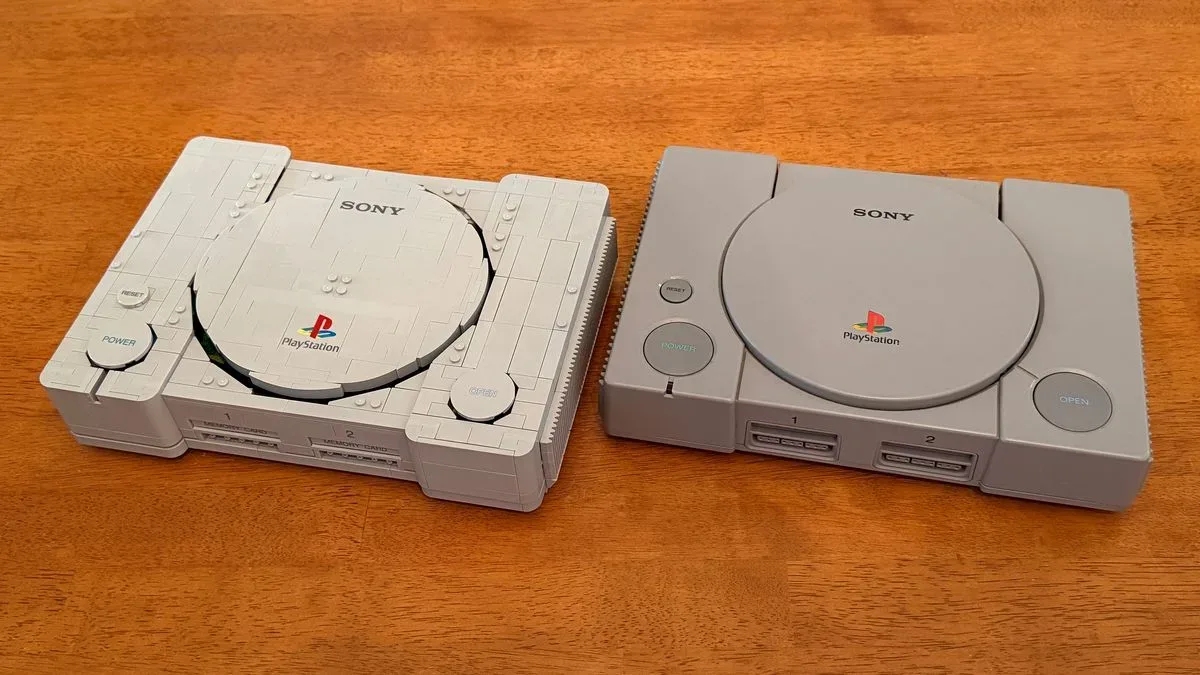
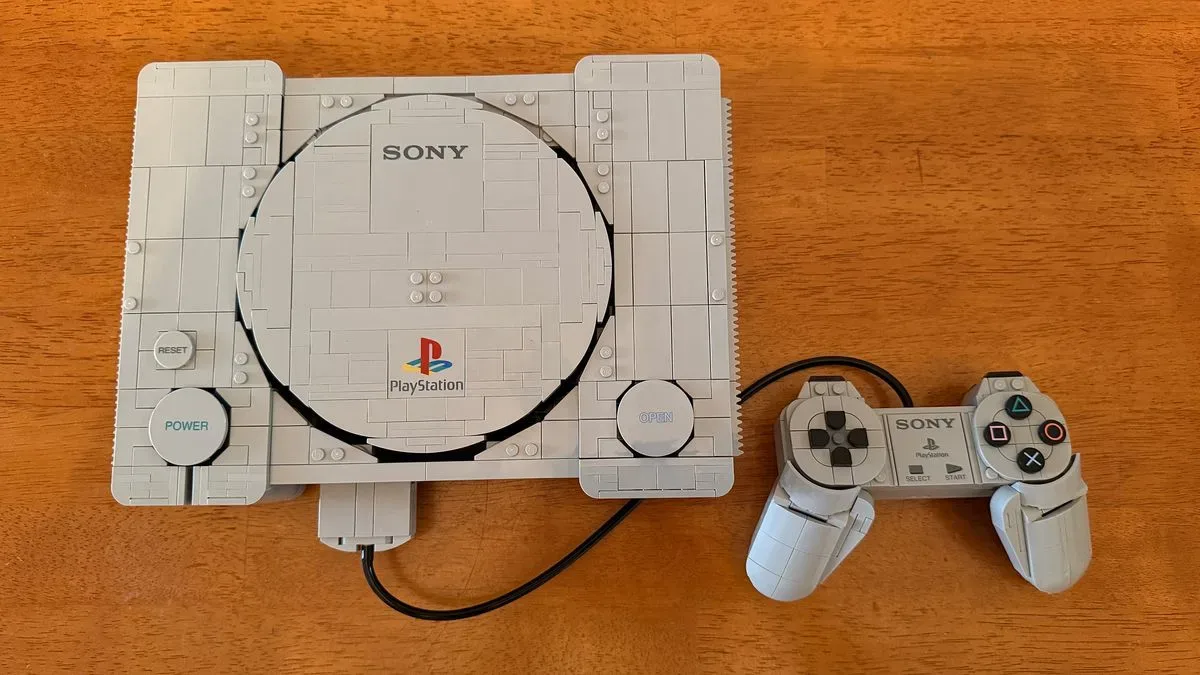
That scale is the point. The finished model measures approximately 2.5 inches (6cm) high, 10.5 inches (26cm) wide and 7.5 inches (19cm) deep. Its proportions are intended to closely match the gray original, while its matching DualShock controller plugs into the front controller ports. This is not a functioning games machine, of course. Its appeal is as a construction project and an interactive physical tribute to PlayStation hardware design.
For a brand that has already tackled game-console nostalgia, Lego’s decision to preserve the PlayStation’s size and unusually curved silhouette makes this a notably ambitious replica. The earlier Lego Sega Genesis Console, set 40926, used a reduced scale. Set 72306 instead prioritizes the familiar outline of the PlayStation, its surface ridges, front ports, rear connections and opening disc lid. The approach makes the price easier to understand for a buyer interested in a display piece, but it also makes the purchase decision more demanding: this is firmly a premium collectible rather than an impulse build.
What comes in the Lego PlayStation set?
- Set number: 72306
- Piece count: 1,911
- Recommended age: 18+
- Price: $179.99 / £139.99
- Dimensions: 2.5 x 10.5 x 7.5 inches (6 x 26 x 19cm)
- Minifigures: None
- Estimated build time: roughly nine to 10 hours
The absence of minifigures is worth stating plainly. Lego has put the parts budget into the console, the controller, an internal decorative layer and miniature scenes rather than character figures. For collectors, that fits the product’s core identity: the PlayStation itself is the star.
The build hides more than a gray box
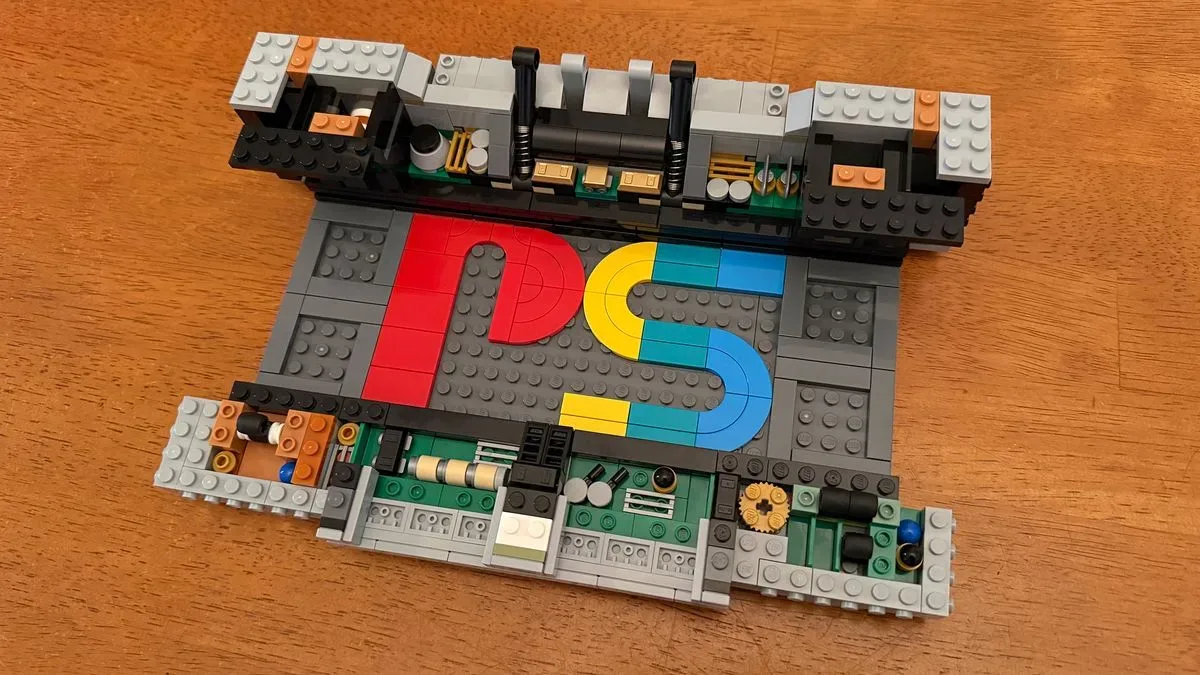
A large share of the visible model is necessarily gray, because that is the defining finish of the original hardware. Yet the build reportedly avoids becoming a repetitive stack of similarly colored bricks by building visual surprises into the base. Early construction includes a large PlayStation symbol in the original logo colors. Around it sits a green layer with gold and silver elements arranged to evoke a circuit board.
That section is decorative rather than electronic, but it matters as a piece of model-making. A circuit board is the assembly within electronics that connects components and carries electrical signals. Here, Lego uses color, layering and small parts to suggest the internal identity of a console that is otherwise a sealed gray plastic object. The effect gives owners a reason to appreciate the build process, rather than merely racing toward the exterior shell.
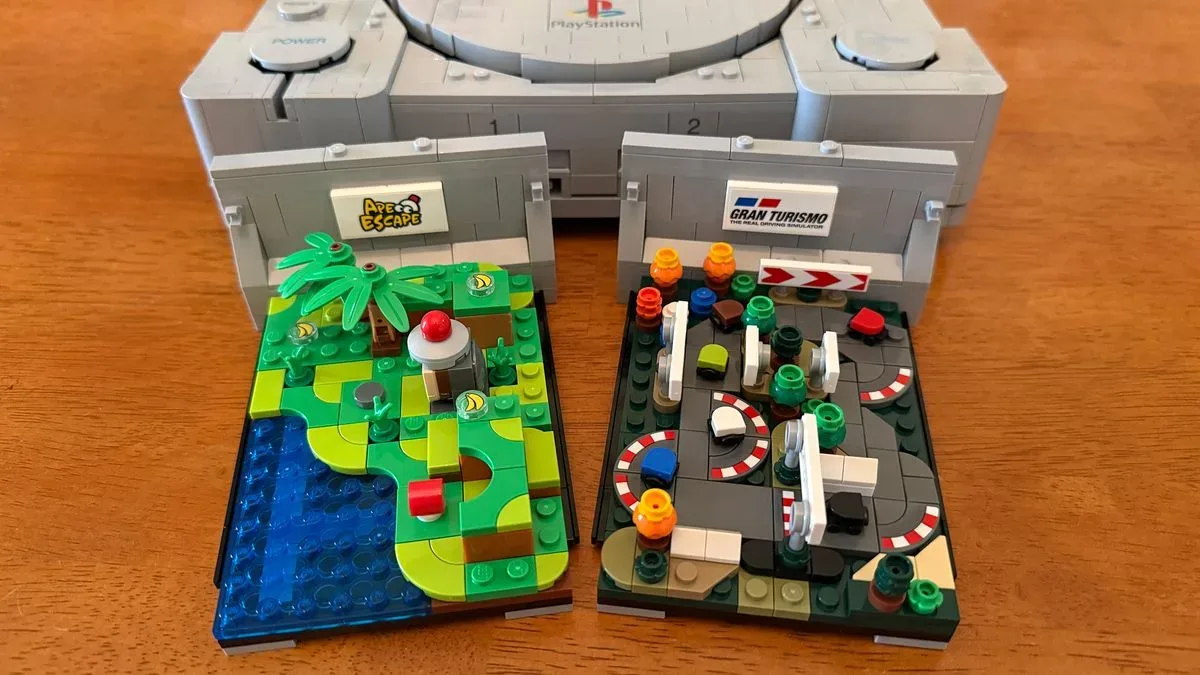
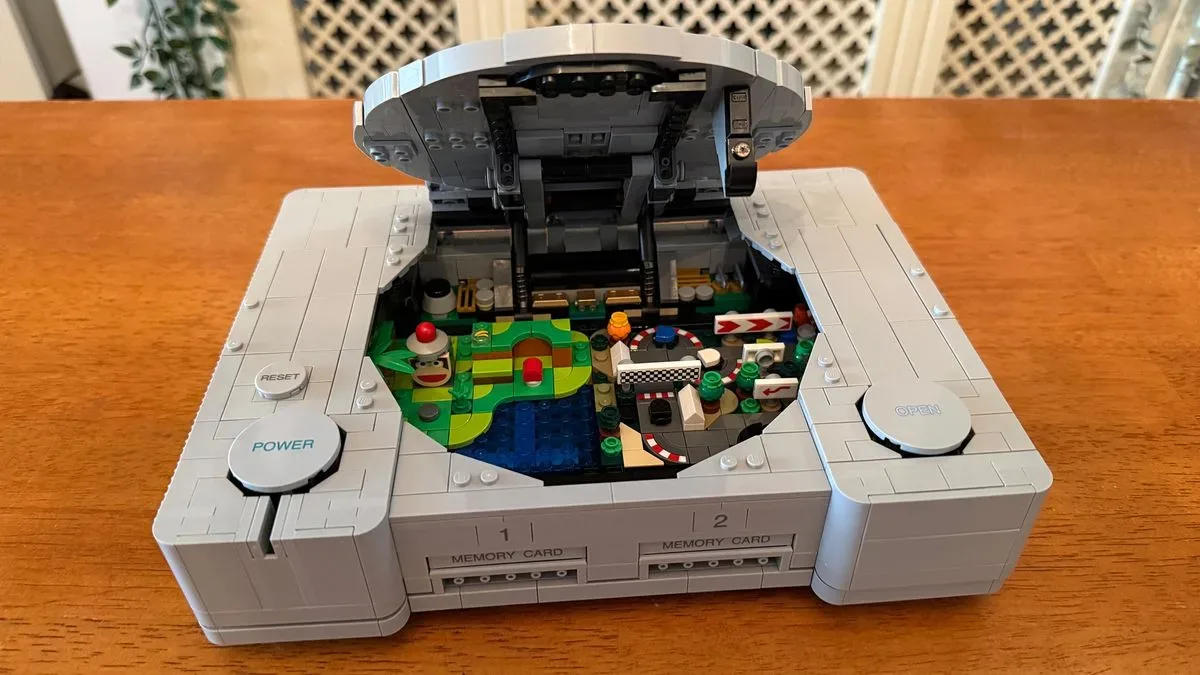
The other major hidden features are two removable internal dioramas based on Gran Turismo and Ape Escape. A diorama is a compact three-dimensional scene built to present a specific setting or moment. These scenes can be slid out after pulling the console’s sides outward, making them accessible for closer display rather than permanently burying them inside the model.
The Gran Turismo miniature uses minifigure roller skates as the basis for its cars, topped with colored tiles. It is the kind of part reuse that Lego builders tend to appreciate: an object made for one scale and purpose is repurposed into a recognizable miniature vehicle. The Ape Escape scene includes a character with interchangeable red and blue helmets, plus a small storage box within the scenery for the spare piece.
Related coverage includes Lego PlayStation 72306 Recreates Sony's Original Console at Near Full Scale.
Those details give the set a broader remit than hardware replication. They acknowledge software closely associated with the early PlayStation era without requiring the exterior to become crowded with game references. Buyers who primarily want a faithful console can keep the scenes inside; buyers who want a more overt gaming display can remove them.
A premium model that favors printed detail
Stickers can be a flashpoint in high-priced Lego sets, particularly when a model relies on labels or logos that could be misaligned. Set 72306 uses 15 small stickers, chiefly in the miniature interior scenes. The prominent external details—including buttons and logos—are printed pieces instead. That is a meaningful distinction for a display model: printed parts maintain their alignment during building and are less dependent on the builder’s hand placement.
There are still delicate portions. The dioramas use many small elements, and the mechanisms demand more concentration than a basic decorative build. The supplied instructions are described as clear, with additional top-down views at key stages to help verify part placement. That extra perspective can be especially useful on a build where a misplaced pivot or cushion may affect a later moving feature.
Construction is divided across 14 bags, allowing sensible stopping points for anyone who does not want to complete a nearly 2,000-piece project in one sitting. The reported pace was about eight hours for the console and another hour for the controller, broadly aligning with the nine- to 10-hour estimate. That makes it a project for several evenings, rather than a quick collectible to assemble between matches.
The mechanical centerpiece is the disc lid
The defining feature is not just the model’s scale but its moving controls. The top Power and Open buttons operate through pivots and rubber cushions. In Lego terms, a pivot is a joint that lets an assembly rotate around a fixed point; it is how the set translates a push on a button into another motion elsewhere in the console body. The rubber cushions provide resistance and return behavior, helping the mechanisms feel more like controls than static brick decorations.
Pressing Power raises a luminous rod through a slot in front of the button to imitate an illuminated indicator light. Pressing Open causes the disc-tray lid to swing upward. The lid locks back into place when closed. These are small actions, but they give the piece a physical performance that a conventional display model cannot offer.
That interactivity also brings a practical limitation. The buttons can jam in their housings if pushed too forcefully. They can be corrected, but careful operation is advisable. This is a model with moving parts, not a toy designed to withstand rough handling. Anyone planning to display it in a busy communal area, or let younger visitors repeatedly test the lid, should account for that distinction.
The exterior fidelity extends beyond the moving top panel. The rear reproduces labels and shapes associated with the AC In, AV Multi Out and Serial I/O connections. The front includes controller ports for the brick-built DualShock, while the underside carries four correctly positioned rubber-like feet. These are the sort of details unlikely to be noticed across a room, but they reinforce the set’s near full-scale premise when viewed up close or compared with original hardware.
Who should consider Lego PlayStation 72306?
This set makes its strongest case to someone who has a personal connection to the original PlayStation and wants an object that represents more than a generic “retro gaming” aesthetic. It is designed to reward close inspection: the internal PlayStation logo, circuit-board styling, removable game scenes, plug-in controller, rear ports and working controls all add layers beyond the initial silhouette.
It also suits builders who value engineering within a display model. The opening lid and Power indicator are not essential to reproducing the console’s shape, but they create a reason to interact with the finished build after the final brick is placed. That is an important part of the value proposition at $179.99 / £139.99, since the set is competing as both a construction experience and a shelf piece.
For more recent context around the PlayStation brand, there are also ongoing questions surrounding its modern hardware strategy, including reported developments involving Sony XR patents and PSVR 2. Lego PlayStation 72306 looks in the opposite direction: toward the instantly recognizable physical design that helped define Sony’s first console identity.
Reasons to pause before buying
The cost is the clearest barrier. At $179.99 / £139.99, buyers should be confident they want both the construction process and a sizable display item. A person only looking for an inexpensive nod to game history may be better served by Lego’s smaller Game Boy set, 72046, or the Sega Genesis Console.
It is likewise not the best pick for a builder seeking a fast, simple assembly. There are more than 1,900 pieces, fine-detail dioramas, 15 stickers and mechanical assemblies where care matters. The modular bag structure helps manage the commitment, but it does not make the project lightweight.
There is also a collecting consideration: the emphasis on accurate scale means buyers should measure their shelf space rather than assume a “Lego console” will be compact. At 26cm wide, plus a separate controller, it is a prominent display. The good news is that its low height should make it easier to place beneath shelves than some taller display builds.
Assessment: an unusually complete physical tribute
The set’s reported scoring reflects its priorities: 4.5/5 for build experience, 3.5/5 for accessibility, 4.5/5 for instruction quality and 5/5 for extra features. The slightly lower accessibility mark fits the fiddly miniature work and moving assemblies, while the maximum feature score is driven by the removable dioramas and functional Power and Open controls.
Lego PlayStation 72306 succeeds because it does not rely on nostalgia alone. Its nearly full-size form makes the original machine immediately legible, while the interior scenes and mechanisms reward closer attention. The premium price and careful handling requirements mean it will not suit every collector, but its detailed hardware references and real moving functions make it a particularly convincing brick-built homage to the first PlayStation.