A substantial Yankees-focused memorabilia auction is giving collectors a chance to chase a wide spread of eras without having to build the hunt one item at a time. The sale, which is in the second of three sessions and is scheduled to close November 1, contains more than 100 pieces from Michael Raymond’s Yankees personal collection. Raymond is known as New York Mike within collecting circles.
The material ranges from vintage baseball cards to modern, serial-numbered autograph cards and physical memorabilia. Aaron Judge is especially well represented, while Derek Jeter, Mariano Rivera, Andy Pettitte, Mickey Mantle, Roger Maris, Billy Martin and broadcaster Mel Allen all appear among the named highlights. For collectors, that mix is the point: it is not merely a card auction and not solely a signed-baseball auction. It is a concentrated collection of Yankees history presented through multiple formats.
Collectors looking for another summary of the sale’s broader Yankees lineup can find an auction overview here. As always with a multi-lot event, though, the meaningful differences are in the particulars: the edition size, the autograph type, the authentication, the card grade, and the historical connection behind a signed item.
Aaron Judge leads the modern-card side
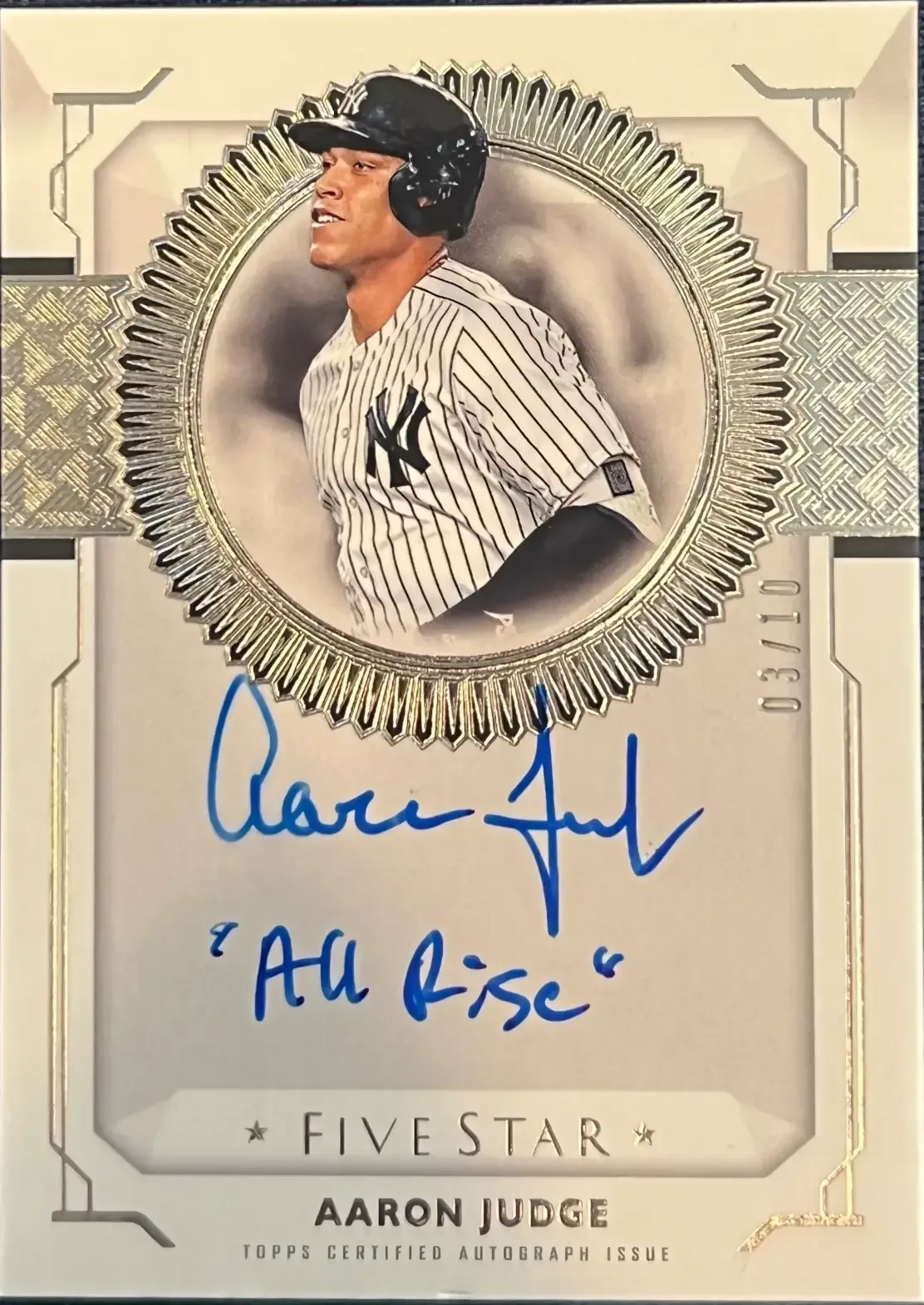
The most immediately recognizable modern centerpiece is a 2019 Topps Five Star Aaron Judge autograph numbered 3/10, bearing the “All Rise” inscription. The phrase plays on Judge’s surname and has become a notable addition on selected signed pieces. An inscription can matter because it differentiates an autograph from a more routine signature, even when both items feature the same player and product family.
For more context, explore Street Fighter’s Mid-Credits Scene Puts Sagat on the Board for a Possible Sequel.
Reported prior sales for this particular /10 variation reached $650 and $950 in 2023. A more recent public sale of a Judge autograph carrying the same “All Rise” inscription reached $1,225. Those figures offer context, not a guaranteed auction result. Comparable sales are useful reference points, but a collector should avoid treating them as a fixed valuation. Differences in card design, serial number, grade, inscription placement, authentication and the precise circumstances of each sale can all influence bidding.
That caution is particularly useful with low-numbered sports cards. A notation such as /10 means a card is one of ten copies in that numbered version. It establishes a firm production ceiling, but scarcity alone does not settle demand. The player, set, autograph quality and the appeal of the individual parallel remain important.
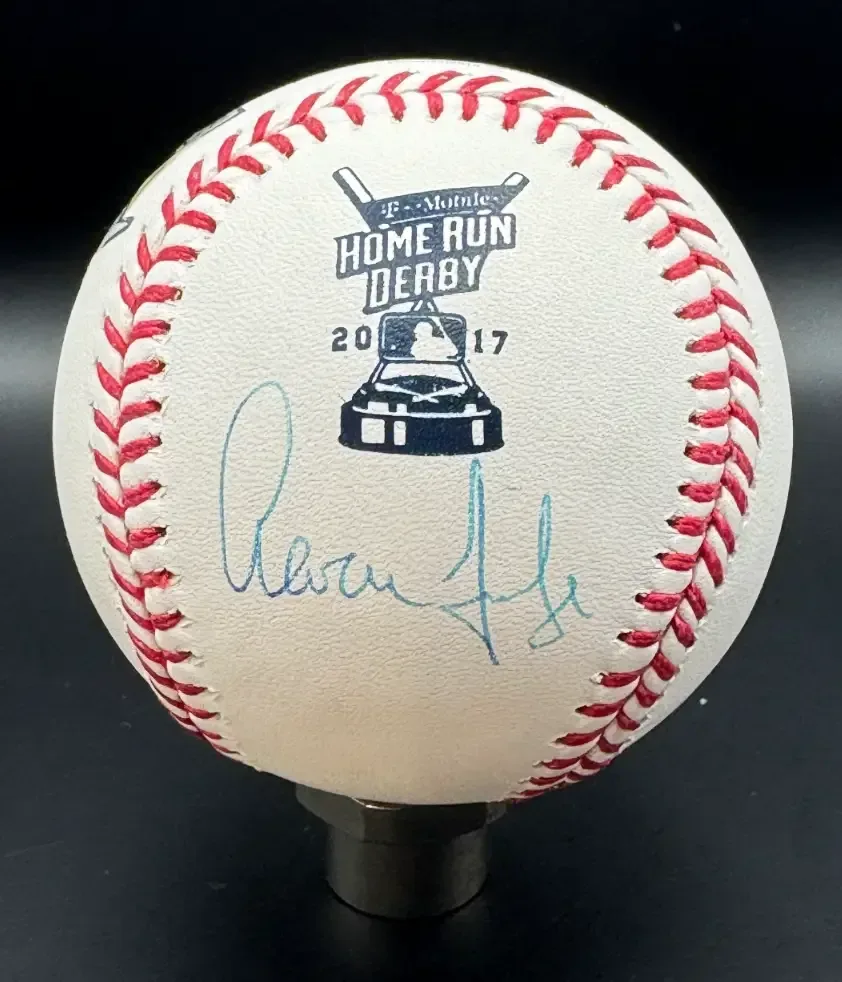
Judge’s 2017 Home Run Derby is also represented by a signed baseball connected to his rookie-year Derby victory. The performance included several home runs measured beyond 500 feet, giving the ball a specific event association rather than simply being another signed Judge baseball. The most recently cited public sale for a signed Judge ball from that Derby was $415 in November 2023. That sale is a historical comparison rather than a prediction, particularly because event-specific baseballs may not come to market frequently.
Related coverage includes Yankees Memorabilia Auction Features Judge, Jeter, Mantle and More.
Rookie-era cards offer several collecting lanes
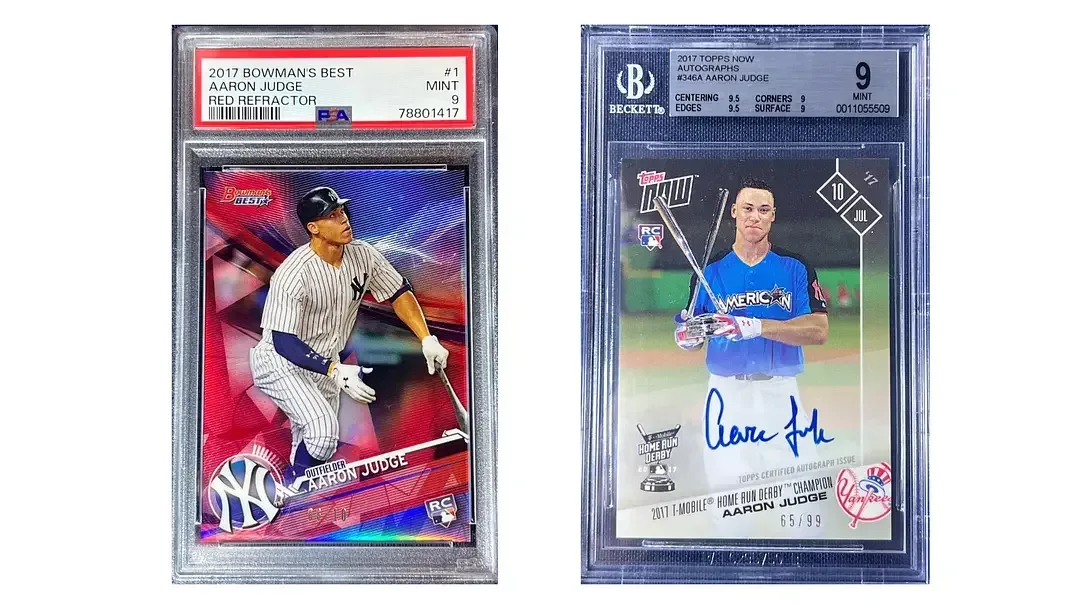
The Judge selection also includes a 2017 Bowman’s Best Red Refractor, described in the lot information as a PSA 9, alongside a 2017 Topps Now Home Run Derby Champion autograph numbered /99 that received a Beckett 9. The source material labels the Bowman’s Best card as a /5 in one place but identifies it as a /10 in its accompanying description; prospective bidders should verify the auction listing’s specific serial numbering before bidding.
A refractor is a card variation known for its reflective finish. Color parallels such as Red Refractors commonly come with a limited print run, though the exact numbering must always be checked on the individual card or listing. Meanwhile, grading companies assign numerical assessments to a card’s condition. A PSA 9 or Beckett 9 identifies a high-grade card, but the labels come from different grading services and should not be assumed to mean perfectly identical standards.
Also included are several Judge Throwback Thursday cards and a 2017 Five Star Silver Signatures autograph numbered /50. Together, those choices give a buyer distinct approaches to the same player: a rookie-era refractor, a Home Run Derby-themed signed card, a premium Five Star autograph, or a limited Silver Signatures issue. That variety may be more useful than a collection composed entirely of one product, especially for someone trying to build a coherent Judge display rather than simply pursue the lowest serial number.
Derek Jeter collectors have cards, paper and a bat to consider
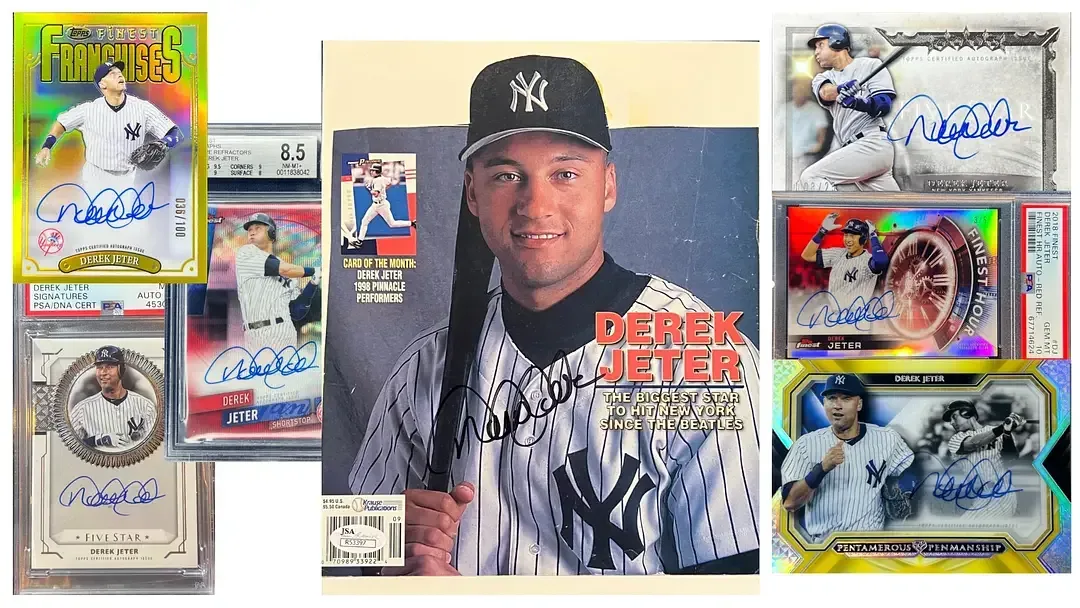
Derek Jeter is another major focus. The auction includes six autographed Jeter cards, a signed bat, and a 1998 magazine cover that has been authenticated by JSA. One standout card is a 2018 Topps Finest Red Refractor Finest Hours autograph graded PSA 10.
The Jeter offerings illustrate how “autograph collecting” can mean very different things depending on the object. A signed card combines the player’s autograph with a manufactured, often numbered collectible. A signed bat has stronger display presence and an obvious connection to baseball equipment. A signed magazine cover is a paper collectible rooted in a specific piece of period media. None is automatically superior; the best fit depends on whether a collector prizes card design, physical scale, era-specific context or a particular form of authentication.
The PSA 10 designation on the Finest card is worth parsing. In basic terms, it is the highest numeric grade used by PSA, a third-party grading company. A graded card is enclosed in a tamper-evident holder, often called a slab, with its identity and grade documented on the label. Grading can help standardize condition discussions, but it does not eliminate the need to inspect the item description and understand exactly what is being graded or authenticated.
Autographed memorabilia stretches the auction beyond cards
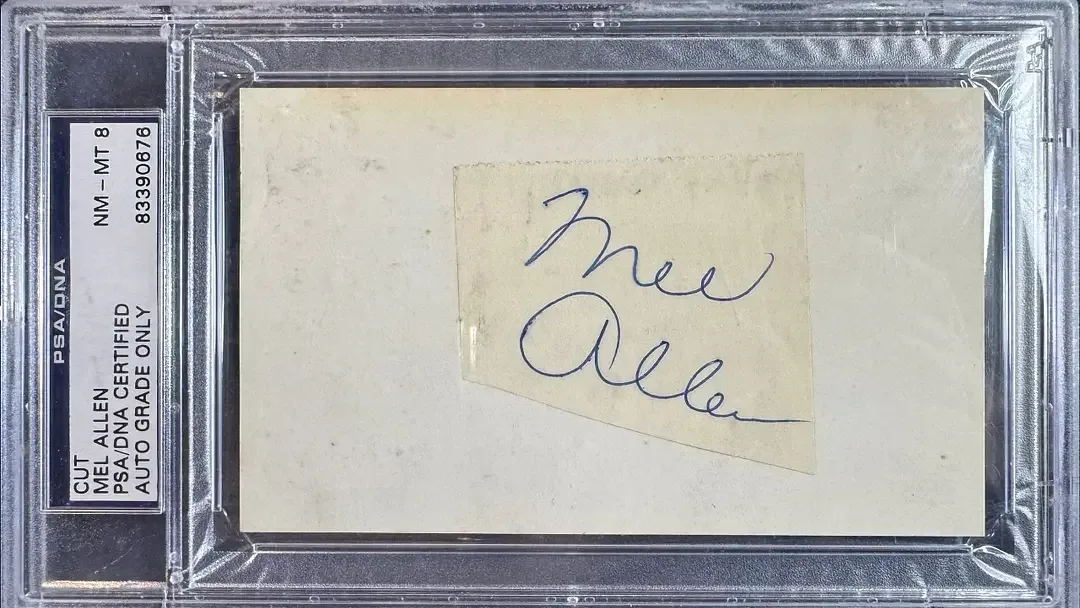
Among the older and more distinctive pieces is a PSA-verified cut autograph of Mel Allen. A cut autograph is a signature removed or preserved from an original signed source—such as paper or correspondence—and then presented as its own collectible. In this case, the signature is encased in a PSA holder.
Allen’s place in the auction broadens the definition of Yankees collecting beyond players. He began broadcasting Major League Baseball games in 1938 and served as CBS’s World Series color commentator. In June 1939, he became the Yankees’ radio broadcaster, a position he held through the end of the 1964 season. His association with the club’s broadcast history makes a verified autograph an unusual counterpart to the player-centric material. Allen was known for the line, “How a-bout that!”
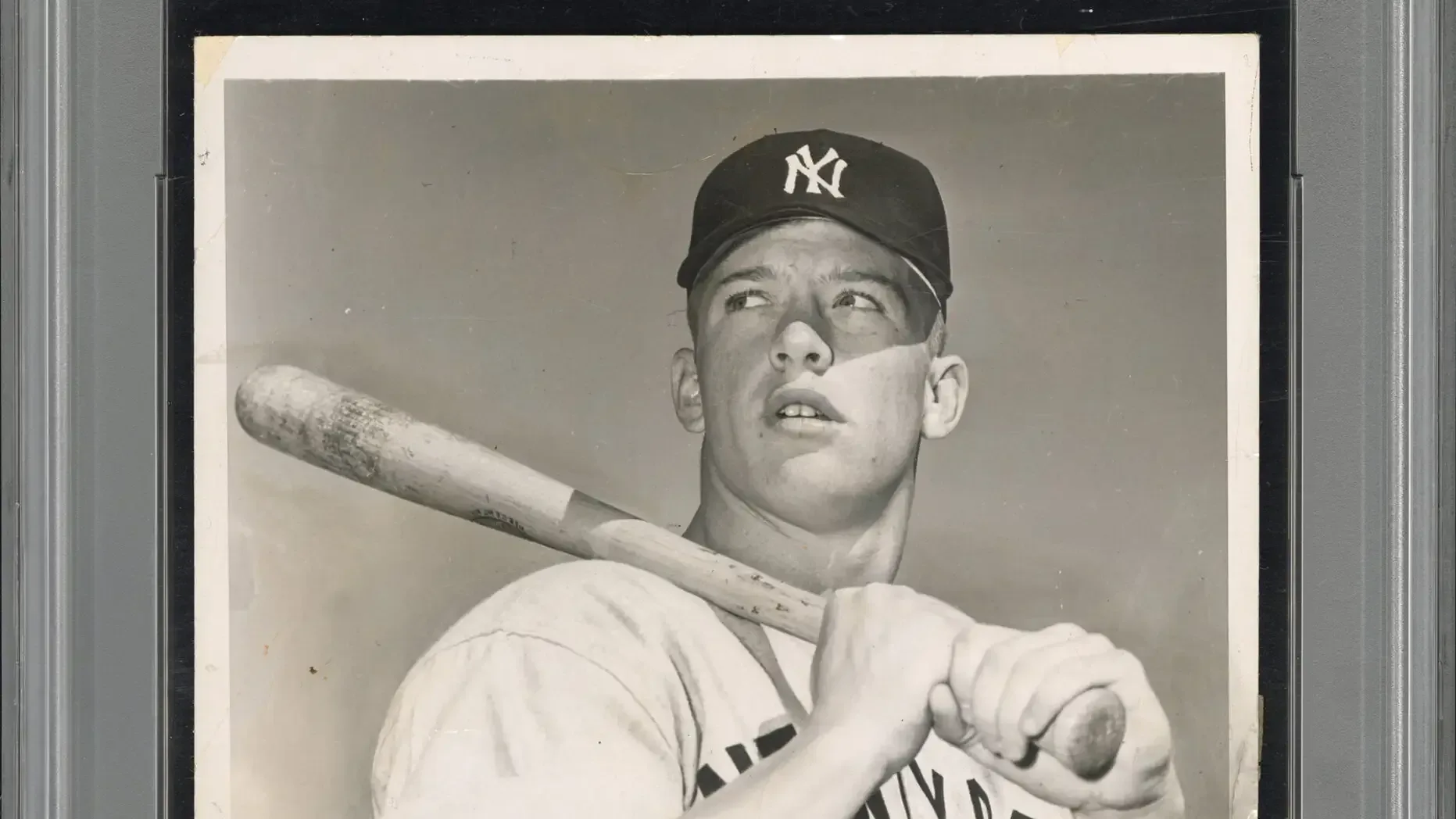
The non-card group also features an 8-by-10 Mickey Mantle signed photograph, a framed 4-by-7 Roger Maris signed photograph, additional cut autographs, signed baseballs, signed bats, and an American Sports Collectibles display signed by Billy Martin. These are not interchangeable items simply because each bears a Yankees name. A Mantle photo offers an image-based display piece; a Maris signed photo combines an autograph with a compact framed presentation; a Martin-signed display is an object made for visual presentation as much as signature collecting.
For buyers, provenance and authentication deserve as much attention as player name. The auction includes items collected in person through Pinstripe Pride autograph-signing events, as well as card products issued by Topps and Bowman over the years. In-person acquisition can be meaningful collecting history, while third-party authentication and encapsulation provide another layer of documentation for relevant lots. The appropriate standard is item-specific: review the authentication identified on each listing instead of assuming that all signatures in a themed auction have identical paperwork or verification.
Topps Dynasty adds a premium patch-autograph dimension
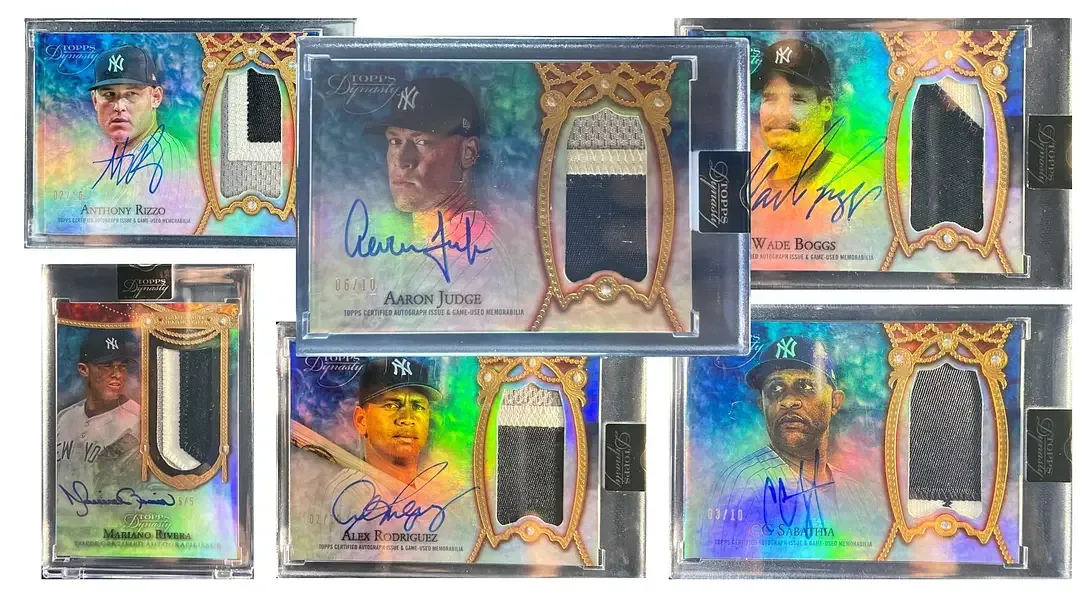
Modern premium-card collectors will find a cluster of 2022 Topps Dynasty autographs featuring Wade Boggs, Anthony Rizzo, CC Sabathia, Alex Rodriguez, Mariano Rivera and Judge. The cards include limited examples numbered /10 and /5, with patch autographs among the formats represented.
A patch autograph card combines a player signature with a swatch of material, typically presented as a patch window within the card design. It differs from a standard signed card because the appeal includes both the autograph and the embedded relic component. As with any memorabilia-card category, the exact wording on the card and listing matters when evaluating what the swatch represents.
The Dynasty grouping gives the auction an unusually broad roster within a single premium product: Yankees icons, former Yankees, and players associated with different chapters of the franchise’s modern identity. Rivera stands out as the purest Yankees anchor of the group, while Judge ties the contemporary-card section back to the auction’s biggest current star. For a collector focused on product consistency, these lots could be a way to assemble an autograph display with matching visual language even as the players vary.
Vintage material creates an era-spanning collection
The sale is not limited to autographs and recent releases. Vintage 1940s cards are part of the offering, including a Yogi Berra Bowman rookie card. That inclusion matters because it gives the auction a bridge between early postwar baseball-card collecting and the serial-numbered, graded autograph market of today.
It also means bidders should decide what they are actually trying to add before the closing date. Someone seeking a single signature may compare the Jeter card, bat and magazine options. A Judge-focused collector can weigh an inscribed Five Star card against Derby-related memorabilia and rookie-era issues. A display-minded Yankees fan might place more value on Mantle, Maris or Martin memorabilia than on condition-sensitive cards. And a collector trying to represent multiple eras might find the Berra rookie and the Mel Allen cut autograph more meaningful than a contemporary parallel.
This is ultimately a sale with multiple collecting identities under one Yankees banner. Its strongest practical appeal is not that every item will suit every buyer, but that the range of cards, autographs and memorabilia allows collectors to target the format, era and player connection that best fits their own personal collection.