Babe Ruth’s place in sports collecting was given a family dimension at the National Sports Collectors Convention, where his granddaughter Linda Ruth appeared alongside an auction of more than 100 cards, autographs, photographs and memorabilia connected to the baseball legend.
Linda Ruth is the daughter of Dorothy Helen Ruth Pirone, Babe Ruth’s only biological daughter. She took part in an eBay Live-stage presentation as a guest of Vintage Sportscard Club, the company that assembled and auctioned the Ruth material. The event paired familiar cornerstone collectibles with personal stories and historical context from a direct descendant of one of baseball’s most enduring figures.
That combination matters because the offerings did not sit in one neat collecting lane. The auction included trading cards, signed baseballs, photographs and broader memorabilia. Each category gives a collector a different kind of connection to Ruth: a card is a period-issued collectible, an autograph bears a signature, a photograph captures an image from the era, and a team baseball places Ruth alongside other Yankees players. The event brought those formats together under one player’s legacy.
A broad Babe Ruth lineup, from cards to signed baseballs
Among the cards listed were 1933 Goudey Babe Ruth cards, a 1933 Sport Kings Ruth card, 1932 Sanella Ruth cards and a 1939 African Tobacco Ruth card. The named issues underscore the historical spread of the material without turning the sale into a single-set showcase. A collector interested specifically in card issues had multiple avenues to follow, while someone seeking signed or photo material had separate categories to consider.
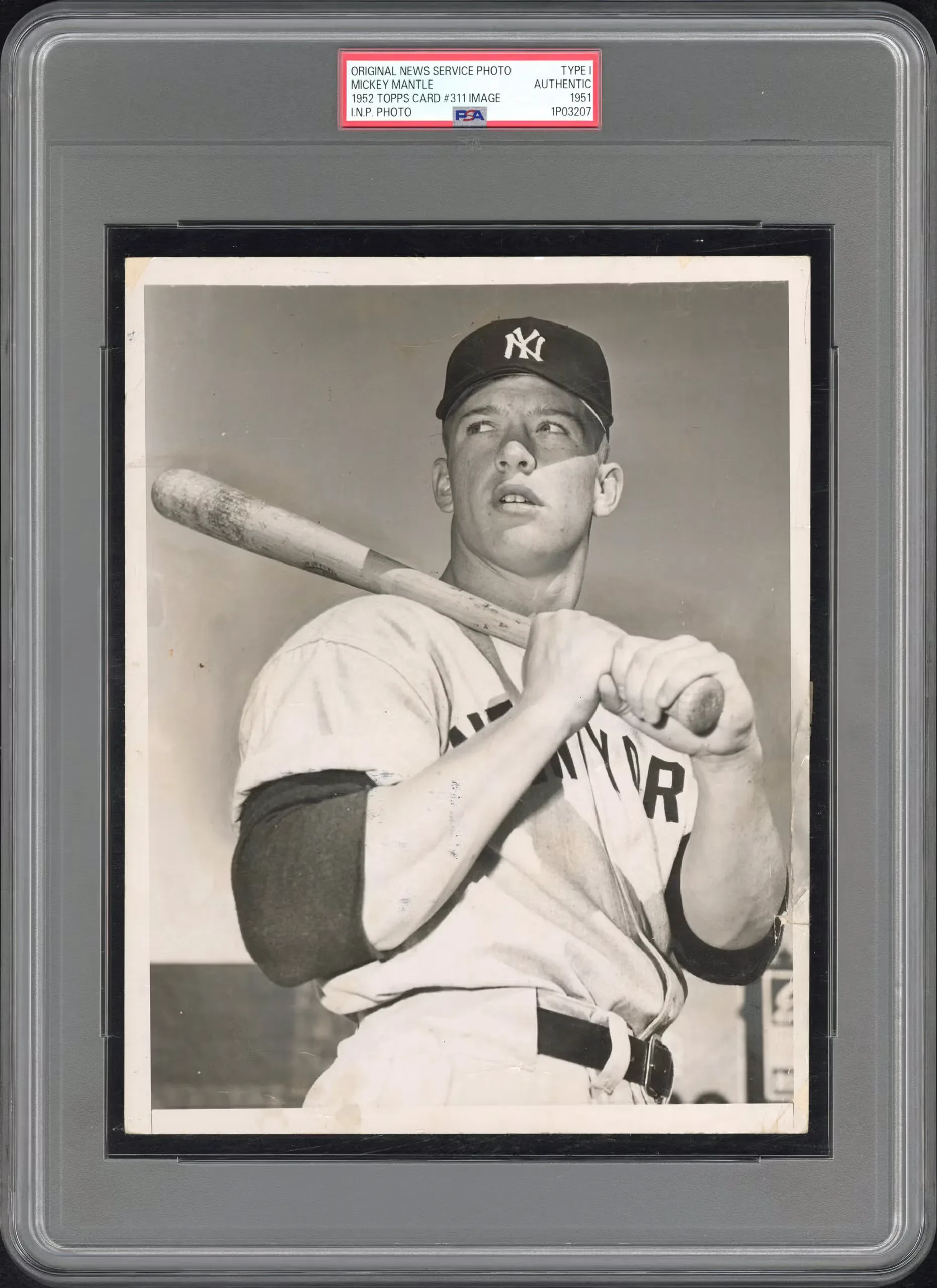
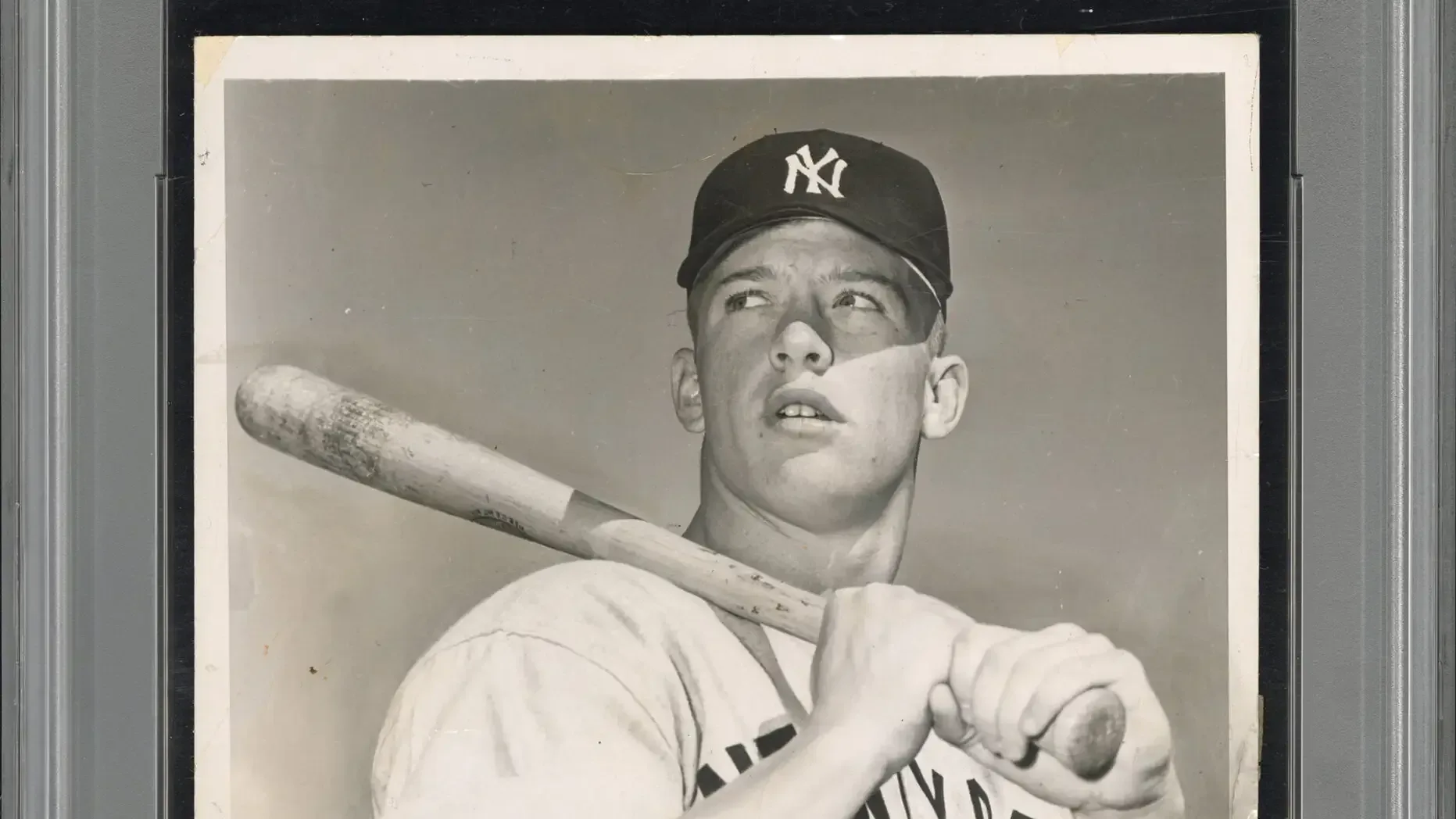
The auction also featured three Yankees team baseballs from the 1930s signed by both Babe Ruth and Lou Gehrig. Those pieces connect two of the sport’s most recognizable Yankees figures on the same object. Type 1 Ruth photographs were part of the group as well, alongside additional memorabilia.
For collectors, that variety is practical as well as visually appealing. It means the event was structured around a subject—Babe Ruth—rather than around one medium or one narrow product line. Someone can care about a particular card issue while another person may prioritize a signed baseball or a photograph. In this case, all of those interests met at the same sale and stage presentation.
The club also displayed vintage items featuring Ty Cobb, Lou Gehrig, Mickey Mantle, Joe DiMaggio, Walter Johnson, Willie Mays, Hank Aaron and Roberto Clemente. That wider selection placed the Ruth offerings within a larger display of baseball history, rather than treating the auction as an isolated pocket of memorabilia.
Why Linda Ruth’s appearance was the event’s distinctive element
The cards and memorabilia supplied the objects of interest, but Linda Ruth provided the unusually personal layer. She shared stories and historical insight about the pieces being auctioned, giving attendees a connection to Babe Ruth’s legacy that could not be printed on a card label or captured in a lot title.
It is important to separate that family connection from the physical items themselves. The event described an appearance and storytelling component; it did not state that Linda Ruth authenticated the lots, appraised them or set their values. Her role was to add personal perspective around the auctioned material. That distinction is useful for collectors, particularly in a hobby where a compelling story and an item’s documented attributes are related but not interchangeable.
The presentation also gave buyers a memento tied specifically to the occasion: collectors who bought items received a Babe Ruth postcard personalized by Linda Ruth. Following the auction, she signed autographs for more than three hours. A line of collectors remained as the convention was ending, a sign of sustained interest in the family appearance beyond the bidding itself.
In other words, the event had two parallel collectible experiences. One involved the historic Ruth material offered for sale. The other was a live convention encounter, including the personalized postcard and autograph session. The latter was tied to attendance and participation at this particular presentation, while the former covered the vintage objects collected and auctioned by Vintage Sportscard Club.
What the listed formats tell collectors
The advertised mix is a reminder that “Babe Ruth collectible” is a broad description rather than a precise one. The term can point to a 1930s card, a period photograph, a baseball with signatures, or another form of memorabilia. Collectors should read the item description closely enough to understand which category they are considering, especially when a sale contains several types of material under the same athlete’s name.
- Cards: The auction included specific issues and years, such as 1933 Goudey, 1933 Sport Kings, 1932 Sanella and 1939 African Tobacco.
- Autographed material: The group included signed items and three 1930s Yankees team baseballs carrying both Ruth and Gehrig signatures.
- Photographs: Type 1 Ruth photographs were among the historic items featured.
- Memorabilia: The sale extended beyond cards, signatures and photos to additional Ruth-related pieces.
That clear categorization is useful even when all the pieces point back to the same athlete. A collector building a card-focused Ruth collection may concentrate on the named issues. A collector drawn to signatures may look most closely at the team baseballs. A photograph collector may be interested in the Type 1 examples. The event’s breadth created multiple entry points without pretending that every piece serves the same collecting goal.
It also highlights the communal side of convention collecting. The eBay Live stage placed the auction in front of an in-person audience while making it part of a live presentation. Linda Ruth’s extended autograph session added a face-to-face element that is fundamentally different from browsing listings alone. The experience did not change what the historic items were, but it gave the gathering a shared setting and a personal narrative around them.
A convention moment built around baseball history
Andre Chiavelli, owner and CEO of Vintage Sportscard Club, described being on the main stage with Linda Ruth and the large audience as a once-in-a-lifetime thrill and a dream realized for the company. The reaction fits an event built around both a major baseball name and a family member able to speak about that legacy.
Ruth’s historical pull is evident in the range of objects selected for the auction. Rather than relying on a single headliner, the offering gave attention to multiple card issues, signed Yankees baseballs, photographs and other memorabilia. Linda Ruth’s presence then made the event more than a display of old objects: it was also an opportunity for collectors to hear family-linked stories and leave with a personalized postcard if they purchased an item.
Physical memorabilia continues to take many forms, from sports history to theatrical promotional products; for a very different modern example, see the Guile popcorn bucket collectible. The Ruth event, however, was rooted in vintage baseball material and a direct family appearance, making its appeal distinctly historical rather than novelty-driven.
The National presentation ultimately showed how a single athlete’s legacy can span numerous kinds of physical collecting. There were cards for set and issue-minded hobbyists, signed material for autograph-focused collectors, photographs for image and print enthusiasts, and a personal appearance that made the occasion memorable for people at the convention. With more than 100 Ruth items auctioned and Linda Ruth remaining for hours to meet collectors, the gathering gave one of baseball’s best-known names a notably human presence on the show floor.