Major spoilers for Street Fighter’s ending and mid-credits scene follow.
The new live-action Street Fighter does not simply use its credits to offer one more gag or a detached character cameo. Its mid-credits sequence advances a thread left deliberately unresolved by the main film: Sagat’s response to losing to Ryu in the first World Warrior tournament.
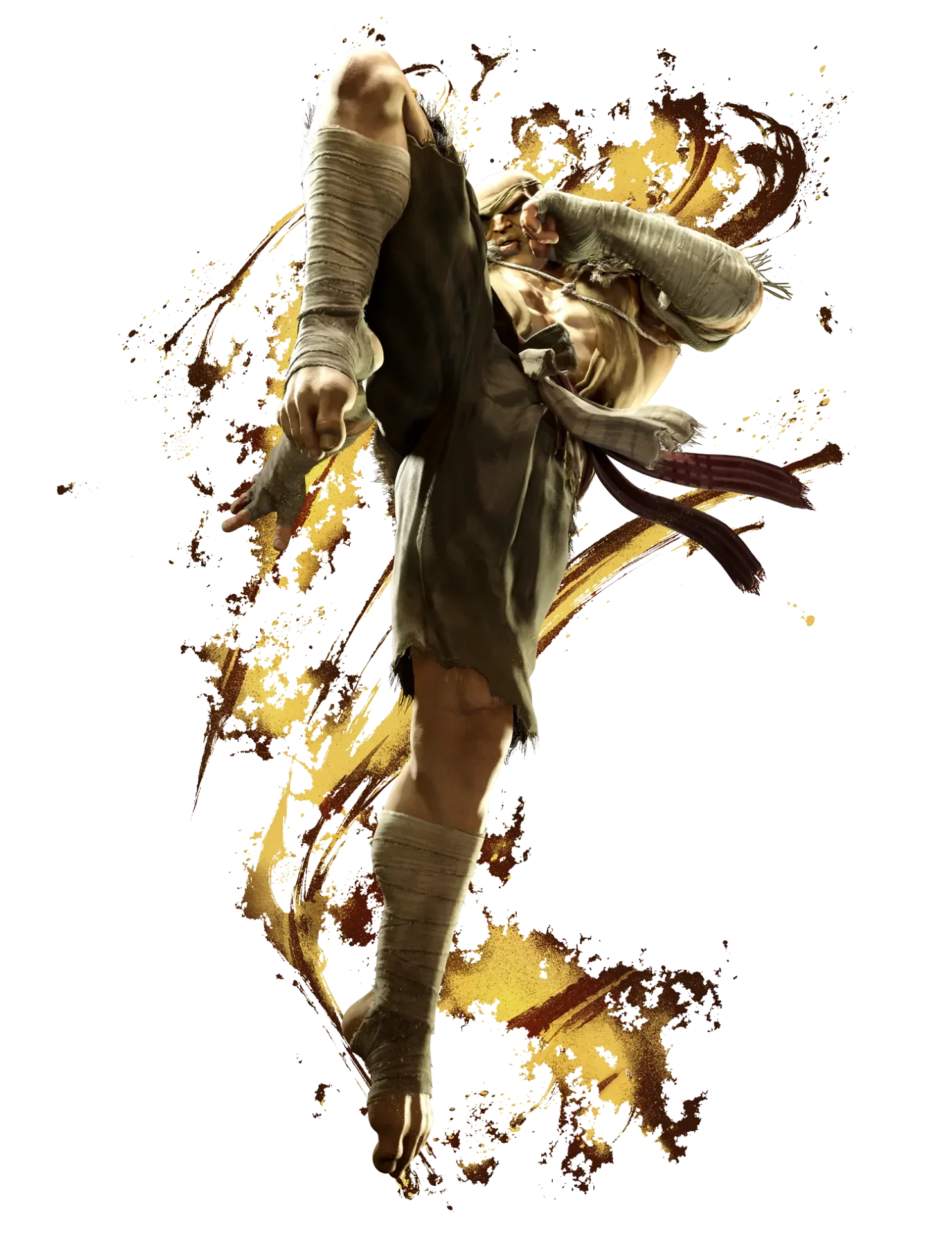
The scene is animated, a notable choice because animation elsewhere in the film is used for flashbacks. Here, though, the format depicts events occurring after the movie’s central bouts have finished. Sagat is shown training with clear anger following his defeat. M. Bison, Vega, Cammy and Juli appear during the session, seemingly approaching him as a potential ally for their villainous cause.
That makes the sequence less a full sequel announcement than a piece of sequel architecture. It establishes where Sagat stands emotionally, places him in the orbit of a faction already represented onscreen, and preserves the promise of a future clash with Ryu. Whether that setup is ever continued remains dependent on the film receiving a sequel greenlight.
What happens in the mid-credits scene?
Sagat’s presence is not brand-new to the movie. He appears in its opening stretch as Ryu’s final opponent in the first World Warrior tournament. The mid-credits tag returns to him after the loss, with his training emphasizing that the defeat has not been accepted or forgotten.
The consequential development is the arrival of M. Bison, Vega, Cammy and Juli. Their appearance suggests an effort to bring Sagat into their plans. The scene does not provide a completed alliance, a mission briefing, or an explicit statement of what comes next. It instead gives viewers the ingredients of a possible escalation: a defeated fighter with a personal grievance and an organized group ready to exploit it.
That restraint matters. A mid-credits scene can serve several jobs at once: reward viewers who remain through the credits, leave a memorable final image, and set out possibilities without forcing a finished film to resolve every thread. This one is primarily doing the last two. Sagat’s anger is the dramatic hook; the group around him gives that anger a direction.
Why is Sagat animated?
The use of animation is the sequence’s most unusual storytelling decision. The film already has animated passages, but those have been associated with flashbacks. By using the same visual language for a moment set after the primary story, the mid-credits scene makes animation function as a bridge to a possible continuation rather than a window into the past.
Related coverage includes Street Fighter’s Mid-Credits Scene Brings Sagat Into a Potential Sequel.
There is a practical reading of that choice, but it should be treated as interpretation rather than confirmation. Sagat may not yet have been cast for a live-action role: no performer is attached to the character’s training noises in the supplied credits information. Animation allows the film to show Sagat, identify his position in the developing story, and avoid committing to an actor onscreen.
If that inference is right, the scene is a flexible piece of franchise planning. It signals the character’s importance while leaving casting and the precise shape of a follow-up open. If it is not, the animated approach still achieves something useful: it separates this brief stinger from the live-action story and gives it the feel of a stylized promise rather than a scene that must immediately pay off.
Flashback language becomes future-facing
Because the film has trained viewers to associate animation with earlier events, the mid-credits sequence initially carries the visual expectation of a flashback. Its placement after the main story changes that expectation. This is not another explanation of how Ryu and Sagat arrived at their tournament meeting; it is a depiction of what Sagat does after it.
That reversal helps the tag communicate quickly. The audience already knows that animation has a special role in this adaptation. Putting a post-story moment in that format makes the scene feel distinct without needing a lengthy explanation. It is a compact way to say that Sagat’s part in the narrative is unfinished.
How Sagat fits the movie’s unresolved conflict
Sagat’s grudge is only one of the film’s remaining open threads. The larger villain picture is also left in flux. M. Bison appears positioned as the main antagonist for much of the story, but Akuma arrives late and takes over that role. The result is a story that does not fully close the conflict one might initially expect it to resolve.
This is the context that gives the Sagat tag extra weight. The sequence does not exist in a vacuum as a reference for longtime fans. It arrives after a final stretch in which the antagonistic hierarchy shifts, leaving room for further maneuvering among several dangerous figures. M. Bison’s apparent recruitment effort can therefore be read as an attempt to build influence after the main film’s villain dynamic has been disrupted.
Importantly, the movie has not confirmed the particulars of any future storyline. It has not confirmed a sequel, a cast member for Sagat, or the exact allegiance that would result from the encounter. The strongest conclusion supported by the tag is narrower: the filmmakers have left themselves a clear route back to Sagat, Ryu, M. Bison’s group and the unsettled threat represented by Akuma.
For viewers trying to parse the final minutes, that distinction is useful. A post-credits scene is not the same thing as a production commitment. It is a narrative option. The difference is especially important when the movie’s own future depends on whether it performs well enough to warrant another installment.
What the scene could mean for Ryu
Ryu is central to the tag even though he does not appear in it. Sagat’s training is framed by the loss to him, preserving the defeated fighter as a rival whose story is tied to Ryu’s. The setup does not need to restage their tournament fight to make the point: Sagat’s reaction means their conflict has narrative momentum beyond the opening competition.
That personal angle gives a possible sequel a straightforward emotional entry point. The movie has already made Ryu the man who beat Sagat; the mid-credits scene establishes that Sagat has continued to dwell on that result. Adding M. Bison, Vega, Cammy and Juli turns a one-on-one grievance into something potentially larger.
There is also a difference between a rivalry and a recruitment. A rivalry centers on the defeated opponent’s desire to answer a loss. Recruitment introduces outside agendas, which may or may not align perfectly with the rival’s personal motive. The tag deliberately leaves that tension unresolved. Sagat is angry, and the group has come to him, but viewers are not shown the terms of any arrangement.
What audiences should take away
Stay through the credits if you want the extra story beat. The scene is a genuine extension of the movie’s plot, not merely a decorative reference. It confirms Sagat’s continued relevance, gives his defeat consequences, and connects him to characters who could shape the next conflict.
It also answers one practical question while opening several others. Sagat is clearly being held in reserve for more than his early tournament appearance. Yet the tag avoids locking the adaptation into details it cannot currently guarantee, including a live-action actor for the role or a sequel that has not been approved.
That measured approach matches a film whose antagonistic conflict remains open after Akuma’s late arrival. The door is open for another chapter, but it is still only a door. For more on the wider reception surrounding the release, see how the Street Fighter movie has split fans and critics.
For now, the clearest message of the mid-credits scene is simple: Sagat has not moved on from Ryu, M. Bison’s circle has taken notice, and the movie has preserved a potentially major adversary for a story that may follow.