Some technology tries to be a universal answer. These gadgets take the opposite route: identify one narrow irritation, build an object around it, and make it delightfully serious. The result is a lineup of Japan-focused products that range from a fan built into an umbrella to a mechanical wearable intended to make standing feel a little more like sitting.
Not every idea is inherently high-tech. Several are refreshingly direct pieces of practical design. Yet even the simplest examples reveal a particular approach to consumer electronics: a gadget does not have to serve every person, everywhere, to be worthwhile. It can serve the person with hot hands and a sunny commute, the person hand-scrubbing muddy shoes, or the person trying to avoid personally policing the noise in a shared study room.
For shoppers outside Japan, that specificity comes with an important catch. Many of these products are primarily sold there, and some manufacturers expressly limit them to Japan or to corporate customers. Importing an item, where possible, is not the same as local availability, support, compatibility, or safe use. Here is what each one is designed to do, the technical language behind it, and why its premise is more interesting than its apparent novelty value.
Sharp Poketomo turns conversation history into a tiny robot companion
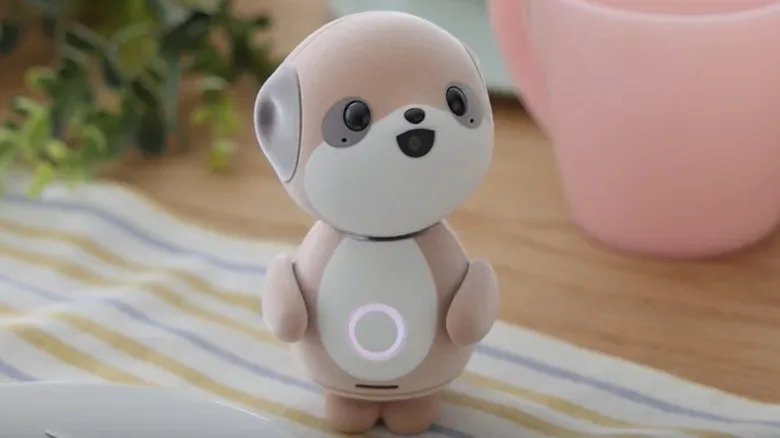
Sharp’s Poketomo is a palm-sized, meerkat-inspired AI companion meant to feel less like opening a chatbot and more like sharing space with a small robotic character. It remembers conversations and experiences, recognizes faces and nearby surroundings, communicates through movement and light, and can sometimes initiate an interaction rather than waiting for a prompt.
Its defining feature is not merely that it answers questions. Poketomo can turn everyday exchanges into a diary-like account presented from the robot’s perspective through its app. That is a different framing from an ordinary voice assistant, which typically treats prior conversation as context for a task. Here, memory is part of the product’s personality: the device is designed to build a sense of continuity over time.
That design also gives the device a more personal practical implication. A system that recognizes faces, surroundings, and recurring conversations has access to details people may consider sensitive. Anyone interested in this category should distinguish the appealing idea of a companion with memory from the broader question of what information a companion records and how it is handled. The supplied product details establish its capabilities, but do not spell out its privacy policies.
Poketomo launched in Japan, then entered Taiwan on July 1, 2026 as its first market outside Japan. It costs roughly $400 before a monthly subscription, placing it closer to a deliberately premium companion device than a toy with a few canned responses. The larger point is that AI hardware can try to create attachment through physical presence, memory, and small gestures—not only through a more capable text box. That idea overlaps with the changing role of AI in personal devices explored in this look at software updates and queued AI features, though Poketomo packages the concept in a very different form.
The AQUOS R11 makes the smartphone an ambient device
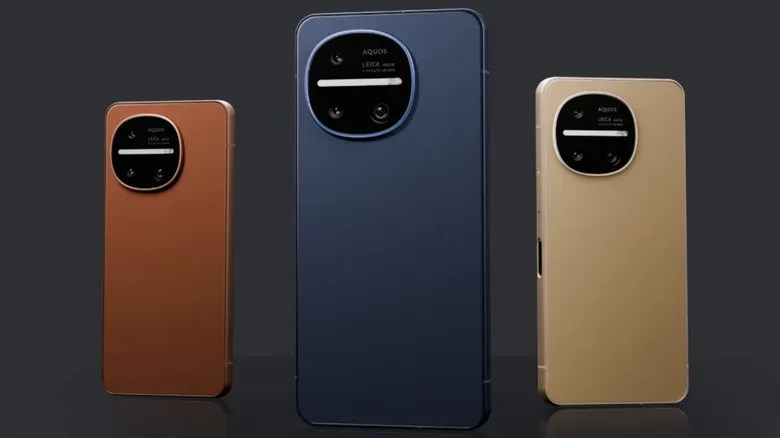
Sharp’s AQUOS R11 is a premium Android phone that pairs familiar flagship specifications with a feature aimed at the mood of the room around it. Its 6.5-inch Pro IGZO OLED display has a variable refresh rate from 1Hz to 240Hz and a claimed peak brightness of up to 3,600 nits. Refresh rate means how many times a display can update its image per second: higher rates can make animation and scrolling appear smoother, while a low rate can be useful when a screen is showing relatively static content.
Related coverage includes 10 Japanese Gadgets That Turn Everyday Problems Into Specialized Tech.
The R11’s camera arrangement includes 50.3-megapixel standard and ultrawide cameras, plus a 38.5-megapixel telephoto camera with 2.9x optical zoom. Optical zoom matters because it uses the camera’s lens system rather than simply enlarging a cropped piece of an image. The camera system is Leica-supervised, and Sharp’s Smart Fit Zoom uses AI to recognize people or pets and adjust framing.
What separates the R11 from a straightforward spec sheet is Acharium, a light-and-sound feature intended to alter an environment’s atmosphere. The premise is that a phone can do more than deliver information through its panel and speakers; it can provide an ambient effect that extends into the room. Whether that becomes a routine feature or a rarely used flourish will depend on the owner, but it is an unusual attempt to make a conventional slab phone feel more spatial.
At roughly $1,100, the AQUOS R11 is priced as a flagship. Its existence is a reminder that a market can produce premium phones outside the handful of brands that dominate discussion in the US, while still putting a distinct spin on what “premium” means.
Thanko’s Fanbrella puts shade and airflow on the same stick
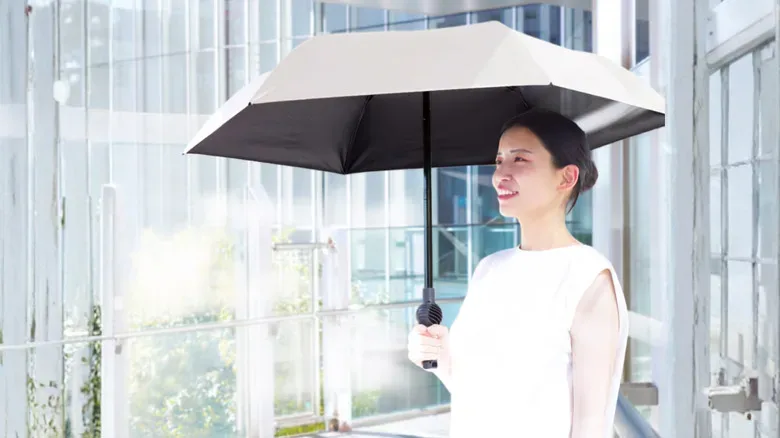
The Fanbrella POLE PLUS solves a hot-weather juggling problem with literal hardware consolidation. It is an umbrella with a small fan integrated into the shaft, directing air upward toward the user’s head and face while the canopy supplies shade and UV protection.
The current model offers three fan speeds. Thanko says its airflow system is 20 percent stronger than the prior version, while its rechargeable battery can run for up to approximately 4.5 hours depending on the selected setting. At about 350 grams, it is designed to remain a carryable umbrella rather than an elaborate sun shelter. Its listed Japanese price is about $47.
The charm of this concept is that it does not claim to reinvent cooling. Portable fans already exist; umbrellas already exist. Fanbrella’s contribution is removing the need to dedicate a hand to each one. That is a meaningful distinction for commuters or walkers who may already be carrying a bag or checking a phone. Of course, the battery duration varies by setting, so the maximum figure should be read as a limit under unspecified usage rather than a universal expectation.
TeteMousse automates one small shower routine
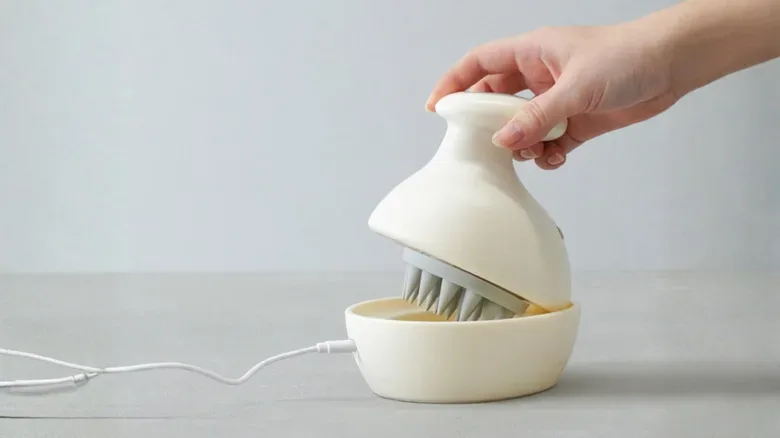
Thanko’s TeteMousse is an electric scalp brush that also creates shampoo foam. Users add water and their ordinary shampoo to a 55mL reservoir, then activate the device to produce foam while its brushes rotate. It is not restricted to special shampoo, although non-foaming formulas are not compatible.
The unit includes three exchangeable attachments: soft and hard scalp brushes, plus a brushing attachment. It has two movement modes, and its IPX7 rating indicates a water-resistance classification intended for use in a shower routine. In broad terms, IPX7 is a designation for temporary immersion in water under defined test conditions; it should not be casually interpreted as proof that every aspect of a device is invulnerable to any water exposure.
Launched in Japan in November 2025, TeteMousse is still available there. Its appeal is not that lathering shampoo is impossible by hand. It is that the machine combines foaming, brushing, and scalp-focused washing into one workflow. This is a recurring theme among specialized appliances: fewer objects to hold can be as valuable as fewer steps to perform.
A countertop washer makes sneakers their own laundry category
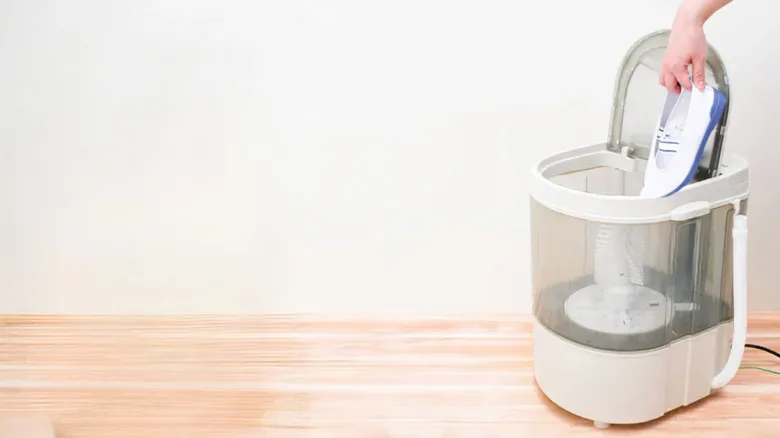
The Thanko Kutsu Araimasenka 3 is a compact dedicated shoe washer. Instead of putting sneakers in regular laundry or scrubbing them at a sink, an owner adds water and detergent, places the shoes inside, and lets a rotating brush handle the cleaning work.
Its capacity is tightly focused. The machine can wash one adult pair measuring up to 10.5 inches, depending on shape, or two pairs of children’s shoes. A removable brush also lets it wash other small objects that users prefer to keep away from standard laundry. The approximate Japanese price is $93.
The constraints are part of the point. This is not a replacement for a full washing machine, and the provided capacity information makes clear that larger adult shoes may not fit. It is a separate appliance for people who value keeping footwear out of clothing loads and reducing manual scrubbing. In a category full of all-purpose machines, the Kutsu Araimasenka 3 makes a case for controlled separation.
The Flowing Water Mat Lite aims to keep cooling from fading overnight
Ordinary cooling mats can lose their appeal once they have absorbed body heat. Thanko’s Flowing Water Mat Lite approaches that limitation with continuous circulation. Water moves through a thin mattress pad, returns to the main unit as it warms, is cooled, and then cycles back through the mat.
The system runs over USB using 6W of power and has a 1.7-liter water tank, three cooling modes, and a timer for up to 12 hours. The same unit can also accept a cooling-fan attachment for daytime use. This is a comparatively stripped-down approach to temperature-oriented bedding: it targets the surface beneath the sleeper rather than describing an entire connected sleep system.
“Continuous circulation” is the key technical idea here. A passive gel or cooling mat starts at one temperature and gradually changes as it takes on heat. A system that sends water back for cooling seeks to counter that warming cycle. The information provided does not establish how cold the mat becomes or how it performs in different room conditions, so those are questions a prospective buyer would need answered separately.
The Mekubari Fan directs air toward people, not empty furniture
siroca’s Mekubari Fan, model SF-HC151, uses a human-recognition sensor that detects the shapes of faces and upper bodies. Its “hitorijime” mode, meaning “all to yourself,” follows one person around a room. In “yamawake,” or “sharing,” mode, it identifies multiple people and aims airflow toward occupied areas.
The fan also supports hand-sign controls near the user’s face. Circle, scissors, and paper gestures can turn it on or off or adjust its oscillation mode. It has eight airflow settings, offering finer adjustment than the limited speed choices found on many basic fans.
This is targeted automation in its most literal form. Rather than treating oscillation as an indiscriminate side-to-side sweep, the fan attempts to put moving air where people actually are. It also reveals a tradeoff that often comes with smart appliances: a task that needs no user decision may be convenient, while a task that depends on recognition introduces a layer of sensing between the person and a very simple function.
Gorilla’s Two Grips focuses compression on one part of the leg
Doshisha’s Gorilla’s Two Grips Massager is a compact wrap for a calf or thigh, not a full leg-compression boot. Eight airbags inflate around the targeted area, while two removable textured pads apply added pressure in chosen positions. The product is designed to produce an intense squeeze-and-press sensation in a very specific location.
Its narrow focus is practical. A user does not need to put on a larger system to target one troublesome area. But there is an unusually firm limitation for overseas curiosity seekers: the GRM-2501 manual says it is made for Japan and cannot be used in foreign countries. That manufacturer guidance should outweigh the temptation to treat an imported unit as plug-and-play.
King Jim’s Oshizukani Light makes a room’s volume visible
The King Jim Oshizukani Light, approximately translated as “Please Be Quiet Light,” uses a microphone to monitor ambient volume and illuminates when sound crosses a selected threshold. It is designed for libraries, study areas, shared offices, and medical waiting rooms—spaces where interrupting someone to tell them they are loud can itself create a disturbance.
Sensitivity can be set to roughly 60, 70, or 80 dBA. Decibels are a logarithmic measurement of sound level, while the “A” weighting in dBA is intended to approximate human hearing sensitivity. The numbers are useful as configurable reference points, not as a complete judgment of whether a particular conversation is appropriate in every setting.
Display sheets can request quiet, ask someone to speak louder, or be customized. That last option is an important clue to the product’s real function. It is not simply a sound meter; it is a social signal designed to communicate a local norm without requiring a person to become the enforcer. King Jim specifies use in Japan only.
ArchelisFX Stick is a battery-free attempt to “sit while standing”
The ArchelisFX Stick is a wearable exoskeleton for people who must spend extended periods upright. Instead of stabilizing an injury, it shifts some body weight from the feet toward the shins and thighs. The company’s description, “sit while standing,” captures the intended effect.
It has three modes. Free mode lets the knees bend normally for movement. Archelis mode supports the wearer with the knees slightly bent. Standing mode adds support for holding a standing posture. The device is entirely mechanical: no motor, battery, or charging cable is involved.
The medium-size lightweight model weighs about four pounds per leg and is the lightest model made by Archelis. It is sold only to corporations, which makes clear that this is workplace equipment rather than a casual consumer purchase. Its battery-free construction is especially notable because it reframes an exoskeleton as a structure for distributing load, not necessarily a powered robot suit.
Together, these products make a strong argument for taking strange gadgets seriously. Their purposes may be extremely narrow, but that is often where product design gets most imaginative: not in asking what one device can do for everyone, but in asking which tiny daily inconvenience has been accepted for far too long.