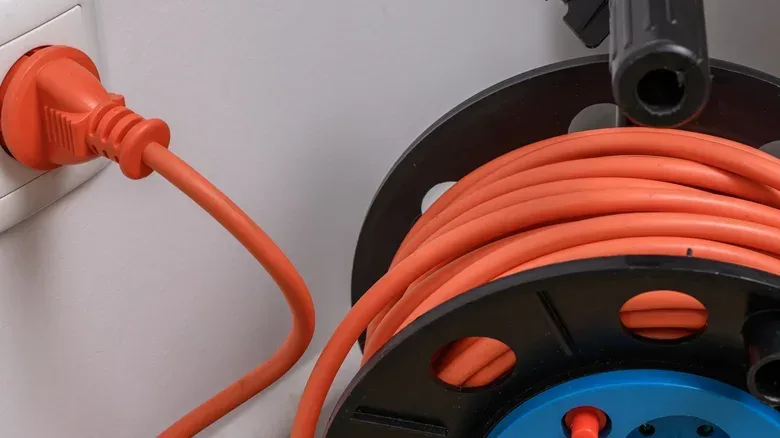
Extension cords are one of the easiest ways to make a desk, TV stand or gaming corner work when the wall outlet is inconveniently placed. A charger needs a little extra reach, then a console cable follows, then the cord disappears behind furniture. Before long, a temporary workaround is doing the job that fixed building wiring was meant to do.
That change—from occasional use to a permanent part of the room—is the important safety issue. Leaving an unloaded extension cord plugged into an outlet does not, by itself, mean it will overheat or cause a fire. The greater concern is that a cord which stays in service can be overlooked, covered, pinched, worn down or eventually used with equipment it was never selected to support.
For a gaming or computer setup, the practical takeaway is simple: treat extension cords as temporary tools, not invisible infrastructure. Check their ratings, keep them exposed and undamaged, do not link them together, and remove them when the temporary job is done. If a desk needs power in the same place for months or years, the lasting answer is generally an outlet installed where it is actually needed.
Why “still plugged in” is not the whole question
It is tempting to frame this as a binary question: is an extension cord safe or unsafe if its plug remains in the wall? That framing misses the conditions that usually make a setup riskier. A cord can be physically trapped behind a desk or sofa, squeezed by furniture, routed across a doorway, hidden beneath a rug, or damaged after an electrical event such as lightning. Because the cord is out of sight, those changes may not be noticed promptly.
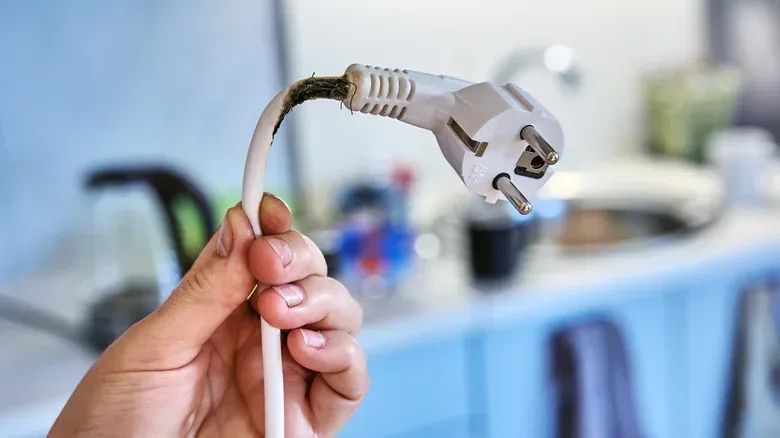
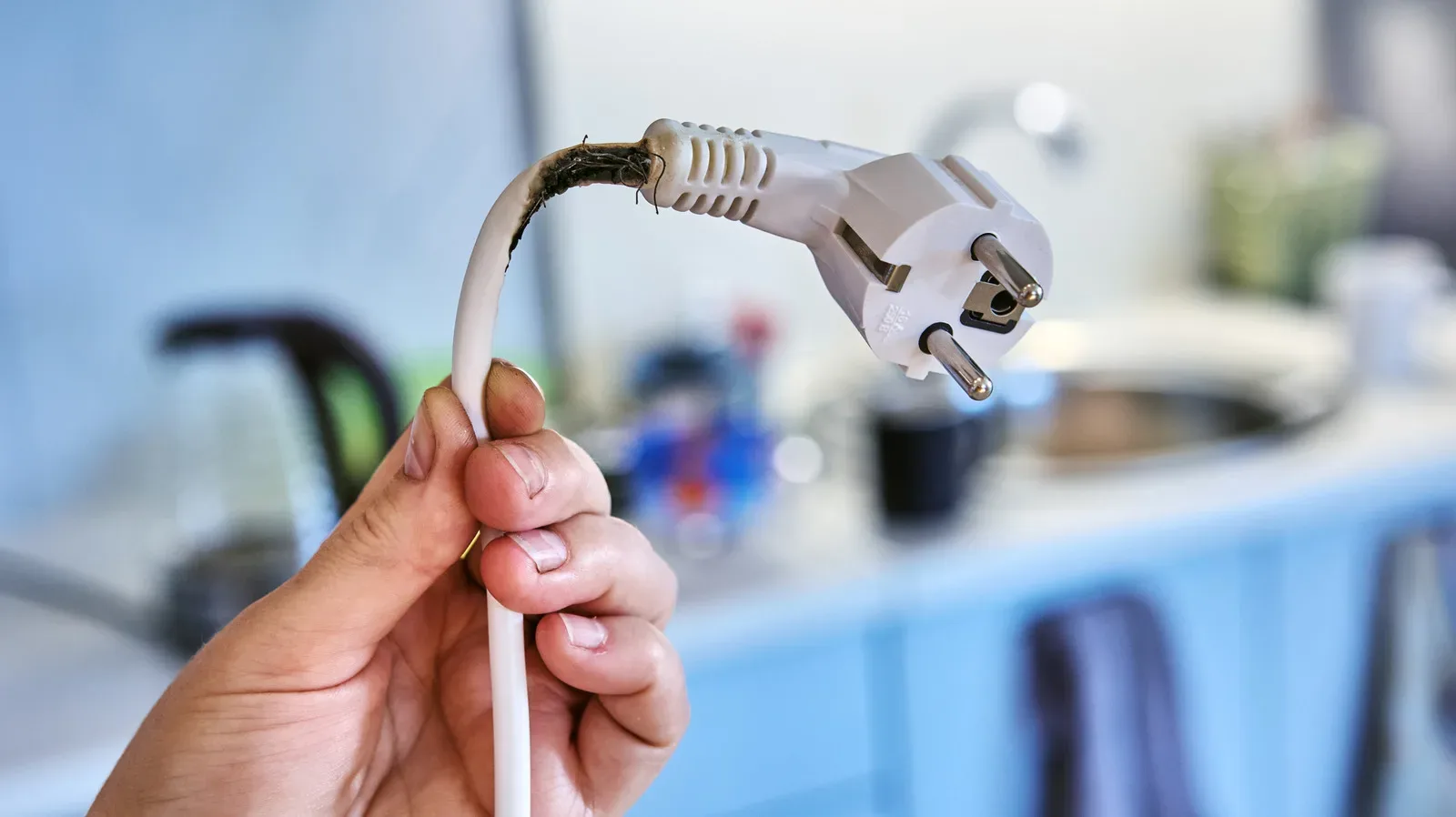
Unplugging a temporary arrangement has another benefit: it creates a moment to inspect it. Look for cracked or split insulation, a loose connection, visible wear, or a plug that feels unusually hot. A damaged extension cord should be replaced rather than kept in service because it still appears to work.
Heat is particularly relevant because covering a cord can keep heat from escaping. The Electrical Safety Foundation International advises against covering cords for this reason. A rug or furniture placement can introduce a second problem as well: physical damage to the insulation or connections. A cable route that looks tidy is not necessarily a route that keeps the cord protected.
Extension cords are not a substitute for installed wiring
The National Electrical Code draws a distinction between flexible cords and fixed wiring in a structure. Section 400.12 says flexible cords and cord sets are not to be used as a replacement for a building’s permanent wiring. It also bars routing them through holes in walls, floors or ceilings; through doorways or windows; and in locations where they are likely to sustain physical damage.
That distinction matters for a PC station built against a wall. Running a cord through a wall opening or under a door might seem like a clever cable-management shortcut, but it is the opposite of an inspection-friendly, protected installation. Once the cord is concealed or constantly pressed against an edge, its condition becomes much harder to see.
Related coverage includes Why Extension Cords Should Not Become Permanent Wiring.
The version of the electrical code and any local amendments in force can vary by location. There is also no universal countdown clock that changes every extension cord into an automatic violation after a particular number of days. Temporary-installation rules include a 90-day limit for holiday decorative lighting and similar uses, but that does not create a nationwide “day 91” rule for every cord in every home.
A separate workplace-oriented rule of thumb says that when equipment has relied on an extension cord for more than 30 days, it is time to consider a permanent solution. That is useful as a planning prompt rather than a magic legal deadline. If a monitor, desktop PC or charging station still depends on the same extension cord a month later, the setup has demonstrated that it needs a better long-term power layout.
For many desk setups, that may mean arranging the desk around an existing outlet or having an additional outlet installed in the needed location. It may sound less exciting than another cable sleeve, but fixed wiring is designed to serve as fixed wiring. The extension cord is not.
The breaker does not validate every cord in the chain
A circuit breaker is an important safety device, but it does not turn any extension cord into a suitable match for any load. The extension cord itself has a current rating, a wire gauge and a length. Those specifications determine what it can support. A wall outlet and the building circuit may be capable of supplying power while the particular cord between the outlet and device remains the weak link.
Current, measured in amps, is the amount of electrical flow a cord must carry. Wire gauge describes wire size; in the ratings listed by the Electrical Safety Foundation International, 16-gauge cords are identified for 1 to 13 amps at lengths of 25 to 50 feet, 14-gauge cords for 14 to 15 amps, and 12- or 10-gauge cords for 16 to 20 amps. Check the specific label on the actual cord rather than assuming that a cord which looks thicker, newer or more expensive is adequate.
A laptop charger and a portable space heater are not comparable demands. The U.S. Fire Administration recommends plugging major appliances directly into wall outlets. Its portable-heater guidance is more direct still: do not use an extension cord or power strip with a portable heater. A heater should go straight into the wall outlet.
That warning is useful beyond heaters because it reinforces a broader habit: decide what an extension cord is for before adding devices to it. A temporary low-demand charger arrangement is not an invitation to attach a high-demand appliance later because it happens to be nearby. The same goes for plugging a power strip into a smart plug, which can create a separate overload risk.
Daisy-chaining turns a simple setup into a harder one to assess
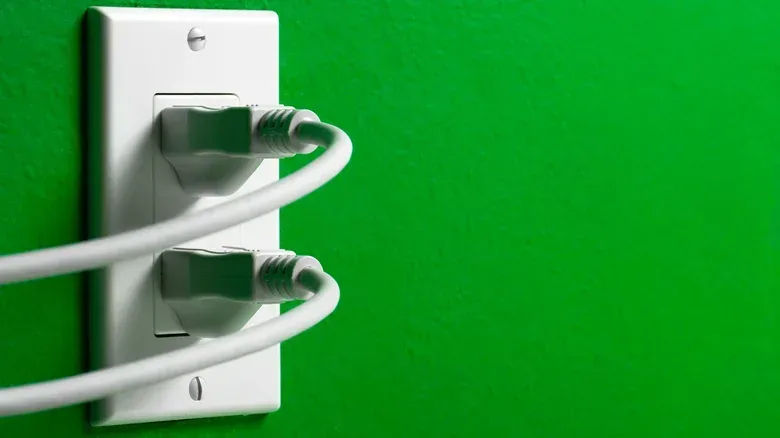
Daisy-chaining means plugging one extension cord into another to gain more distance. It is not a safe way to solve a cord that falls short. The Electrical Safety Foundation International advises against the practice, and the reason is practical as much as it is technical: every added connection is another point that can loosen, wear or be mismatched to the demand.
It also makes it harder to understand what is powering what. A desk may begin with one cord intended for a charger, then gain a second cord, then a multi-outlet accessory. At that point, diagnosing an overloaded or warm connection becomes needlessly difficult. More length does not increase the capability of the original cord; it merely adds another component that must remain in sound condition.
This is a good moment to separate extension cords from other products that may sit behind a desk. A power strip is not simply a long extension cord with more sockets, and neither product should be assumed to be appropriate for every device. What matters here is the load, the rating, the physical condition and the manufacturer’s instructions for the equipment in question. Avoid treating the presence of a breaker, surge-related feature or smart control as permission to add more demand without checking those basics.
A desk and gaming checklist that does not require guesswork
There is no need to panic over a cord that is temporarily in use. There is a clear, manageable set of checks that keeps a temporary arrangement from quietly becoming a neglected permanent one.
- Read the cord’s rating. Match the cord’s amp rating, wire gauge and length to the load it will carry. Do not select based on reach alone.
- Keep the cord visible and protected. Do not put it under a rug, route it through a doorway or window, pass it through a wall, floor or ceiling, or place it where furniture can crush it.
- Do not cover it. Covering a cord can impede heat dissipation and makes damage harder to spot.
- Do not daisy-chain cords. If the existing cord does not reach, rethink the outlet location or use a properly planned temporary approach instead of connecting cords end to end.
- Inspect before reuse. Replace cords with cracked insulation, loose connections or excessive heat at the plug.
- Keep major appliances off extension cords. Plug major appliances directly into a wall outlet; portable heaters should never be connected through an extension cord or power strip.
- Unplug when the temporary task ends. This reduces the odds that a stopgap arrangement will be forgotten and gives the cord a chance to be checked.
That last item is especially relevant in a room full of technology. Chargers and small accessories can make an extension cord feel harmless enough to leave forever, while the cable’s hidden location means it receives almost no attention. A routine reset—unplugging, checking and deciding whether the setup remains genuinely temporary—can stop convenience from becoming complacency.
What an extension-cord fire report does—and does not—prove
Extension-cord failures can have serious consequences. In July 2026, Loudoun County Fire and Rescue attributed a Virginia house fire to the electrical failure of an extension cord, displacing five occupants. But the available information did not identify what was connected to that cord or how long it had been used. It would be wrong to turn that incident into evidence that any unused cord left plugged in will cause a fire.
The more responsible reading is narrower: extension-cord failure is a real hazard, and the risk factors are worth taking seriously. Long-term use, physical wear, concealed routing, heat retention, an unsuitable rating and high-demand equipment are all reasons a casual arrangement deserves review.
For hobby desks, streaming corners and home offices, safety improvements can also make the setup more useful. A power plan built around accessible wall outlets makes it easier to inspect connections and rearrange hardware without running a cable through a traffic path. It also avoids making cable management dependent on hiding a cord where nobody can see it. Anyone refining a compact computer project may also find our Raspberry Pi 5 RAM guide useful when planning the hardware side of a small desk build.
The key is not to fear every extension cord. Use one for the temporary role it is meant to fill, select it by its stated electrical capacity, and give it regular visual attention. When the cord has become a permanent fixture behind the desk, the better question is no longer whether it has survived so far. It is whether the room now needs permanent power where the equipment actually lives.