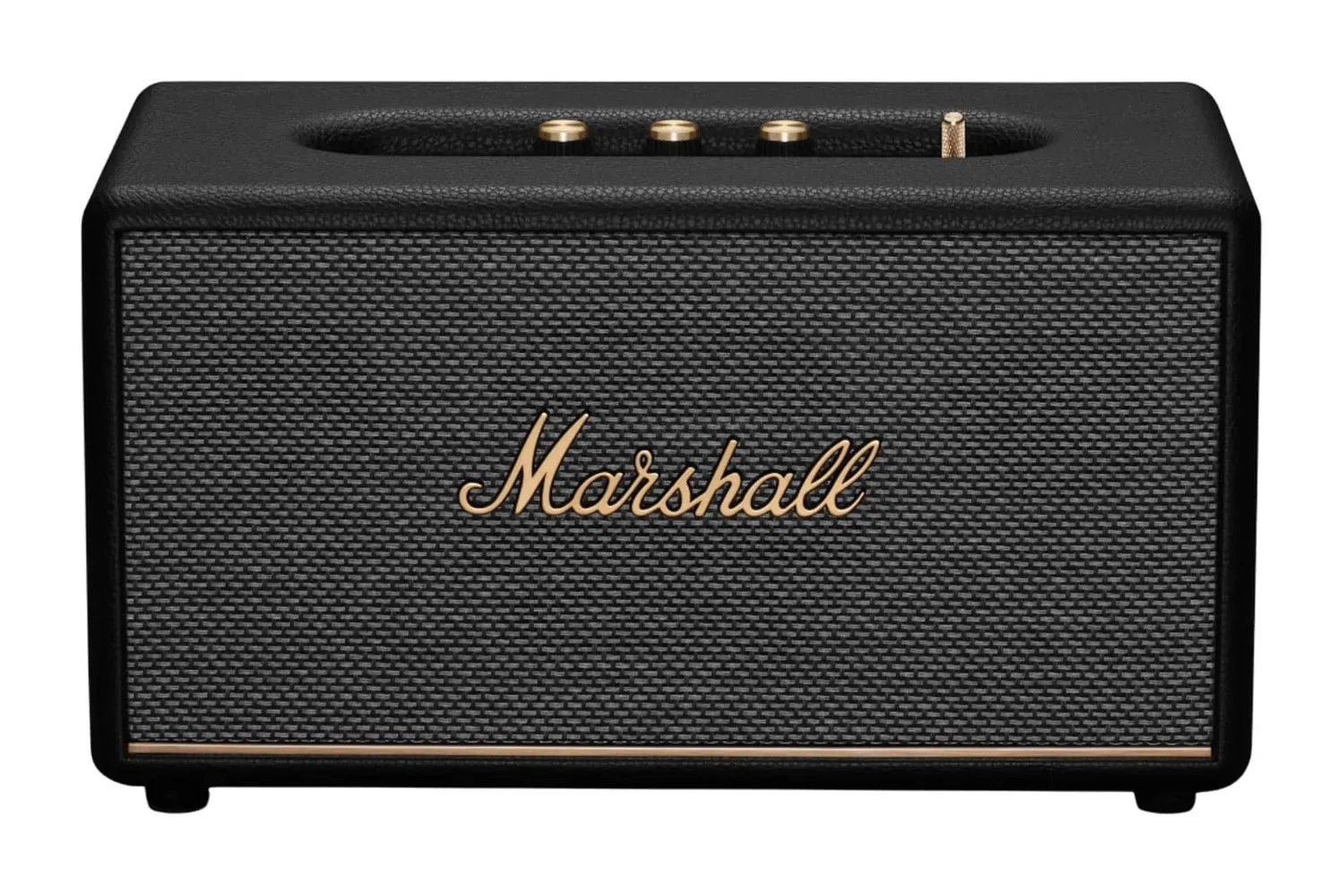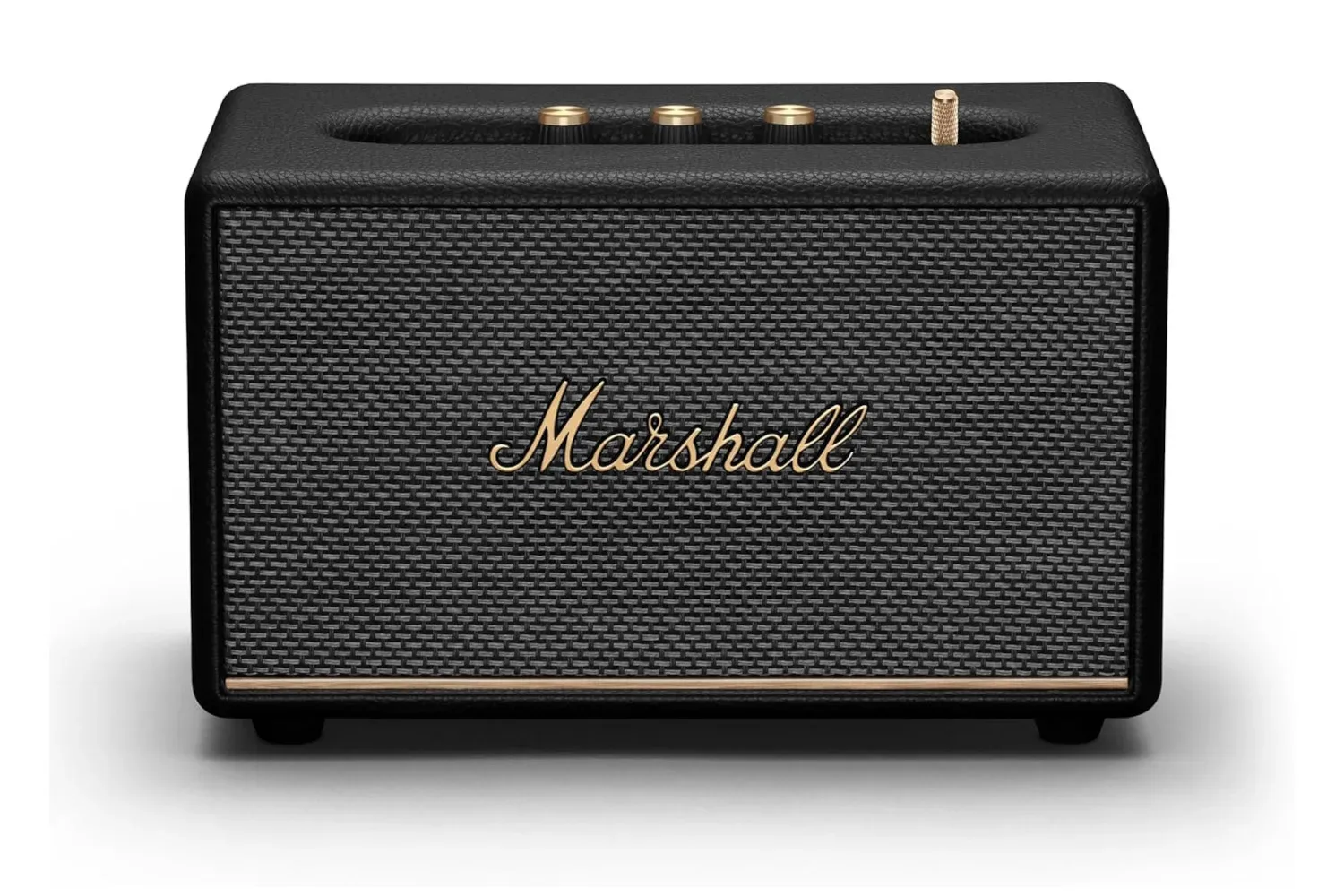
A reported price cut on the Marshall Acton III put the Bluetooth home speaker at $190, down from a stated regular price of $300. That is a $110 reduction, or roughly 37% off. For shoppers who want a room-oriented speaker rather than another tiny portable cylinder, the number is attention-grabbing—but it should be treated as a time-sensitive listing, not a permanent new price.
The Acton III’s appeal in this context is straightforward. It is positioned as a home Bluetooth speaker with controls for bass and treble, plus a 3.5mm auxiliary input for wired playback. Those details matter more than marketing claims about filling a room: they describe how the speaker can fit into a desk, living room, game setup, or music corner where convenience and simple connection options are priorities.
The reported deal: $190 versus $300
The stated discount takes the Acton III from $300 to $190. Deal pricing can change quickly, so prospective buyers should verify the price, seller, color or version, shipping terms, and return policy at checkout rather than assuming the figure remains active. A low price is only useful if it applies to the exact product being considered.
It is also worth separating a discount from a specification. The $190 figure makes the speaker potentially more attractive relative to its stated regular price, but it does not by itself establish that it is right for every listening situation. Someone seeking a speaker to carry outdoors, connect to a television, or use in a larger multi-component audio setup may need capabilities that are not established by the information available here.
What the Acton III is said to offer
The listed features point toward flexible everyday listening rather than a single narrow use case.
- Bluetooth playback: A wireless device connection for playing audio from compatible phones, tablets, computers, and other Bluetooth-capable gear.
- 3.5mm auxiliary input: A physical analog audio connection, often called Aux, for attaching a compatible device with the appropriate cable.
- Bass control: An adjustment that lets listeners alter the lower-frequency emphasis in their sound.
- Treble control: An adjustment for the higher-frequency portion of the sound, which can affect the prominence of details such as cymbals, vocal edges, and certain effects.
Bluetooth is the convenience-first route: select the speaker from a device, start playback, and avoid running an audio cable across a room. The 3.5mm input is a useful alternative precisely because it is not wireless. It gives a compatible wired source a direct route into the speaker, which can be appealing for an older device or a setup where a cable is preferable.
Neither connection method is inherently best in all circumstances. Bluetooth favors simplicity and device switching; Aux is relevant when a buyer has a suitable physical source and cable. The important practical point is that the Acton III is described as offering both options, so a purchase is not restricted to a Bluetooth-only routine.
Why the tone controls are more than decoration
Dedicated bass and treble controls are especially relevant on a single-box home speaker. Rooms, placement, source material, and personal taste can all affect whether audio seems too heavy, too thin, too sharp, or too restrained. The controls do not turn a speaker into a custom studio installation, but they give the listener a direct way to change the tonal balance without replacing the speaker.
For music, a listener may prefer more bass presence; for spoken-word material such as audiobooks or podcasts, the goal may instead be a clearer, less crowded presentation. That is not a promise that any one setting will solve every recording. It is simply why physical adjustment can be useful: the same speaker may be asked to handle very different material over the course of a day.
Gamers should apply the same realistic lens. A Bluetooth home speaker can be a convenient audio companion for a casual setup, but buyers should check the connection needs of their particular console, display, computer, or handheld rather than presuming universal compatibility. The supplied feature list identifies Bluetooth and 3.5mm Aux input; it does not establish every possible gaming connection, latency characteristic, or television feature.
Questions worth answering before ordering
A sensible deal check is short and specific:
- Is the $190 price still displayed for the exact Acton III listing? Temporary promotions are temporary until confirmed at checkout.
- Will Bluetooth or Aux actually work with the intended source? Verify the ports and wireless support on the phone, PC, console, monitor, or other device that will provide audio.
- Is a cable needed for the planned wired use? The presence of a 3.5mm input does not mean every source includes the required cable or connector.
- Do bass and treble controls suit the listening habits? They are most useful to people who want straightforward tuning rather than a fixed sound profile.
- Is a home speaker the desired form factor? A buyer who mainly needs something for travel or outdoor use should not assume a home-focused speaker is the same kind of product.
That last point is less glamorous than shouting about a percentage off, but it is the difference between buying a good deal and buying something that spends its life as a very handsome dust collector.
A sensible fit for a media-focused room
The Acton III’s stated combination of wireless playback, analog input, and tonal adjustment makes the strongest case for listeners who rotate among music, podcasts, audiobooks, and general entertainment in one regular space. It may be particularly handy when several devices take turns providing audio: use Bluetooth when convenience wins, and use the Aux input when a compatible wired device is the better match.
There is a nice broader connection to game-adjacent music hardware, too. Projects such as a Game Boy cartridge music library concept underline how varied the sources in a personal listening setup can be. That does not mean the Acton III is confirmed to connect to every such device; it means that an Aux input remains meaningful for people whose audio life extends beyond a single phone app.
Bottom line on the price cut
At the reported $190 price, the Marshall Acton III represents a substantially lower entry point than its stated $300 regular price. Its documented selling points are not mysterious: Bluetooth for wireless listening, a 3.5mm Aux input for compatible wired audio, and bass and treble controls for basic sound tailoring.
The caveat is equally simple. The discounted price was described as short-lived, and shoppers should confirm it before treating it as available. They should also judge the product on the connections and controls they will genuinely use—not on the fantasy of becoming the kind of person who hosts a daily, thunderous audiobook festival in the kitchen.
Shop the products
Check current price, model and availability at the retailer.