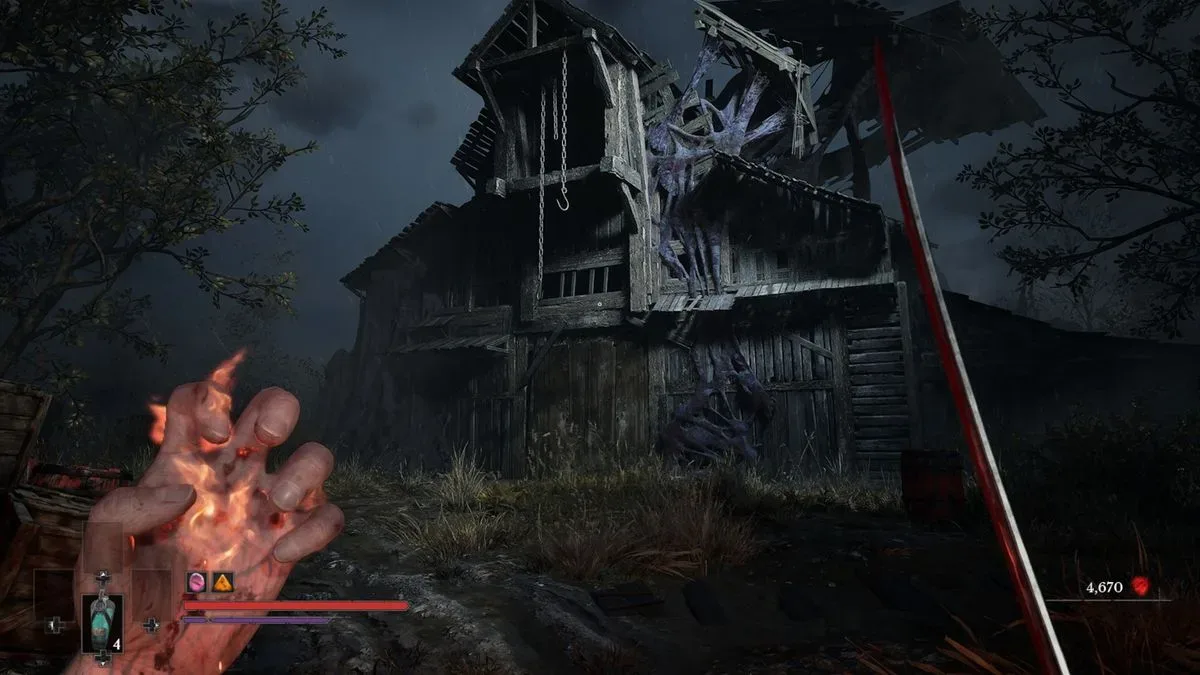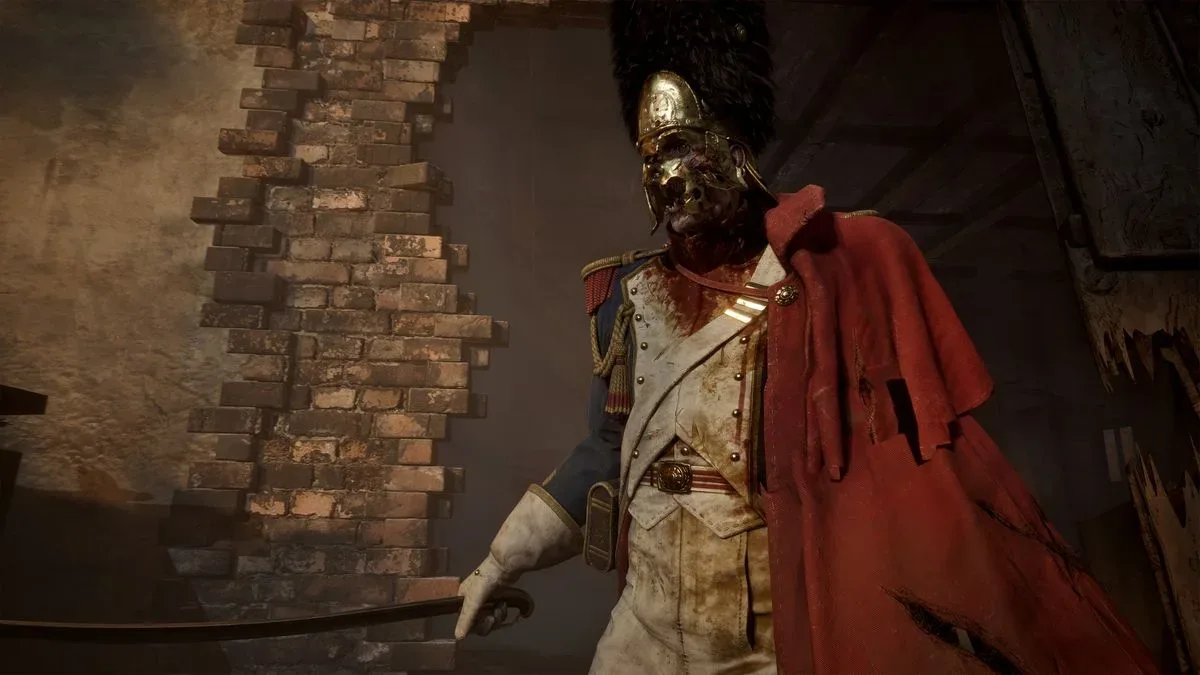
Valor Mortis has a strong elevator pitch: take the punishing rhythm, shortcut-heavy exploration and currency-recovery stakes associated with Soulslikes, then force the action into first person in a plague-ravaged, supernatural vision of Napoleonic Europe. It is an immediately legible premise, but one with enough odd components to make it interesting: a resurrected soldier with amnesia, flame-casting hands, firearms, grotesquely transformed enemies and, yes, a sentient windmill boss.
The critical picture at launch is similarly split. The game’s most persuasive idea is not that it has parries—Soulslikes have made those a familiar skill check—but that it makes them feel unusually close and consequential through a first-person viewpoint. When combat becomes a tense exchange of incoming blows, carefully timed deflections and a decisive counterattack, Valor Mortis reportedly delivers the physical immediacy its setup promises. Its biggest stumbles come when it asks players to execute tightly scripted parkour sequences, and when performance problems intrude on a game built around exact timing.
Developed by One More Level and published by Lyrical Games, Valor Mortis is due October 13, 2026, on PC, PlayStation 5 and Xbox Series X. For a broader introduction to its setting and premise, see our earlier coverage of Valor Mortis’ supernatural Napoleonic war.
A Soulslike that is clear about its central demand
William, the player character, begins in a decidedly unhealthy position: he is a loyal soldier of Napoleon Bonaparte who dies before the game properly gets underway, rises again, and has no meaningful memory of how he got there. He finds a Europe overtaken by a plague that has made its victims hostile and armed. The broad story machinery is recognizably videogame gothic, but the setting gives the game room for pulpier, stranger images than another ruined fantasy kingdom.
Mechanically, the structure is no less recognizable. Players are expected to learn enemy patterns, unlock routes through connected spaces, operate without a conventional map screen, and return to their death location for a single chance to reclaim level-up currency. Those are foundational Soulslike ideas: danger is persistent, information is partial, and progress comes from mastering spaces as much as mastering attacks.
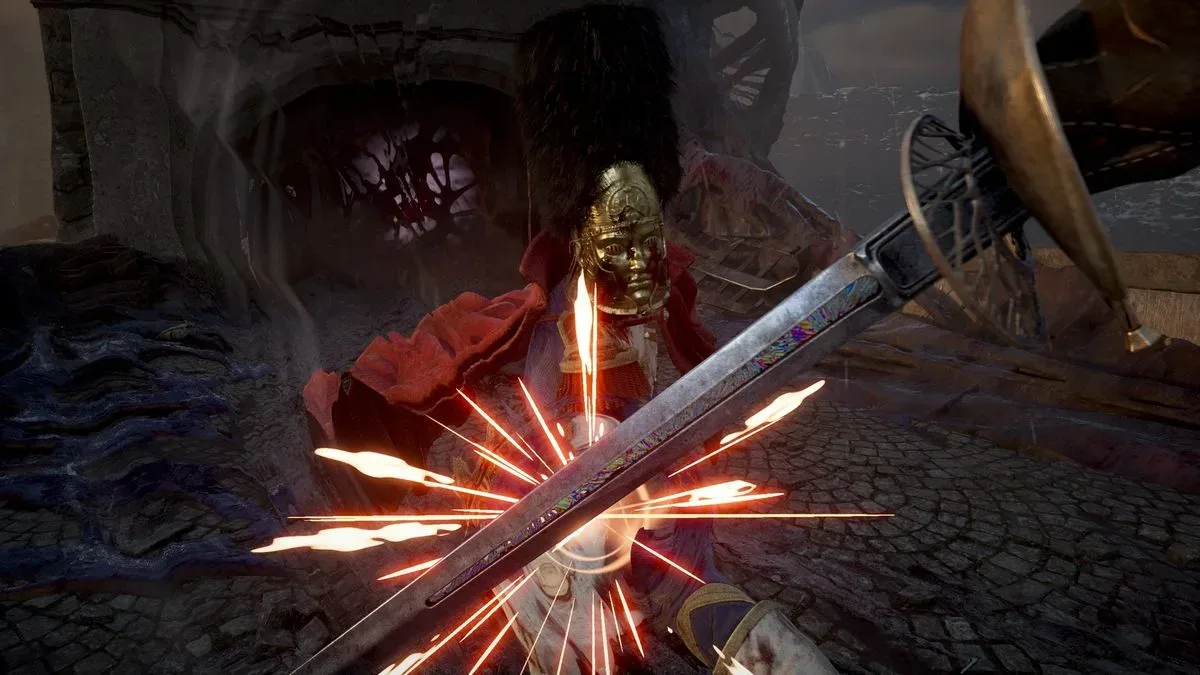
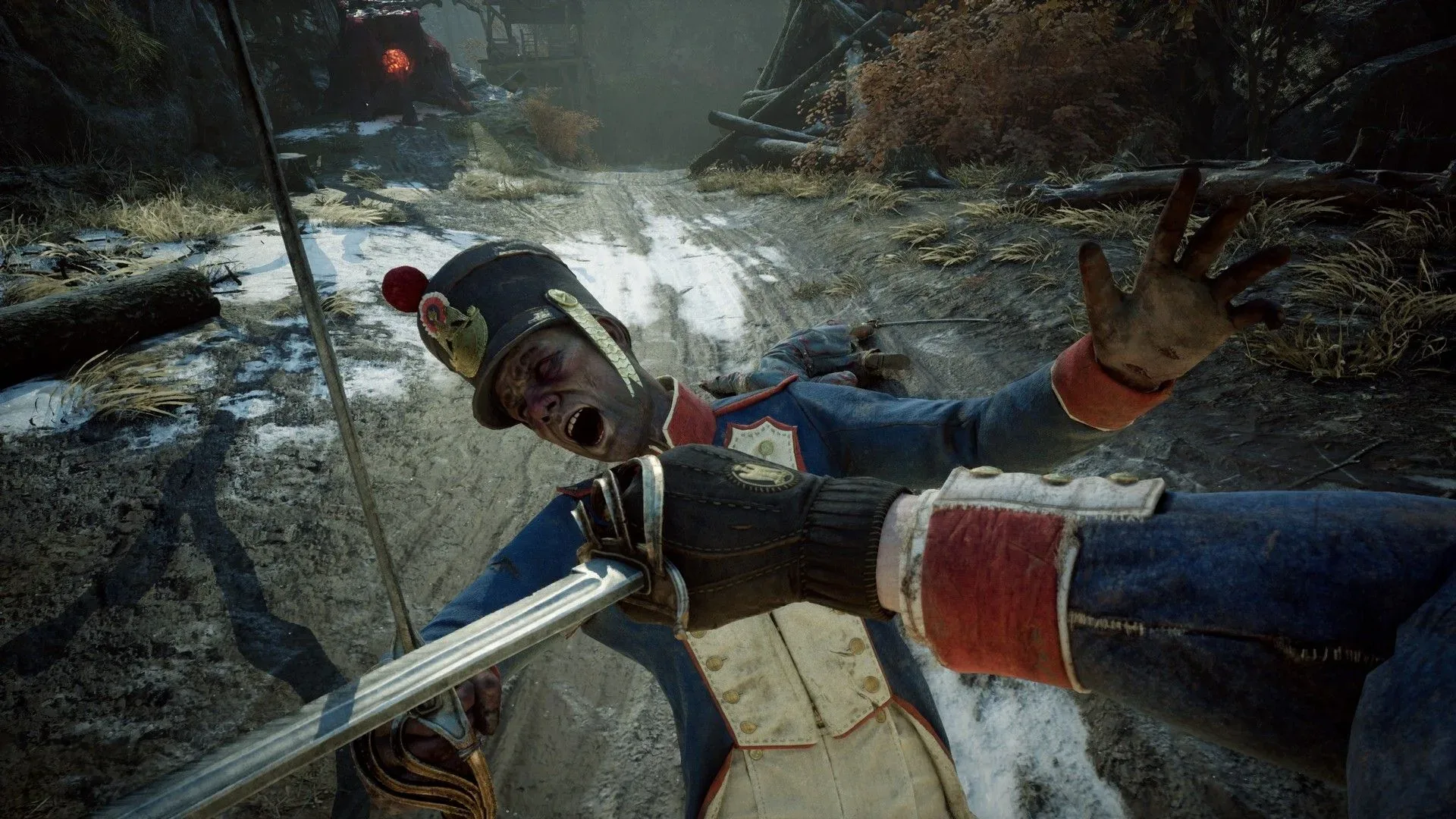
What Valor Mortis foregrounds above all else is parrying. A parry is a precisely timed defensive input that turns an opponent’s attack aside. In this case, regular enemies can require multiple successful parries before their guard breaks, making the move a core loop rather than an occasional flashy answer. This distinction matters for prospective players. A game can contain a parry without demanding it; Valor Mortis appears to build its earliest encounters around it. Anyone who dislikes repeated timing practice or prefers to sidestep defensive tests may find that friction immediately.
The payoff, when the timing clicks, is substantial. First person narrows the gap between player and strike: the opponent’s blade arrives directly into the player’s view, rather than being observed from behind a character model. That can make a successful deflection feel less like a command issued from afar and more like a narrowly survived collision. The reported best boss encounters build on this sensation, becoming severe parry duels in which a few small errors can end a run.
Guns and witchcraft do more than decorate the loadout
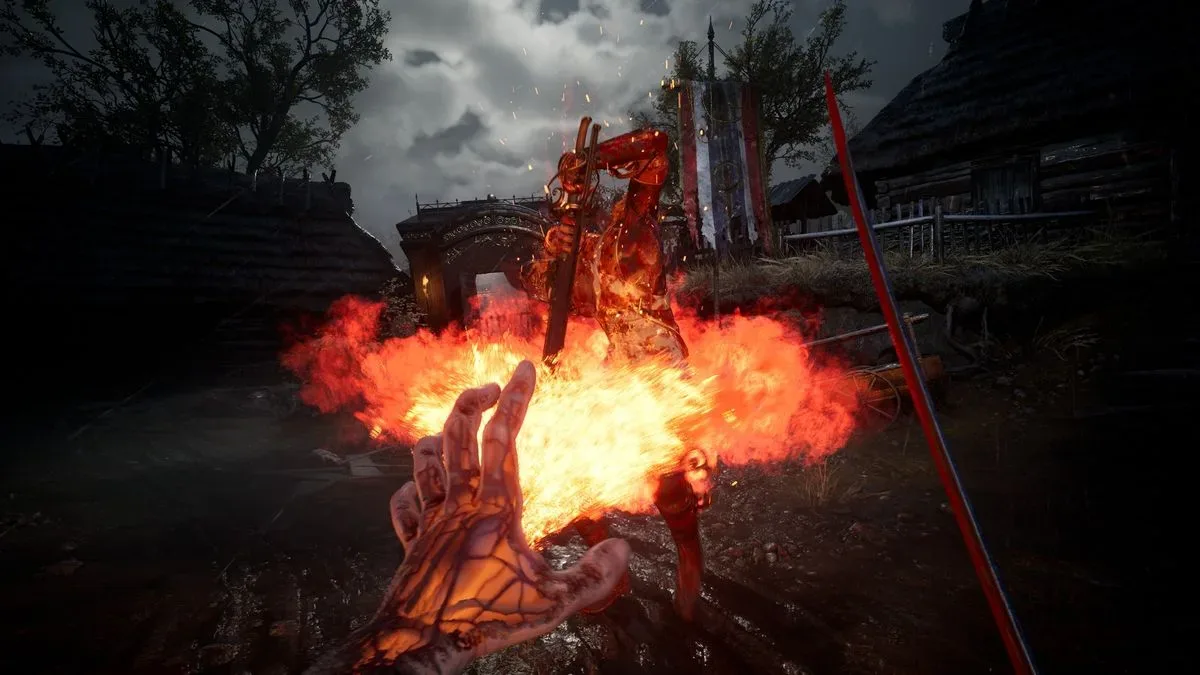
Valor Mortis does not confine William to a sword. He also has a gun and can project fire from his hands, with these tools described as viable combat approaches rather than emergency novelties. That is important in a genre where an arsenal can often be technically broad but practically subordinate to one dominant melee strategy.
Related coverage includes Valor Mortis Review: First-Person Parrying Gives This Napoleonic Soulslike Its Best Shots.
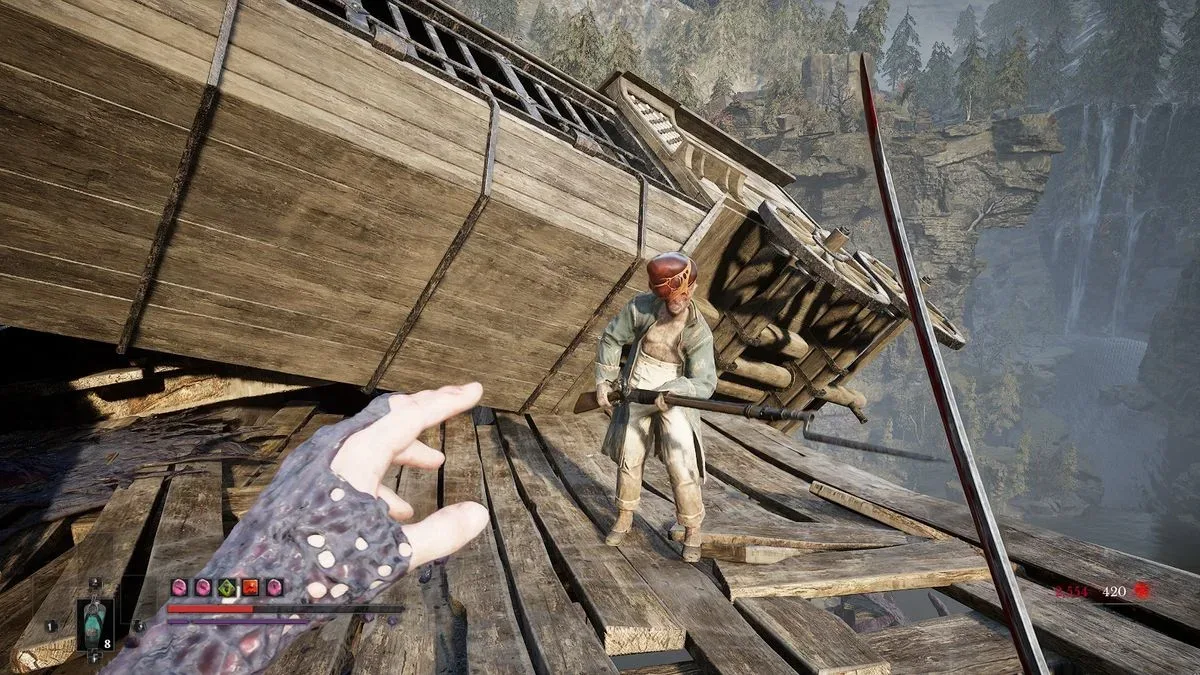
Fire, in particular, can change the approach to an early boss, while a later blunderbuss offers a satisfying interruption to an enemy swordsman’s attack. The firearm’s appeal seems straightforward: a close-range shot is an aggressive way to seize space and puncture the formality of an otherwise blade-focused duel. It also helps sell the alternate-history military setting more effectively than a saber alone could.
But the game’s supernatural abilities do not always seem to turn into equally fresh design. Time-stopping is used for familiar environmental puzzles, such as holding a moving cog in place long enough to clear a gate. Another ability produces temporary surfaces for running, though only in designated areas. A shield power can deflect attacks, which creates a slightly awkward progression issue: after a long stretch spent teaching precise parrying, it offers a tool that reduces the need to engage with that learned precision.
That does not mean every ability needs to reinvent action games. It does suggest the difference between having powers and building situations that draw out new decisions from those powers. Valor Mortis seems strongest where its systems combine in combat—parry, strike, burn, shoot—rather than where an ability is treated as a conspicuously marked key for a prescribed obstacle.
The Ghostrunner connection is both asset and warning
One More Level is also the developer of Ghostrunner, and its influence can be felt in Valor Mortis’ mobility. Wall-running and pole-swinging bring an unusual degree of athleticism to a genre often associated with deliberate, ground-bound movement. Used in ordinary traversal, that mobility can be liberating: it gives William a different relationship to the world than the heavily armored wanderers who usually populate Soulslikes.
The trouble is in the more theatrical sequences. The review describes scripted platforming stretches that demand near-perfect execution, feel more like memorization tests than responsive challenges, and can kill the player instantly if they reach a collapsing platform before the intended dramatic cue. In other words, the issue is not simply difficulty. Soulslikes are allowed to be difficult—indeed, that is much of their purpose. The complaint is that the game’s rules can become unclear when its cinematic scripting overrides player momentum, including use of a sprint button.
This is a useful distinction for assessing demanding games. A hard combat encounter usually communicates a language: read the animation, identify the opening, choose a response, improve on the next attempt. A rigid chase or platform sequence can ask for learning too, but it risks feeling arbitrary if speed, route choice and success conditions are concealed by a sequence the game insists on staging one particular way. Valor Mortis apparently crosses that line often enough for its parkour to become a major caveat.
Horror imagery and secondary characters help the world stick
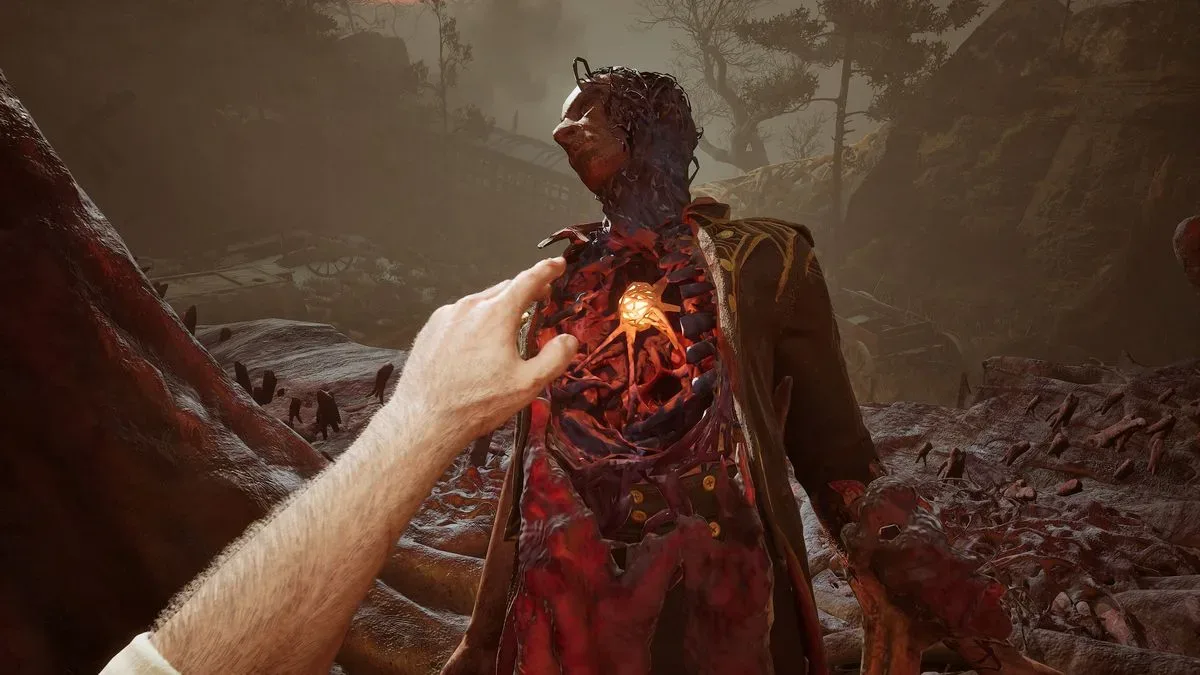
For all its familiar genre scaffolding, Valor Mortis has flashes of genuinely nasty imagination. Its “dog” enemies are not simply supernatural hounds; they are human soldiers contorted into canine shapes, barking and pursuing William accordingly. That is a concise, upsetting monster concept that makes the plague feel like more than a generic explanation for hostile enemies.
Its narrative color is also said to improve whenever it moves away from Napoleon’s voice in William’s head. Napoleon supplies combat advice, but his lines are portrayed as bland enough to undercut the notion that players are sharing their thoughts with a legendary strategist. Other figures fare better: a reckless scientist dispatches William on lethal research errands, while a settlement’s reverence for a mysterious deity develops into one of the story’s stronger reveals.
The standout detail is a group of unseen children who narrate and guide the player through a ruined city. Their crude wall drawings record the monsters William has encountered. It is a small environmental storytelling device, but it appears to do several jobs at once: it provides a softer visual counterpoint to the horror, lets the game reflect on its own creatures, and establishes a human presence without requiring a conventional companion at William’s side.
These are the kinds of details that could give Valor Mortis an identity beyond its mechanical influences. A first-person camera alone does not automatically make a Soulslike distinct; an unsettling bestiary, an eccentric cast and a setting that finds room for both grimness and absurdity can do more of that work.
Launch-state performance is a consequential concern
The review’s technical warning is not minor. Its PC playthrough encountered crashes to desktop, highly inconsistent frame rates and a boss that stopped attacking. A launch-day patch is said to address many of those issues across PC and console, but the result will need to be assessed after release rather than assumed in advance.
Performance matters in every game, but it matters especially in one that asks the player to parry rapidly and precisely. Frame-rate instability can affect the perceived smoothness of enemy motion and the consistency with which a player reads an incoming blow. A crash is also more aggravating in a structure where progress can be earned through repeated failure and gradual familiarity. Even if technical problems do not literally alter input timing, they can disrupt the confidence and rhythm that a demanding action game depends on.
That makes patience a practical option for interested players, particularly those considering the PC edition. The review was conducted on PC hardware that had handled another recent large action release without issue, which reinforces that the observed instability should not be casually dismissed as an obviously underpowered setup. The clearest next step is to watch how the day-one update performs on each platform.
Who Valor Mortis appears to be for
Valor Mortis sounds aimed squarely at players who enjoy deliberate, high-pressure action and are willing to treat parrying as a language worth learning. The first-person perspective is its strongest differentiator because it changes the sensation of the genre’s central exchanges, making blade-on-blade confrontations feel close, urgent and occasionally exhilarating. The gun and flame abilities provide welcome tools alongside that demanding sword work, rather than merely sitting on the sidelines.
At the same time, the game seems less convincing as an overall evolution of the formula. Several powers are applied in familiar ways, its progression has an uneven early difficulty curve, and some bosses are more frustrating than their concepts are exciting. A sentient windmill is absolutely the sort of sentence that should make an action-horror game memorable; a finicky fight can prevent that novelty from paying off.
The central contradiction is clear. Valor Mortis has enough verve to be easy to root for: monstrous soldiers shaped like dogs, supernatural battlefield weaponry, strange characters and close-in defensive combat all point toward a game with a vivid personality. Yet its rigid platforming and launch technical issues threaten to turn its best attribute—precision—against itself. For players who want first-person Soulslike combat and can tolerate some familiar ideas around it, William’s resurrection may be worth watching. For everyone else, the condition of that launch patch is likely to matter as much as the sharpness of his sword.