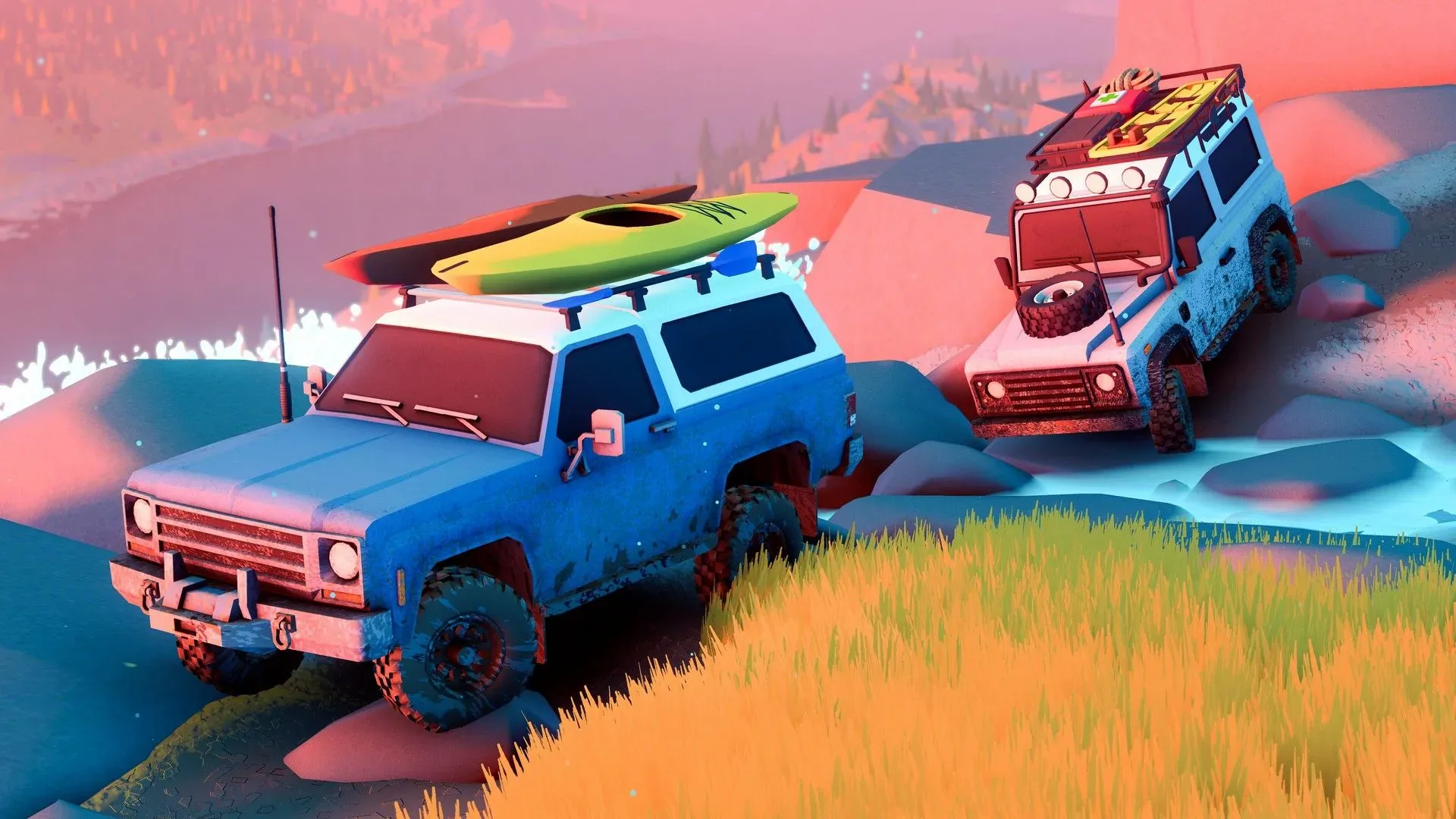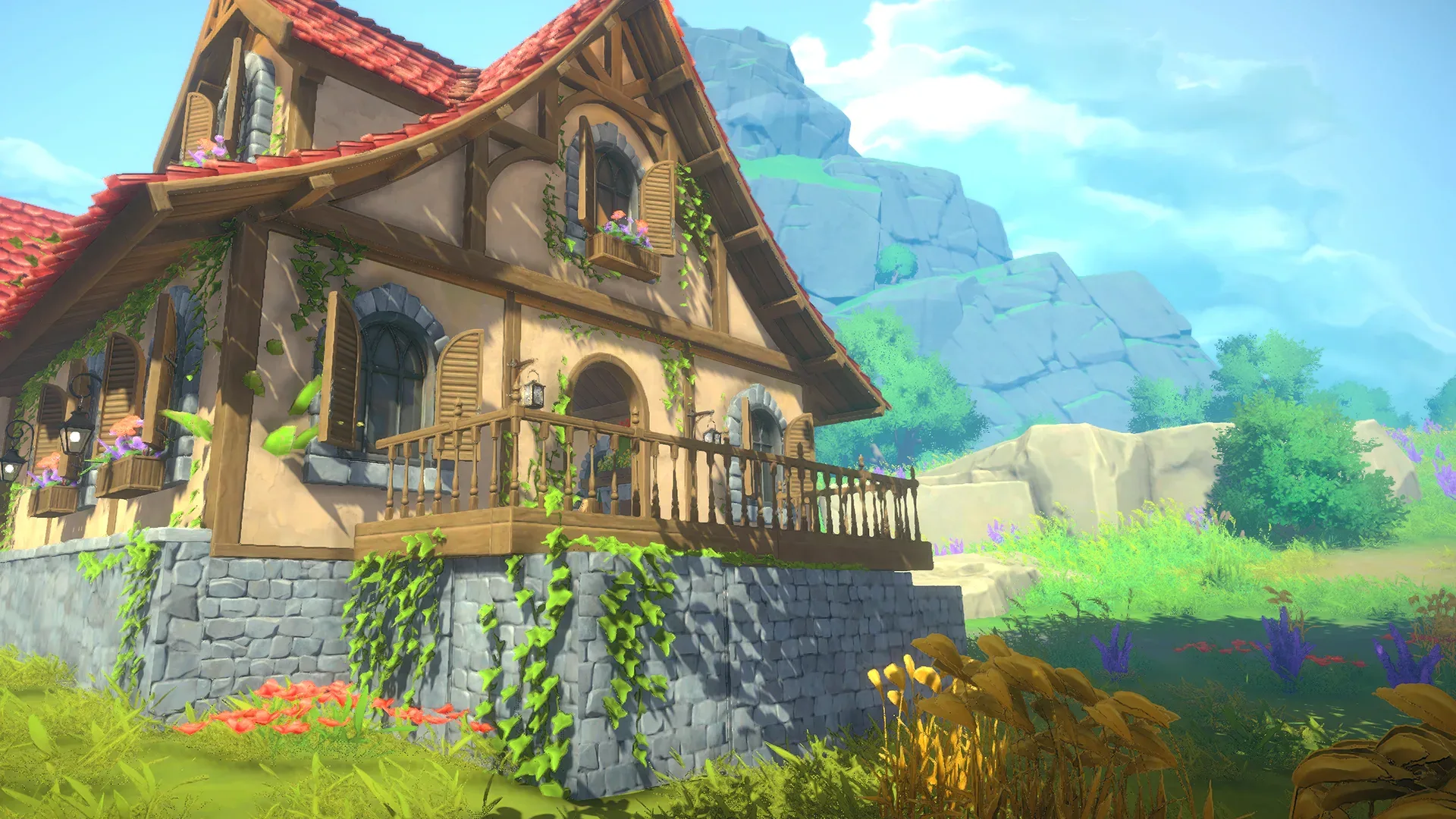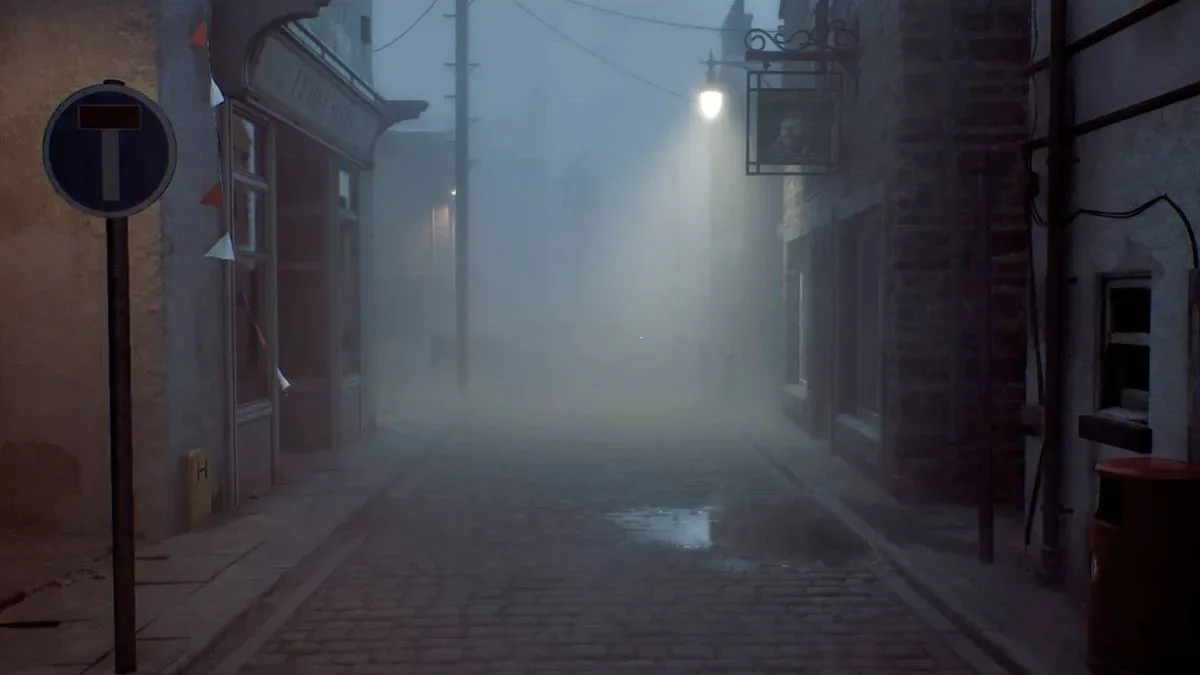
Over the Hill has the visual ingredients of a game designed to lower the heart rate: little off-road vehicles, wide wilderness, acoustic guitar on the tape player, distant wildlife and sunlight sliding across hillsides. Its actual driving, however, is built around traction failure, punishing slopes and the stubborn fact that a tree is not moved by your optimism.
Funselektor Labs’ off-road exploration game released on October 14, 2026 for PC, PlayStation 5, Xbox Series X and Nintendo Switch 2. It comes from the developer behind Art of Rally, and its presentation carries some of that earlier game’s recognizable stylized character. But where Art of Rally’s driving fantasy is about rhythm and flow, Over the Hill is much more interested in the uneasy relationship between a vehicle, gravity and an aggressively inconvenient landscape.
That difference matters. This is not a game where the open road is an invitation to floor the accelerator and chase a horizon. It is a game where the horizon may be technically reachable, but first you must find a route that will not leave your vehicle sliding backward, snagged on a tree or marooned in terrain that looked harmless from 20 metres away. The wilderness is scenic, but it has clearly been taking notes from the world’s least forgiving parking lots.
The central drive is friction, literally
Over the Hill’s early hours make limited grip a core part of the experience. Vehicles struggle on inclines, and getting upward momentum can become a laborious cycle of sliding, skidding and choosing a new angle. Tire upgrades improve matters, but they do not transform the game into an effortless cross-country cruise. The central challenge remains terrain management: reading the surface, avoiding angles that can overturn or strand a vehicle, and accepting that the direct route is frequently a trap.
In practical terms, traction is the amount of grip a tire can generate against the ground. When a hill is steep or its surface is loose, wet or icy, the wheels may spin or the vehicle may lose forward progress. Over the Hill bases much of its tension on that simple problem. Rather than treating rough ground as a temporary obstacle between destinations, it makes rough ground the destination’s main character trait.
There is a contradiction at the center of that design. Players can travel widely, yet many steep hills are effectively blocked. The result is an open landscape that can feel unexpectedly linear as drivers search for flatter, safer passageways. That does provide authored challenges: protruding stones, slick rock faces and awkward routes appear deliberately arranged to test careful movement. But it also limits the sense of freedom promised by the broad environment. “You can go anywhere” loses some force when “anywhere” comes with a lengthy disclaimer about not actually being able to get up there.
The winch is the game’s genuine rescue hero
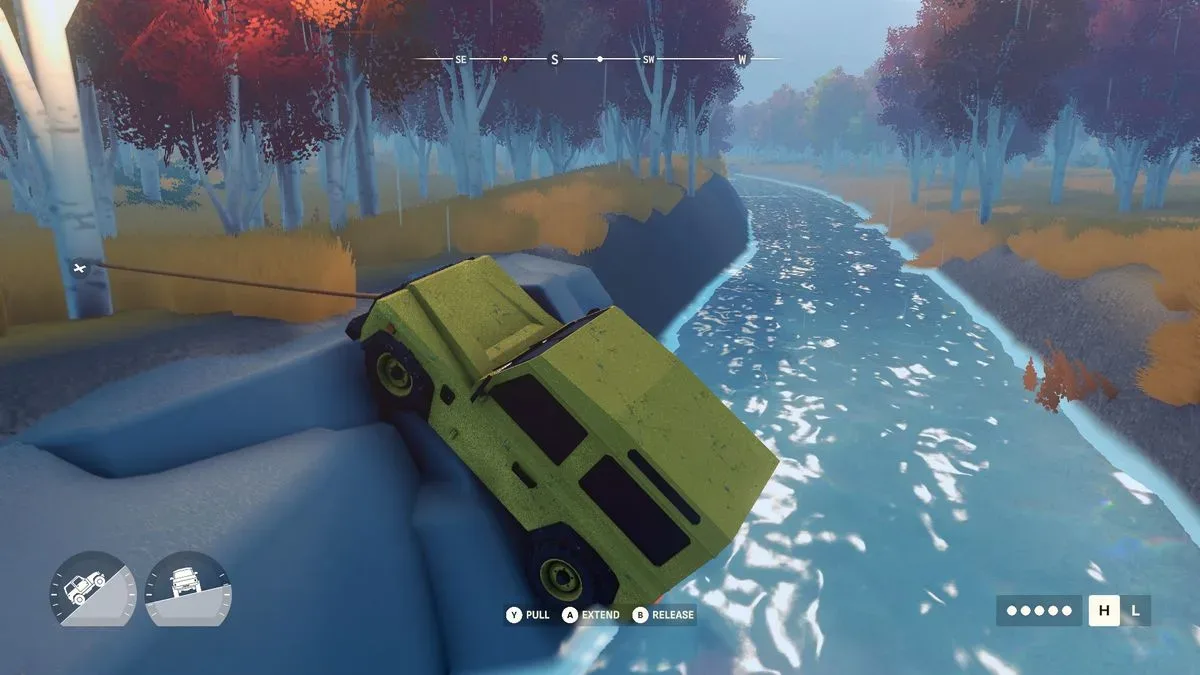
The standout tool is the winch. Using an Xbox controller, it can be quickly attached to trees and reeled in, pulling the vehicle out of mud, water, rocks and other varieties of self-inflicted automotive despair. It is a smart system because it directly turns the environment into a solution. A tree that previously stopped a climb can become the anchor that saves it.
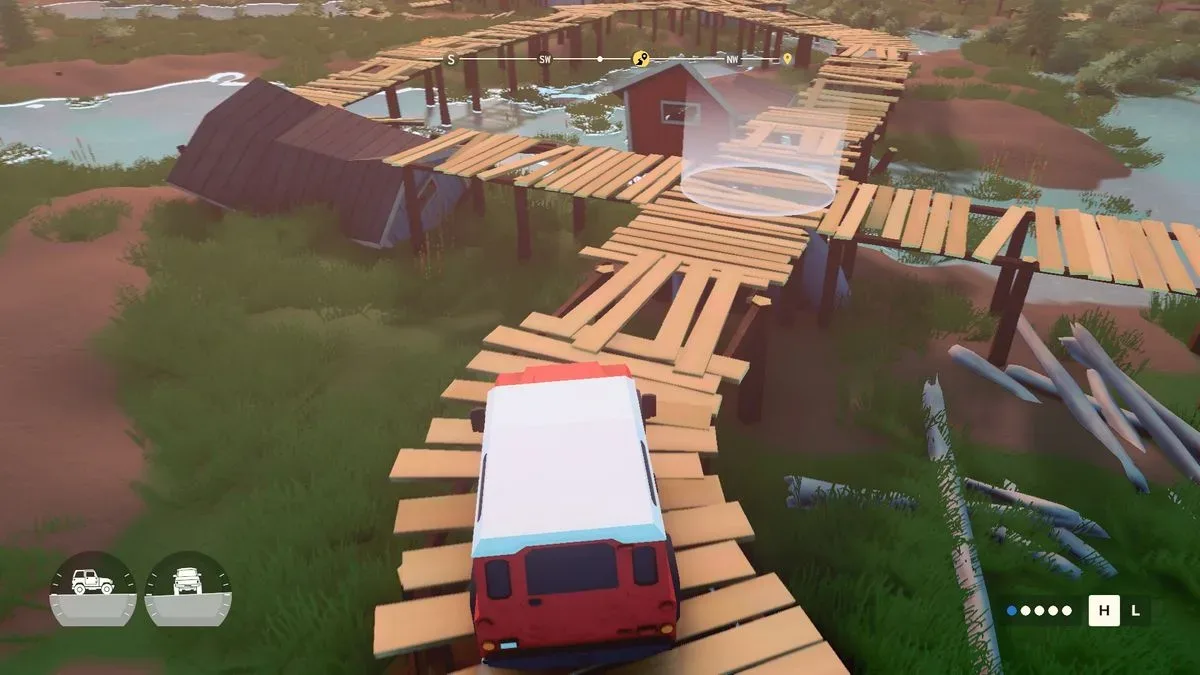
Later tools broaden that survival kit. Limited-use planks can bridge small gaps, while a jack can reset a rolled vehicle. The jack functions as a respawn rather than physically lifting the chassis, so it can feel more like an emergency correction than a simulated roadside recovery. An additional item allows an anchor point to be created in many locations, which is powerful enough to resemble a cheat when a natural winch target is unavailable. Yet Over the Hill’s unforgiving terrain makes that sort of intervention sometimes feel necessary rather than optional.
Related coverage includes Over the Hill Review: A Gorgeous Off-Road Journey That Often Becomes a Grind.
That is an important distinction in a driving game with simulation-adjacent ambitions. A good recovery mechanic does not merely undo failure; it gives failure an interesting next step. The winch appears to do precisely that. It asks drivers to assess their surroundings and improvise a pull rather than simply reload. When it works, the game’s hard-won progress can feel earned.
Trails give the wilderness its clearest purpose
The strongest structured content comes in the form of trails. These routes ask players to reach checkpoint circles placed along difficult tracks, turning the broader off-road premise into a clearer videogame challenge. The format offers goals, pacing and a reason to care about each awkward rock rather than merely resenting its geological career choices.
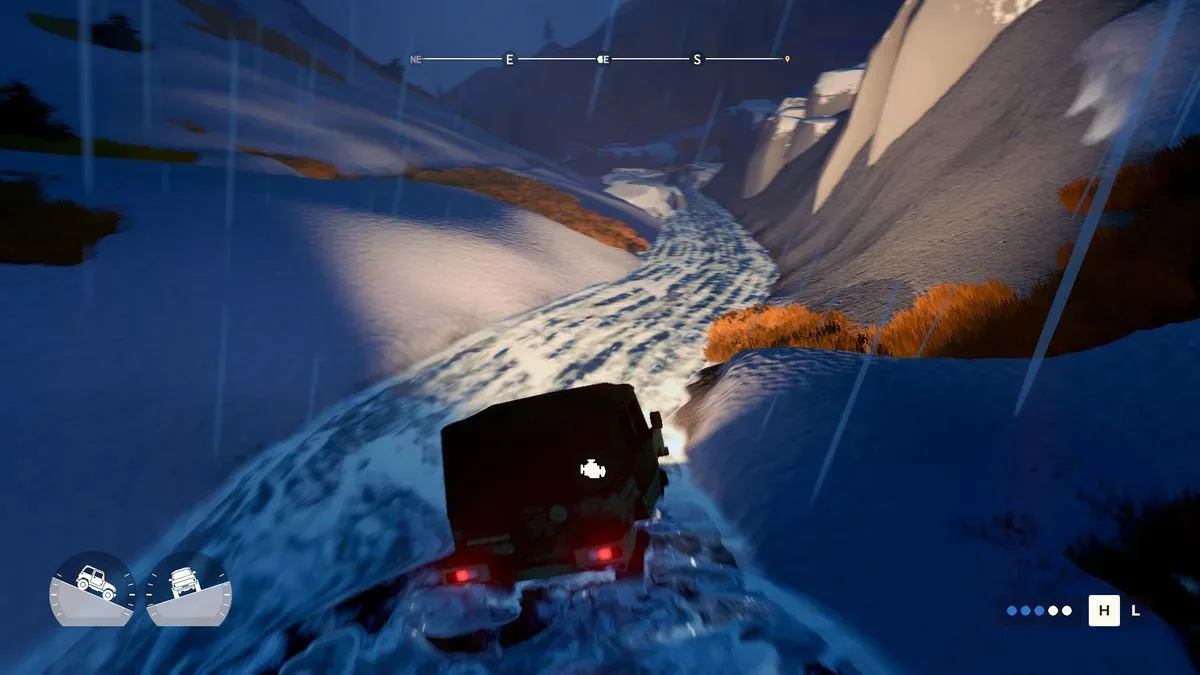
One trail, Bridal Veil in the second Canadian region, stands out for combining a challenging route with a waterfall and favorable weather. These are the moments where Over the Hill’s art direction and environmental design pull together. The landscapes can look attractive, with lighting, fog and weather helping establish mood. Storms are especially dramatic, shaking trees across the screen as rain changes the tone of a route.
The game’s soundtrack is diegetic, meaning it is presented as part of the game world rather than as music heard only by the player. Here, it comes through the vehicle’s tape player, which lets drivers switch tracks or albums. That detail helps sell the fantasy of being alone in a cab while weather batters the roof and headlights dip across uneven ground. Acoustic guitar is an especially fitting match for the game’s quiet, remote mood, even when the next incline is preparing to ruin it.
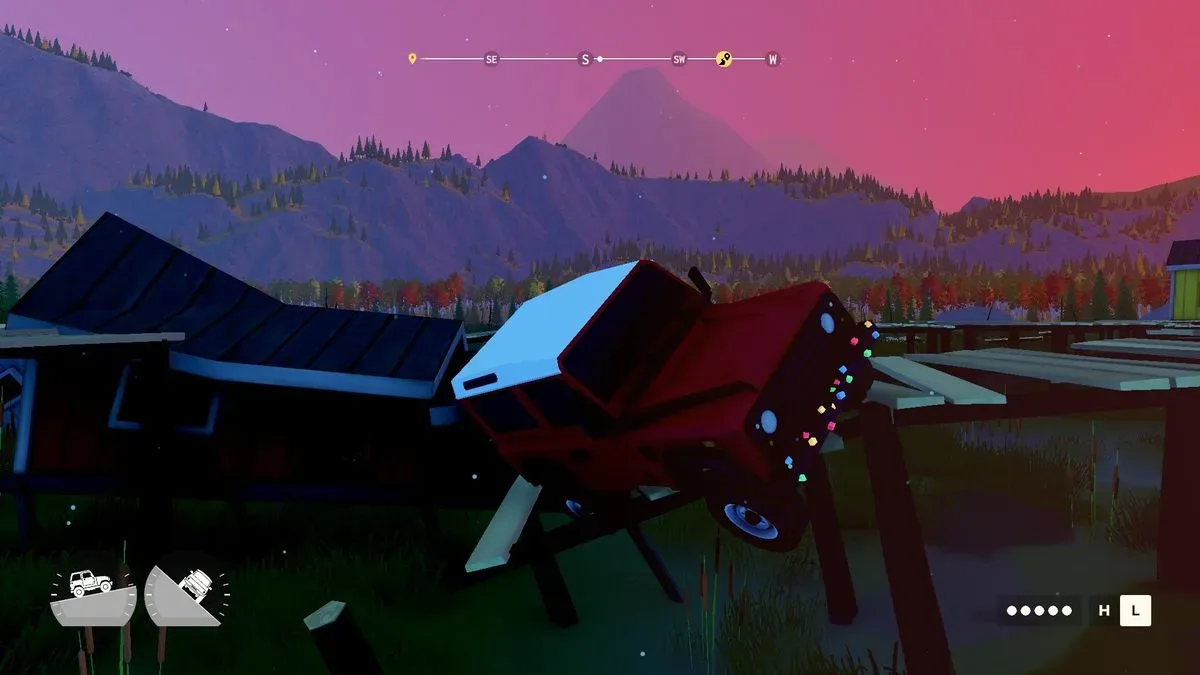
At night and in storms, the atmosphere can be compelling. A vehicle creeping along a mountainside with a severe drop nearby has an old motoring-show kind of drama. The problem is that those vivid conditions do not always translate into sustained discovery. The world can become a sequence of slow crossings through dunes, valleys and hostile surfaces, with not enough new activity to match the time required to traverse them.
Exploration exists, but discovery can feel thin
Driving into unmapped space clears the fog of war, revealing question-mark points of interest. These can lead to crates containing vehicle personalization options, vehicles that can be towed back to camp, gates for trails and other objectives. Fully clearing an area removes its fog of war. There is no stated rush to complete that work, and the game allows players to proceed at their own pace.
That relaxed structure may appeal to players who like self-directed exploration. It also means the game depends heavily on the intrinsic appeal of driving through its environments. When the landscape is beautiful and a route presents a readable problem, that can be enough. When the terrain is sparse and the vehicle’s pace is extremely slow, the absence of more frequent discoveries becomes harder to ignore.
Vehicle customization supplies one layer of reward. Players can unlock decorative items, including notably festive combinations of lights, wreaths and other embellishments. An instant camera permits wildlife photography, too. Wildlife sightings are not constant, so spotting an eagle can have a stronger effect precisely because it is unusual. Still, the feature is not positioned as a deep animal-spotting system; it is a small, pleasant activity within a generally isolated journey.
A handful of mechanics sell upgrades through brief dialogue interactions, but the game otherwise emphasizes solitude. That isolation is clearly part of its intended atmosphere rather than an accidental omission. For anyone who wants an unhurried, lonely drive accompanied by rain, radio music and the occasional mechanical emergency, it may be part of the appeal. For players seeking regular narrative encounters, escalating events or a dense world of surprises, it may feel barren.
Stylized scenery, serviceable simulation
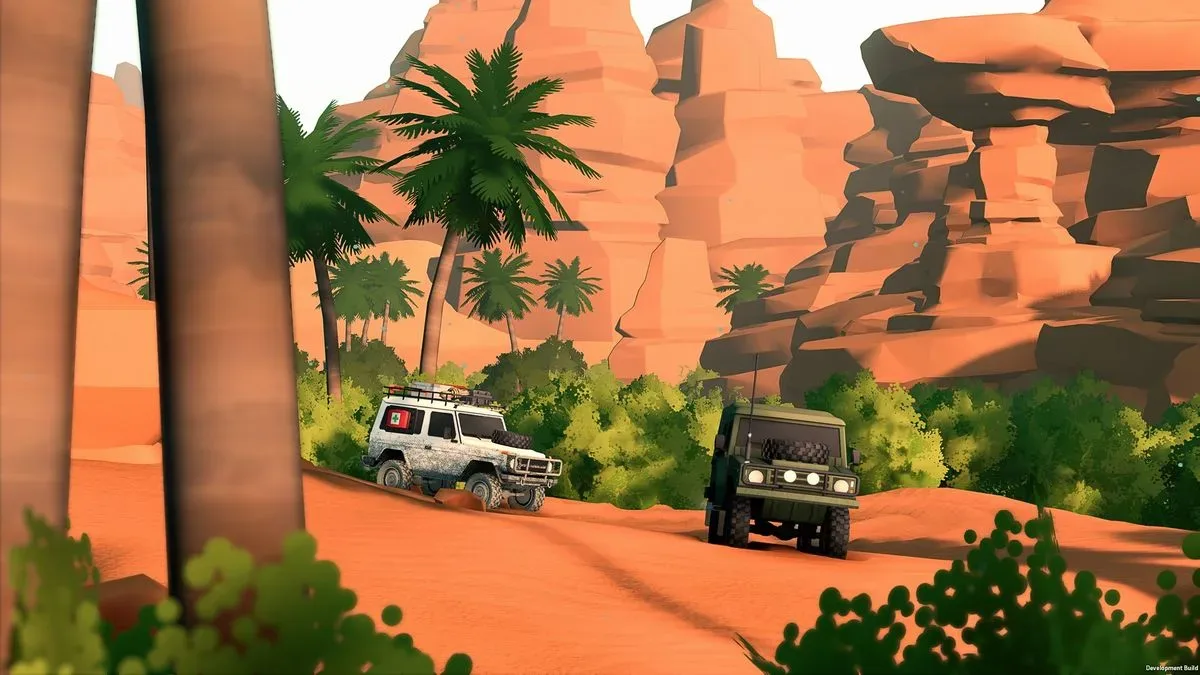
Over the Hill uses a stylized visual approach reminiscent of Art of Rally rather than aiming for strict photorealism. Lighting, fog and weather effects do considerable work, although sparse spaces such as the Algerian desert can look basic. The game reportedly runs well on Steam Deck despite large draw distances, with little visible LOD redraw. LOD, or level of detail, refers to how games substitute simpler models at a distance to preserve performance; obvious transitions can break immersion, so keeping them unobtrusive is a meaningful technical positive.
The vehicle physics are less convincing than those of some more realistic off-road games. Movement at extreme angles can look questionable, while mud and snow deformation has limits. Deformable terrain describes surfaces that visibly react to vehicle movement, such as tires carving ruts through mud. Here, terrain flattens but does not appear to rebuild under reversing or push outward in a fully dynamic way. It can still look effective when wheels leave broad tracks through a swamp or deep snow, but the system does not consistently convey the physical complexity its subject invites.
Online play is available for people who would rather share the ordeal. Players can winch one another out of trouble and cooperate on larger meteorites. But the game was designed first as a solo experience, and online performance is still being improved. Anyone considering co-op should therefore view it as a supplemental mode rather than the foundation of the experience. Players in the mood for a more traditionally cozy cooperative PC game may also want to look at this recent cozy builder release, though its premise is very different.
Who should brave the hill?
Over the Hill seems best suited to patient players who enjoy deliberate traversal, route planning and extracting a vehicle from terrible decisions with a well-placed winch. Its best scenes sound quietly cinematic: headlights in the rain, a dangerous mountainside, a waterfall appearing after a punishing route, and a lone eagle over an otherwise empty landscape.
Players expecting an easygoing open-world driving holiday should adjust expectations. The pace is slow, the terrain is routinely hostile, and the world’s points of interest may not provide enough variety to make every lengthy journey feel worthwhile. Its most memorable mechanic is not speed, spectacle or sightseeing. It is the rope that hauls you out when the hill has once again made its position on your plans extremely clear.