Silent Hill: Townfall is positioned as a bleak, patient kind of horror: one that does not depend on constant shocks, but instead turns uncertainty, limited options and prolonged vulnerability into its primary weapons. Developed by Screen Burn Interactive and published by Konami, it arrives on September 24, 2026 for PC, PlayStation 5 and Xbox Series X.
The game moves the series’ nightmare logic to St Amelia, a small Scottish coastal town in the early 1990s. Players take the role of Simon Odell, a protagonist who arrives with no meaningful understanding of why he is there or even what the place truly is. That uncertainty is not merely setup. It appears to be the structure Townfall builds around: players investigate alongside Simon rather than being handed a neat explanation at the outset.
For horror fans who like dread to accumulate gradually, the result sounds unusually potent. But Townfall’s commitment to stealth and severe consequences means it may be a difficult recommendation for anyone who wants regular combat, flexible problem-solving or a smoother forward pace.
A Scottish town built for unease
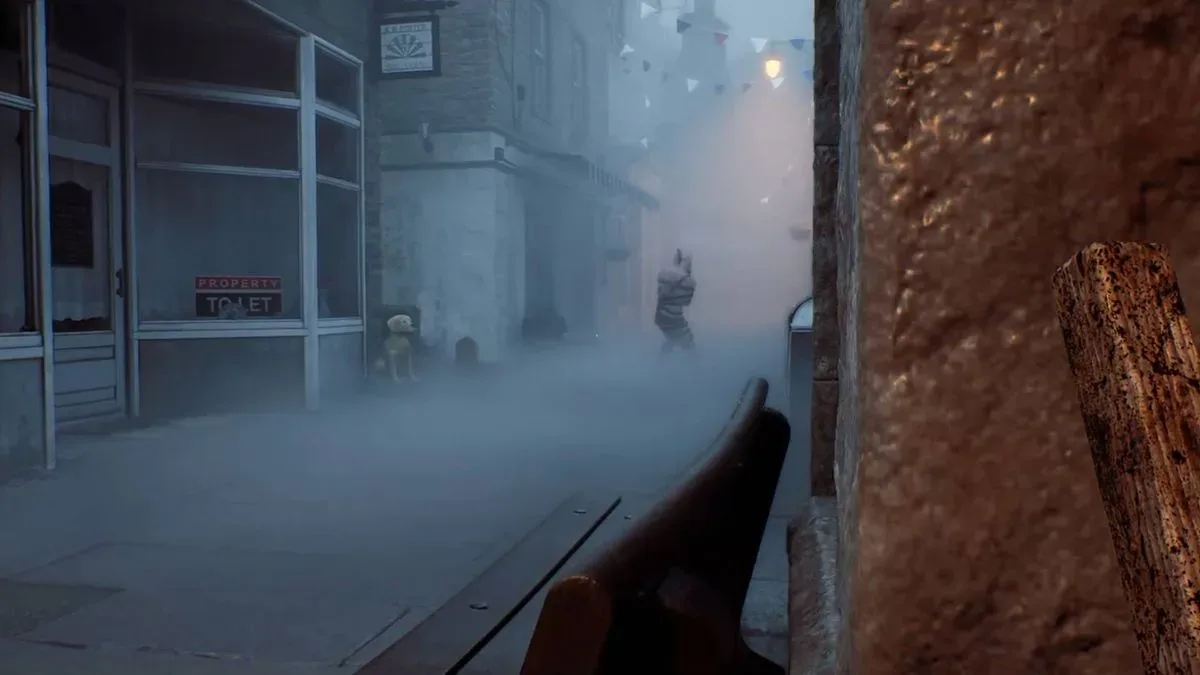
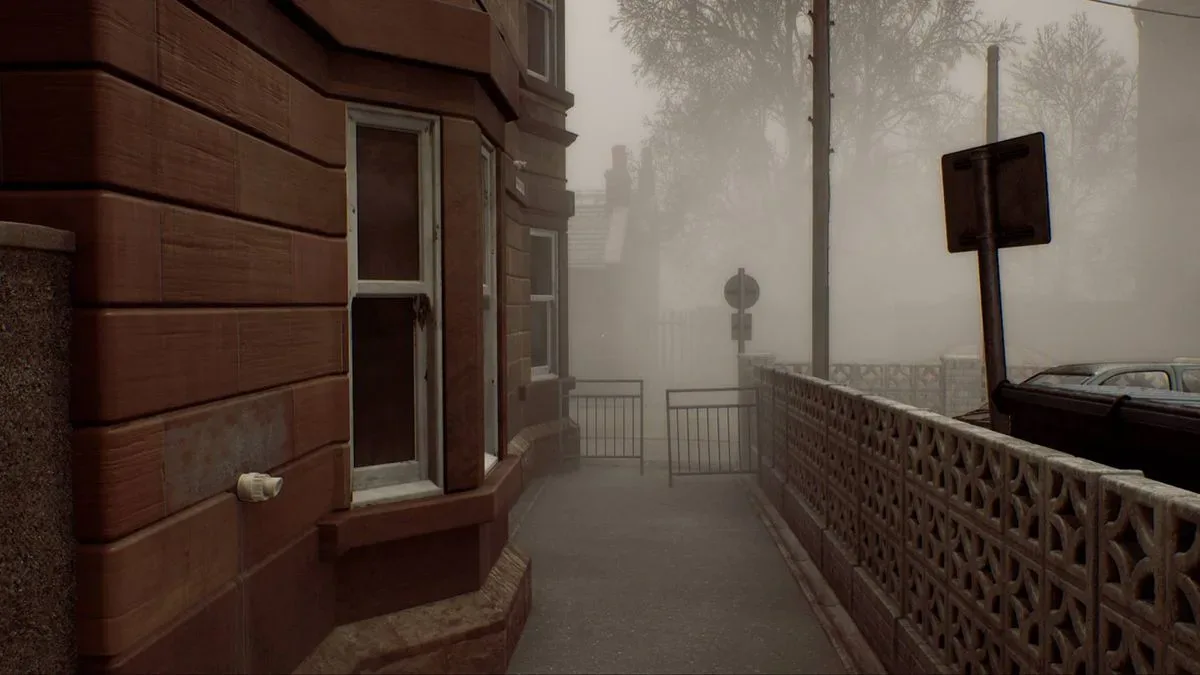
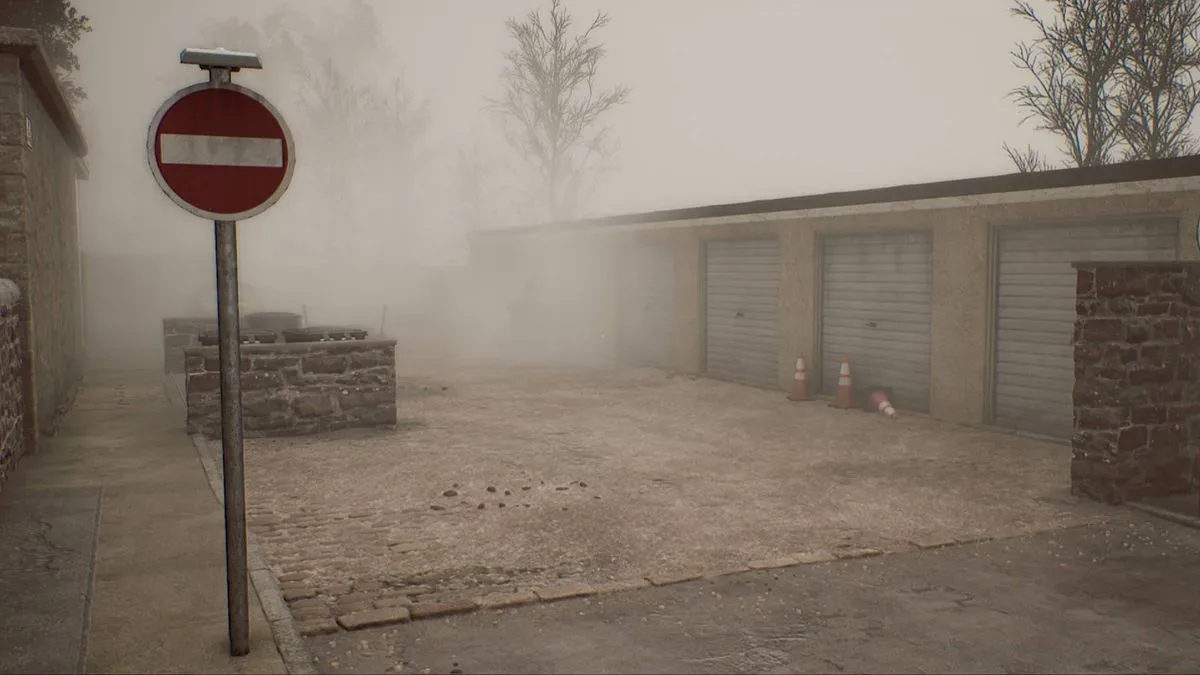
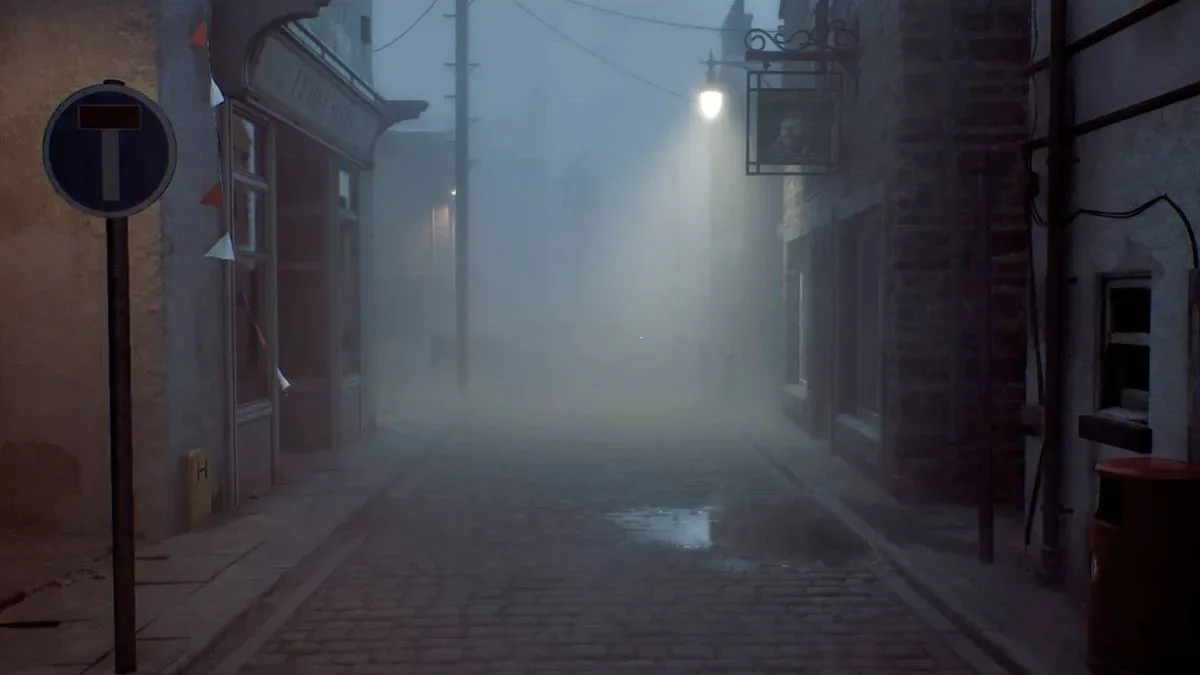
St Amelia supplies the game with an identity distinct from the familiar American setting long associated with Silent Hill. Foggy streets, coastal cold, housing estates and shopping centres evoke a recognisable 1990s Britain, while the seaside setting adds a particular kind of isolation. The physical world is not described as bustling or nostalgic; it is empty, foreboding and thick with the suggestion that something is profoundly wrong just beyond sight.
That locale is central to Townfall’s effect. Horror environments often work best when they make normal infrastructure feel unreliable: a street becomes dangerous because there is nowhere to hide, while a cramped building becomes dangerous because escape routes are too few. Townfall reportedly uses both. The exterior streets can create frantic, high-pressure chases, but tighter interiors turn detection into a more trapping problem. Being seen may lead to a fight, a dash for safety, or a desperate attempt to break line of sight before a creature closes in.
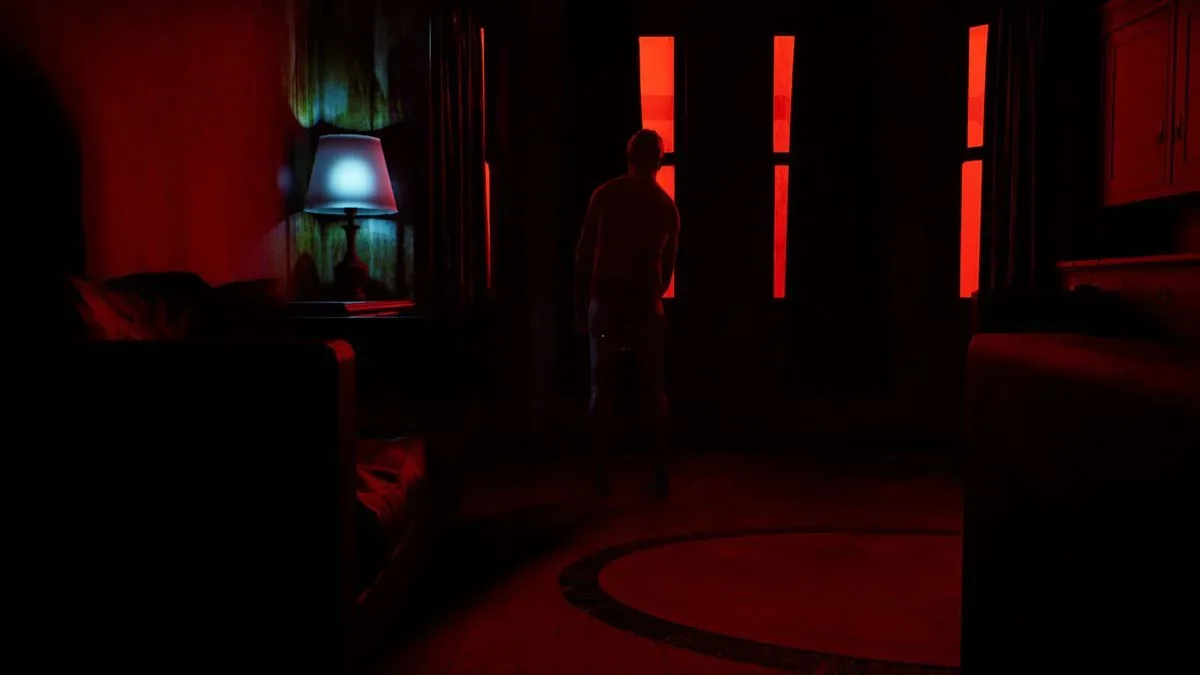
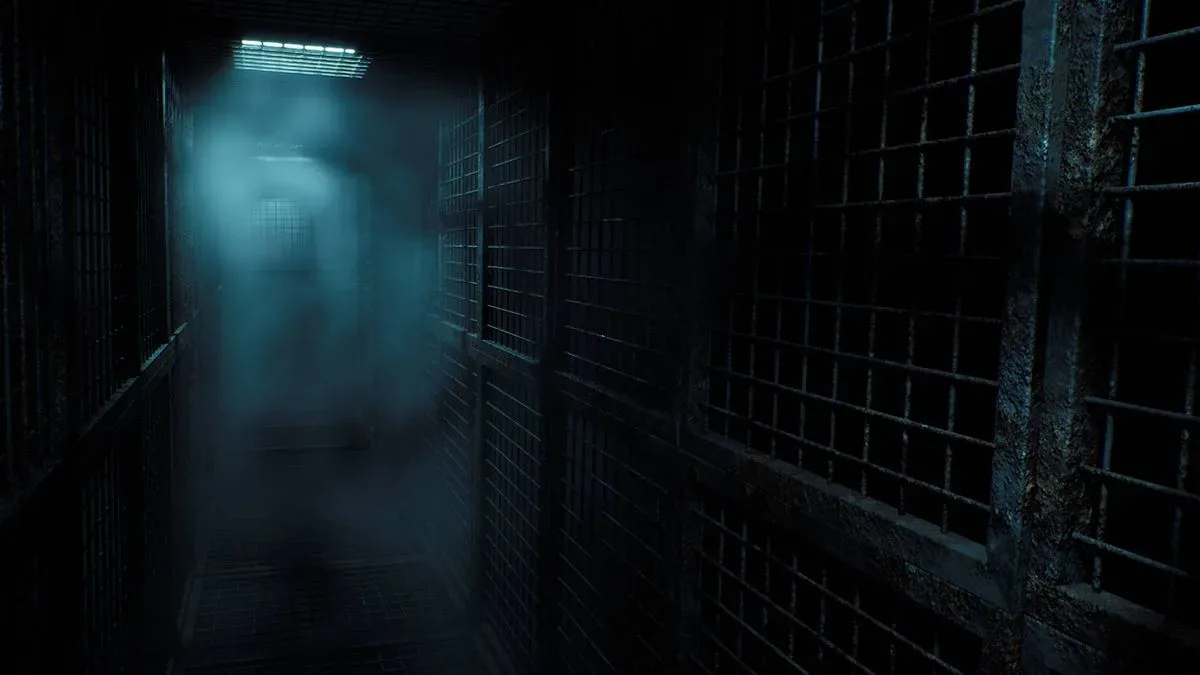
The game’s alternate nightmare spaces, the Otherworld, are given a markedly different visual character. Where St Amelia’s ordinary spaces lean into fog, salt-air desolation and period detail, the Otherworld is described through hard concrete brutalism, strong monotone lighting and an imposing cinematic weight. Brutalism, in architectural terms, refers to an approach commonly associated with massive concrete forms and imposing geometry. In horror imagery, that visual language can make a location feel institutional, inhuman and difficult to escape.
The soundscape appears just as important as the scenery: warped piano, uneasy guitar, abrasive synth textures, distant metal sounds and unseen breathing all contribute to a threat that does not need to be in view to be felt. That attention to audiovisual pressure is a major reason Townfall’s atmosphere stands out. It is not only interested in showing monsters; it is interested in making the space between encounters feel unsafe.
The CRT television changes how players read danger
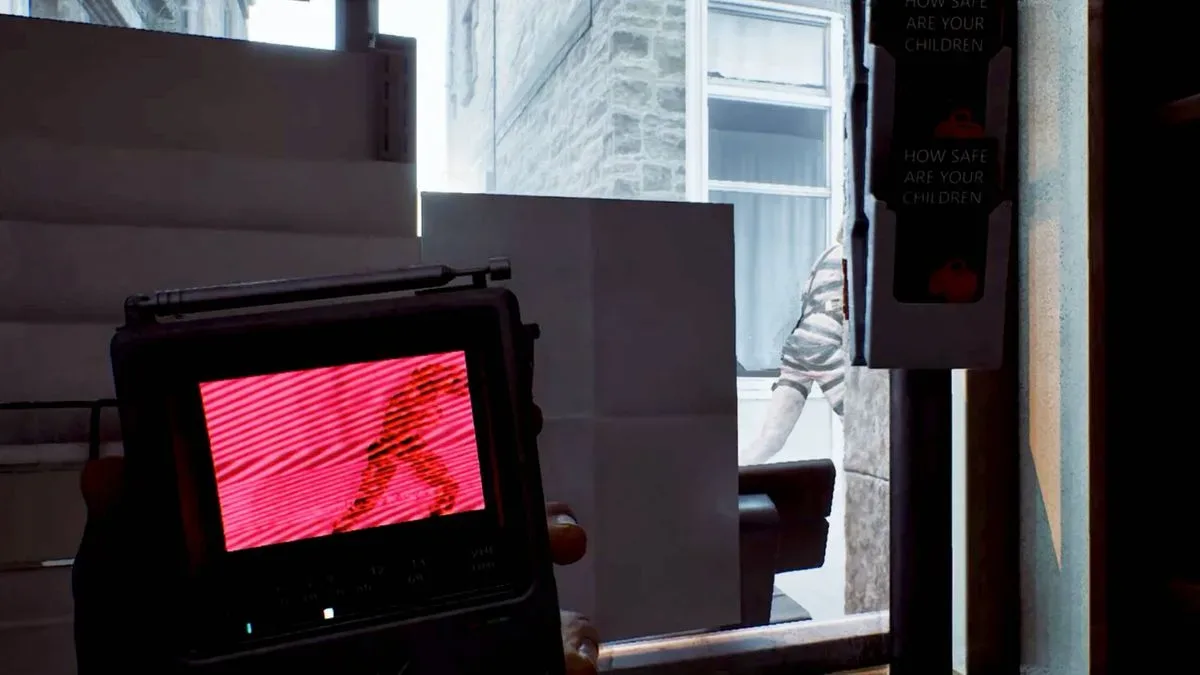
Townfall’s standout mechanical idea is a pocket CRT television, which takes the place of the series’ traditional monster-warning radio. CRT, short for cathode-ray tube, refers to the boxy television display technology common before flat-panel screens became standard. Here, the deliberately old-fashioned device is more than a period prop. It is a detection tool.
Related coverage includes Silent Hill: Townfall Review -- A Terrifying Slow Burn With Few Places to Hide.
Instead of simply signalling that a monster is close, the television can be tuned to detect threats through obstructions, providing an interference-filled, X-ray-like glimpse of danger beyond a wall or around a corner. Crucially, it cannot deliver complete battlefield awareness at all times. Each creature has its own signal, so players must switch between frequencies to locate separate enemies. The design makes information useful but incomplete.
That distinction matters. A detection system can easily weaken horror if it removes too much ambiguity. Townfall’s approach seems designed to preserve uncertainty: the television helps players decide whether a route is safe, but tuning one threat does not reveal every other threat. The player gains a tool, then remains responsible for interpreting a fragmented and noisy signal under pressure.
A separate peek mechanic reinforces that cautious pace. Looking around and over cover gives players tiny visual checks rather than a comfortable view of the area ahead. Together, these systems make surveillance an act of fear. Rather than charging into a room with reliable intelligence, players repeatedly expose themselves just enough to decide whether moving is worth the risk.
Stealth is not an option; it is the game’s foundation
Townfall is said to be intensely stealth-focused, and that should shape expectations before anyone starts. Combat exists, but it is not presented as a dependable route through encounters. Melee weapons such as planks deteriorate quickly, later pipes last longer but still break down, ammunition is scarce, and firing a gun can attract nearby monsters.
In practical terms, that creates a survival-horror economy where fighting costs resources and may create a larger problem than it solves. Players are therefore encouraged to hide, watch patrol routes and move through available gaps. Distractions such as bottles and bricks can briefly pull enemies away, but they are not portrayed as a universal solution.
This is the part of Townfall likely to divide its audience. Strong stealth horror produces fear through helplessness, because players lack the means to simply erase a threat. Yet helplessness also demands that routes be readable and that failures feel understandable. When players can see why they were spotted, adapt their plan and try again, tension can feel purposeful. When an enemy patrol seems to deny movement for too long, that tension can curdle into frustration.
Townfall evidently runs close to that boundary. One recurring special enemy can kill instantly and may linger near the player even when it has not directly found them. The resulting stalemates—waiting in a room while the threat patrols outside, or gambling on a sudden sprint—sound like the game at its most divisive. They serve the fantasy of being hunted, but they can also interrupt momentum and make progress feel subject to luck.
There are systems intended to soften the harshest outcomes. Healing items are plentiful, while an IV-bag resurrection mechanic offers another layer of protection against a punishing return to the last save. This does not make Townfall forgiving, but it suggests the game recognises that its encounters can be especially punishing. The tension comes from knowing that survival may be possible, not from knowing that recovery will be easy.
Where relentless horror risks becoming a grind
The biggest caveat is not that Townfall is frightening. It is that the game sometimes appears to ask players to endure its fear for too long without sufficiently changing the terms.
A notable stretch removes the ability to fight or resurrect while also making enemy detection harder, and it is followed by another similarly severe sequence. Those choices are understandable in thematic terms: stripping away tools can make a horror game feel desperately exposed. But mechanics need rhythm. If several prolonged sections reduce agency in nearly the same way, even an effective scare can lose its force.
Likewise, stealth-heavy games depend on downtime as much as danger. A player needs intermittent relief—whether through investigation, a manageable puzzle, a safe room, a reveal or a brief moment of power—to make the next threat hit harder. Townfall does reportedly offer a late-game reversal involving a shotgun and cat-and-mouse horror, suggesting that it does experiment with a shift in power. That kind of reversal can be valuable precisely because it changes the emotional meaning of the player’s tools.
But the most arduous pursuit sequences and at least one late puzzle appear to keep Townfall just short of being an unqualified masterpiece. The puzzle issue is particularly notable because the game is otherwise said to favour grounded investigation over needlessly elaborate locks and riddle-poetry. An early objective involving an electricity meter and a prepaid card at a newsagent illustrates the approach: it asks players to think through an ordinary local problem rather than decode an ornate abstraction.
The CRT television also has a role in puzzle-solving, tuning into fragmented videos that suggest locations and clues. That gives the central device a second purpose beyond survival, weaving it into the mystery rather than leaving it as a one-note monster radar. Some later Otherworld puzzles become more surreal and directly tied to the narrative, while a few extended fetch-style sequences reportedly feel more laborious than satisfying.
A mystery that withholds its answers
Townfall’s narrative is deliberately slow to clarify itself. For much of the game, players are left with fragments, assumptions and the broad certainty that something awful happened. The story reportedly does not meaningfully identify its shape until well into the experience, allowing the player’s imagination to fill the gaps before the eventual reveal.
That structure is appropriate to Silent Hill’s tradition of psychological interpretation, but Townfall seems to take the idea further by treating the franchise less as one fixed place and more as a force capable of surfacing elsewhere. Earlier recent entries have also explored settings beyond the original town, and Townfall’s Scottish location strengthens that broader reading.
The game’s characters refer to an unnamed “it,” which can be read as evidence that the horror is not simply a local haunting. One interpretation is that Townfall frames its evil as a predatory presence drawn to remorse and suffering. That remains interpretation rather than a stated fact, but it is a useful lens for understanding why the game’s revelation-heavy structure matters. Monsters, tools and locations may gain different meanings once players understand the events that brought its small cast to St Amelia.
That also explains why New Game Plus has potential beyond simple replay. The mode allows an entire first playthrough to be reconsidered: objects that looked incidental may become significant, while imagery and encounters can be read differently with the story’s later context in mind. For players drawn to horror that rewards close observation, that reframing is a meaningful incentive to return.
Who should brave St Amelia?
Silent Hill: Townfall sounds best suited to players who want a horror game to be oppressive, methodical and willing to leave them uncomfortable. Its strengths are atmosphere, sound, environmental detail, patient storytelling and a smart detection mechanic that turns looking for monsters into another source of anxiety.
Those who prefer a more combat-led survival-horror experience should be cautious. The game makes fighting expensive, leans heavily on hiding, and includes sequences that can become punishing when routes are narrow or an instant-kill enemy refuses to give space. Its opening is especially powerful, its investigative puzzle design is generally compelling, and its story is designed to stay with the player—but it is not a breezy scare ride.
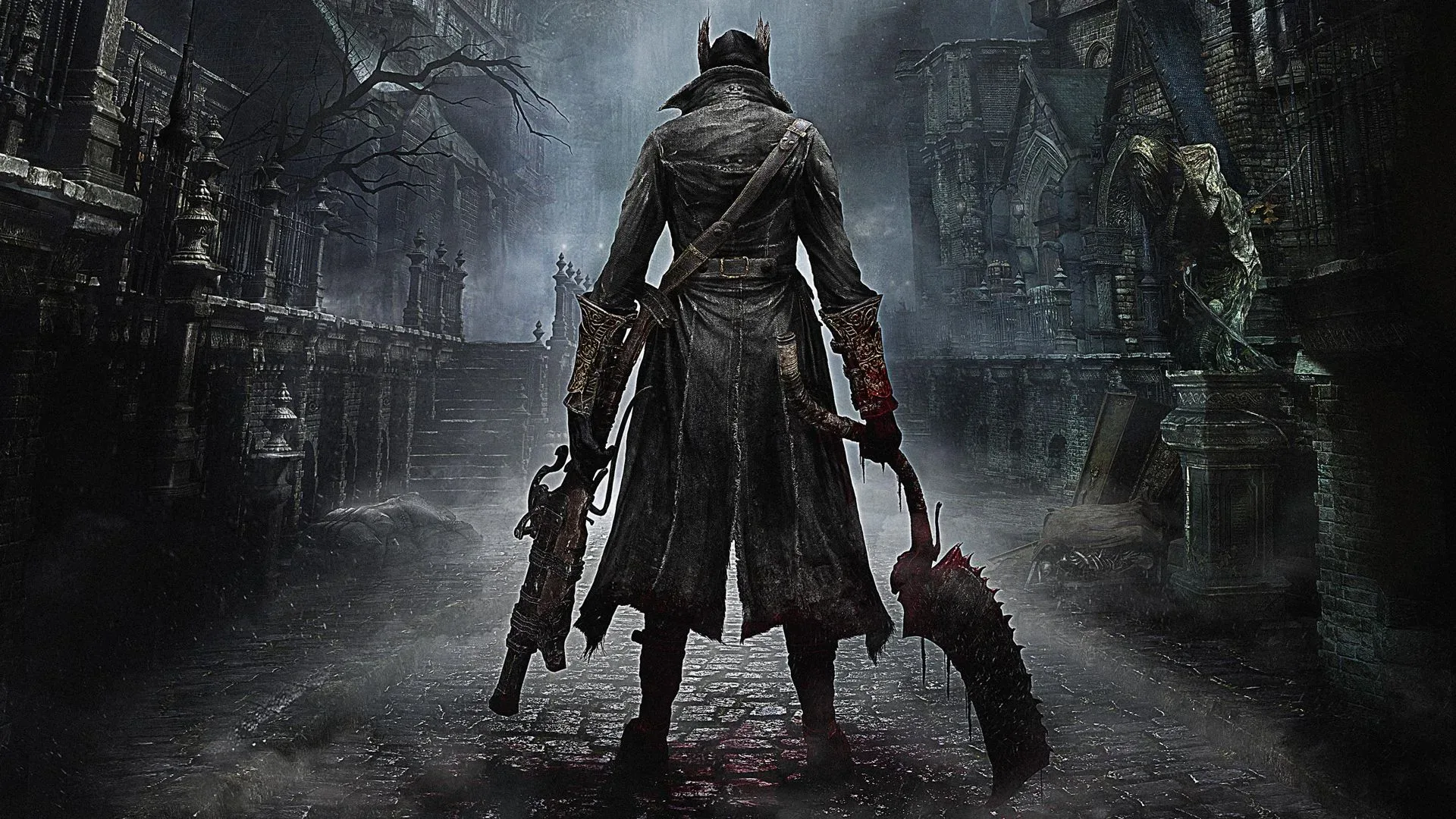
For a wider look at how horror games translate beyond the controller, see our coverage of the challenge of honoring a game world in a Bloodborne movie.
Townfall’s lasting achievement may be that it makes a new setting feel compatible with Silent Hill without merely repeating familiar imagery. St Amelia, its broken television signals and its suffocating stretches of concealment give the series a distinct new nightmare—one that seems powerful enough to unsettle, even when its most unrelenting design decisions become hard to bear.