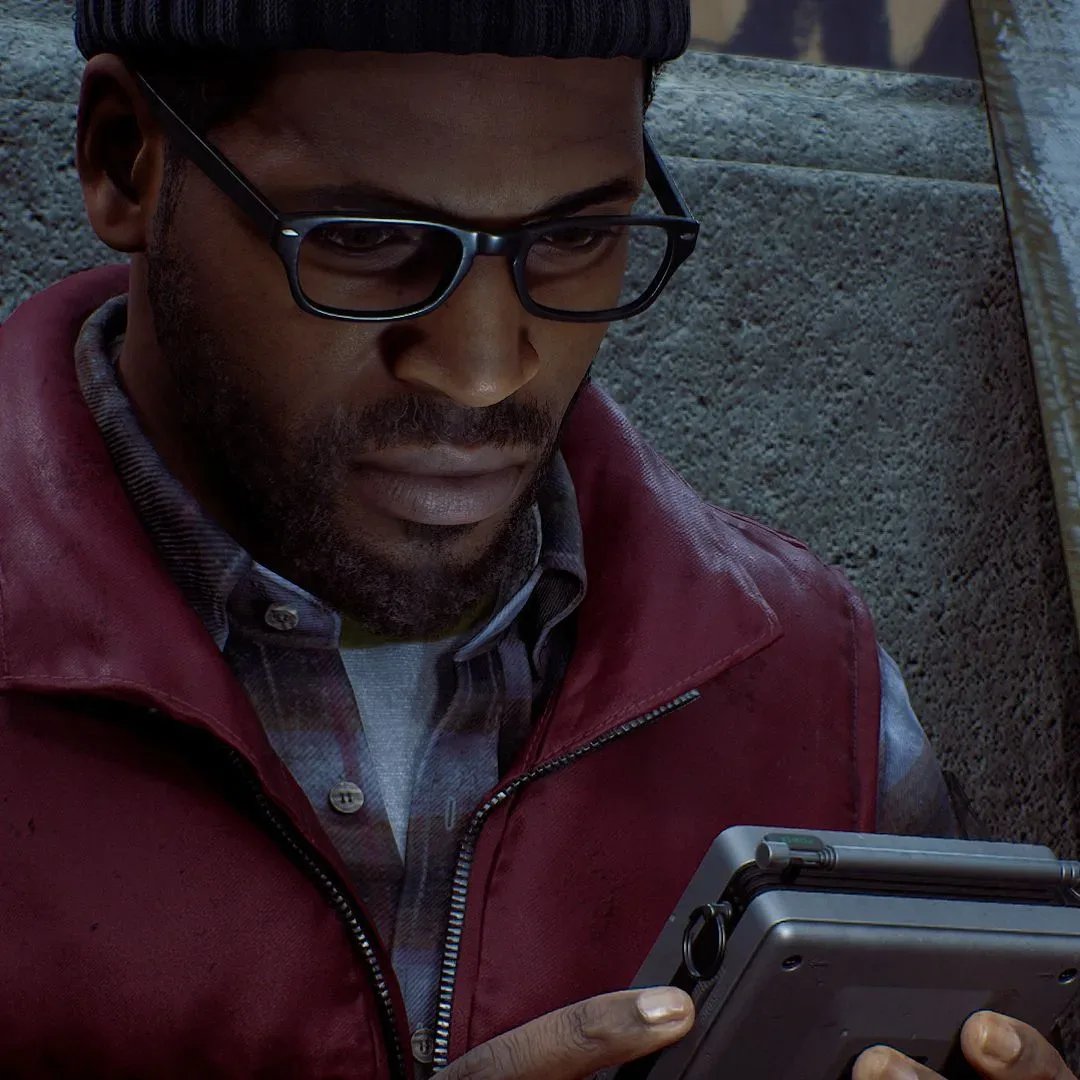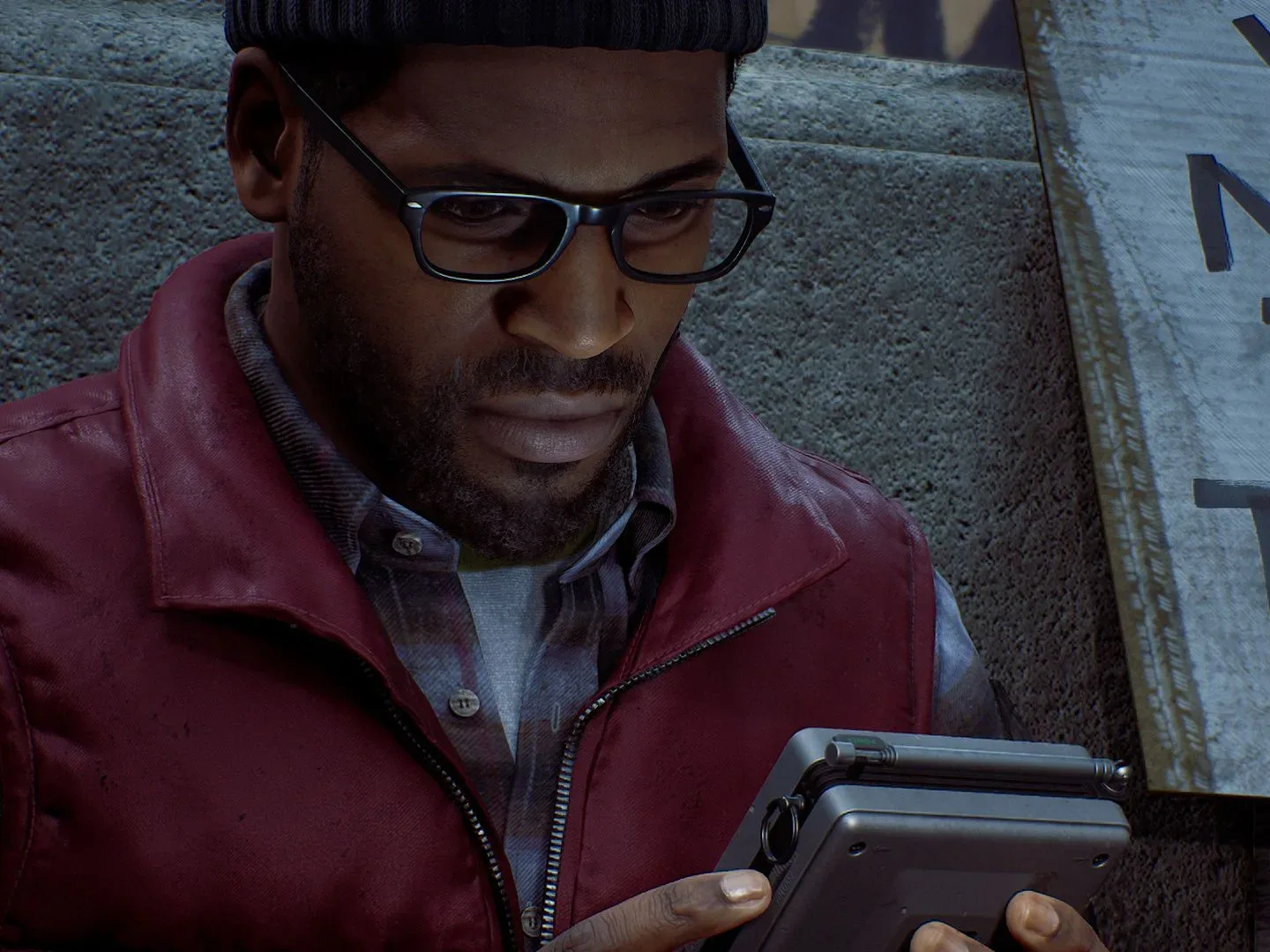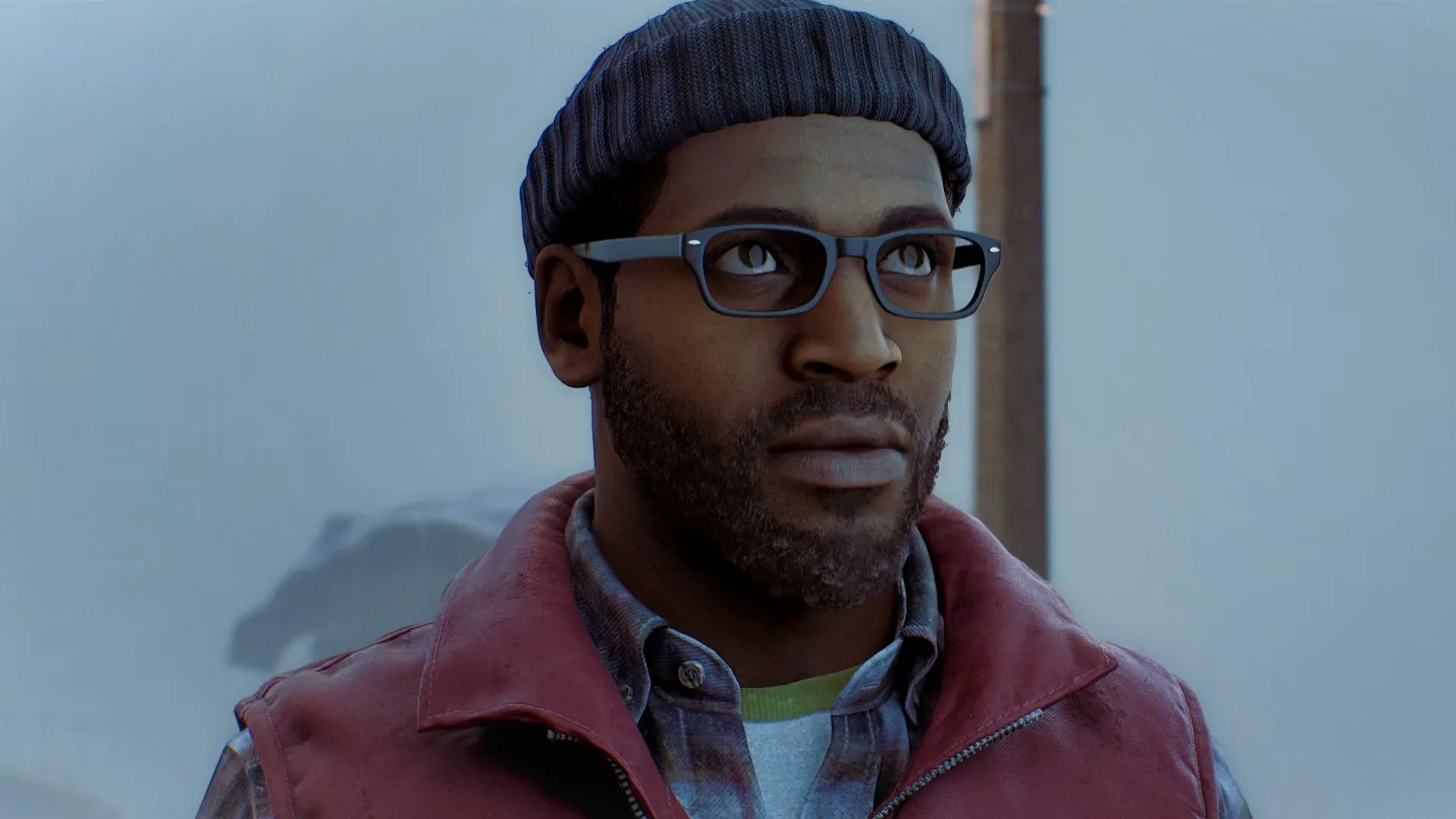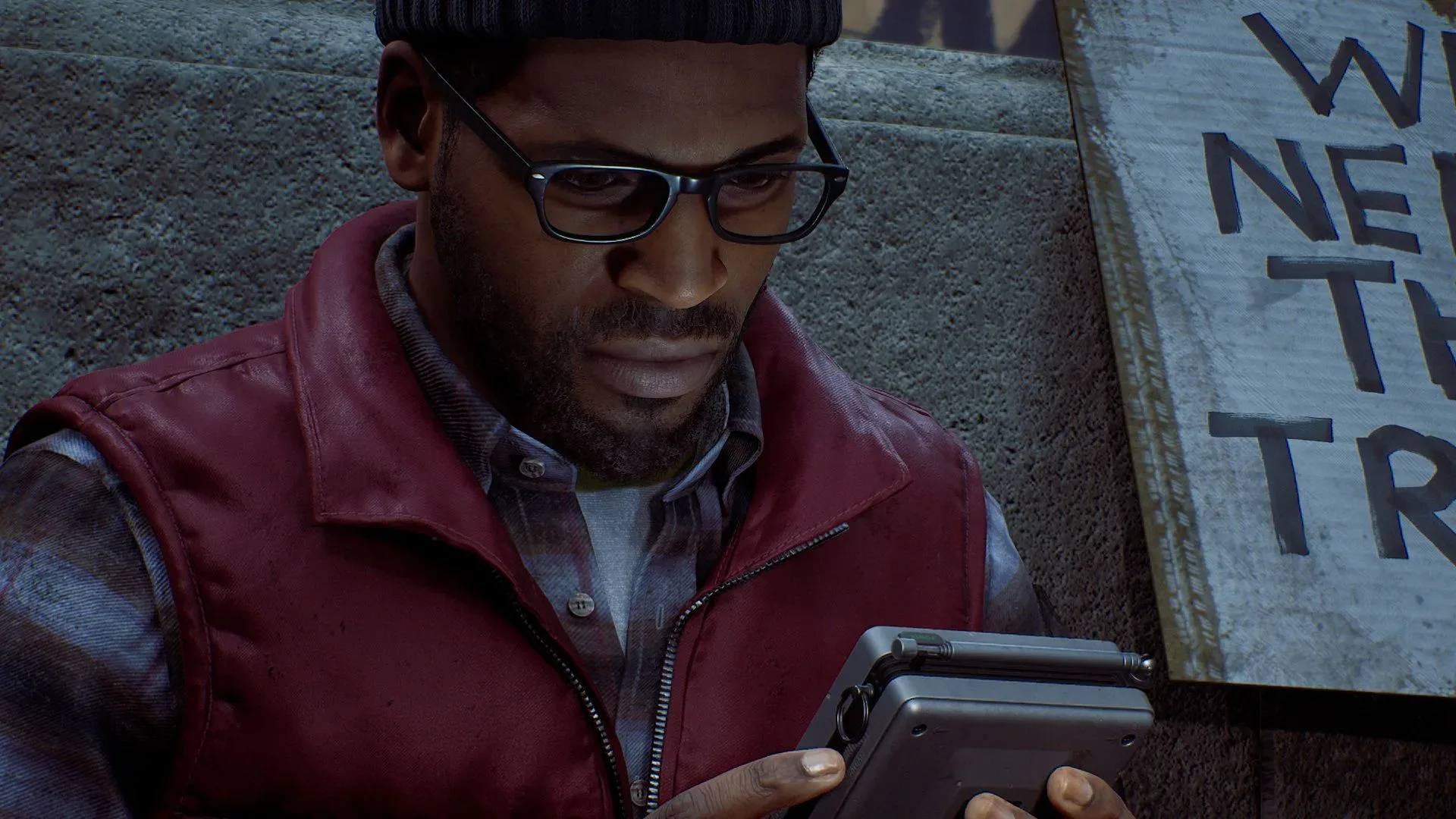
Silent Hill: Townfall appears to understand a difficult truth about stealth horror: hiding is most frightening when it is a choice made under pressure, rather than a punishment for not already knowing where every danger is. Its answer is Simon Ordell’s CRTV, a chunky handheld screen that detects threats in the fog while preserving the uncertainty that makes St Amelia feel unsafe.
That balance matters. Patrolling-enemy sequences can be among horror gaming’s most effective ideas, but they are also divisive. A player can feel trapped in a cupboard, deprived of information and forced to wait for an unseen foe to move on. Townfall still asks players to use cover, peek from behind objects, slip into hiding spots and avoid enemies that are difficult to outrun. What distinguishes its approach is that the CRTV supplies partial knowledge without turning the town into a safe tactical map.
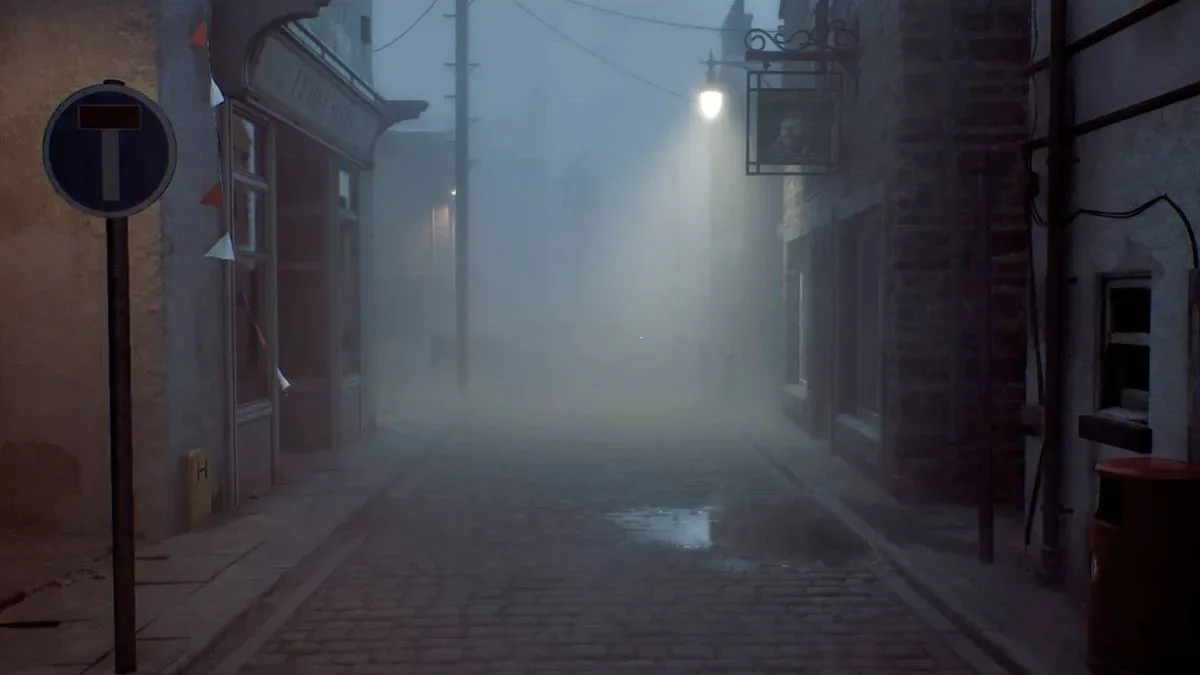
The device is a central part of Townfall’s survival language. It gives Simon a way to locate an enemy’s silhouette through obstacles after tuning to the right signal. It also echoes the series’ long-running use of static as a warning that hostile creatures are near. The result is a tool that turns a familiar horror cue into an active decision: listen for danger, tune in, identify the shape, then decide whether to retreat, wait, sneak past or gamble on an attack.
A screen that reveals danger, not certainty
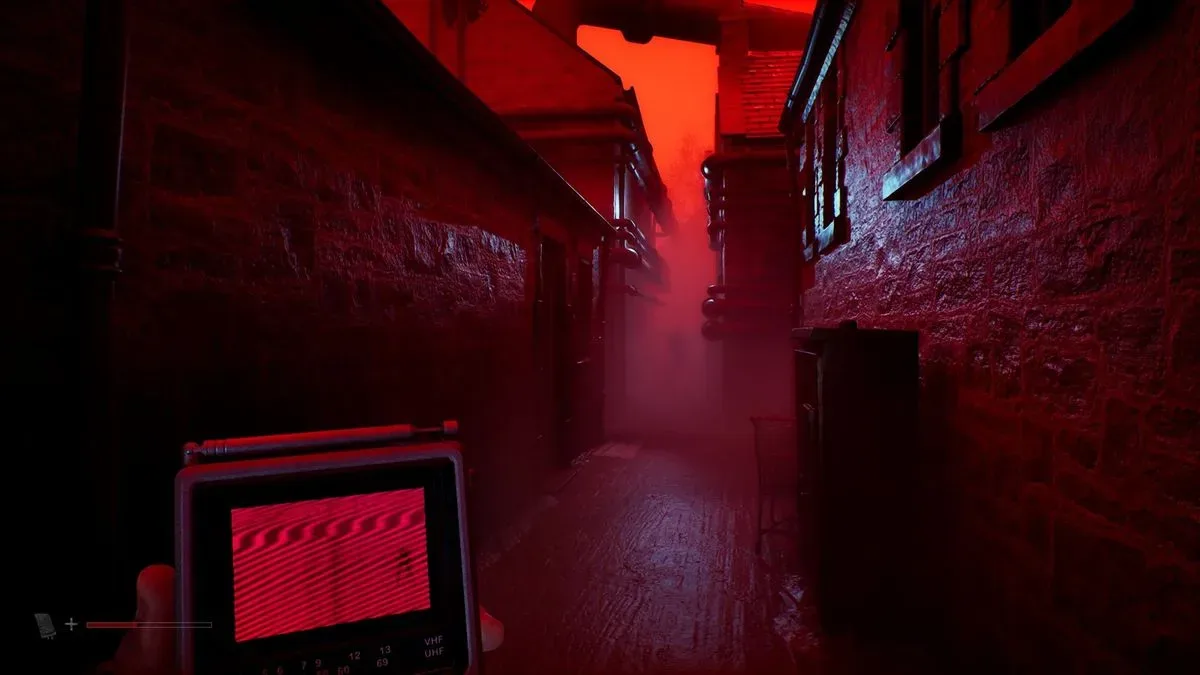
At its simplest, the CRTV functions as an early-warning system. Static signals nearby enemies in the fog. But its more unusual role begins when Simon holds up the device and tunes it to signals in the area. The screen can provide progression clues and, crucially, reveal specific monsters. When an enemy is isolated on the CRTV, the display turns red and shows a darker outline that can be seen through intervening objects.
This is not ordinary visibility. It is an abstraction: players are not suddenly seeing a brightly lit enemy in the world itself. They are interpreting a hostile shape through a red-tinted, imperfect electronic image. That distinction is important to the tone. An enhanced-vision mechanic can easily make a horror game feel like a power fantasy, where every wall becomes transparent and every encounter becomes routine. Townfall’s CRTV instead seems to make the player feel alert in a way that is still unnerving.
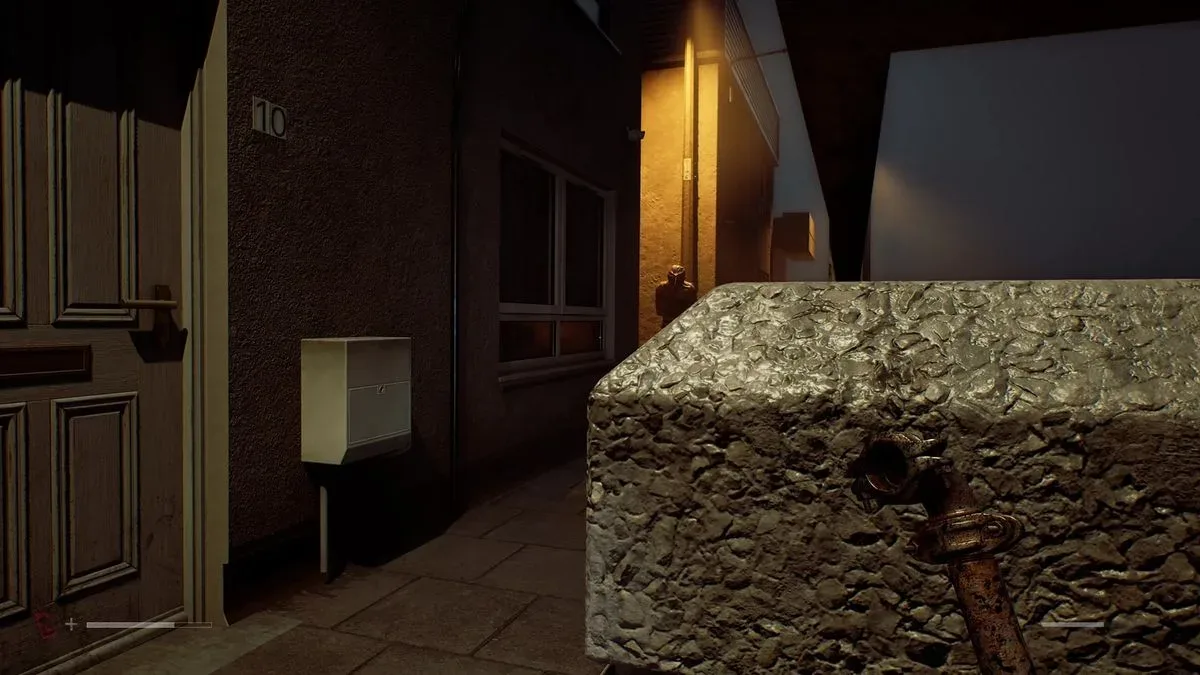
The practical value is clear in cramped spaces. Gardens, sheds, alleys and the areas around blocks of flats can turn into lethal routes when enemies patrol close by. Knowing that an axe-bearing creature is moving back and forth in an adjacent alley can help a player choose a safer path. Recognizing that a crouched enemy is near a turn can prevent a disastrous blind corner. Yet the screen does not eliminate the need for movement, timing or judgment. The player still has to get Simon through the space.
That is a useful definition of information-driven horror. The CRTV offers situational awareness—an understanding of where a threat may be and what it may be doing—without promising control over the situation. An outline behind a wall can be valuable, but it does not automatically reveal whether a different enemy is about to walk into Simon’s route. The player has more evidence, not an answer key.
Stealth remains a physical problem
Townfall’s tension is not confined to the CRTV screen. Simon can anchor himself in cover and peer around corners, cars and low garden walls. He can flatten himself more closely to cover while peeking. These are familiar stealth-game actions, but their role here is especially revealing: the player must combine the creature’s electronic silhouette with whatever fragment of the real scene can be safely seen.
Related coverage includes Silent Hill: Townfall's CRTV Turns Hiding Into a Fight for Control.
That combination keeps the body in the world. A map may offer a broader sense of direction, but consulting it leaves Simon rooted in place and vulnerable. The CRTV, by contrast, can be held while walking and even brought into a hiding place. It therefore becomes the more immediate navigational device in an emergency. Rather than stopping to study streets and rooms, players can move while maintaining a tenuous read on the threat landscape.
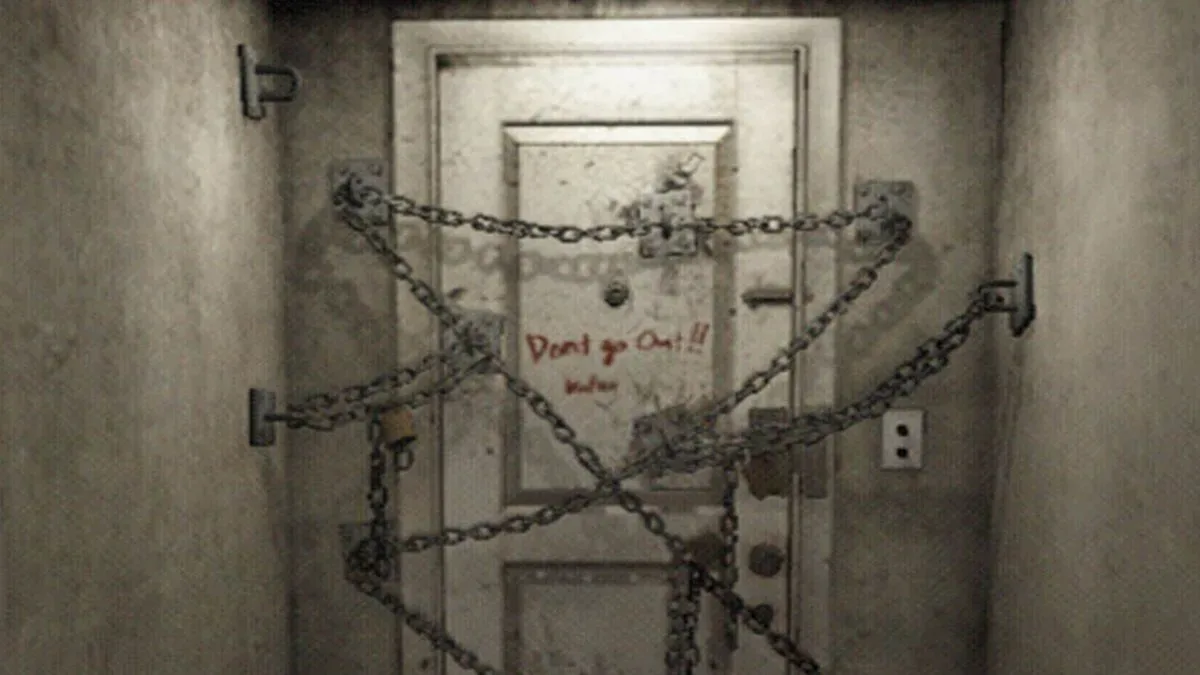
Hiding spaces remain dangerous rather than absolute shelters. St Amelia has enough places to duck into that a player who rounds a corner may often find a half-open doorway or comparable refuge. But enemies can pull Simon out if they spot him. In one early pursuit, a creature moves past a hiding player and repeatedly slams its head against a locked gate nearby, leaving the player to listen and wonder whether its attention will shift back toward the door.
That is the real value of a well-designed hiding mechanic: not safety, but a change in the shape of danger. The player is no longer running, yet cannot relax. Visibility narrows to a small slit. Sound becomes more meaningful. The threat may be outside the room, but it has not disappeared. Townfall even includes an achievement, Isolating Experience, for staying in one hiding spot for at least 60 seconds—a fitting acknowledgement that waiting itself can be an ordeal.
From prey to calculated risk
The CRTV also changes the emotional rhythm of a hostile area. A player who only hears static and sees fog is primarily prey. A player who can tune in to separate enemy outlines can begin to reason about patrol patterns. One creature may be stuck behind a wall or otherwise unable to reach Simon. Another may be alone, exposed and facing away. That does not transform combat into a fair fight, but it creates a narrow opening for initiative.
Townfall’s combat remains risky. Simon can use a destructible plank of wood to ambush a vulnerable enemy, yet a direct encounter can leave his weapon broken and inflict deadly damage. The CRTV does not make aggression reliable; it makes aggression thinkable. That is a meaningful difference. A limited scan of a dangerous zone can give a player the confidence to move from passive evasion toward a carefully chosen strike.
In design terms, this is a shift in the pursuer-pursued relationship. Horror games frequently build tension by making the player run from an invulnerable or overwhelmingly powerful threat. Townfall appears to preserve that anxiety while allowing brief, fragile reversals. Players can sometimes use reconnaissance to identify a weakness, but they cannot assume that a detected enemy is a defeated enemy.
That approach speaks to a wider tension in survival horror. The genre often relies on limited resources, impaired visibility and vulnerable characters, while players still need sufficient tools to make decisions that feel like their own. The broader survival-game space has been described as finding its stride, as discussed in this look at the survival genre’s evolving confidence. Townfall’s CRTV offers a horror-specific version of that principle: pressure works best when agency is scarce, not absent.
Why the CRTV feels at home in Silent Hill
The CRTV has the outline-reading utility of an enhanced-vision system, comparable in broad function to the “Detective Vision” idea seen in games such as Batman: Arkham Knight and The Witcher 3. But Townfall changes its meaning through presentation. This is not sleek forensic software or a superhero’s advantage. It is an almost Game Boy-like object carried through a Scottish town marked by UK-specific 1990s details, a place that initially seems ordinary before its nightmare character becomes apparent.
That contrast gives the mechanic its discomfort. The device is useful, perhaps necessary, but it is also another screen mediating a world filled with red tinting, fog and ghostly manifestations of regret. Simon looks at a screen to understand a threat; the player looks at a screen to watch Simon do so. The nested perspective creates distance, but not comfort. It reminds the player that knowledge can arrive in warped, incomplete forms.
There is a strong precedent for that mixture of access and vulnerability in Forbidden Siren. Its Sightjacking mechanic lets players see through enemies’ eyes, gaining crucial intelligence while surrendering a stable perspective on their own character. The benefit is offset by disorientation. Townfall’s CRTV is less radical in its viewpoint shift, but it relies on a related trade-off: it offers a clearer outline of danger while making the player attend to a mediated image instead of simply trusting their immediate surroundings.
That trade-off helps preserve the series’ psychological texture. The town does not become less threatening because Simon can trace a monster behind a wall. If anything, the confirmed presence of that shape may make the space more alarming. The device gives form to a danger that fog had left to the imagination, and the player must then live with that knowledge.
Practical implications for players
For players who find hiding mechanics stressful, the CRTV suggests a more active way to approach Townfall’s stealth sequences. It should be treated as a planning aid rather than a guarantee of safety.
- Tune before committing to a tight route. In alleys, gardens and areas with obstructed sightlines, identifying nearby shapes can prevent a blind encounter.
- Pair the screen with cover. Use the CRTV’s outline in combination with peeking around walls, vehicles and garden features; neither source of information is complete alone.
- Watch for patrol reversals. A creature that appears ready to double back may be the signal to move into a nearby hiding place rather than push forward.
- Do not mistake hiding for immunity. Enemies can pull Simon out if they see him, so the moment of entering cover is as important as the wait inside it.
- Choose violence selectively. If the CRTV shows a reachable enemy isolated and facing away, an ambush may be viable. A straightforward fight remains dangerous and can cost both weapon durability and health.
- Keep the map for orientation, not emergencies. Reading it leaves Simon stationary; the CRTV is more suitable when a threat is close because it can be used while moving or hiding.
None of these choices removes fear. That is the point. Townfall’s CRTV does not offer the fantasy of mastering St Amelia. It offers enough information to make a frightened player responsible for the next decision.
A small tool with a larger horror purpose
Silent Hill: Townfall’s CRTV is compelling because it turns one of stealth horror’s most frustrating feelings—being unable to see what is hunting you—into a tense interaction. It gives players a way to seek out a monster’s outline, follow its movement and identify a possible opportunity, all while ensuring the enemy still controls much of the encounter.
The mechanic therefore supports both sides of horror. It sustains dread through close patrols, limited sightlines, vulnerable hiding spots and hard-to-escape chases. At the same time, it creates flashes of resolve: moments when the player is not merely waiting in a cupboard, but reading the field, selecting a route and perhaps deciding that the monster should be worried too.
For a series built around distorted realities and uneasy tools, that is an apt design choice. The CRTV delivers information, but it cannot cleanse the fog, erase regret or make danger fair. It simply gives Simon—and the player—one more imperfect way to look directly at what is coming.