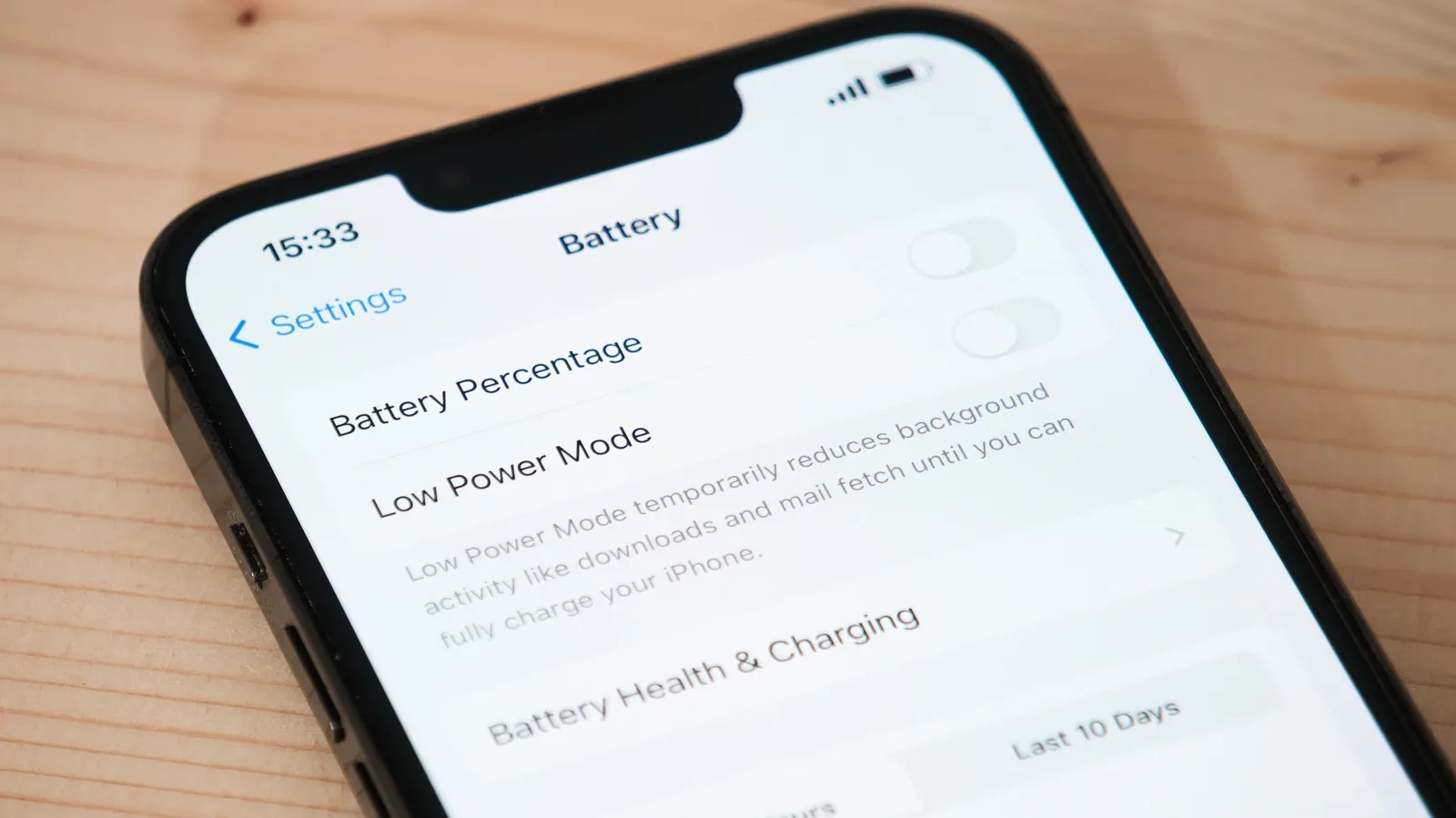
The 80% charging limit on newer iPhones is one of those settings that sounds wonderfully simple: stop short of a full charge today, and perhaps the battery will be healthier years from now. A three-year set of results across the iPhone 15 Pro Max, iPhone 16 Pro Max and iPhone 17 Pro Max offers a useful reality check. The feature may help reduce battery stress, but the available numbers do not establish a dramatic, universal advantage over charging to 100%.
That does not make the setting pointless. It makes it a trade-off. Owners exchange a fifth of the capacity available on a typical day for a possible long-term benefit that is difficult to isolate from other variables: how often a phone is charged, how hot it gets, whether it spends time on a wireless charger, the size of its battery, and how heavily it is used.
For people who plan to keep a phone for years, like to tinker with device care, or simply have easy access to power, a limit can be sensible. For anyone whose phone must survive a long commute, travel day, convention floor, gaming session, or an afternoon away from an outlet, 80% can be a substantial sacrifice. The most practical lesson from the results is not “always charge to 80%.” It is to match the limit to the day ahead.
The three-year snapshot
All three phones in this informal comparison were kept with the 80% maximum charge setting enabled. Their reported battery-health readings and cycle counts were:
- iPhone 15 Pro Max: 88% maximum capacity after 36 months and 369 cycles.
- iPhone 16 Pro Max: 93% maximum capacity after 24 months and 343 cycles.
- iPhone 17 Pro Max: 97% maximum capacity after 12 months and 277 cycles.
On the newest phone, the 97% figure is the best result in the three-device run. It arrived alongside 277 cycles after a year, compared with 299 cycles reached by the iPhone 16 Pro Max by September 24 of its first year. The later measurement on the newer model was almost two weeks after that comparison point, so the lower cycle count is notable. A larger battery is presented as a likely reason: more energy between charging sessions can mean fewer times the battery is cycled.
But a snapshot is not a controlled experiment. The devices are different models, used in different years, with different battery sizes and thermal designs. The iPhone 17 Pro Max also received an aluminum construction and vapor-chamber cooling. It was observed to spend less time uncomfortably warm than the iPhone 16 Pro Max. Since heat can plausibly be relevant to battery wear, that difference is important context rather than a footnote.
There was another behavior change, too. Charging during the iPhone 17 Pro Max year leaned more heavily on USB-C instead of Qi2 or MagSafe wireless charging. That may have affected results, or it may not have. The available evidence explicitly does not settle the question. A cooler-running phone, a larger battery, fewer cycles, changes in charging behavior, and the 80% cap all overlap here. Picking one as the decisive factor would overstate what the data can tell us.
What “maximum capacity” and “cycle count” actually mean
Two numbers tend to dominate battery-health conversations, and they answer different questions.
Maximum capacity is a battery-health estimate expressed relative to the phone’s capacity when new. A reading of 97% means the device estimates that the battery can hold about 97% of its original capacity. It is a useful direction-of-travel indicator: lower numbers generally mean less runtime between charges. It is not, however, a complete biography of a battery, nor a guarantee that two phones reporting the same percentage behave identically in every circumstance.
Cycle count tracks accumulated battery use in charge-cycle terms. In practical language, it reflects how much of the battery’s total capacity has been used and replenished over time, rather than merely how many times a cable was connected. The 277, 343 and 369 figures therefore help frame the health readings. The iPhone 15 Pro Max has seen the most elapsed time and the highest number of cycles in this set, while the newest phone has the fewest cycles.
Those measures are useful together, but neither cancels out other factors. A phone can see more cycles because it is used more. It can also produce fewer cycles because a bigger battery requires less frequent charging. Meanwhile, thermal conditions can differ between hardware generations and charging methods. Battery longevity is not a single-setting problem, even if an 80% toggle is the simplest visible control.
The 80% limit’s real cost is felt every day
The main drawback is not theoretical. A cap at 80% deliberately withholds 20 percentage points of the charge meter every morning. That was considered difficult to live with on the iPhone 15 Pro Max and iPhone 16 Pro Max, and the long-term retention figures did not make that sacrifice feel clearly worthwhile. Even the 97% reading on the iPhone 17 Pro Max was viewed as potentially not far from what a comparable phone charged to 100% might report.
The newer model makes the policy easier because its bigger battery and faster charging reduce the practical sting. The phone rarely ran out of charge during the year in question, even though a battery pack was often carried. That is a key distinction. An 80% cap becomes more feasible when the underlying battery is large enough, charging is quick enough, and a top-up is readily available. It is much less appealing when every percentage point matters.
For gaming and media-heavy use, this is especially relevant. Portable play can turn a comfortable battery margin into an anxious one quickly, while travel and event days often remove the convenience of a wall outlet. Carrying a compact power bank can soften the compromise. USB-C power banks with built-in cables, including magnetic packs that physically attach while charging through USB-C, were identified as a convenient way to get faster wired charging without surrendering portability. Slim packs also reduce the bulk penalty.
That is a workable routine, but it is still a routine. If a phone requires a backup pack most days to make an 80% cap comfortable, the setting may not be the right default for that person. Battery preservation only has value if the present-day device remains dependable enough to use without friction.
Heat and charging method deserve attention, but certainty is not available here
The most intriguing part of the iPhone 17 Pro Max result may be the uncertainty around why it performed best. More USB-C charging was used in an attempt to reduce reliance on Qi2 and MagSafe. Wireless charging was not ruled out as a contributor to battery stress, but neither was it shown to be the source of a meaningful difference. The cooler behavior associated with the new model’s vapor chamber could instead be more consequential.
A vapor chamber is a component intended to spread heat away from hot areas more effectively. In this context, its relevance is straightforward: a phone that remains cooler could spend less time in the uncomfortable thermal conditions users notice during demanding activity or charging. That does not prove a direct battery-health outcome in this three-phone sample, but it makes the newest result difficult to attribute solely to the charge limit.
This is also why an individual battery report should be treated as a useful case study rather than a verdict. The 80% setting was consistent across the three models, yet the hardware and use patterns were not identical. The results support the idea that limiting time at a full charge can be part of a battery-care approach. They do not prove that the limit alone produced 88%, 93%, or 97% capacity readings.
A better approach: use the limit when it fits, remove it when it does not
There are more flexible options than treating 80% as an oath. Newer iPhones also offer 90% and 95% charging limits, which may better balance day-to-day runtime against reduced time at 100%. Those steps will not preserve as much of the daily battery reserve as an 80% target, but they may make the phone more useful without abandoning the broader idea of limiting full-charge time.
Another option is Optimized Battery Charging. Rather than permanently capping the battery below full, it is designed to minimize the period spent at 100% while still making a complete charge available. It is the lower-maintenance choice for people who do not want to manage limits around their schedule.
A sensible practical hierarchy looks like this:
- Use Optimized Battery Charging if you want full capacity with minimal decision-making.
- Try 90% or 95% if an 80% cap causes range anxiety but you still want a regular limit.
- Use 80% when access to chargers is easy and the phone’s typical workload leaves comfortable headroom.
- Temporarily disable any cap before travel, long days out, or other times when a full battery matters more than a marginal longevity benefit.
- Pay attention to heat and charging convenience, rather than assuming one cable or one setting determines every outcome.
That flexibility has an obvious advantage: it preserves the benefit of a limit on ordinary days without turning it into a self-imposed emergency on exceptional ones. A full charge is a feature to use when it is needed, not a failure of battery stewardship.
What the long-term numbers do and do not say
The older two devices add an interesting wrinkle. From 2025 to 2026, the iPhone 16 Pro Max lost only one percentage point of reported capacity, while the iPhone 15 Pro Max showed no reported capacity loss. Their activity was also far lower in that period: 44 cycles for the iPhone 16 Pro Max and 17 cycles for the iPhone 15 Pro Max. Both remained at the 80% limit despite no longer being main phones, and both were used daily as test devices. They also spent short periods completely discharged.
The practical reading is cautious. Lower use coincided with very small reported changes in the latest year. That does not demonstrate that sitting dead briefly is harmless in every circumstance, nor does it establish a general storage rule. It does show how strongly usage level can complicate any attempt to judge a charge limit solely by a capacity percentage.
For anyone comparing their own phone, cycle count and time in service provide useful context alongside the maximum-capacity figure. A person who always charges to 100% may find their number close to these results, or materially different. Either outcome is informative personally, but one comparison cannot answer the larger question for everyone.
In the end, the 80% setting remains a rational option rather than a proven necessity. The three-year sequence shows respectable battery-health readings, particularly 97% after a year on the iPhone 17 Pro Max. It also shows that better thermal behavior, a larger battery, and fewer cycles may matter at least as much as the limit itself. For a culture that prizes keeping hardware useful for the long run—whether that means a favorite handheld, controller, or old console—the instinct to manage wear makes sense. The trick is avoiding a maintenance ritual that makes the device worse at doing the thing it was bought to do.
For more on how game technology can evolve through difficult design constraints rather than simple formulas, see the challenge Sonic Team described in translating high-speed play into 3D.