Murder mysteries arrive with a trunk full of expected equipment: an enclosed setting, an unsettling death, a group of suspicious personalities, carefully planted details, and a final explanation that has to make the entire contraption click into place. The challenge is not avoiding those tools. It is using them so well that an audience is happy to see the old implements brought out again. The Mermaid Mask, the newest Detective Grimoire adventure from SFB Games, appears to understand that assignment completely.
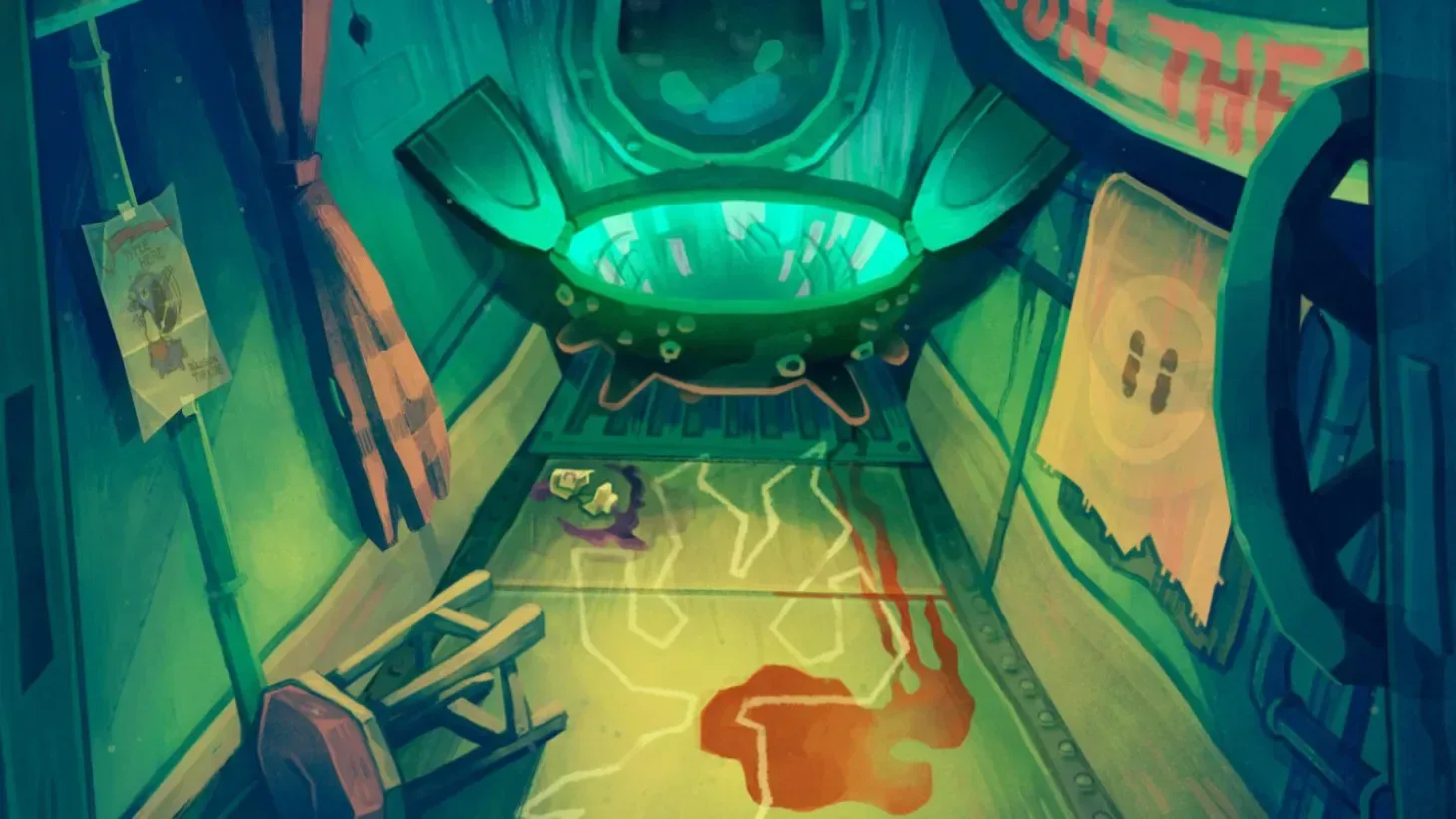
Its central crime is immediate and tidy in the best genre sense. Magnus Mortuga, captain of the Mortuga Submarine, has been killed. Detective Grimoire and his assistant Sally take responsibility for untangling what happened among the vessel’s unusual residents. The whole case remains inside the submarine, making the setting more than a backdrop. It is the sealed tin in which every alibi, odd habit, personal space, and hidden object has to rattle around until the right explanation emerges.
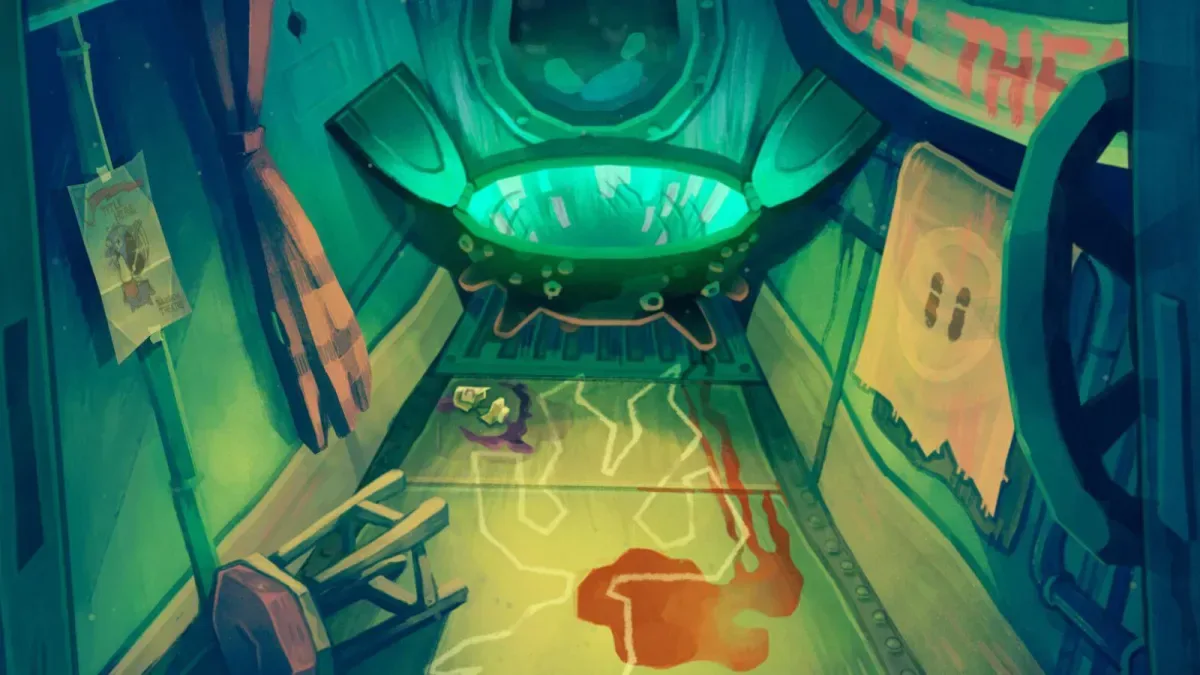
That compact premise gives the game a useful advantage. A submarine is naturally claustrophobic, but The Mermaid Mask uses that closeness for theatrical personality rather than simple gloom. Each room is shaped around the character connected to it, and the environments are loaded with items to inspect. The result is a mystery location that should feel less like a collection of generic puzzle rooms and more like a floating—or, more accurately, submerged—gallery of motives.
For anyone interested in how a stylized story can make familiar narrative machinery feel newly alive, there is a worthwhile parallel in this look at a biopic finding energy in difficult material. The Mermaid Mask is working in a very different genre, of course, but the same broad principle applies: recognizable structures are not a weakness when the characterization and presentation have enough confidence.
A case built from conversation and curiosity
The Mermaid Mask combines point-and-click investigation, character conversations, and standalone puzzle-solving. There are roughly 50 pieces of evidence to locate and examine across the submarine. That total is substantial enough to make the investigation feel properly stocked. It also creates one of the game’s few meaningful pressures: later in the story, finding the final clue needed to prompt a confrontation can become a difficult bit of detective housekeeping.
Fortunately, the design includes an optional hint system with no stated cost or penalty. That is an important accommodation for an adventure game built around forward momentum. Mysteries depend on rhythm. Being briefly stumped can support the fantasy of careful deduction; being trapped because one tiny object has been missed can drain the drama from a looming accusation. A free nudge system allows players to preserve the pleasure of working things out without turning an overlooked detail into a permanent residency permit aboard the Mortuga Submarine.
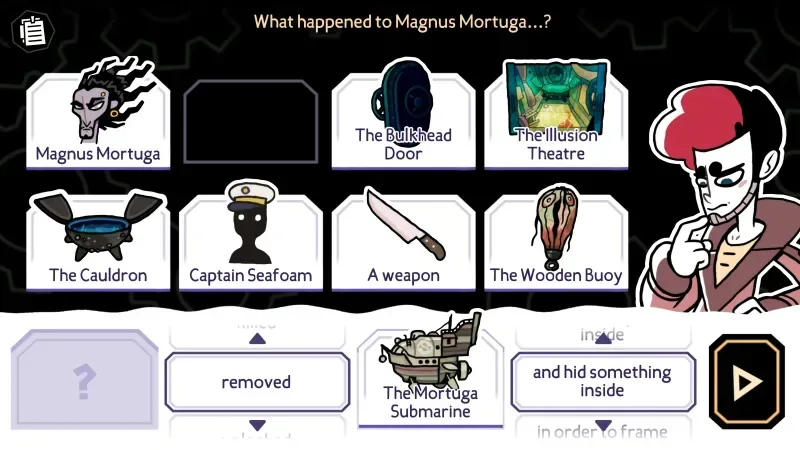
Crucially, clues do not seem intended as mere inventory tokens to be presented at the nearest suspicious face. The game asks players to earn its deductions. Its recurring fill-in-the-blank conclusion sequences require the relevant facts to be arranged into an actual inference. That distinction gives the detective work a little extra bite. Identifying evidence is one thing; explaining what it means is the part that lets the player share Grimoire’s job instead of simply handing him objects until the plot continues.
The series has precedent here, but the approach sounds especially well matched to this case. In a classic whodunit, the final answer only works if it feels both surprising and retrospectively plausible. Systems that repeatedly make players connect information can prepare them for that logic. They encourage attention without demanding that players maintain a corkboard-and-string installation in their living room.
Puzzles with oddball identities
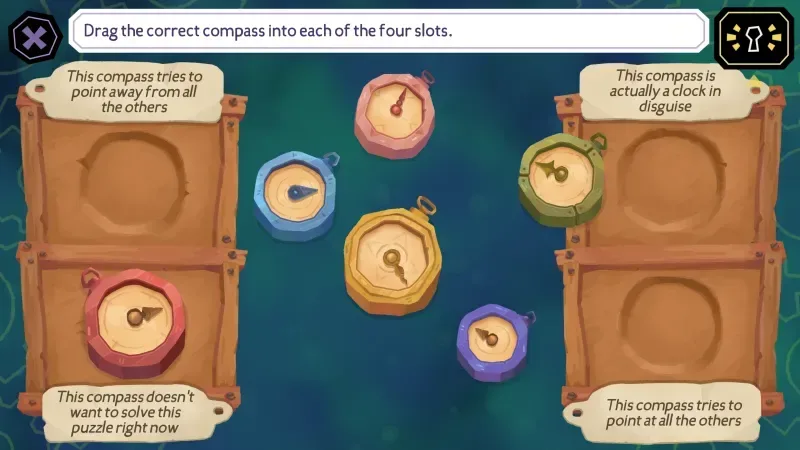
The 3D puzzle elements are another major part of the case. They usually open containers or expose concealed compartments, fitting neatly into the broader investigative loop. More importantly, their individual concepts are unusually specific. One task involves manipulating a pig’s expression to form numbers. Another has players organizing a grid of strange skulls. A further puzzle concerns identifying and recording mushroom species.
Those examples suggest a welcome refusal to rely on a single lockpicking template with different paint colors. Distinct puzzles can make every discovery feel associated with the person, room, or secret behind it. They also reinforce the game’s quirky world: this is not a place where every problem is solved by matching three red jewels or rotating pipes until the plumbing receives its union-mandated respect.
Some of these challenges may initially appear opaque. The design’s answer is not simply to flatten their difficulty. Careful inspection can reveal the intended logic, while unsuccessful attempts lead Grimoire and Sally to offer more information. That is a smart middle road for a detective game. Players are invited to observe and reason, but the protagonists can become part of the support system rather than detached narration waiting to scold them.
A crew that sounds as vivid as it looks
Dialogue occupies a large share of The Mermaid Mask, so its performances have to carry a great deal of the experience. The cast is described as consistently strong, with every major personality arriving with a distinct vocal character. Symmetry uses a near-Shakespearean cadence. Zephyr’s low voice lends an enigmatic quality. Sinthia, meanwhile, brings an earnest and infectious enthusiasm.
Those differences matter because a contained mystery lives or dies on its suspects. If everyone speaks with the same flat delivery, the investigator may as well be interviewing furniture. Here, the vocal work, character designs, and detailed animation reportedly give the submarine’s crew immediate presence. Grimoire and Sally’s exchanges are especially important, with the pair’s delivery helping the script’s conversational humor land.
The visual presentation also seems to save some of its strongest work for the climax. The reveal and the animation around it are positioned as a particular high point, and the solution itself is said to improve upon the finale of Tangle Tower, the earlier entry in the series. That is a meaningful claim in a mystery: the ending is not merely the last room on the tour, but the test of whether the entire investigation deserved the player’s trust.
After the story is complete, an extensive art gallery offers early character concepts alongside commentary from the artists. It is an appealing extra for players who enjoy seeing how stylized casts evolve. In a game where the inhabitants’ faces, clothes, rooms, and mannerisms appear so central, that archive is more than a bare-bones unlockable. It offers another way to appreciate the craft behind a very particular collection of suspects.
Music that knows when not to interrogate the room
Raphael Benjamin Meyer’s orchestral score has an equally delicate job. In a dialogue-heavy mystery, music must establish tension and color without fighting the performances for attention. The soundtrack is characterized as lively and situation-specific while still restrained enough to leave room for the conversations and deductions at the center of play.
There is apparently more variety than a project of this scale strictly needed to include. Characters receive their own themes, and minigames have dedicated music as well. That level of musical specificity helps turn the submarine from a single setting into a series of emotional and comic spaces. A theme can gently signal who is in control of a scene, where the mood is shifting, or when a bizarre puzzle has decided it deserves its own tiny anthem.
It is a useful reminder that strong storytelling does not only come from dialogue or plot. The wider games space continues to explore new methods for shared and immersive narrative, as seen in this report on immersive projects pursuing better storytelling. The Mermaid Mask takes a more traditional adventure-game route, but its reported blend of performance, animation, music, and interactive deduction shows how much expression remains available within classic point-and-click grammar.
The strongest Detective Grimoire case yet
The Mermaid Mask’s biggest accomplishment appears to be balance. It embraces the recognizable beats of a locked-setting murder mystery without becoming trapped by them. It supplies a large evidence trail, yet asks players to interpret that material. It offers demanding-looking puzzles, then supports investigation with character-led guidance and consequence-free hints. It leans heavily on dialogue, then backs the writing with a cast, score, and animation style equipped to make those conversations sing.
Most importantly, the mystery’s conclusion is described as both unexpected and satisfying. For a genre built around a final answer, there is no higher priority. A clever culprit and a visually memorable reveal can transform all the earlier searching, questioning, and suspicious mushroom cataloging into a payoff rather than a procedural checklist.
With its eccentric submarine residents, freeform-feeling clue hunt, individual puzzle ideas, and polished presentation, The Mermaid Mask stands as a strong argument for the Detective Grimoire series continuing to investigate stranger crimes. The formula remains visible. The game’s trick is making that visibility feel like part of the fun.