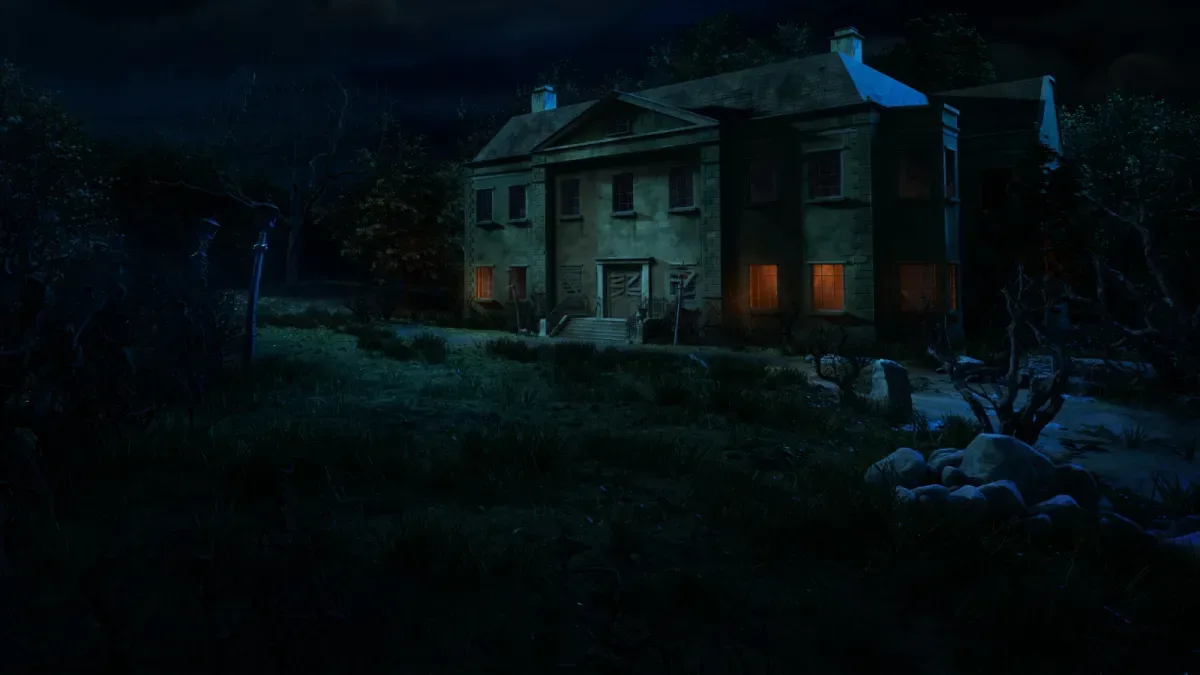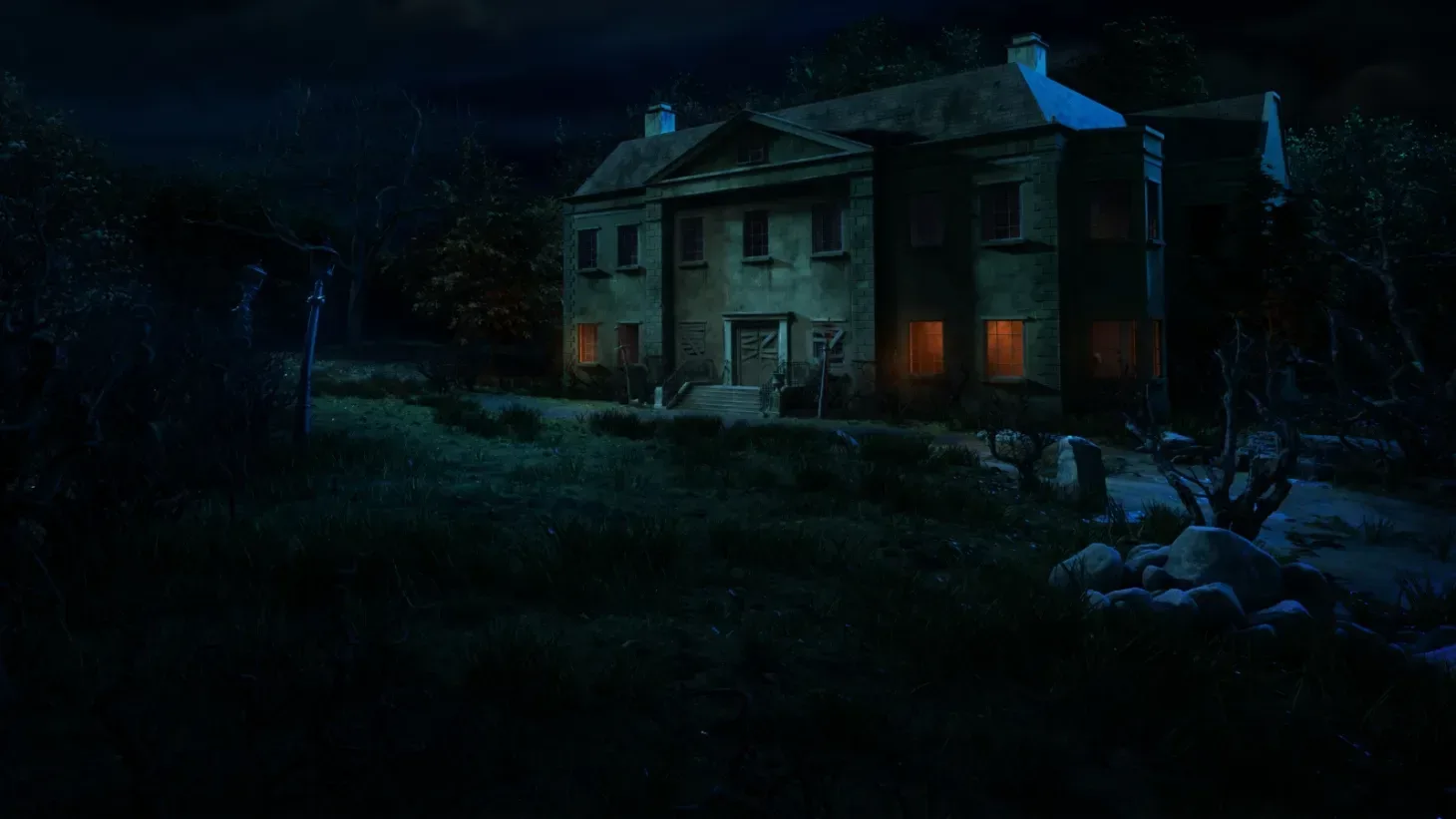
The Incident at Galley House takes the familiar ingredients of a locked-house mystery—an isolated mansion, a stormy night, a crowded guest list and a collection of deaths—and rebuilds them as a methodical information puzzle. Its most compelling trick is not simply asking who died or who might be responsible. It asks players to reconstruct the social geometry of a disastrous evening in 1936: who was in each room, what they knew, what they concealed, and how one overlooked sentence can alter the meaning of events seen hours earlier.
The game is a remastered and expanded reimagining of Type Help, the 2025 horror text game by William Rous. Evil Trout, the team behind The Roottrees Are Dead, has adapted that premise into a larger investigation with an emphasis on searching, cataloguing, revisiting, and carefully connecting evidence. It is a mystery for people who enjoy treating dialogue as a crime scene and chronology as something to be interrogated rather than accepted.
A house full of questions
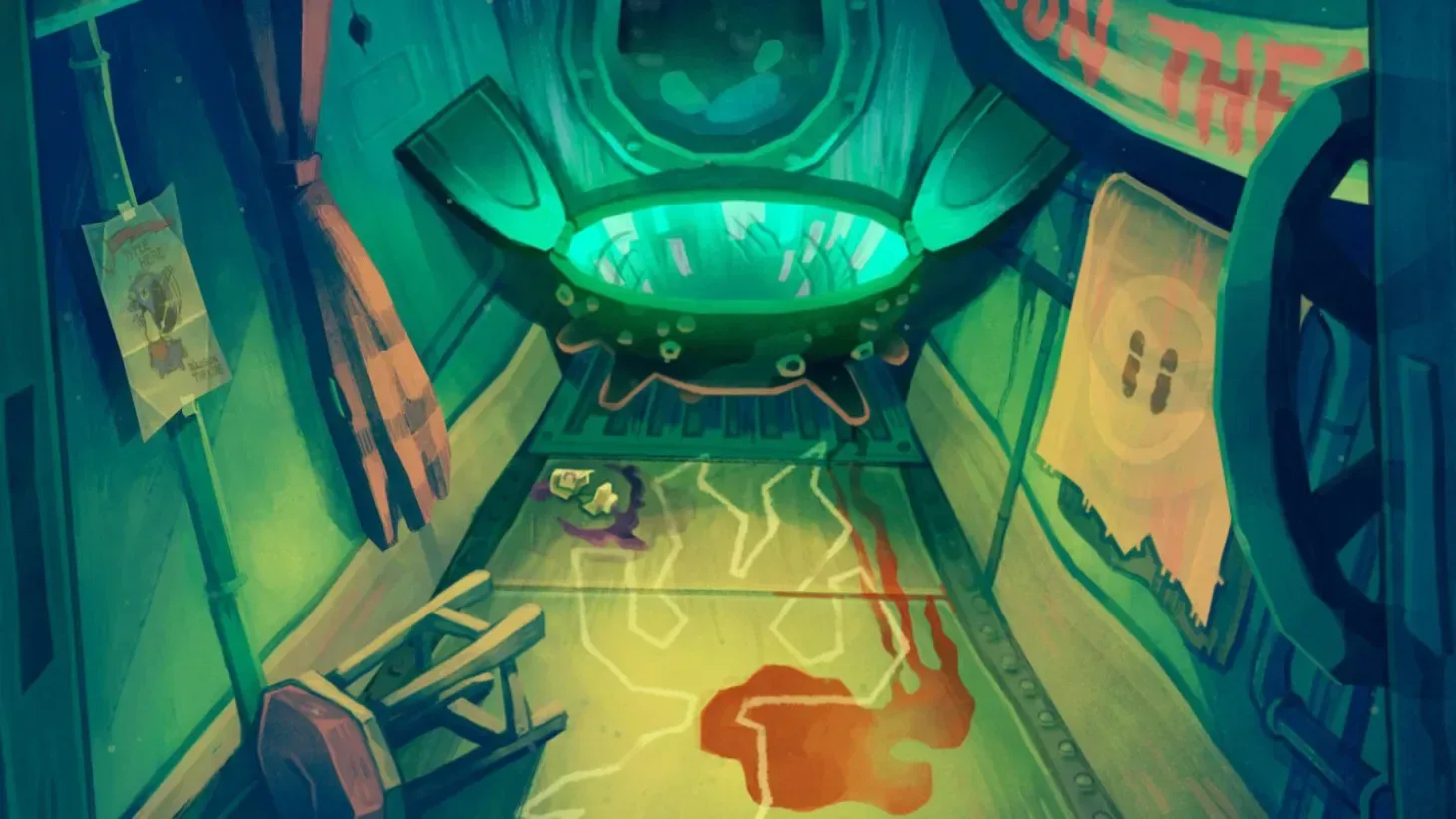
The present-day framing places the player in the role of a researcher visiting the condemned Galley House, where multiple bodies were found decades earlier. Their causes of death remain unknown. A device capable of reconstructing past moments gives the investigation its unusual structure: rather than merely reading a case file, the researcher can observe fragments of the night as they happened. Each recovered scene offers another chance to understand the guests’ conversations, movements and decisions in the hours before the tragedy.
The central setup is immediately useful because it gives the mystery several layers. A man arrives after being invited by somebody called Rupert Galley, yet the other people gathered in the home do not recognize that name as their host. Why was he summoned? Who is Rupert Galley? What brought this particular assortment of visitors to the mansion? And how did the evening end with no survivors? The game’s power seems to come from allowing those questions to multiply before gradually putting individual pieces in their proper places.
That makes Galley House less like a simple whodunit and more like a tangled timeline in which personal motives, physical spaces and missed connections all matter. The pleasure is in the act of recontextualization. A line that first appears incidental can become revealing after another scene changes what the player knows about a speaker, a room, or the moment in which the conversation took place.
Codes turn observation into progress
The investigation spans a 26-part timeline and follows roughly a dozen characters. At first, the people involved are identified only by numbers, making even the discovery of a name meaningful. To unlock scenes, players enter numerical codes tied to location, time and character information. That system turns evidence into a practical key: learn enough about where a person was at a certain hour, and a new fragment of the evening becomes accessible.
It is an elegantly thematic structure. In a traditional murder-mystery game, a player may find a key that opens a door. In The Incident at Galley House, knowledge itself performs that function. Deducing that two people must have occupied the living room at a specific point can lead to a reconstruction, which then provides the next fact needed to map another person’s route through the mansion.
The process has a tabletop-deduction flavor, reminiscent of the satisfaction in narrowing down possibilities in Clue. But it does not appear to be limited to one prescribed line of thought. Players can focus on a single person’s night, push several threads forward to reach later parts of the timeline, or aim for a more chronological account and fill gaps along the way. This flexibility matters in a dense mystery. It gives players permission to follow the clue that seems most promising instead of repeatedly forcing them back to a single correct trail.
That kind of design also makes the mansion’s layout part of the puzzle. Areas of Galley House must be discovered, and visual details are as important as spoken testimony. The game asks for attention to plain meaning and subtext alike: not just what someone says, but why they say it, what another character might misunderstand, and what objects or locations quietly contradict the account.
Built-in tools for a very busy case file
A dozen characters multiplied across 26 segments can create a daunting amount of detail. The game responds with tools designed to keep the player from relying entirely on memory—or on a desk covered in increasingly alarmed sticky notes.
- An in-game notepad lets players record observations and preserve quotes from dialogue transcripts.
- Pause and highlighting options make it possible to stop scenes, reread them and flag important text before continuing.
- A keyword search tool helps surface relevant conversations across the growing archive.
- Timeline markers allow notable events, including deaths, to be logged at a glance.
- Locked-scene indicators show how many additional cinematics can still be uncovered from a given scene.
These features do more than provide convenience. They support the game’s intended rhythm of discovery. A player may recognize the significance of a phrase only after seeing a later reconstruction, then use search and notes to return to its earliest appearance. Rather than making the player manually comb every transcript again, the system leaves the interpretive work intact while reducing the clerical burden.
The returning notepad and discoverable-cinematic indicators also show a clear connection to The Roottrees Are Dead. Fans of that earlier Evil Trout mystery may recognize the appeal: the game respects close reading and encourages organized curiosity. For a different kind of game-night investigation, see The Unwritten Rules of Couch Multiplayer, Now Written Down, which considers how groups turn shared play into its own informal system of clues, etiquette and chaos.
Horror comes from inevitability as well as shocks
Galley House’s horror does not depend only on the basic fact that the people in the reconstructed scenes are already doomed. As the cast becomes more familiar, that foreknowledge can build a particularly uncomfortable kind of tension. Players are not trying to prevent the disaster; they are studying a catastrophe whose result is fixed, looking for the point at which events became irreversible.
The characters are described as colorful, and the voice work is generally effective. The presentation and atmosphere add a welcome layer of unease to the investigation, with moments intended to be genuinely hair-raising. Still, there is a notable weakness in the vocal direction: reactions to learning of another person’s death can sometimes sound strangely restrained. In a story where revelations should land with emotional force, muted responses risk breaking the spell.
Even so, the game’s larger mood appears to benefit from its format. A conventional horror title can use action and immediate danger to create panic. Here, dread comes from information arriving at the wrong time—or perhaps exactly when the player has become invested enough for it to hurt. Every unlocked scene has the potential to recast a relationship or confirm that a character is moving toward an outcome the player cannot change.
The value, and risk, of withholding an answer
The biggest point of uncertainty is the ending. The story reportedly provides meaningful answers to many surrounding questions, and its revelations are substantial enough to support the long process of investigation. However, it deliberately keeps its largest explanation out of reach. That choice may be fascinating for players who prefer ambiguity, theory-building and a mystery that refuses to seal every crack.
For others, it may feel like an incomplete payoff. A game that asks players to spend so much time checking locations, testing theories and revisiting dialogue naturally creates an expectation of resolution. If the central answer remains intentionally less concrete than the rest, the response will likely depend on whether a player sees uncertainty as the point or as an unresolved debt.
That tension is worth knowing before approaching the game, but it does not erase what sounds distinctive about the journey. The Incident at Galley House is structured around the satisfaction of learning: identifying a numbered stranger, locating a missing room, recognizing that a statement was deceptive, or realizing two separate scenes have been speaking to each other all along. It is an elaborate machine for making attention feel productive.
Its invitation is therefore not merely to solve a crime, but to inhabit the work of solving one. Players who appreciate text-led adventures, puzzle games and mysteries that reward note-taking may find a lot to chew over in the corridors of Galley House. And anyone who has ever enjoyed organizing an obsessive hobby’s details may recognize the same appeal in How to Store Retro Games: A Collection You Can Find and Play: the right structure does not replace discovery; it makes discovery possible.