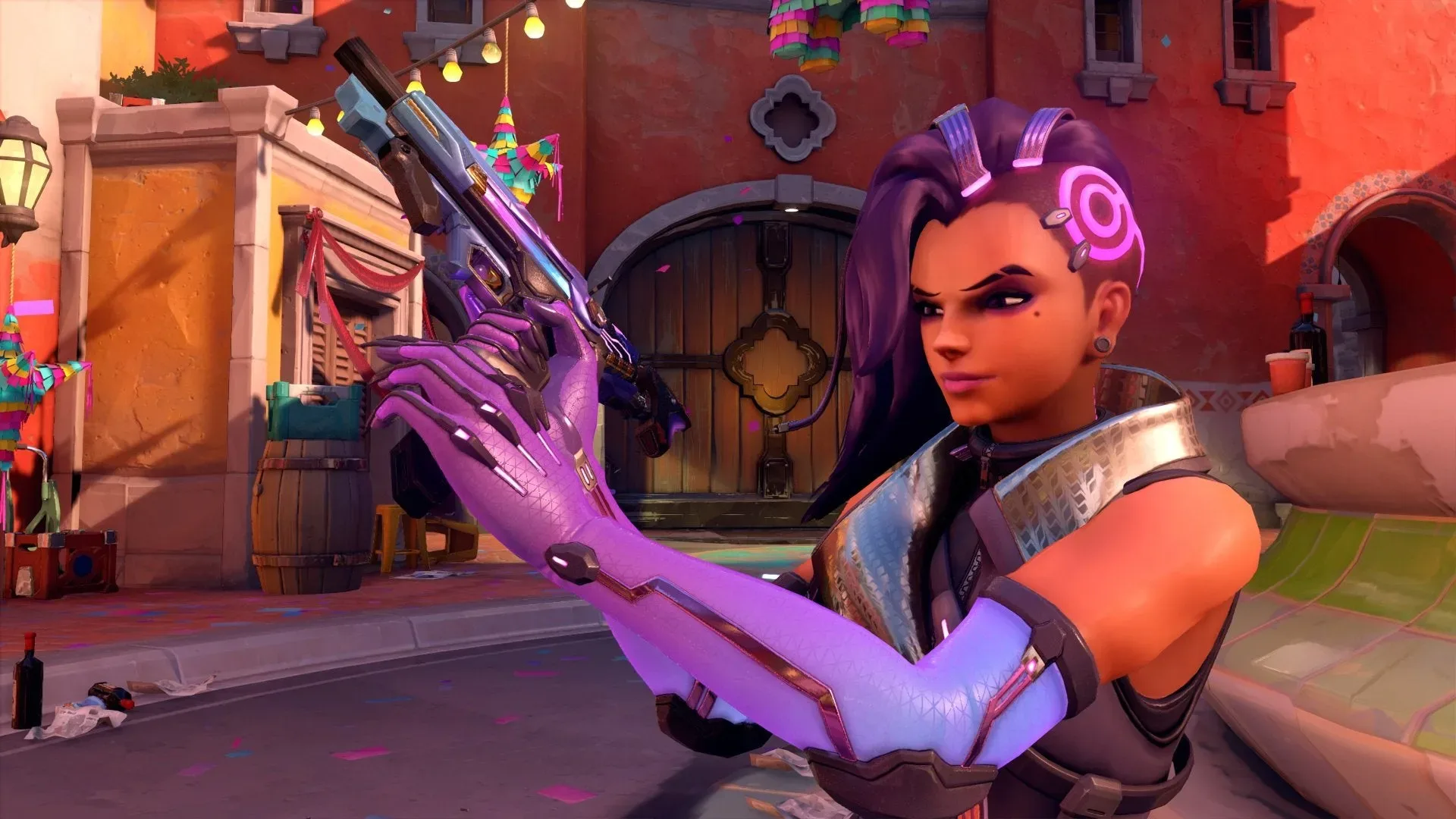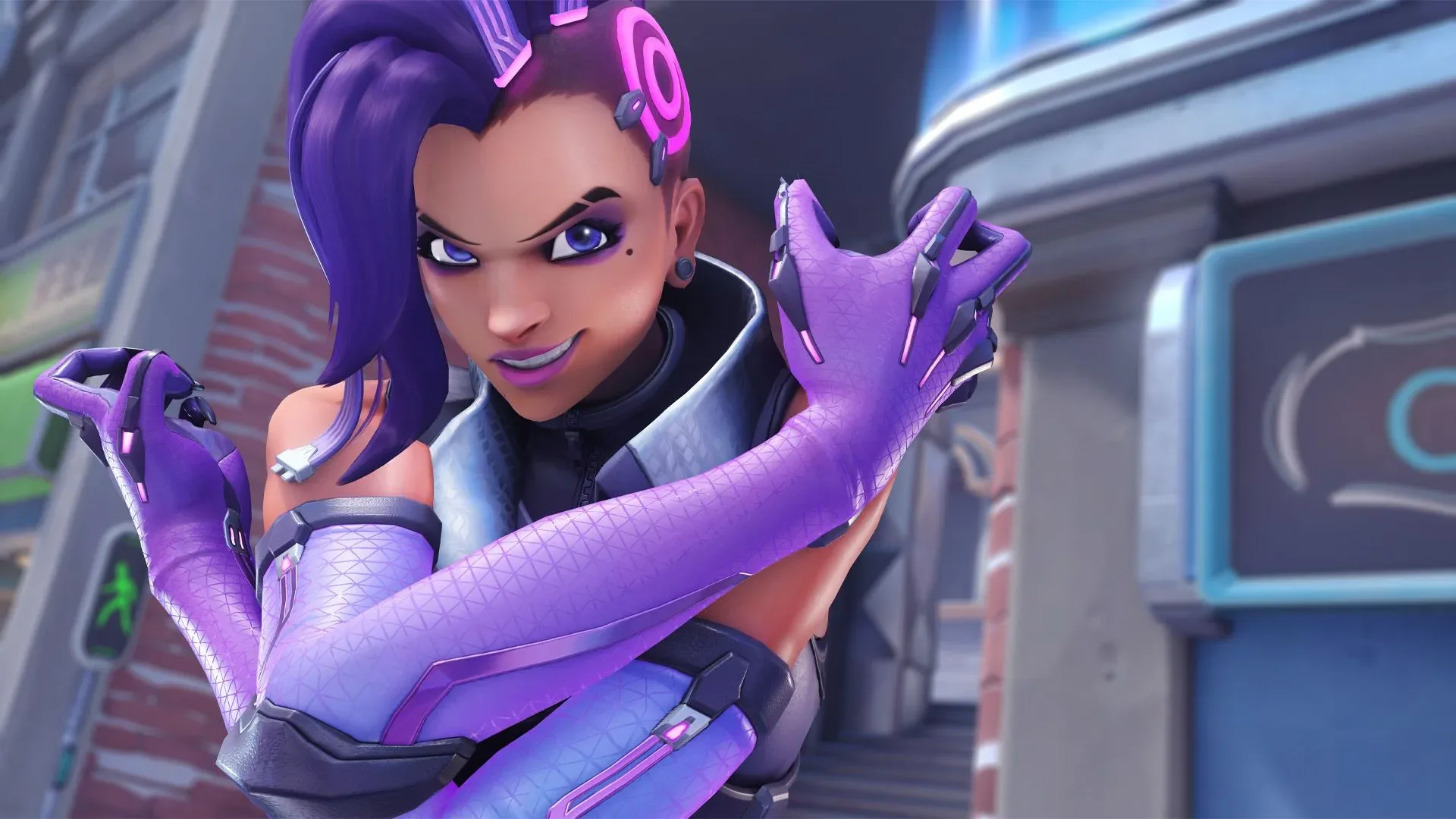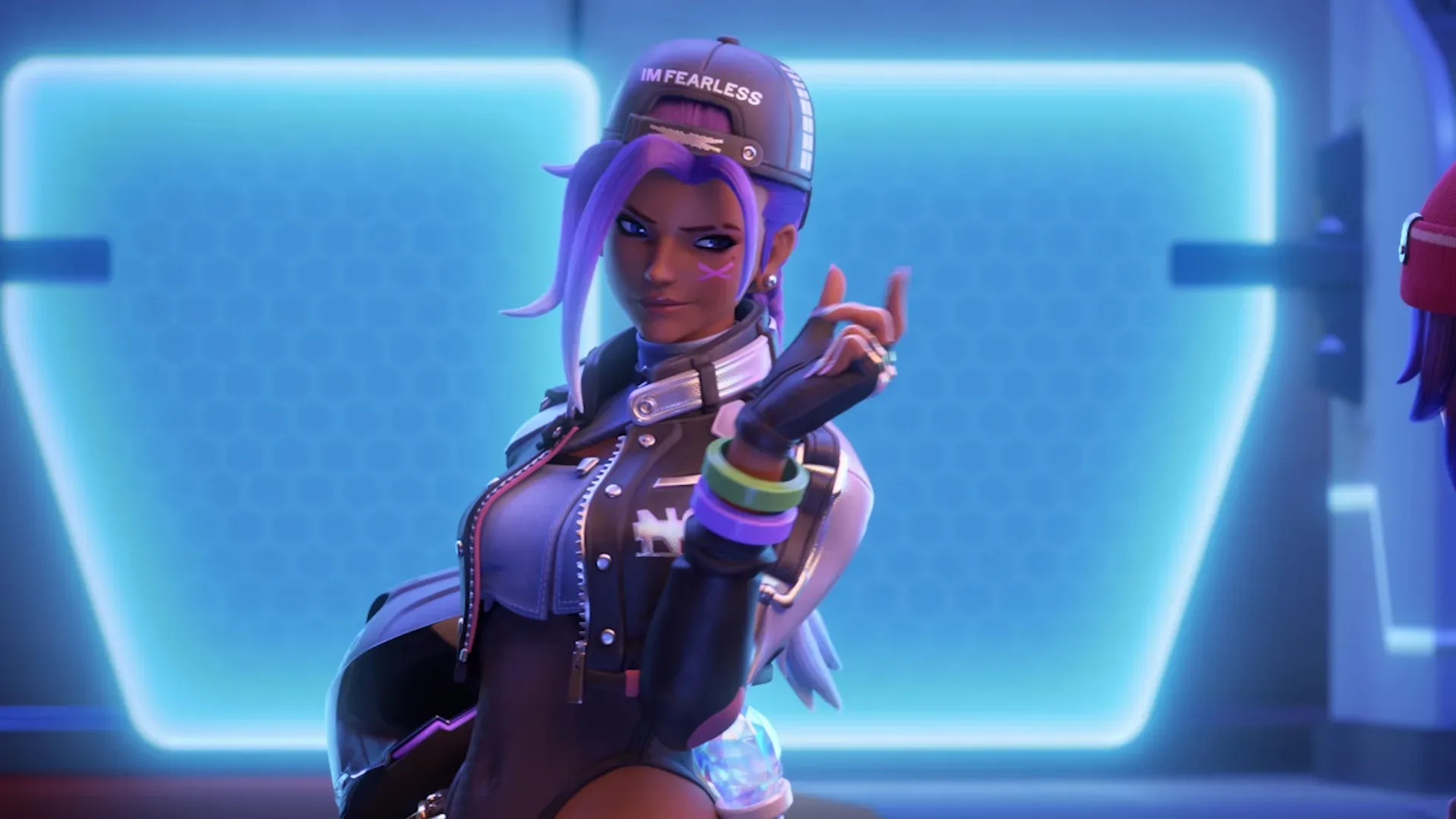
Sombra’s move from Damage to Support is not a gentle tuning pass. It changes the role of a hero long defined by slipping into an enemy backline, disrupting key targets and shutting down abilities at exactly the wrong moment. The new version loses her standard Hack as an ability-locking tool, shortens the reach of Translocator and replaces Virus with a new area-control tool called Cyberspace. In return, she gains healing and a more clearly team-oriented purpose.
That is likely to be a painful adjustment for players whose Sombra habits were built around isolated flanks and disruptive pick attempts. But the reported early shape of the rework suggests a coherent trade: less direct control over opponents’ kits, more ways to preserve allies and blunt an enemy push. Rather than making Sombra a conventional high-output healer, the update positions her as an enabling Support—one who applies healing, contributes damage and creates a short-lived zone where opposing attacks are dramatically less threatening.
The result is still recognizably Sombra in theme, even if it is a major departure in play pattern. Her tools are now less about deleting an opponent’s options outright and more about corrupting the value those options can produce.
A role change that asks Sombra to stay connected
Damage Sombra encouraged independence. Her identity revolved around getting behind an opposing team, applying pressure to vulnerable targets and using Hack to interrupt abilities or deny an escape. That playstyle could pull her far away from her own teammates, sometimes productively and sometimes at the cost of leaving a team without enough immediate damage in the main fight.
Support Sombra has more incentive to operate within reach of allies. Her Translocator does not carry her as far as it once did, making deep solo excursions more dangerous. More importantly, her central responsibility now includes keeping teammates alive. The revised kit therefore makes positioning a shared concern rather than solely a question of where she can harass an opponent.
This does not mean Sombra becomes a stationary backline healer. Her stealthy identity and weapon still give her reasons to move, scout and look for angles. But the new constraints suggest that the best value comes from cycling between teammates who need help and nearby spaces where an enemy advance can be weakened. That is a more disciplined loop than simply disappearing on a long flank.
For players, the adjustment is practical as well as philosophical. Old muscle memory will matter: someone accustomed to reaching for Hack to stop an ultimate or interrupt a defensive response has to relearn which moments demand EMP, weapon pressure, Hotfix or Cyberspace. A role conversion can feel awkward even when it makes a hero stronger, because familiar solutions no longer exist.
Hotfix shifts the old Hack gesture toward healing
Hotfix is Sombra’s primary healing ability, and it preserves part of the presentation of her prior kit. She brings up the familiar hacking interface, targets an ally and quickly performs the action, but the outcome is healing over time rather than an enemy lockdown.
Related coverage includes Overwatch's Support Sombra Rework Is Already Showing Surprising Promise.
Healing over time means the target continues receiving health after the initial application instead of requiring Sombra to continuously maintain a beam or repeatedly fire a direct heal. That distinction is central to the new design. Once Hotfix is applied, Sombra can resume shooting, repositioning or preparing the next response while the healing continues. She will still need to monitor teammates and refresh the effect as needed, but she is not required to spend every second focused on one health bar.
The cast is described as slightly faster than the former Hack. A seemingly small cast-time reduction has outsized importance in a shooter where sightlines change rapidly. If an ally moves behind cover just after being targeted, successfully starting the heal before that happens can be the difference between useful support and a missed window. It also reduces the time Sombra spends exposed while attempting to help someone.
Hotfix is not presented as a route to matching the raw healing totals of a more heal-focused character such as Lifeweaver. That distinction matters. “Healbot” is community shorthand for a Support whose main contribution is sustained, repeated healing rather than damage, utility or playmaking. Sombra’s apparent job is not to win through top-off healing alone. Her value comes from allowing a teammate to remain active while she keeps participating in the fight through damage and disruption.
Wuyang is a useful comparison point only in the broadest sense: both are framed as supports that enable teammates instead of constantly trying to fill every missing point of health. The important takeaway is not that their kits are identical, but that Sombra’s success should be evaluated through survival windows, pressure and fight control—not just a post-match healing number.
Cyberspace is the rework’s defining piece
The most consequential new tool is Cyberspace, which takes the place of Virus. Virus was a damage-over-time skill shot: it needed a direct hit, and its strongest application depended on setup with Sombra’s former Hack. Without that setup, it could struggle to create urgency.
Cyberspace pursues a completely different kind of value. It creates an area of effect that weakens enemies inside it, cutting both their healing output and damage output by half. In game-design terms, a debuff is a negative status effect applied to an enemy; an area of effect is a zone that can affect multiple characters within its boundaries rather than one precisely struck target. Both elements make Cyberspace more forgiving than a direct-hit projectile, while still requiring good placement and timing.
The half-strength penalty is substantial because it affects two of the most important ways an enemy can win an engagement: finishing targets and restoring allies. In a contested space, lower incoming damage can buy enough time for Hotfix or another Support’s healing to work. Reduced enemy healing can also make it easier for Sombra’s team to convert focused fire into an elimination.
Unlike the old Hack, Cyberspace does not erase an ability from the game. It instead changes the math around that ability. That distinction could make the effect more readable and more escapable for opponents: enemies can leave the field to end the debuff. The counterplay is spatial rather than an interruption that simply tells a player their button no longer functions.
There is a strong example of its defensive potential in a Reinhardt pin. Placing Cyberspace near the point where Reinhardt is expected to connect can reduce the pin’s normally lethal damage enough for the targeted ally to survive, receive healing and remain in the fight. Similar timing could reduce the threat of an Orisa or Reaper ultimate when an opposing team is grouped together.
Those possibilities should not be confused with guaranteed answers. An opponent can leave the field, and the effect depends on anticipating where an engagement will occur. But Cyberspace appears to give Sombra a concrete response to burst-damage moments that once might have demanded a perfectly timed Hack or simply resulted in a lost teammate.
Why the rework is a healthier fit for a Support slot
The main tension around Sombra has long been that the qualities that feel most authentic to a hacker—denying an ability at a critical instant and turning an opponent’s plan off—can be deeply frustrating to face. The new version gives up much of that direct denial. In particular, Sombra can no longer use a standard Hack to stop Sigma while he is airborne during his ultimate; EMP remains the relevant larger-scale tool for that kind of denial.
That loss is real. Players who enjoyed Sombra because she could surgically interrupt an opponent’s big moment have reason to miss it. A character’s fantasy is partly about what she can do in the clutch, and Hack was a defining expression of Sombra’s identity.
Yet Cyberspace offers a different expression of the same hacker fantasy. Instead of canceling a system outright, Sombra degrades it: damage hits at half force, and healing performs at half power. It is a less absolute form of interference, but it potentially has broader team utility. Crucially, it creates value even when Sombra is not hunting a lone target in the backline.
That is why the conversion may be more than a rescue plan for an inefficient Damage hero. It gives the character a job aligned with five-player coordination. Hotfix rewards attention to allies. A shorter Translocator discourages separation. Cyberspace rewards anticipation of an enemy’s route and cooldown commitment. Her gun and mobility still let her contribute aggression, but that aggression now has a clearer relationship to the rest of her team.
What Sombra players should reconsider
- Stay close enough to matter: The shorter Translocator and healing responsibility make very deep flanks a greater gamble. A nearby angle can still be threatening while preserving access to teammates.
- Apply Hotfix before the emergency peaks: Healing over time is most useful when it begins early enough to create a buffer, rather than after an ally has already taken overwhelming burst damage.
- Treat Cyberspace as a prediction tool: Its field can be placed where an enemy must commit—near a wall, choke or vulnerable teammate—rather than aimed only at a single opponent.
- Measure impact beyond healing: A teammate surviving a pin, an enemy ultimate producing reduced damage or an opposing healer struggling inside the field can be fight-winning value that is not captured by raw healing totals.
- Accept the missing Hack plays: Standard ability cancellation is no longer the default plan. Sombra players will need to reserve expectations of major disruption for EMP and find more value in weakening a threat than stopping it altogether.
The rework will not make every longtime Sombra player happy, and it should not be described as a simple buff to her former Damage identity. It is a replacement of that identity with a Support version that asks for different instincts. Still, the pieces fit together more cleanly than a label change alone might suggest. Fast healing-over-time gives her room to act; a less forgiving escape tool keeps her tied to the team; and Cyberspace gives her a meaningful, hacker-flavored way to interfere with an enemy’s most dangerous moments.
That wider shift toward utility, timing and team survival is why the new Sombra has generated such interest. It is also part of a larger conversation about how games reshape familiar roles when their old tools become difficult to balance, a subject that has surfaced elsewhere in recent games-industry developments. For Overwatch players, the immediate question is simpler: whether trading the satisfaction of a perfectly timed Hack for a perfectly placed Cyberspace field is a trade worth making. Early signs suggest it may be.