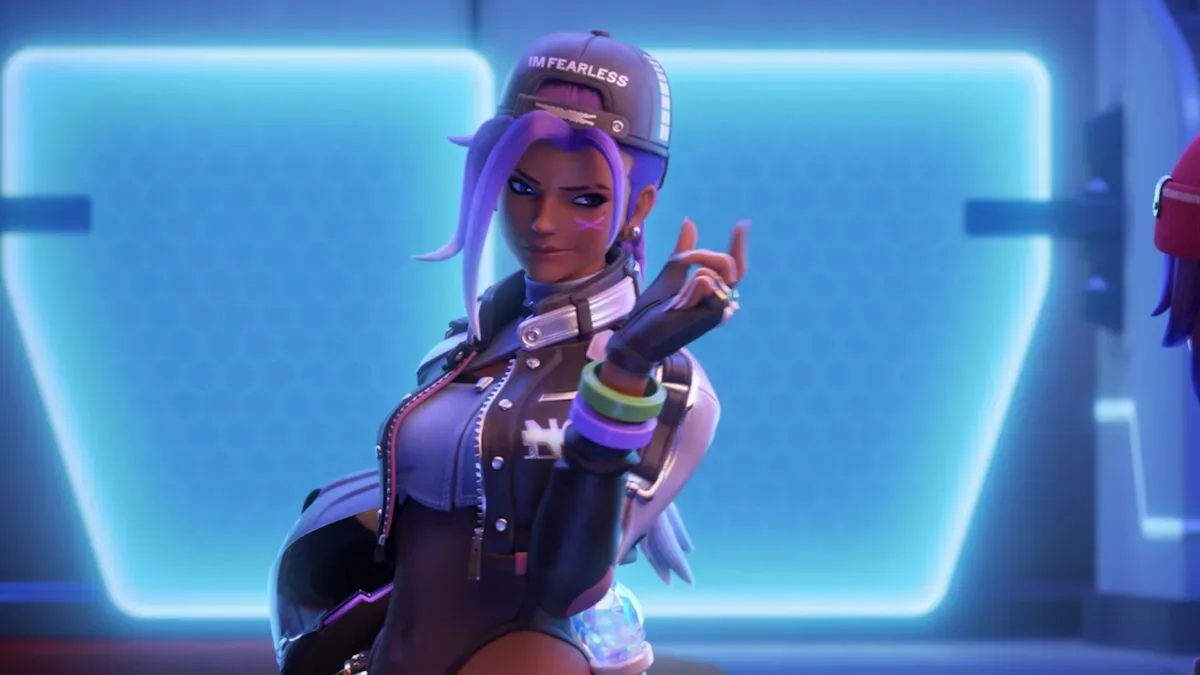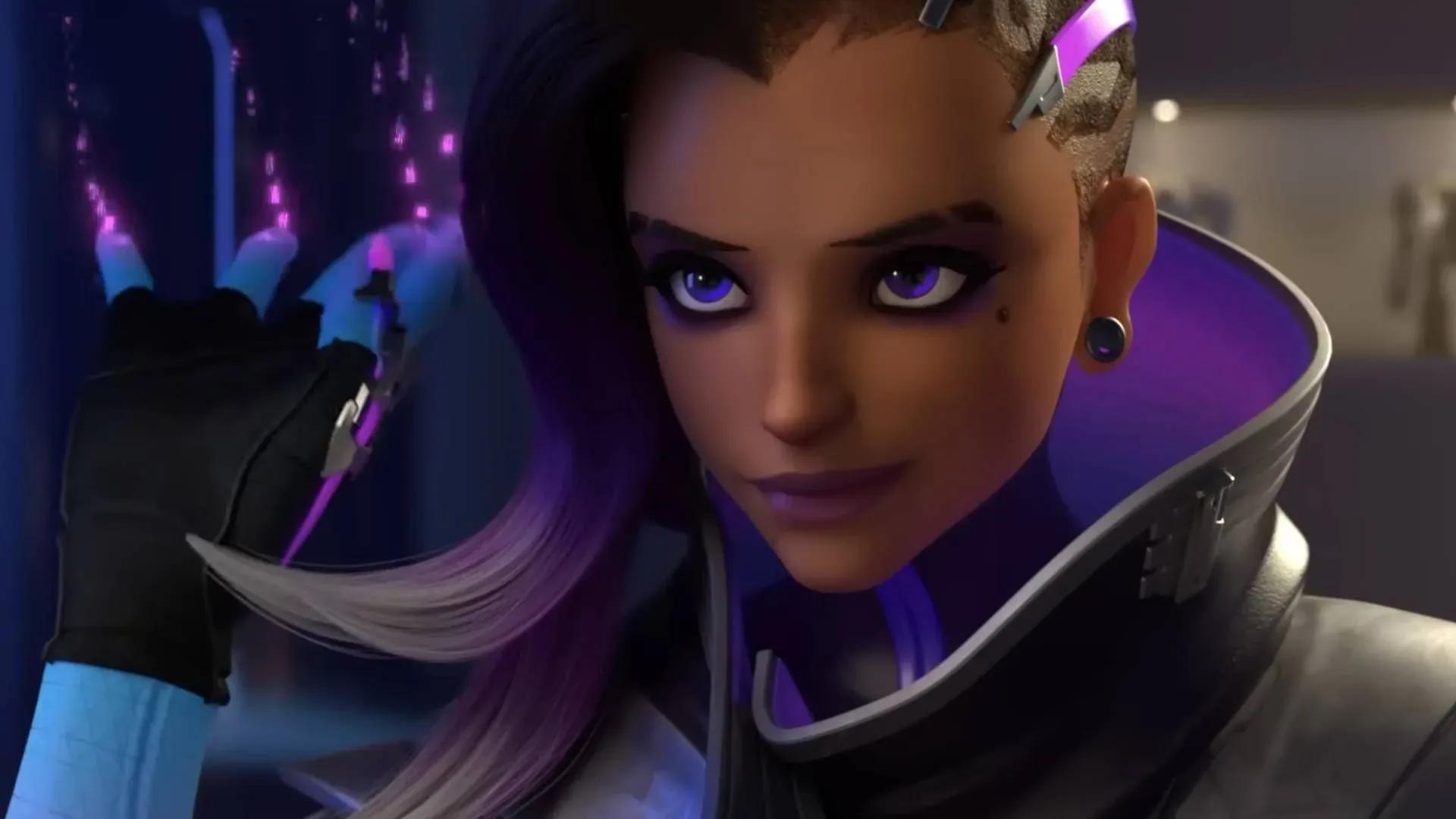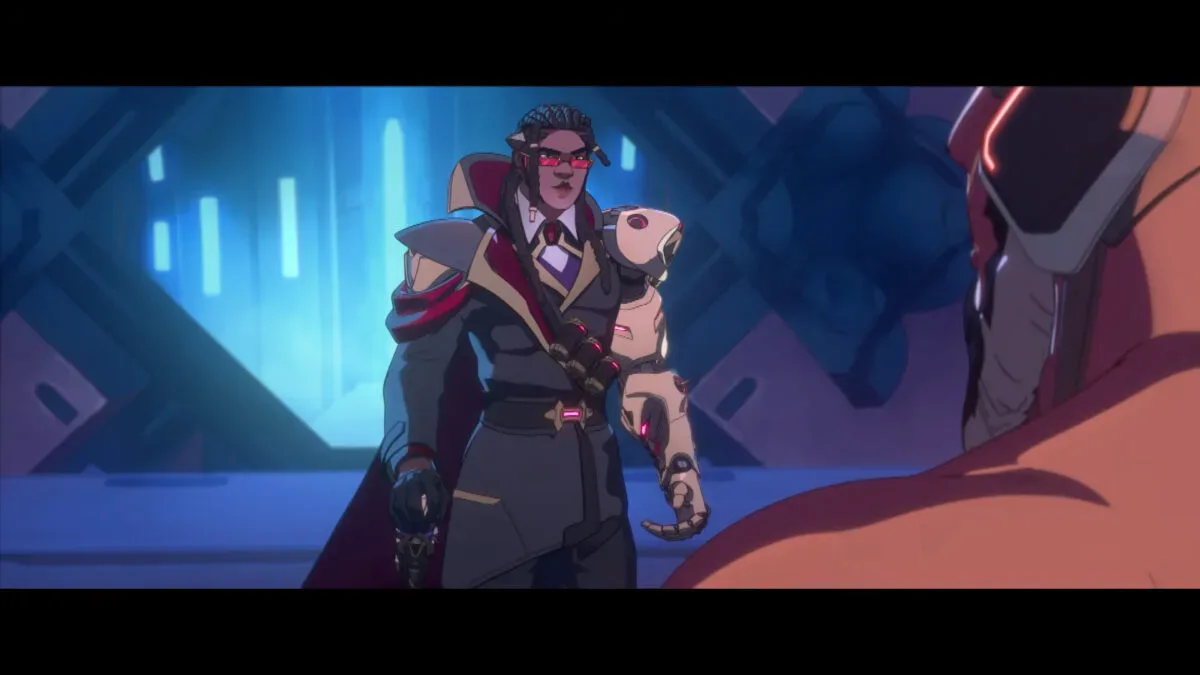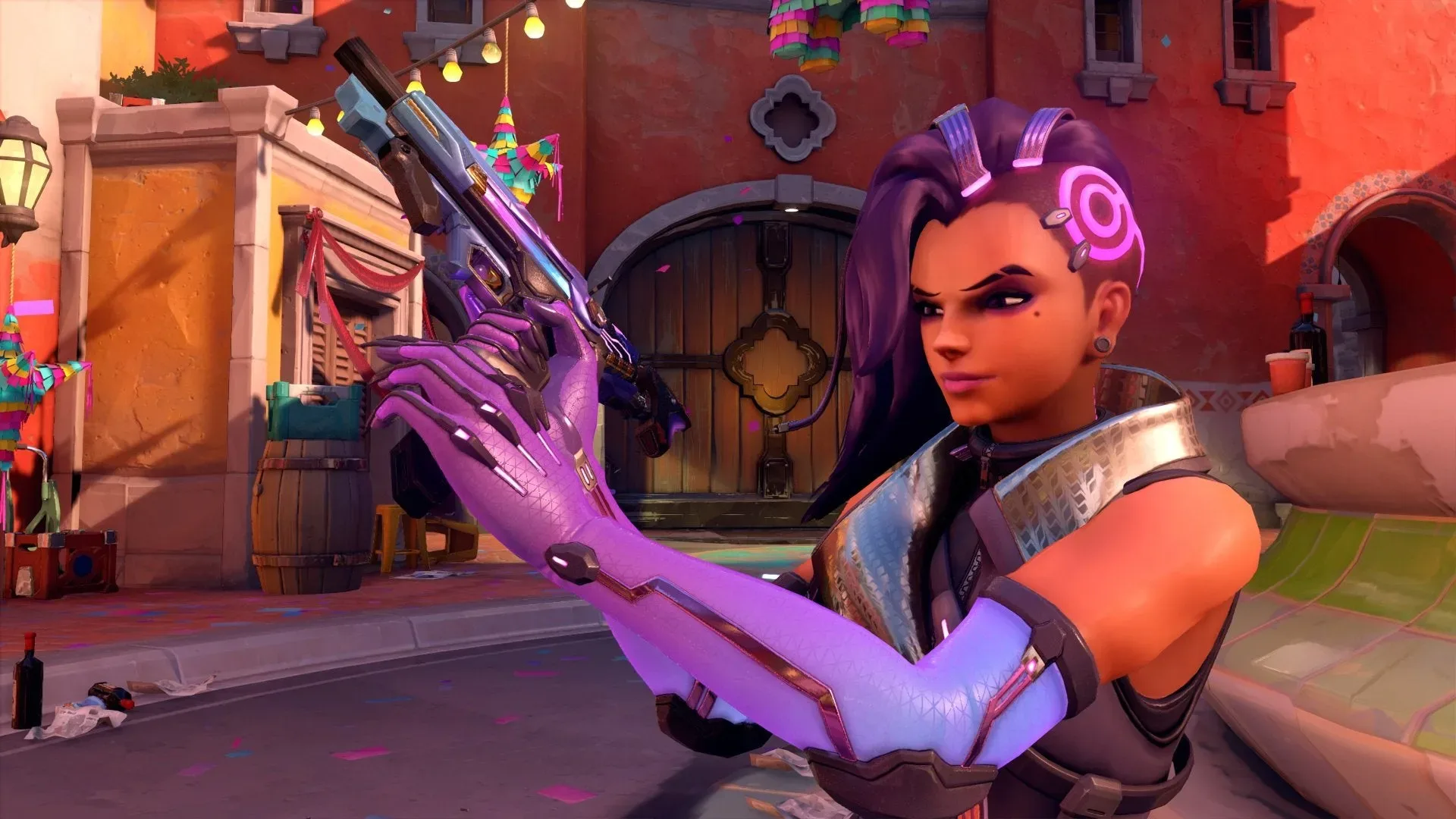
Overwatch’s reported decision to move Sombra from the Damage roster to Support in Season 5 is not a routine balance adjustment. It is a redefinition of what the character is for.
For years, Sombra has occupied a particularly prickly space in the hero shooter: an invisible infiltrator who could find an opening, interfere with an enemy’s key ability, and escape before the opposition could turn a bad moment into an elimination. That loop can be miserable to be caught in. It can also be immensely satisfying to execute, because success rests on timing, positioning, awareness and knowing which threat actually matters in a crowded fight.
The reported Support kit retains parts of that identity. Sombra is expected to keep invisibility and Translocator, while EMP remains the place where her ability-locking utility lives. A new ability called Cyberspace reportedly creates an area that heals allies while reducing enemies’ damage and healing output. There is genuine design logic there: instead of treating disruption and team support as opposites, it turns Sombra into a Support who helps allies by making an enemy team worse at its own job.
But the most contentious part of the change is equally clear. If ordinary Hack is no longer freely available against enemies and ability denial is mainly reserved for EMP, Sombra is losing a defining moment-to-moment interaction. The character may remain stealthy and tech-themed, but a stealthy Support is not automatically the same thing as a saboteur.
For more context, explore Fan-Voted Lego Yu-Gi-Oh Exodia Build Moves Toward an Official Set.
The difference between a role change and a rework
Hero shooters regularly rebalance numbers: damage, cooldowns, range, duration and health. Those adjustments change effectiveness without necessarily changing why a player chose a hero. A major rework goes further, altering the gameplay loop—the repeating sequence of decisions and actions a character asks of the player.
Sombra’s earlier Damage identity was built around infiltration and intervention. A player would approach from an unexpected angle, identify an opponent whose next action could swing the fight, use Hack at the right instant, then either capitalize on the disruption or leave through Translocator. In that context, raw damage was only part of the point. The reward was often the interruption itself.
That distinction matters because the most memorable Sombra moments are not necessarily clean eliminations. They are denials. Stopping Sigma while he is exposed during his Ultimate, cutting off Cassidy’s High Noon before it fires, or preventing Moira from continuing a powerful play are examples of what players mean when they describe Sombra as a high-game-sense hero.
Game sense is the practical ability to read a match: tracking dangerous cooldowns and Ultimates, anticipating where enemies will move, recognizing which opponent is vulnerable, and knowing whether a play is worth the risk. It is not the same as aim. Sombra’s disruptive tools historically made that knowledge unusually visible, because a well-timed intervention could prevent an entire enemy plan rather than simply add damage to a target.
Moving her to Support does not erase the need for game sense. A Support Sombra will presumably need even more judgment about when to stay hidden, when to heal, where to place Cyberspace and whether to use EMP for the team’s benefit. Yet the nature of that judgment changes. The question shifts from “Which enemy play can I interrupt right now?” toward “How can I sustain allies and weaken the opposing team?” Both are valuable, but they are not interchangeable fantasies.
Why Sombra has always been hard to balance
Blizzard’s stated rationale is straightforward: invisibility, ability lock and significant damage become problematic when they are all available at a high level. The reported redesign appears intended to separate those strengths. Sombra can retain mobility and stealth, but she is no longer expected to rapidly execute opponents as a Damage character. Meanwhile, the harshest disabling effect becomes less frequent because it is attached to EMP.
That is a familiar balancing problem. In competitive games, a character with strong access, strong denial and strong finishing power can feel like they have too many ways to decide an encounter. Invisibility complicates that further. Other players cannot always respond before the ambush begins, and losing access to abilities can make a player feel unable to participate in the answer.
Cooldowns are abilities temporarily unavailable after use. A hero built around switching off those tools attacks more than an opponent’s health bar; she attacks their options. That can be strategically rich, but it also explains why Sombra provokes a stronger emotional reaction than an opponent who simply deals high damage.
The response is not uniform across the player base. Sombra was reportedly the most-banned hero after Hero Bans were introduced, especially at lower ranks. A Hero Ban is a pre-match restriction that prevents a selected character from being used. High ban rates do not settle whether a hero is too strong, too frustrating, poorly understood, or some mixture of all three. They do, however, show that a large share of players would rather remove the problem than solve it in the match.
That presents an uncomfortable reality for any live-service competitive game: balance is partly about objective outcomes, but it is also about the lived experience of the people being countered. A mechanically fair character can still be unpopular to face. Conversely, a difficult or annoying character can have devoted specialists who see counterplay opportunities that less experienced players miss.
The danger is solving the second issue by hollowing out the first. If the answer to “people dislike being hacked” is “Sombra mostly stops hacking,” the game may become less irritating for opponents but less distinctive for the people who loved playing her.
Cyberspace is the rework’s most promising idea
The new Cyberspace ability is important because it suggests the Support redesign is not merely Damage Sombra with lower damage numbers and a healing button attached. Its reported area-of-effect combines ally healing with enemy weakening, reducing both damage output and healing output.
Area of effect, often shortened to AoE, means an ability influences a defined zone rather than one target alone. In a team fight, that turns placement into a major decision. A Cyberspace field could potentially reward Sombra for choosing chokepoints, contested objectives or clusters of teammates and enemies. Its value would not come solely from restoration; it would come from changing the terms of a fight in one location.
That has an unmistakably Sombra-like flavor. Rather than directly shutting off a single foe’s abilities, she could undermine the enemy team’s output while helping her own side endure. It is sabotage translated into Support language.
There is still a meaningful difference between weakening an area and canceling a pivotal action. A field that reduces damage and healing is sustained pressure. A well-timed Hack was an interruption. The first encourages space control and team coordination; the second enabled a sudden reversal based on anticipation. Whether Cyberspace feels like a worthy trade will depend on the final tuning and, more fundamentally, on whether players wanted Sombra’s core identity to become more team-facing in the first place.
EMP carries more responsibility now
Under the reported change, EMP becomes the main remaining route to Sombra’s ability-locking utility. That makes the Ultimate more consequential than before.
Ultimates are powerful abilities charged through play and used less often than normal skills. Putting Hack-like denial behind an Ultimate means opponents encounter it less frequently, which may reduce frustration. It also concentrates Sombra’s old disruptive identity into a high-stakes moment. A player can no longer repeatedly seek small interruption windows; they must build toward a larger one.
There is a potential upside. A less frequent EMP may make Sombra’s team-fight planning more legible to allies and enemies alike. It can create a recognizable win-condition moment rather than a series of individually disruptive encounters. There is a potential loss, too: Sombra’s former appeal lay in the small, sharp reads between Ultimates. Her skill expression was not only about pressing a big button at the right time.
For an overview of the debate surrounding the reported role swap, see this look at concerns over Support Sombra’s identity.
Ten years of character expectation cannot be patched away lightly
Sombra arrived in 2016 with hacking at the center of her presentation. Her debut leaned into the idea that even a major event’s security could not contain her, and Carolina Ravassa’s delivery of Sombra’s opening line made the hacker persona immediately recognizable. The character was introduced as someone who gets behind systems, finds leverage and makes the supposedly secure feel vulnerable.
That background does not mean she must remain a Damage hero forever. Fictional identity and gameplay role can evolve. It does mean, however, that the mechanics carrying her theme deserve unusual care. Hacking enemy systems in battle was not decorative flavor pasted onto a generic shooter character. It was the playable expression of the fantasy.
Blizzard’s designers argue that invisibility, Translocator and EMP preserve enough of that core. That may prove true for players who chiefly value Sombra’s movement, information advantage and misdirection. For players who chose her because she could proactively derail an enemy’s decisive play, the calculation will be harsher. Stealth plus healing may be an effective Support concept while still feeling like a replacement rather than an evolution.
What players should watch when Season 5 arrives
With Season 5 reportedly set for October, the meaningful questions will go beyond whether Support Sombra is strong on a tier list.
- Does Cyberspace create choices unique to Sombra? If its blend of healing and weakening changes how teams approach space, it may establish a distinct Support niche.
- How much agency does invisibility provide? Stealth can enable scouting, rotations and rescues, but it needs a clear purpose beyond simply arriving to heal from an unusual angle.
- Does EMP still feel like an earned disruption tool? Restricting ability lock to an Ultimate could preserve the dramatic part of Sombra’s identity, or it could make her old signature too rare to define her.
- What replaces the former pick-making loop? Support players need meaningful opportunities to turn fights, not only to refill allies’ health. The reported enemy-output reduction may be the answer, but its impact will be central.
The role swap is therefore bigger than a response to a frustrating enemy. It is a test of what a long-running hero shooter owes to character specialists when it revises a controversial design. Games have to account for how opponents feel; no competitive ecosystem survives if a large portion of its players dreads a hero’s presence. But players also form attachments to unusual jobs within a roster. When those jobs vanish, a game may become smoother without becoming richer.
Support Sombra has a credible foundation: mobile healing, stealthy positioning, area control and debuffs can make for an inventive kit. Yet the concern from longtime Sombra players is not that change is automatically bad. It is that the change removes the very form of disruption that made the hacker special. The final question is simple, even if the answer will not be: when Sombra wins a fight in her new role, will it still feel like she outsmarted the system?