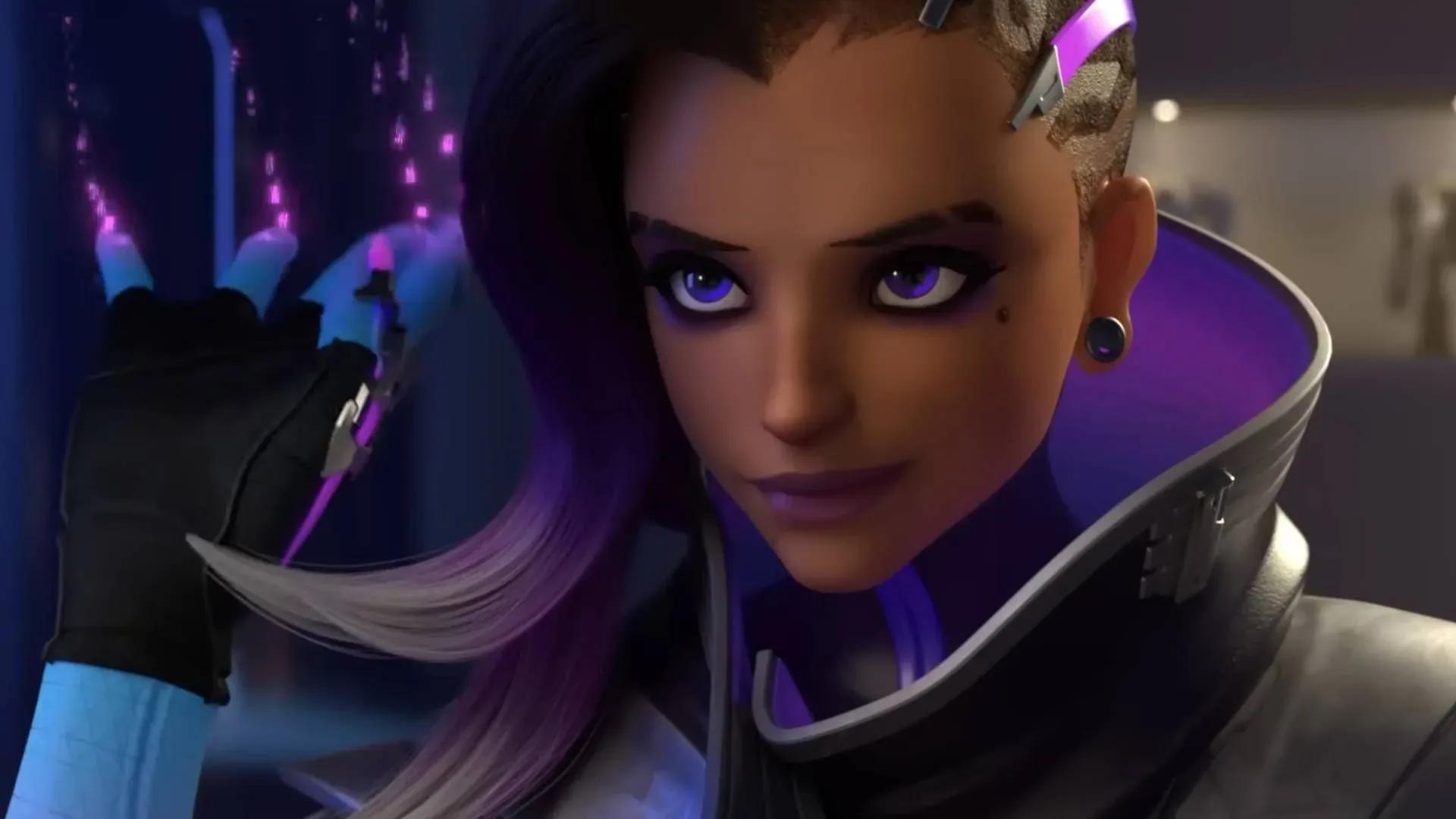
Sombra has spent a decade making Overwatch matches feel like someone replaced the rulebook with a hacked PDF, deleted the important pages, and then vanished before anyone could complain. That disruptive identity is exactly why she became memorable after joining the roster in 2016—and exactly why she has repeatedly become one of the game’s most contentious heroes.
Now, Blizzard is preparing perhaps the largest rethink of the character yet. In Overwatch Season 5, Sombra is set to leave the Damage category and enter the Support lineup. The goal is not to turn the hacker into a completely different hero wearing her old purple coat. Rather, the development team says the new role should preserve the parts of Sombra that make her Sombra while placing much firmer limits on how long she can roam unseen, harass a backline, and escape the consequences.
It is a dramatic role change, and it speaks to a long-running design problem. Sombra has received multiple reworks over the years, but the same underlying complaints have followed her: players dislike losing access to abilities, dislike being attacked by an invisible opponent, and dislike watching that opponent teleport to safety after creating chaos. Her opponents have had plenty to say about it. Her own teammates have also had reasons to grumble.
Why Sombra has been so difficult to balance
A normal frustrating hero can often be understood in one sentence: too much damage, too much survivability, too much crowd control, or perhaps a suspicious willingness to punch a flying robot. Sombra’s issue has been more cumulative. Her kit combines several mechanics that are each manageable in isolation but prickly together.
- Hacking: Her signature disruption can deny or limit access to key abilities, taking agency away from an opponent at a critical moment.
- Stealth: Extended invisibility makes it difficult to track where she is, when she will engage, or which teammate is about to become the evening’s designated computer error.
- Escape tools: Teleporting away can make a successful chase or retaliation feel abruptly pointless.
- Independent flanking: Sombra can operate far from the main fight, creating pressure that may be useful but is not always visible to the players trying to hold an objective.
Any one of those traits could fit into Overwatch’s fast, ability-heavy combat. The trouble arrives when they overlap. A player can be hacked, unable to respond as expected, uncertain where the attacker came from, and then unable to punish that attacker because she has already disappeared. That sequence is the root of the “anti-fun” label the hero has attracted.
The design challenge is not merely numerical. Reducing damage, increasing cooldowns, or adjusting a duration can improve a matchup while leaving the broader emotional experience intact. Sombra’s problem has often been that the interaction itself can feel aggravating even when the numbers are technically balanced. Her next rework appears aimed at changing the rhythm of that interaction.
A Support role creates a new leash on the flanker
The planned Support version of Sombra is intended to use healing as an anchor. Instead of spending extended periods detached from her squad, she will need to return to help them. The described structure is straightforward: supporting allies with heals creates opportunities to enter stealth and pressure the enemy backline, but that excursion has a limited duration. Once the window closes, Sombra needs to head back and resume supporting her own team.
That is a meaningful shift in incentives. Damage Sombra has often been free to seek an opening on her own timetable. The Support model could make her disruption part of a more visible cycle: assist teammates, infiltrate briefly, interfere with enemies, then return to the group. The result may still be recognizably Sombra-like, but less like an independent contractor who only appears in the team photo after activating her ultimate.
Related coverage includes Overwatch Plans Major Sombra Support Rework While Preserving Her Hacker Identity.
That last point matters because complaints about Sombra do not only come from the side being hacked. A Sombra player may be accomplishing valuable work through scouting, distractions, isolated eliminations, or pressure that forces enemies to play cautiously. Yet allies pushing an objective can struggle to recognize that value if one member is consistently out of sight. Other mobile heroes, including Tracer and Wrecking Ball, can spend time away from the core fight, but Sombra’s stealth and escape patterns have made that absence especially pronounced.
By attaching her access to stealth and flanking to the job of healing, the rework could give allies a clearer sense of when and how she is contributing. It also gives the hero a responsibility that is impossible to ignore: Supports are expected to enable their teammates. If the plan works, Sombra’s squad will see more of her before the moment she materializes for an ultimate.
Keeping the hacker fantasy intact
Moving a hero between roles is always risky because role labels carry expectations. Damage heroes are generally judged by pressure and eliminations. Support heroes are judged by their ability to sustain, enable, protect, and help coordinate a team. A straight conversion that stripped Sombra of infiltration and disruption would solve one problem by deleting the reason people chose her in the first place.
Blizzard’s stated intent is to avoid that outcome. Sombra should still have chances to use stealth, reach the enemy backline, and perform the disruptive maneuvers associated with her character. The key difference is that those actions are expected to happen in shorter bursts and in between meaningful support work.
There are still major unknowns. No full ability kit, healing method, cooldown list, exact stealth duration, damage values, or ultimate details were laid out alongside the role change. It is therefore too early to claim whether the conversion will make Sombra a high-output healer, an opportunistic utility Support, a hybrid backline pest, or something stranger. Overwatch has never been shy about strange. A character who heals allies before briefly becoming an invisible cybersecurity gremlin is, if anything, a very on-brand possibility.
Those unknowns will determine whether the rework succeeds. Healing has to be reliable enough that teammates want a Sombra on their side. Her flanking tools have to remain potent enough that established Sombra players do not feel their hero was replaced by a different character with the same haircut. And opponents need adequate counterplay, especially when facing hacking effects. The balance point is narrow: too much freedom risks reviving old frustrations, while too little could leave her without the threat that defines her.
What Season 5 is bringing alongside the rework
Sombra will not be the only hero receiving attention in Overwatch Season 5. Roadhog is also due for changes, and a new hero named Doctrine is expected to arrive at the same time. That gives the season a substantial roster-shaping focus rather than a single isolated patch note for a famously troublesome infiltrator.
The timing is notable for a live-service game where character changes can alter team composition, player expectations, and the language of complaints in roughly equal measure. A Support Sombra may affect how teams build around backline pressure, how they protect healers, and what players consider a viable answer to enemy flankers. It could also change the social bargain inside a match: Sombra’s value may become less invisible to her allies if healing keeps her regularly involved in the team’s frontline or objective play.
It is also worth treating the move as an experiment rather than a guaranteed cure. Sombra has already been revised several times because her fundamental concept is difficult to fit cleanly into a competitive hero shooter. The Support conversion is bigger than a cooldown adjustment, but big changes do not eliminate the need for tuning after players get hold of them. The important promise is not that every old complaint disappears overnight; it is that the character’s most polarizing tools will be framed by clearer limits and stronger team obligations.
For players who love Sombra’s style, the best-case scenario is a hacker who still finds clever routes, disrupts key targets, and slips into dangerous territory—but now returns with enough healing and presence that her own team is happy to see her. For everyone who has ever lost a crucial ability at the worst possible time, the hope is simpler: fewer long stretches of wondering where Sombra is, followed by fewer moments of realizing she was behind them all along.
Blizzard’s broader slate remains busy as well. For another look at how the company’s game plans are evolving, read our coverage of Diablo 5’s procedural Sanctuary ambitions. As for Overwatch, Season 5 will reveal whether shifting its most notorious infiltrator into Support creates a better team player—or simply a healer who knows exactly how to make the group chat nervous.