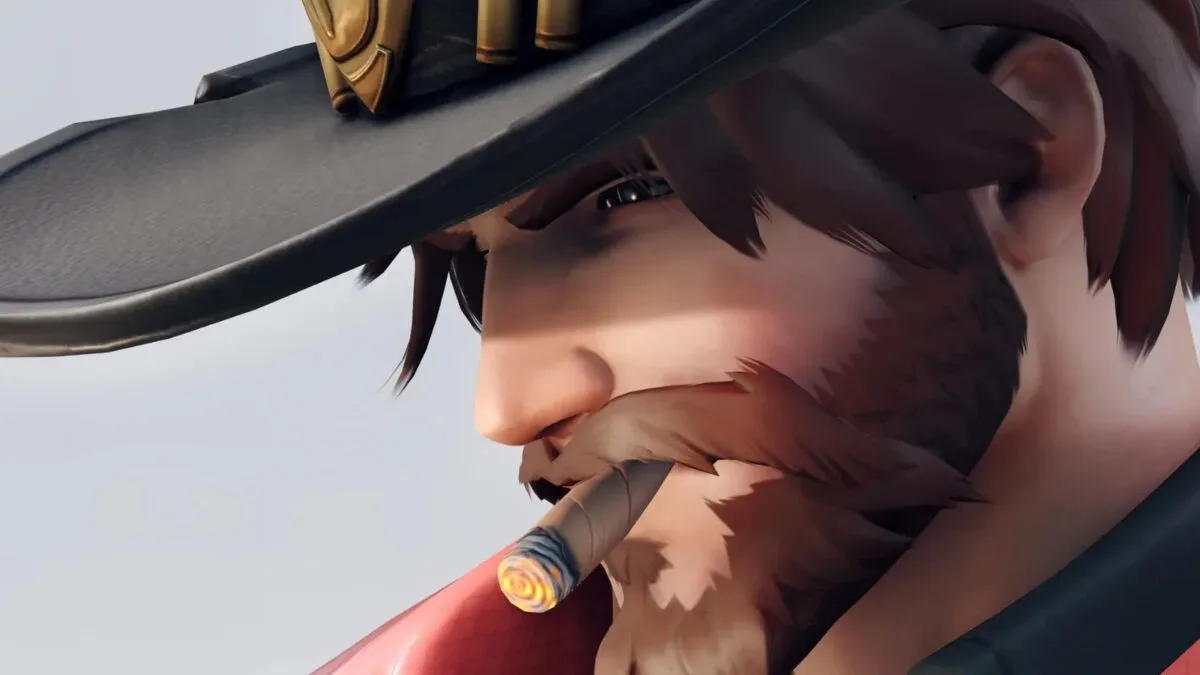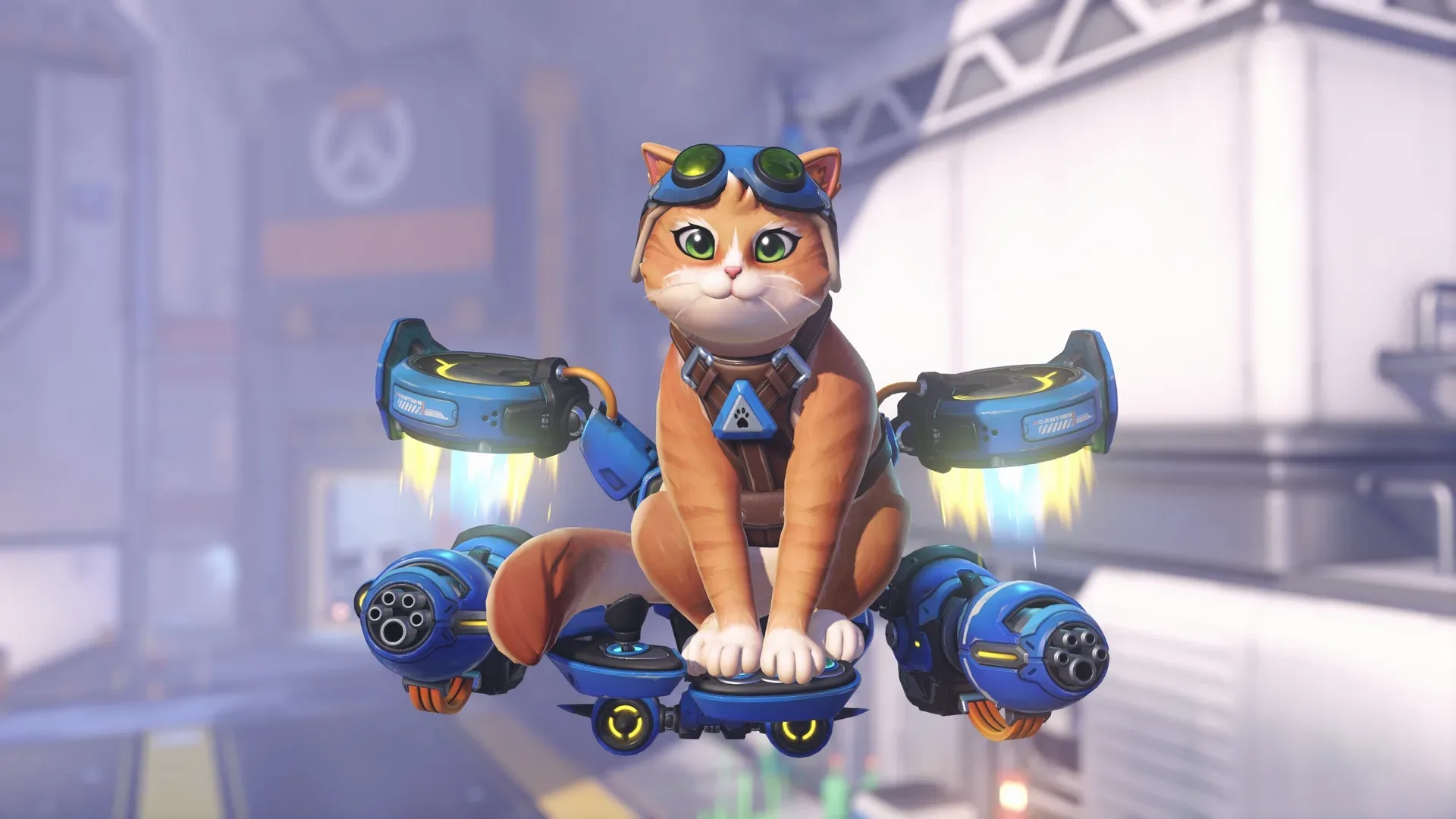
Overwatch’s new season has arrived with a very particular casualty: the airborne Cassidy ultimate. Cassidy can no longer attach to Jetpack Cat’s Lifeline while using High Noon, ending a striking team-up in which the Support hero could carry the gunslinger into the sky while he lined up his ultimate.
It is a narrow rule aimed at one interaction, but it says a great deal about the patch’s broader priorities. The update introduces Doctrine, shifts Sombra from Damage to Support, substantially reworks Roadhog, adjusts several other heroes, and changes both hit volumes and hitscan projectile sizes across the roster. There is plenty here for players to relearn. Yet the Cassidy restriction is likely to be the patch note that produces the most immediate mixture of relief and disappointment.
Why the Jetpack Cat and Cassidy pairing was so potent
Jetpack Cat is a Support hero whose defining Lifeline ability lets her tether to a teammate and fly them around the map. In practical terms, that means an ally can be moved to high ground or carried above an enemy formation in ways conventional map geometry may not allow.
Cassidy’s High Noon is an ultimate built around maintaining sightlines on opponents. The longer targets remain visible, the more dangerous the ability becomes. Putting Cassidy above the opposing team makes taking cover considerably more difficult, because the usual walls, corners, and low cover stop working as reliable breaks in line of sight. The result was an aerial firing angle that could turn High Noon into an unusually effective finishing tool.
The new rule specifically prevents Cassidy from attaching to Lifeline during High Noon. It does not describe a general removal of Jetpack Cat’s ultimate interactions, and that distinction matters. Soldier: 76’s auto-targeting ultimate and Ashe’s deployable B.O.B. are cited among the other ways Lifeline can produce unusual positioning, but neither receives the same listed restriction in this update.
The difference appears to be High Noon’s ability to rapidly eliminate exposed targets once it has its sightline. The stated concern is not merely that Cassidy can fly, but that Lifeline lets him reposition too effectively while preparing an ultimate that can secure kills. The team says it will assess other ultimate interactions individually, leaving the door open to later, targeted changes rather than an announced wholesale redesign of Lifeline.
High Noon will now prevent Cassidy from attaching to Jetpack Cat’s Lifeline.
For Cassidy players, the immediate implication is simple: do not plan a High Noon around being carried overhead. Jetpack Cat remains a mobility partner, but the timing must change. A player can still use the tether to reach a position, then use High Noon once their own footing and sightline are established; what is gone is the ability to maintain the airborne escort during the ultimate itself.
Related coverage includes Overwatch Removes Cassidy's Airborne Jetpack Cat High Noon Combo in New Season Patch.
For opponents, that should make conventional counterplay more dependable. Breaking sightlines, forcing Cassidy off an angle, and using terrain to deny his view regain importance when the ultimate user cannot remain directly over the team. The patch has removed an exceptional positional advantage, not High Noon’s core function.
Roadhog trades some hook lethality for a new defensive weapon
Roadhog’s rework is the other major gameplay overhaul. Its stated aim is twofold: reduce the frustration created by Chain Hook’s lethality and give Roadhog a more conventional means of helping his team.
His Scrap Gun primary fire now shoots two bursts per volley, with ammo increasing from six to 12 and total listed damage per volley rising from 175 to 204. But the numbers are not a straightforward damage buff. Critical damage multiplier falls from 2x to 1.5x, pellet count drops from 25 to 16, and pellet damage falls from seven to 4.25. A larger central projectile, worth 34 damage, is added to each shot. Spread narrows from eight degrees to six, projectile speed rises from 80 to 100 meters per second, and falloff is brought closer, changing from 30–50 meters to 20–35 meters.
The intended trade-off is clearer consistency at appropriate close ranges without preserving the previous critical-hit burst profile. Roadhog’s secondary fire has been removed, replaced by Trash Compactor.
Trash Compactor absorbs projectiles in front of Roadhog for two seconds, slowing him by 15% while active. At the end of that window, it fires an explosive projectile whose damage depends on what it absorbed: 75 to 200 damage, at a conversion rate of 30% of absorbed damage. The blast has a two-meter inner radius and a six-meter outer radius with a 30% falloff scalar, plus 10 impact damage. Its cooldown is 10 seconds in 5v5 and 11 seconds in 6v6.
In plain language, projectile absorption is a defensive tool that turns enemy fire into a potential counterattack. The mechanic gives Roadhog a reason to position in front of teammates and confront incoming projectiles, while the delayed return shot adds an offensive payoff. It is also not a free advance button: the movement penalty and fixed two-second absorption period create a timing and positioning commitment.
Chain Hook itself remains central but offers less immediate victim control. The post-pull stun is reduced from 0.4 seconds to 0.3, and targets finish 4.5 meters away instead of three. Its cooldown is faster, however: six seconds rather than seven in 5v5, and seven rather than eight in 6v6. Take A Breather becomes shorter but more concentrated, lasting a maximum of two seconds instead of three, healing 200 per second instead of 150, reducing damage by 35% instead of 40%, and using a two-second cooldown rather than 1.25 seconds.
Roadhog’s perk choices now reinforce the new kit. Here, Piggy Piggy cuts Chain Hook cooldown by 80% during Whole Hog. Toxic Exhaust adds a 30% slow and 20 damage per second to enemies in front of Roadhog while Trash Compactor is active. These changes suggest that the hero’s biggest swings should arise from absorbing pressure, slowing attackers, and creating repeated displacement opportunities during his ultimate—not exclusively from a single hook-and-shot sequence.
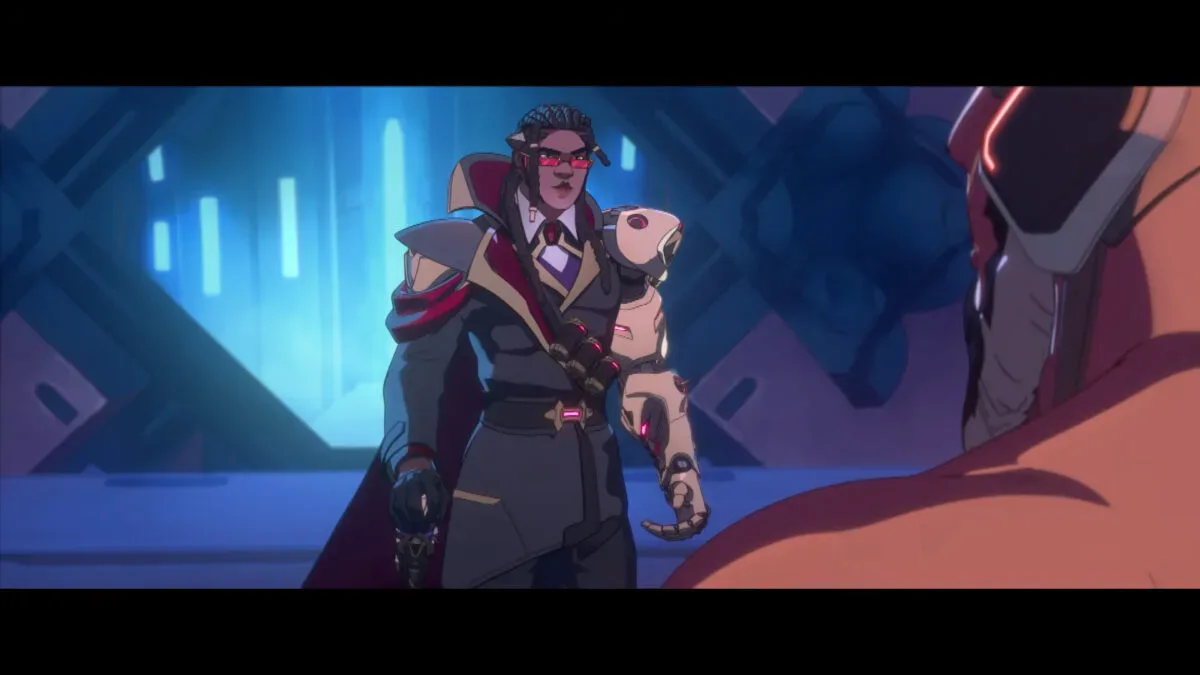
Sombra becomes a Support built around healing and Weaken
Sombra’s rework is even more fundamental. She moves from Damage to Support and from the Recon subrole to Tactician. Her old Hack ability is removed as a main ability, as is Virus. The new version keeps stealth, disruption, and information-gathering at the center of her identity, but asks her to deliver direct support value rather than operate primarily as a damage flanker.
The key new status effect is Weaken, which reduces an affected enemy’s own damage and healing output by 50%. Unlike an ability lockout, Weaken does not stop a target from using their kit. It instead reduces what their actions accomplish. That is an important technical difference: opponents retain agency, while a timely debuff can still sharply alter a fight.
Her new secondary-fire ability, Hotfix, heals an ally for 65 immediate health and then 25 health per second, ending after it has delivered 175 total healing or after 12 seconds. It has two charges, an eight-second cooldown, a 17-meter range, and a 0.5-second cast time. Hotfix can also target health packs and most enemy deployables to hack them through a separate six-second cooldown, without consuming Hotfix charges. That hack can be interrupted by damage, and health packs remain hacked for 30 seconds rather than 45.
Sombra can cast Hotfix while stealthed, temporarily revealing herself without ending Stealth. That detail creates a meaningful decision: she can help an ally from concealment, but does so at the cost of exposing her position.
Cyberspace is her new Ability 1. It launches a projectile that creates a five-meter zone for three seconds. The initial impact deals 40 damage to enemies and 40 healing to allies. Inside the zone, enemies take 25 damage per second and allies receive 30 healing per second, while enemies are Weakened. This makes Sombra a space-contesting Support: the ability rewards placing an area effect where allies can benefit while enemies are pressured to leave or suffer reduced output.
Her mobility is also adjusted. Translocator’s Stealth duration rises from five seconds to 6.5, but entering Stealth takes 0.75 seconds instead of 0.3. Its projectile range falls from 18 meters to 12.25 and cooldown rises from six seconds to 7.5. The movement-speed bonus now begins immediately after teleporting rather than after Stealth fully starts. The net result is faster post-teleport movement paired with more limited range, a longer cooldown, and a slower transition into concealment.
EMP costs 67.5% more and deals 20% of current health rather than 25%. Its Life Hack minor perk causes EMP to apply Hotfix to nearby allies. Meanwhile, Conspirator replaces Opportunist and reveals enemies with fully charged ultimates to Sombra. That is strategic information rather than direct damage: it can help a team anticipate when it needs defensive positioning or cooldown discipline.
The new perks further concentrate Sombra’s value around support decisions. Data Packet reduces Hotfix’s main cooldown by four seconds when she hacks health packs. Cybersecurity doubles Cyberspace healing on allies below half health. Both reward attention to map resources and ally health thresholds rather than solitary assassination attempts.
Aiming changes may be felt everywhere
The patch also performs a broad hit-volume pass. A hit volume is the invisible region used to determine whether an attack connects with a character model. The stated purpose is greater consistency across heroes of comparable type, while still accounting for different visual models, movement options, and combat ranges.
Many individual body areas change in size. Jetpack Cat, for example, receives larger head, torso, waist, and leg hit volumes; Cassidy’s torso and leg hit volumes are reduced; Sombra’s head and legs increase while her torso decreases. The list reaches across the roster, including changes to heroes such as Ana, Ashe, Bastion, D.Va, Genji, Lucio, Mercy, Reinhardt, Tracer, Wrecking Ball, and Zenyatta.
At the same time, global hitscan projectile sizes are reduced. Large hitscan projectiles go from 0.07 meters to 0.04 meters, while small ones go from 0.04 to 0.02. Hitscan refers to attacks that register at the point of aim immediately, rather than projectiles that travel through space over time. Reducing their size alongside the hit-volume work is intended to keep their overall effectiveness in a similar range, rather than allowing the model changes alone to make hitscan attacks too forgiving.
This is the kind of system-level adjustment that may be more noticeable through repeated matches than in a single dramatic moment. A player’s familiar shot may connect or miss in slightly different edge cases, particularly against heroes whose body regions were substantially revised. The stated expectation, though, is smoother aiming consistency rather than a dramatically different overall feel.
Other changes worth tracking
- Doctrine: The new Support hero receives early reductions after reportedly overperforming during a trial weekend. Ultimate cost rises 8%; Invigorating Drones attack speed falls from 35% to 30%; and Shrouded Momentum has a longer cooldown, lower damage reduction, and no critical immunity. Deliverance applies effects faster through a drone fire-rate increase, but its overhealth, debuff, and decay durations are shorter.
- D.Va: Micro Missiles rise from 11 to 14 shots per second. Total damage does not increase, but the full volley arrives sooner.
- Genji: Swift Strike damage rises from 50 to 60. Dragonblade damage falls from 110 to 100, while swing speed increases 15%, an adjustment designed to avoid damage-boost breakpoints while improving the ultimate’s pace.
- Ana: Groggy is replaced by Local Anesthetic, causing Sleep Dart to explode on impact, slow nearby enemies, and deal 45 damage over three seconds.
- Lucio: Sound Barrier duration returns from five seconds to six. The Beat Drop minor perk now activates Amp It Up for four seconds after Sound Barrier.
- Bastion: Reconfigure duration falls from six seconds to five, putting more emphasis on selecting the right moment for sustained pressure.
This is a season-opening patch built around role definition and positional limits. Roadhog receives tools to influence projectile-heavy fights. Sombra is remade into a healer-disruptor. Cassidy loses the most extravagant expression of a Jetpack Cat partnership, but not the underlying hero. As players parse the adjustments, it is another reminder that live-service balance can reshape both a character’s job and the spectacular little combinations teams discover around it. For another example of how strongly players can react when a long-running online game considers structural change, see the debate around RuneScape Reignited.