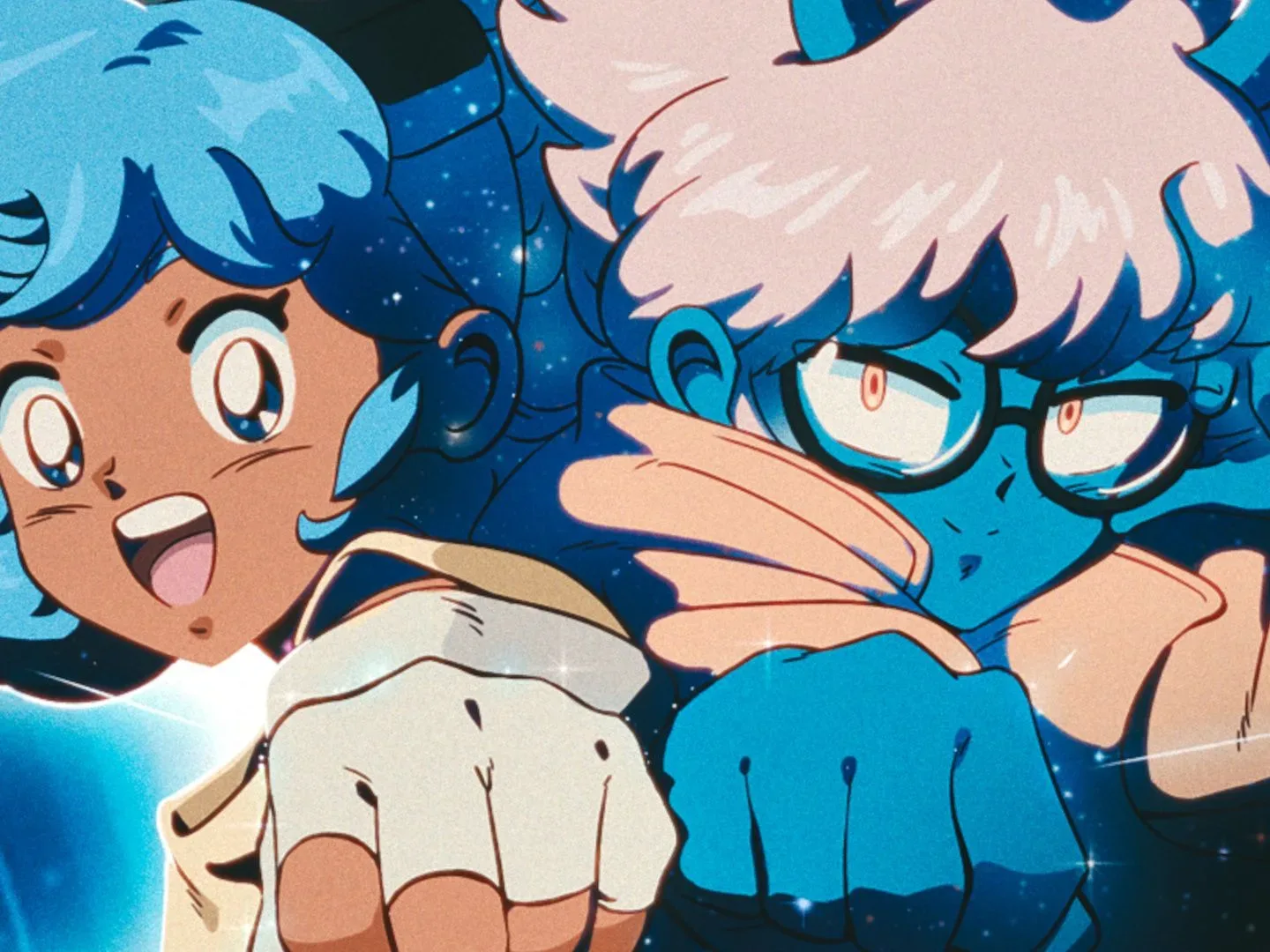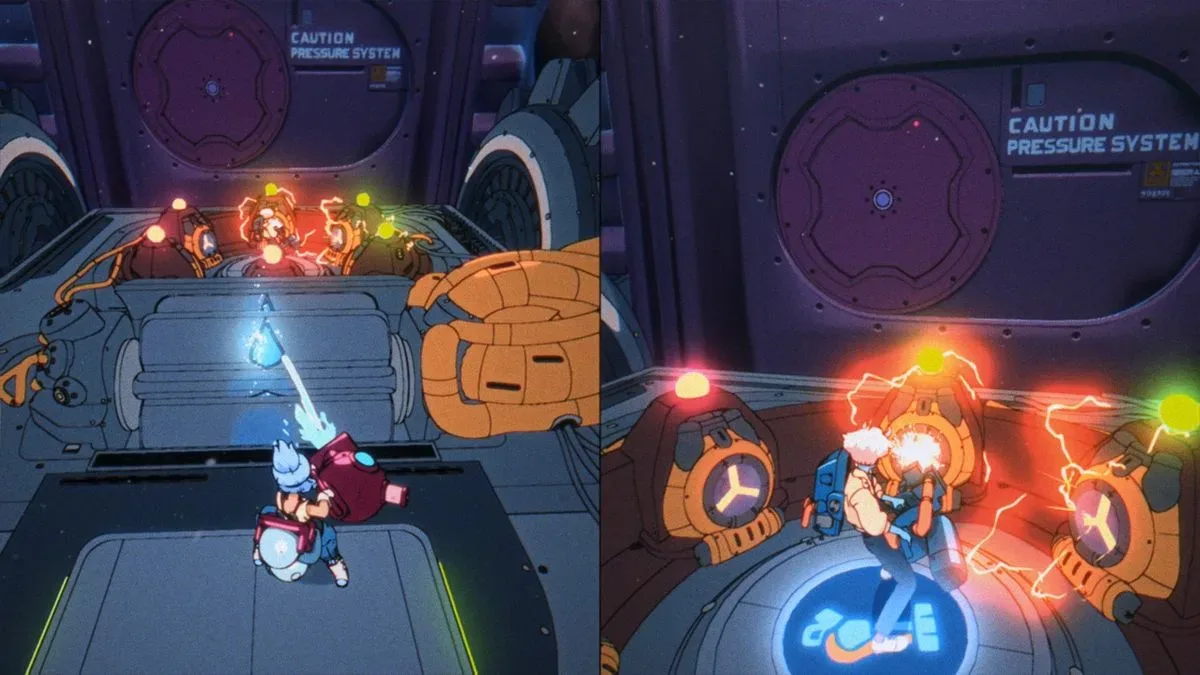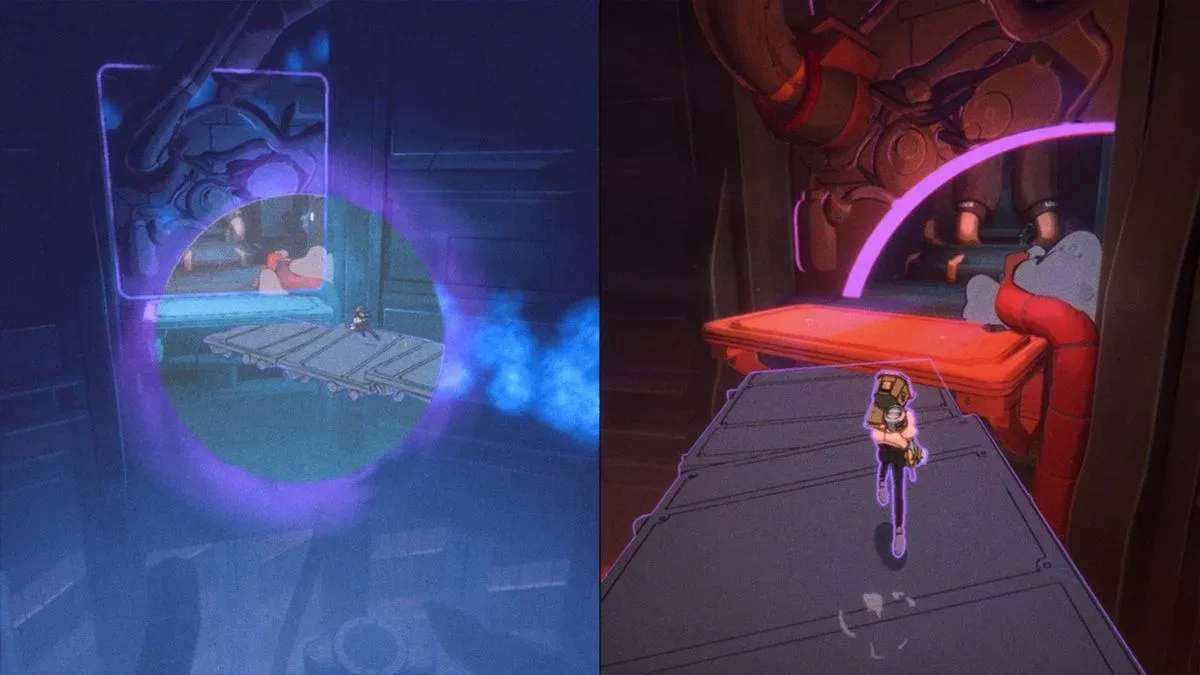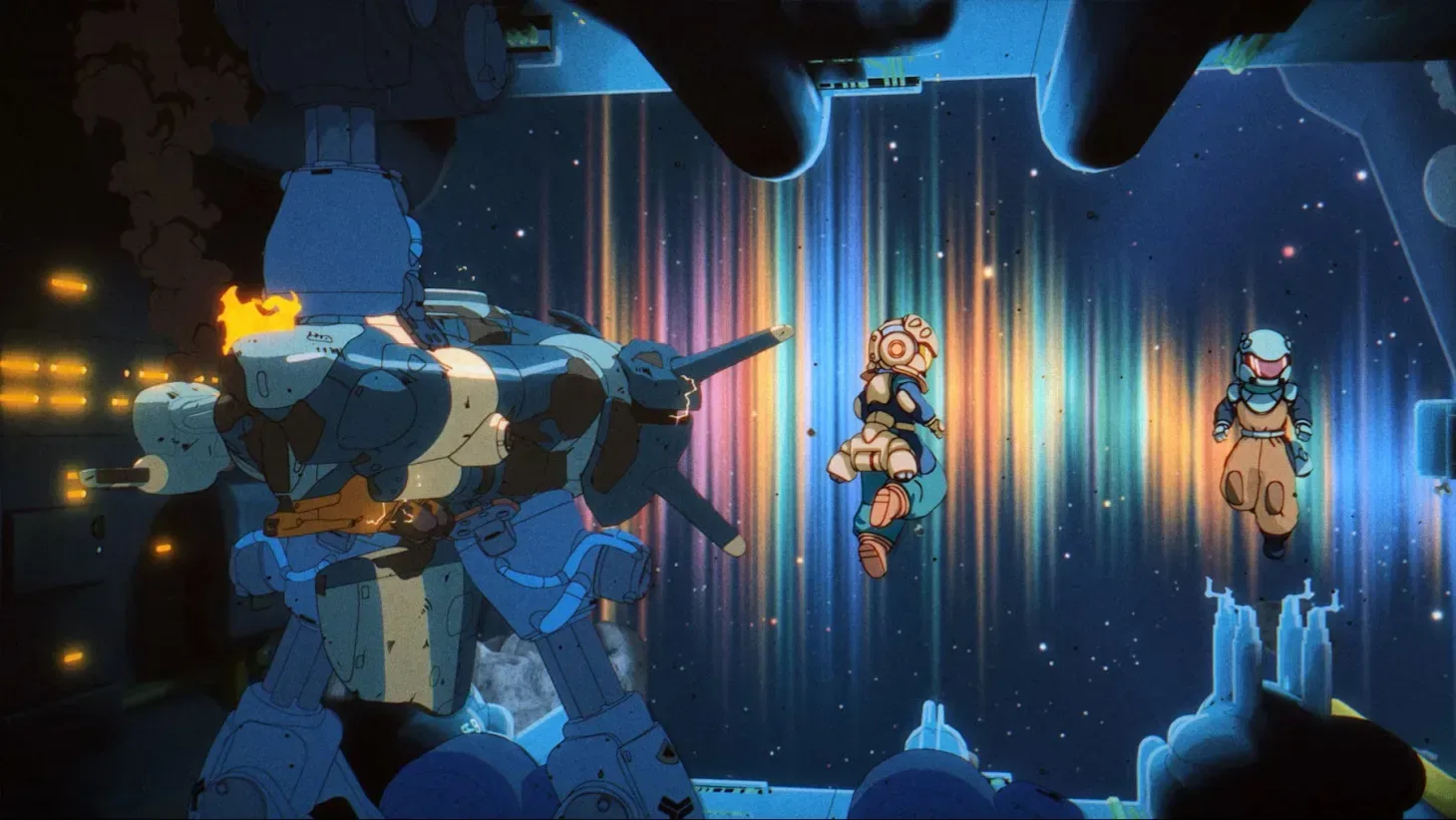
Some games make their case before a controller is ever switched on. Orbitals, developed by Shapefarm and published by Kepler Interactive, is plainly built to do that. Its visual language draws heavily from 1970s and 1980s anime, giving the game an immediate, high-impact identity in an era when plenty of releases struggle to look like anything but polished variations on one another. It is the kind of style that can prompt an instant reaction: this is something I want to share with someone.
That instinct is exactly where Orbitals becomes more complicated. Released for Nintendo Switch 2 on September 3, 2026, it is a strictly co-op game. It supports local and online play, but it does not offer a solo route. Every puzzle, sequence, setback, and victory requires two people. That design is not inherently a flaw; cooperative games can create moments that no solo experience can reproduce. Yet mandatory partnership also narrows the door, particularly when the game expects both players to arrive with a substantial vocabulary of action-game skills.
Orbitals belongs to a modern co-op tradition associated with games such as It Takes Two and Split Fiction: two players move through bespoke challenges, solve problems together, and react quickly enough to keep a shared sequence alive. It is a format with enormous appeal. The best versions turn communication into gameplay. A player is not merely watching another person play; they are interpreting information, covering gaps, coordinating timing, and occasionally laughing as a plan disintegrates with theatrical precision.
But co-op is not automatically welcoming just because it asks for two controllers.
The invisible tutorial players bring with them
Games routinely rely on knowledge they do not explicitly teach. A longtime player sees a ledge and expects a jump. They understand that a moving camera may need adjustment, that an enemy’s animation is a warning, or that a button prompt appearing during a leap probably wants a quick response. In an action game, they may already know how to aim while moving, swap targets, manage a camera, and keep track of a partner’s position. Those habits feel basic only after years of repetition.
For someone whose history with games lies elsewhere, that supposed baseline can be anything but basic. Turn-based RPGs such as Final Fantasy VII, exploratory oddities like Katamari Damacy, and character-driven adventures such as Spyro all build familiarity with games, but not necessarily with the rapid, simultaneous inputs demanded by a contemporary action-platforming challenge. Being a player is not one universal skill. It is a collection of learned languages.
That distinction matters enormously in couch co-op. One player may be reading the screen as if it were a familiar road map while the other is trying to identify the steering wheel. Add time pressure, platforming, shooting, target selection, and partner-dependent progress, and the more experienced player can unintentionally become a hurried instructor. The less experienced player can feel as though they are holding the team back. Neither person has done anything wrong, but the evening’s mood can change quickly.
Our own guide to the unwritten rules of couch multiplayer gets at the social side of that dynamic: the game is only one part of the room. The real experience includes patience, communication, whose turn it is to solve a problem, and whether failure is funny or quietly discouraging. A beautifully animated co-op adventure may create a wonderful shared occasion for one pair and an exhausting mismatch for another.
Mandatory co-op changes the meaning of accessibility
There is a tendency to treat accessibility as a menu of settings, and those settings are deeply important. Subtitle options, remapping, readable interfaces, color adjustments, and difficulty tools can determine whether somebody is able to participate at all. But Orbitals points toward another accessibility question: what happens when a game’s central social structure requires two people with compatible experience, confidence, schedules, and tolerance for challenge?
A solo option would not necessarily preserve the intended design. Games built around two distinct roles may lose their point when one person controls both, or when an AI companion replaces human improvisation. Nor should every game be obligated to be all things to all players. A focused creative decision can be worth protecting.
Still, there is a broad middle ground between abandoning a co-op premise and assuming both players already speak fluent action game. Developers have many possible tools, even if the correct mix will differ from game to game:
- Early challenges that teach one concept at a time before combining movement, aiming, timing, and puzzle-solving.
- Optional assists that soften demanding jumps, slow a high-pressure sequence, or make targeting less punishing.
- Generous checkpoints and rapid retries, so a missed jump does not turn into a lengthy wait for the other player.
- Role flexibility that lets the more action-confident player carry more of the twitchy execution while the other gets meaningful puzzle or support tasks.
- Difficulty settings that adjust more than enemy health, including timing windows, navigation guidance, or recovery after failure.
- Clear communication of the game’s expected skill level before players commit to a purchase or a planned co-op night.
None of these ideas is a magic accessibility switch. They also are not demands that every co-op game become frictionless. Challenge can be satisfying, and coordination under pressure is part of why this category resonates. The point is that a game can preserve tension while making room for different kinds of partners.
Aesthetic invitation, mechanical barrier
Orbitals’ particular tension is that its art direction can function as an invitation to people who are not necessarily invested in modern action games. Anime influences from the ’70s and ’80s have a broad cultural pull. They suggest warmth, melodrama, mechanical spectacle, expressive color, and a sense of animated adventure. A couple might see that presentation and reasonably assume they have found a shared game night candidate.
Then the actual requirements arrive. The game asks both participants to execute clever puzzles and well-timed responses together. For practiced players, that may be the appeal. For a mixed-experience pair, it can be a wall that becomes visible only after the game has already made its strongest first impression.
This is not unique to Orbitals, and it should not be read as an accusation that demanding co-op games are somehow mistaken for being demanding. It is instead a useful case study in expectation. The industry often celebrates co-op as a way to bring people together, but “play this with someone you love” is different from “play this with anyone you love.” The second promise needs more deliberate design work.
There is also a small but meaningful emotional cost when a game looks tailored to two people’s shared interests but cannot accommodate their different play histories. Aesthetic taste may align perfectly. One person may adore the anime-inspired look; the other may be immediately drawn to it too. Yet shared enthusiasm for a world is not the same thing as shared confidence in its controls.
Co-op does not have to mean equal reflexes
The most enduring cooperative games often understand that contribution can take many forms. One player might excel at precision movement, while another spots patterns, remembers objectives, chooses routes, manages resources, or simply keeps the mood buoyant after a string of failures. Great co-op lets those strengths matter without turning either player into a passenger.
That ideal is difficult to achieve in games where every participant must repeatedly clear the same reflex-heavy threshold. It is especially difficult when progress depends on both players performing an action in a narrow window. The design can be thrilling when a team succeeds, but it can create a harsh bottleneck if one person is still learning the underlying grammar of 3D movement or action combat.
For players deciding whether Orbitals fits their household, the crucial fact is straightforward: it is not a solo game, despite the appeal of its distinctive presentation. It is intended for a duo, whether seated together locally or connected online. Prospective partners should also account for the style of play it emphasizes—coordinated problem-solving and timely execution—rather than judging suitability by visuals alone.
And if the prospective teammate would rather explore at their own pace, make choices without another person waiting at the next checkpoint, or avoid the pressure of synchronized action, that is not a lesser way to enjoy games. It may simply mean that a solo-focused adventure is the better fit for that particular night.
Orbitals is therefore a useful reminder that the dream of couch co-op has two separate ingredients: a game worth seeing together and a game both people can comfortably play together. The first can be immediate, dazzling, and easy to recognize. The second takes careful design—and sometimes, just as importantly, an honest understanding of what each person wants from the controller in their hands.