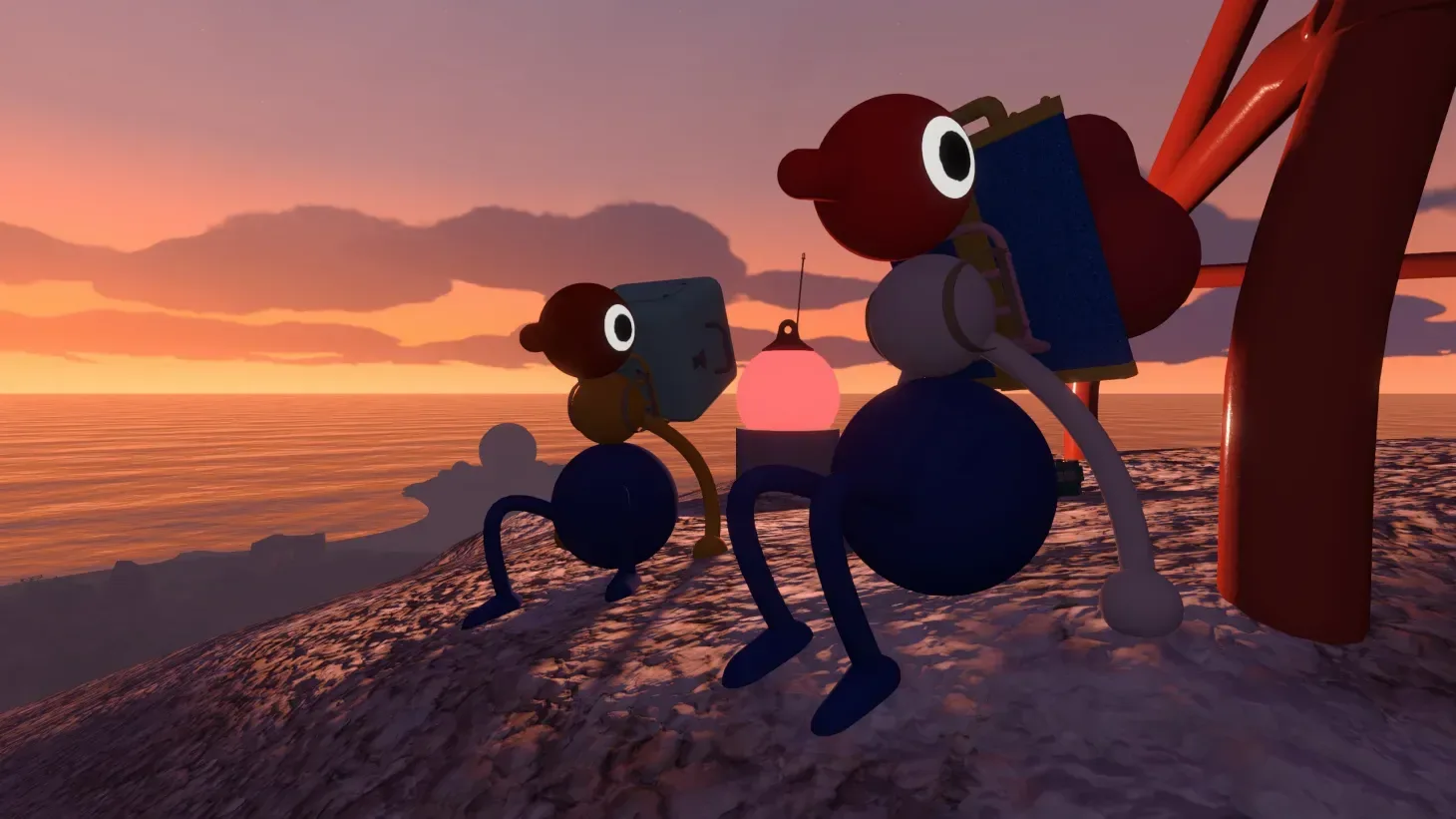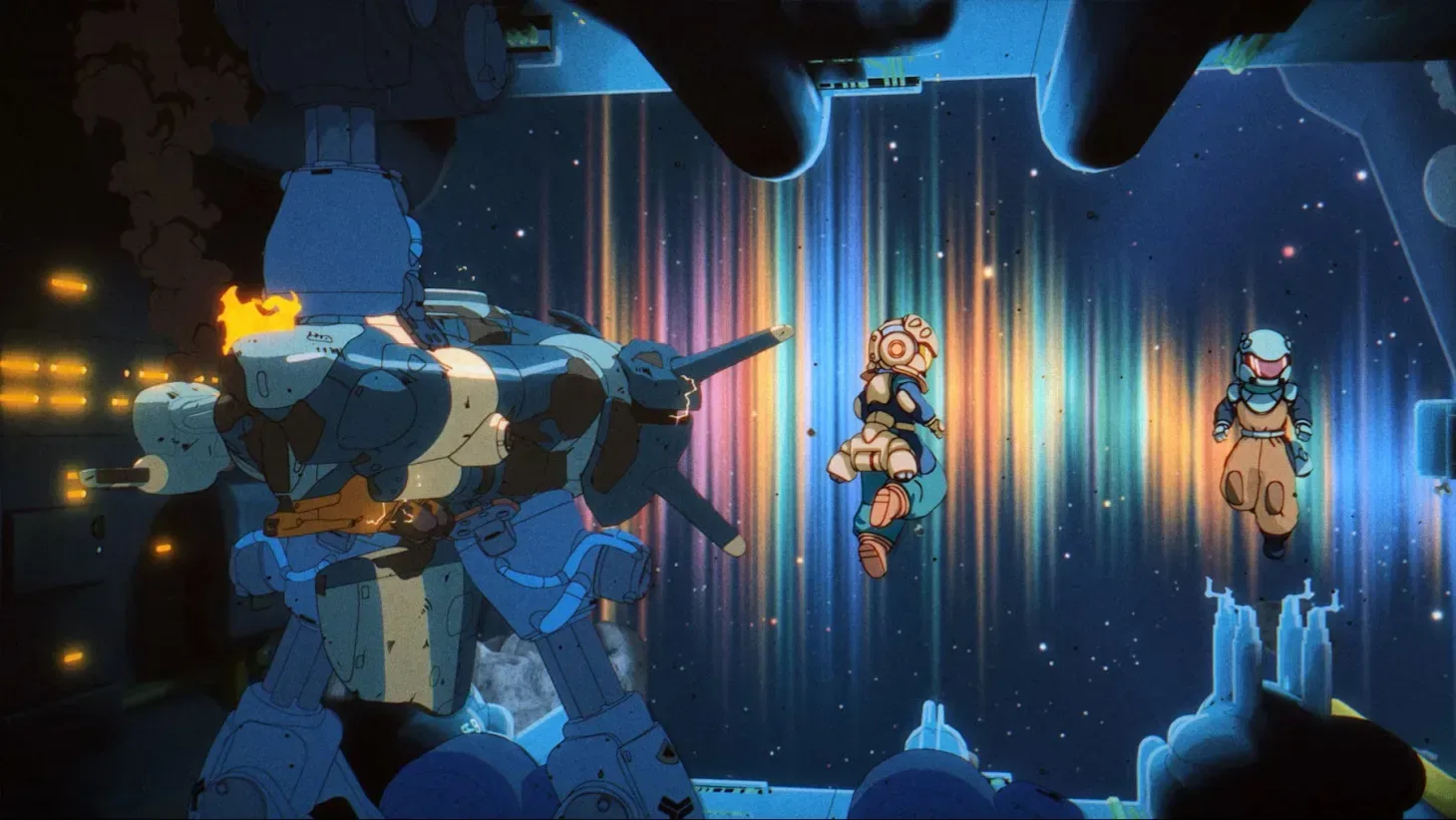
Orbitals, the anime-inspired co-op adventure from Shapefarm, seems built to win people over before a single puzzle is solved. Its retro animation, cassette-futurist environments, cheerful alien creatures and charged-up title music create a sci-fi world with a strong personality. It looks like a lost weekend broadcast from a kinder, stranger future—one where every control panel may be a cassette deck and every abandoned station could use a few more flower petals.
That presentation carries real weight. Orbitals has an immediately recognizable visual identity across its cutscenes and its 3D gameplay spaces, rather than treating the animated sequences as the only place to show off. Its tone also matters: the game favors playful banter, oddball lifeforms and cozy whimsy over the permanently grim mood that can swallow space stories whole. Even when individual challenges do not make the strongest mechanical impression, the world’s expressive design gives them a lift.
But striking art direction is not an automatic reactor core. Orbitals’ central co-op ideas are varied and often charming, while its narrative seems less certain about how to earn its biggest emotional moments. The result is a game with plenty of personality, a pair of appealing protagonists and a finale that reportedly arrives with more dramatic cargo than the journey has room to unpack.
A station-saving premise with limited room to breathe
Players take control of Maki and Omura, two young adults who live aboard an isolated space station. A deadly storm threatens their home, and protecting the community depends on collecting three reactor cassettes. That sends the pair travelling to neglected and abandoned stations in search of the components they need.
It is a clean, functional setup for an adventure driven primarily by levels and puzzles. There is a home to save, a clear objective and a chain of derelict sci-fi destinations to explore. For much of the game, that is enough. Orbitals appears more interested in keeping its cooperative machinery moving than in laboring over every larger plot detail.
The trouble comes near the end, when the story accelerates sharply in roughly its final half-hour. A slower-paced game can absolutely land a sudden crescendo, but the material here seems to introduce or emphasize emotional beats before enough groundwork has been laid. The broad idea that Maki and Omura care deeply for their community is understandable; what appears to be missing is enough time actually spent building those relationships. If players hear about people more often than they meaningfully encounter them, the stakes can remain theoretical even when the characters insist they are urgent.
That is particularly unfortunate because a more community-focused version of this story could have made the cassette hunt feel like more than a mission-shaped excuse to travel. The three reactor cassettes are a useful objective, but an objective is not automatically an emotional engine. More scenes, interactions or consequences connecting the duo to the residents back home might have given the ending a firmer launchpad.
Maki and Omura make a convincing team
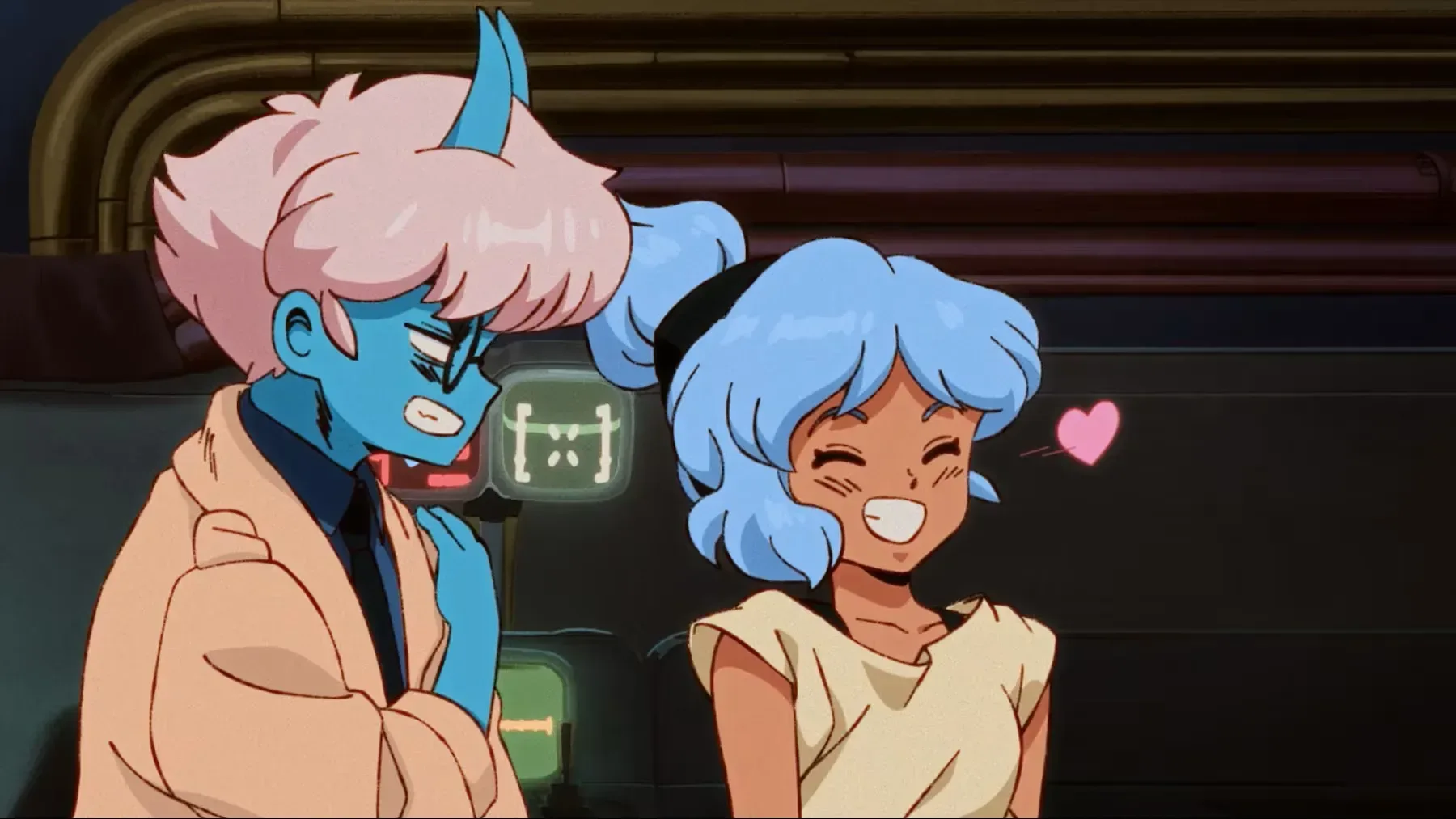
Where Orbitals does seem to establish its heart is in the relationship between its two playable leads. Maki and Omura have an easy, sibling-like rhythm, even if the game does not formally define it that way. They share jokes, make puns, sing goofy songs and sometimes speak in unison. Crucially, they sound like people who genuinely enjoy one another’s company.
That should not be a rare quality in co-op games, but it is. Plenty of two-character adventures derive their tension from sarcastic bickering, distrust or a temporary alliance between personalities designed to clash. Orbitals instead gives its duo a friendly rapport. That makes a difference when the players themselves are being asked to cooperate constantly. The avatars support the intended mood rather than acting as though they would each prefer to be assigned a different partner.
There is also something especially fitting about a game whose systems ask two people to solve problems together giving its leads a relationship that feels collaborative rather than combative. The game does not need every exchange to be a joke, but this warmth helps hold the experience together when the larger narrative loses some thrust. For more thoughts on why the social atmosphere around shared-screen games matters, see The Unwritten Rules of Couch Multiplayer, Now Written Down.
Asymmetry provides the game’s main propulsion
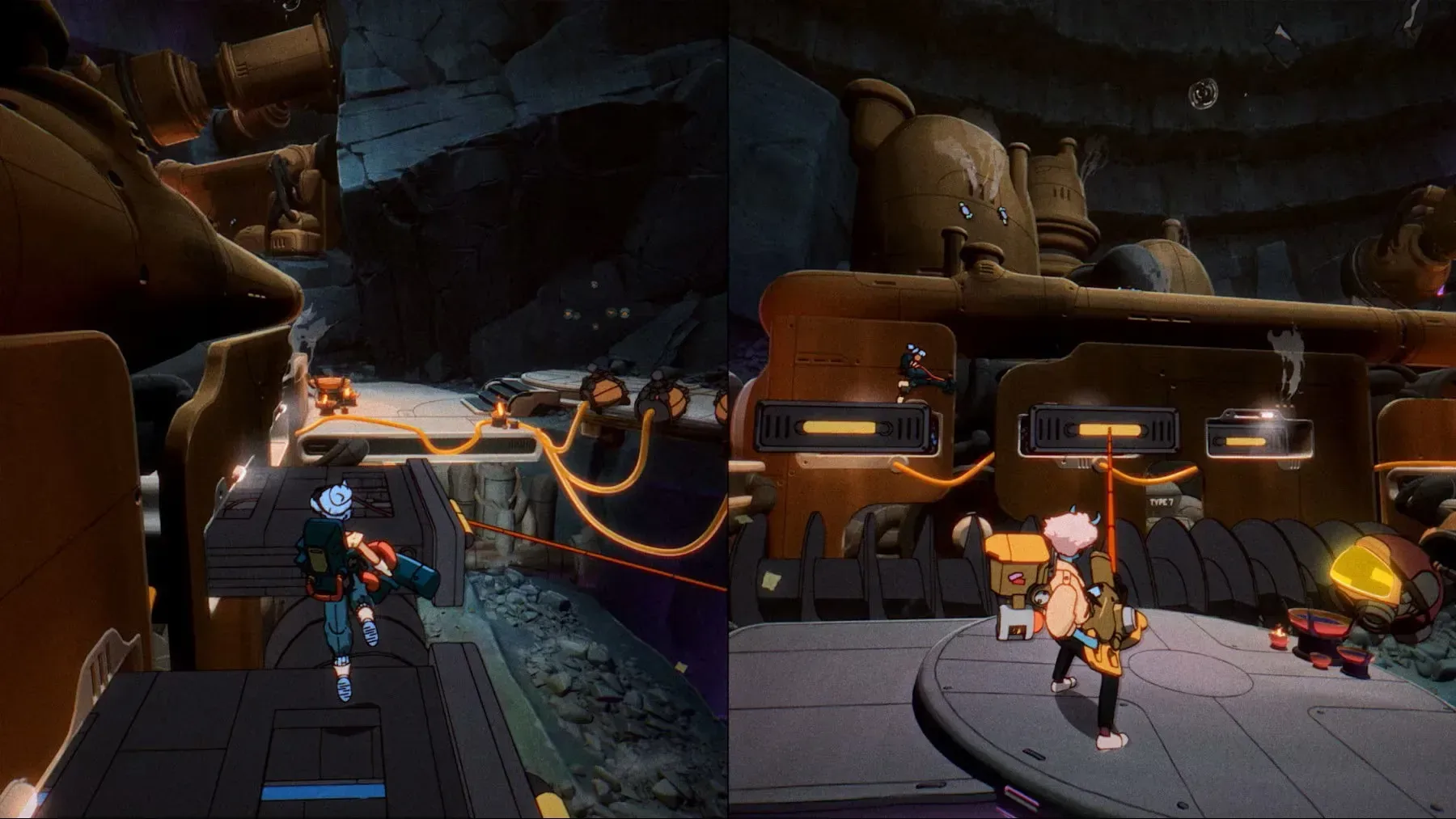
Orbitals is co-op only, and its core design is mostly asymmetrical. Maki and Omura typically receive different tools—such as a laser, grappling hook or water cannon—and must combine their abilities to navigate obstacles and complete puzzles. There are exceptions, including minigames and stretches where the characters lack equipped tools, but distinct roles are the dominant idea.
This structure enables a welcome amount of variety. Rather than endlessly repeating one interaction, the game reportedly finds different applications for its gadgets from section to section. That matters in a puzzle platformer: a versatile tool kit can make a familiar basic action feel newly contextualized when the environment asks a different question of it.
Not every solution demands the same level of thought, however. Some puzzles can feel overly sequential: one player performs an action, the other responds, and the exchange repeats until the route forward is clear. That is cooperation in the technical sense, but it may not always produce the lively communication, planning or split-second coordination players expect from the format. A co-op game is at its best when both people feel like active problem-solvers, not two hands taking turns operating a particularly cute machine.
Still, Orbitals understands that theme can rescue a modest action from feeling completely ordinary. Creating platforms may not be revolutionary by itself. Creating bright, blossoming petal platforms against a wall of soil is more memorable because the game has framed the task with color and playfulness. The same generosity of imagination appears to be one of its great strengths: even when the puzzle underneath is simple, the surrounding concept has enough charm to keep it from feeling entirely routine.
The spaceship is a smart hub, until combat gets crowded
Travel between the stations happens aboard a shared home-base spaceship that grows over the course of the adventure. New critters and minigames join the craft as the journey continues, making it more than a disposable menu between levels. This evolving hub sounds like a natural extension of Orbitals’ affectionate, lived-in sci-fi style. A ship that gradually gathers odd inhabitants is exactly the kind of detail that can turn transit into a place players want to revisit.
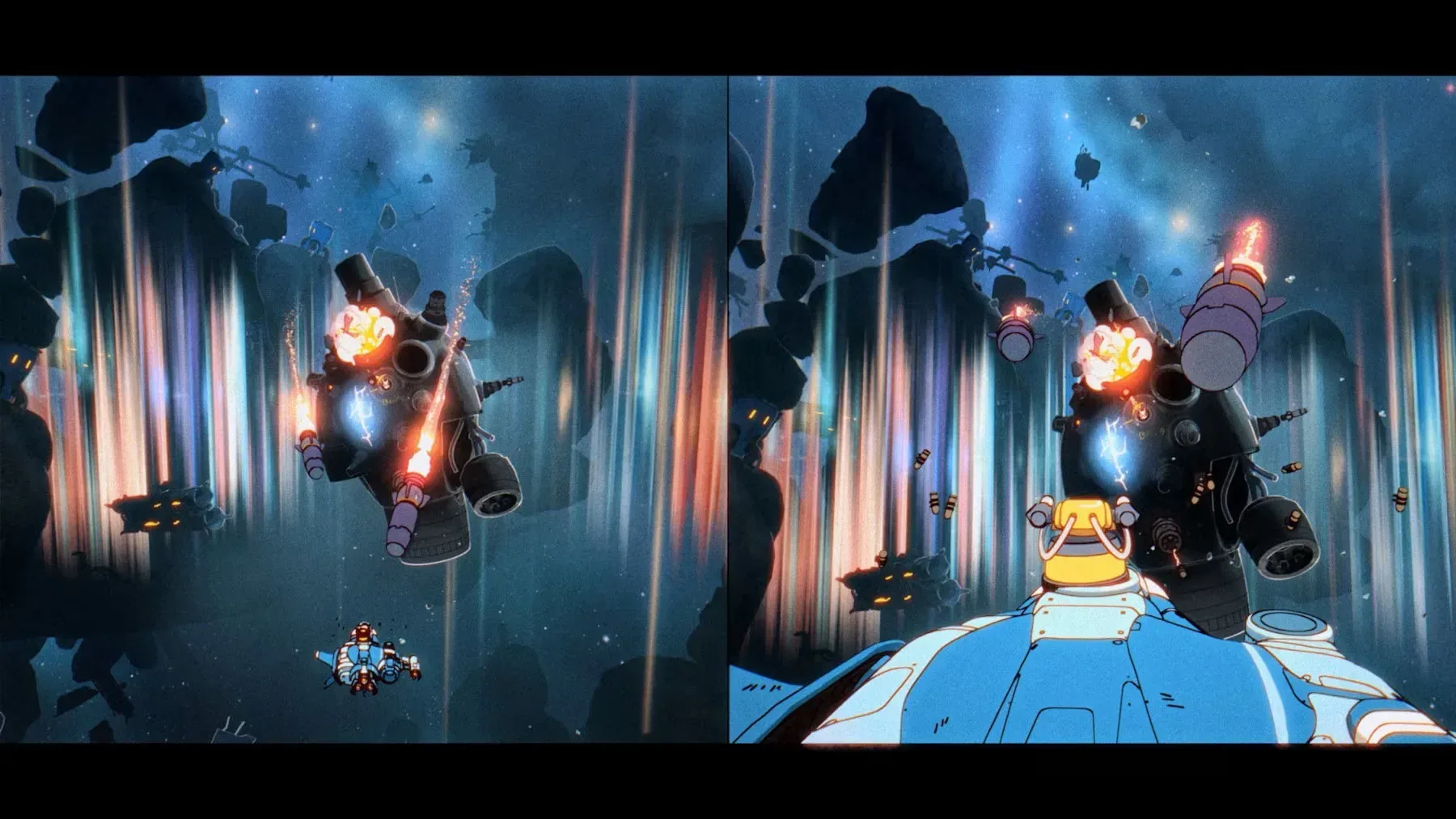
Piloting it also preserves the game’s division of responsibility. One player takes the pilot’s seat while the other operates the guns. The arrangement can make traversal puzzles engaging: one partner manipulates obstacles or switches while the other steers through the opening. It is a clever way to keep both players involved in movement rather than simply placing one person in the passenger seat.
Space combat is a less comfortable fit. Fast homing missiles can make evasion stressful, and a later sequence reportedly becomes especially overwhelming. Difficulty is not inherently a problem; a co-op adventure can benefit from an occasional panic-button moment. Yet frustration rises when the challenge feels more awkward to control than exciting to overcome. In a game otherwise so committed to inviting, cozy energy, punishing projectile pressure may feel like an uninvited asteroid smashing through the snack table.
Style, soundtrack and softness keep Orbitals aloft
Orbitals ultimately sounds like a game whose virtues are easy to see and hear. Its retro-anime cutscenes, polished 3D look and energetic music—especially the title theme—give it a powerful sense of place. The cassette futurism is not merely visual wallpaper; it helps define the playful, analog-flavored texture of the world. Animal-like aliens and an evolving ship add further texture without abandoning that core identity.
Its shortcomings are meaningful, not imaginary. The late narrative rush appears to weaken the payoff of a story that needs deeper community ties, certain puzzles do not demand much beyond orderly tool use, and the spacecraft’s combat can turn from tense to uncomfortable. Yet these flaws do not erase the appeal of an adventure so visibly invested in warmth, color and friendly partnership.
For players who value inventive co-op setups, a distinctive audiovisual identity and leads who are pleasant to spend time with, Orbitals has a lot going for it. Those looking for a fully developed story with a carefully paced ending may find it less satisfying. It is an endearing interstellar trip that has not solved every puzzle in its own design, but its charm is substantial enough that the rougher edges may not be the only thing players remember.