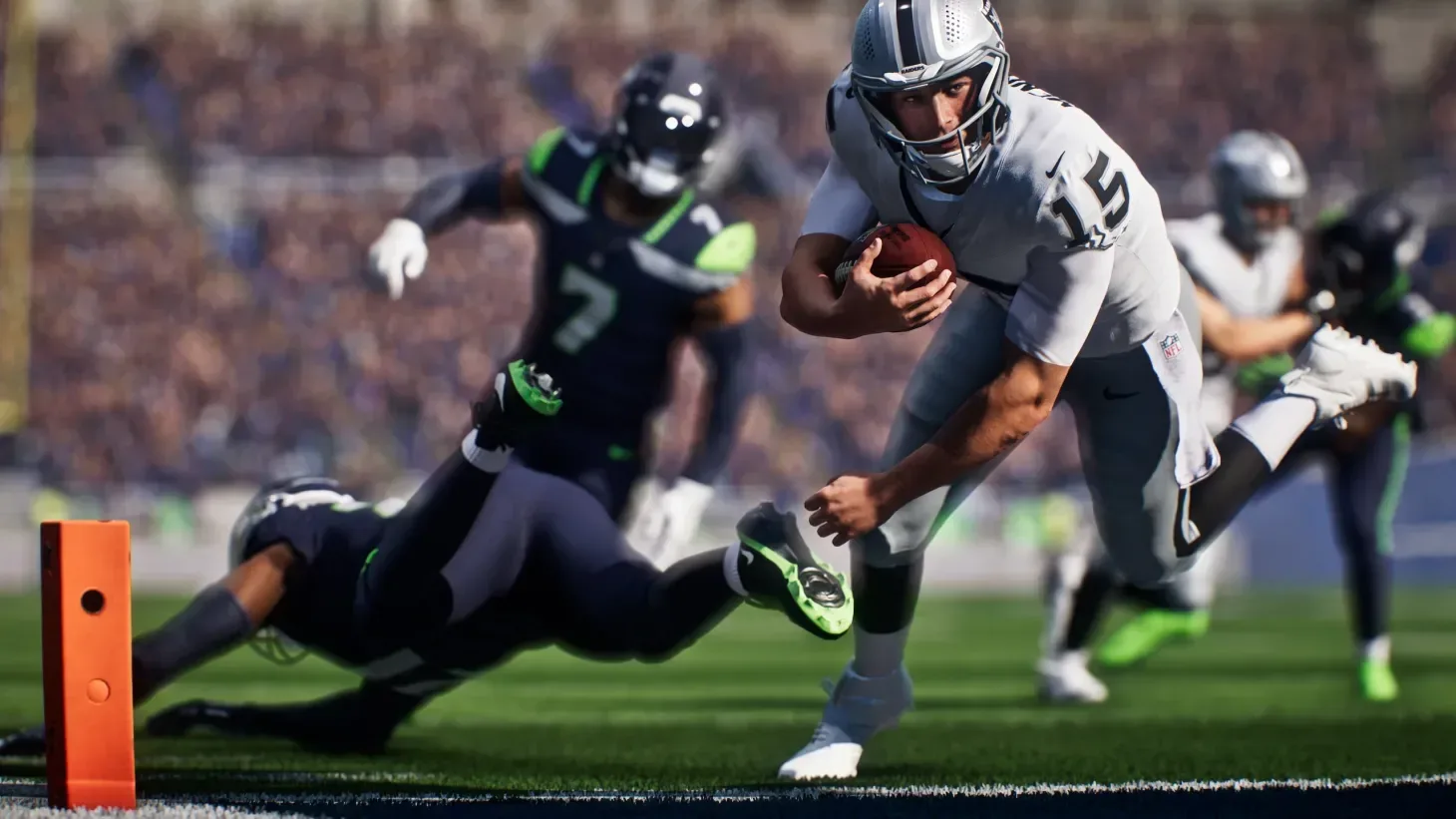
Madden NFL 27 arrives with the familiar annual-sports-game mandate: make the action feel better immediately, then give people a compelling reason to keep returning once the opening-week novelty has worn off. On that first point, the game appears to have a real foundation. Running plays retain a responsive, satisfying feel, while animations can sell the physicality and flow of an NFL snap. The tougher question is whether its largest mode changes turn that sturdy field-level football into a convincing long-term league experience. The answer, unfortunately, seems far less certain.
There is a useful contrast at the center of Madden NFL 27. Its football can produce the little victories players want from the series: spotting daylight in the run game, timing a throw into coverage, fighting for a contested reception, or breaking up a pass at just the right moment. Yet the systems surrounding those plays—particularly Franchise negotiations, simulated league logic, and Superstar progression—do not consistently turn a string of games into the story of a season. Madden can still make Sunday afternoon feel lively; it has a harder time making the rest of the NFL calendar feel consequential.
The sticks remain Madden’s most reliable asset
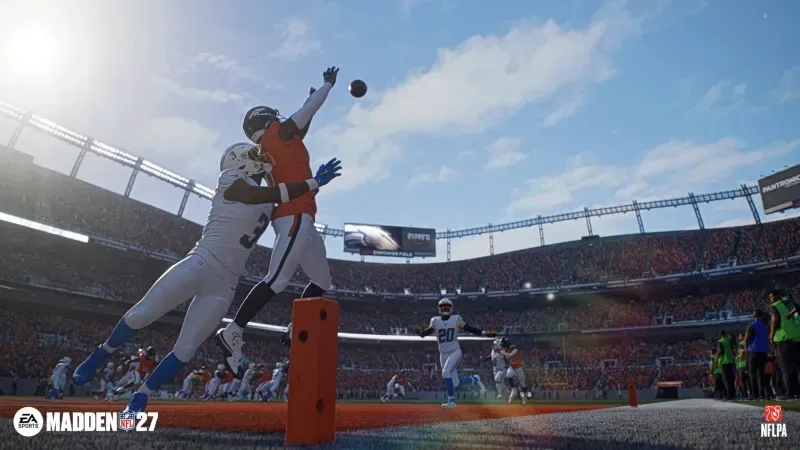
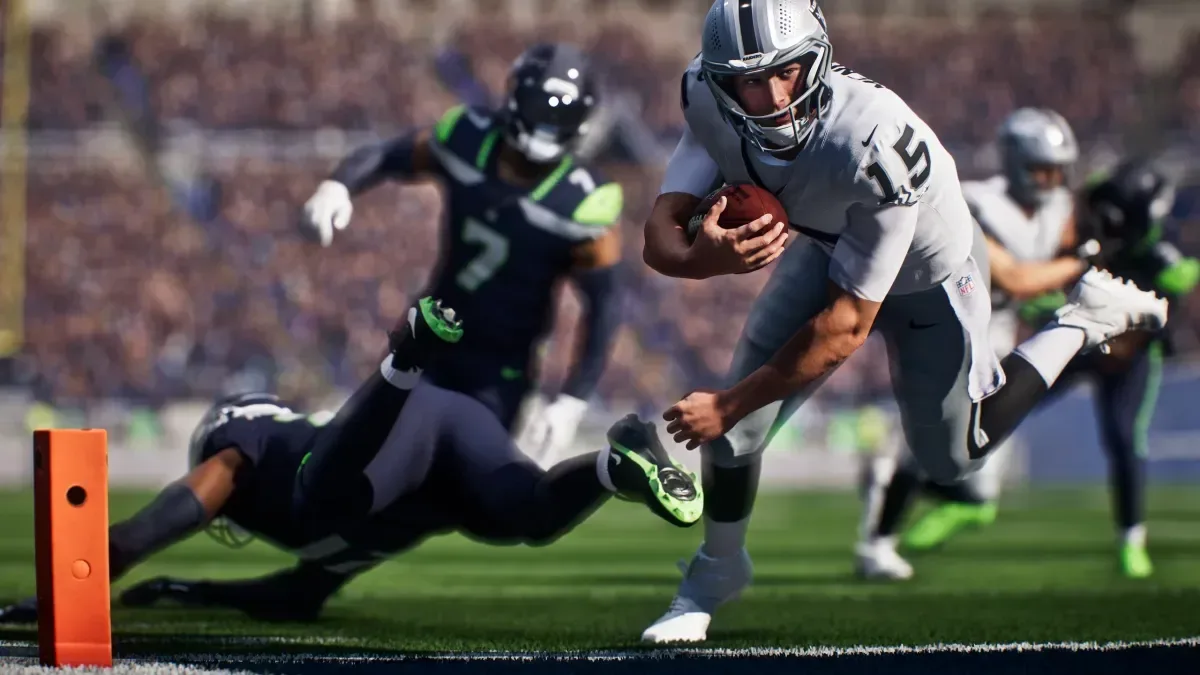
The strongest case for Madden NFL 27 begins between the whistles. The running game is still described as responsive and enjoyable, an important quality for a sport where a two-yard gain can be either an uninspiring collision or a miniature triumph of patience, blocking, and directional control. More convincing player movement and animation work also help the game capture the look of football when a play develops cleanly.
One of the headline gameplay additions is an optional catch meter carried over from College Football. Its purpose is straightforward: make receptions and pass breakups feel more dependent on the player’s timing. Combined with increased interaction between receivers and defensive backs, it can create satisfying high-pressure moments around the ball. A well-timed catch in traffic or a crucial swat suddenly has more involvement than a simple button press at the end of a route.
That optional design matters. Players who want a more deliberate layer to passing can use it, while those who prefer a less demanding approach are not necessarily forced into it. In a game built for audiences with wildly different appetites for simulation, that flexibility is sensible. It gives Madden a way to add texture without declaring that every player must become a meter specialist before attempting a third-down conversion.
CPU defenses also bring aggression, which can make offensive possessions more tense and force more thoughtful reads. However, the current treatment of play-action appears to be an area in need of adjustment. Quarterbacks are getting hit too frequently on those calls, undercutting an important part of a balanced offense. Play-action should carry risk; it should not feel like a formal request for the defense to immediately introduce itself to the quarterback’s ribcage.
Franchise mode adds personality, but its logic remains hard to trust
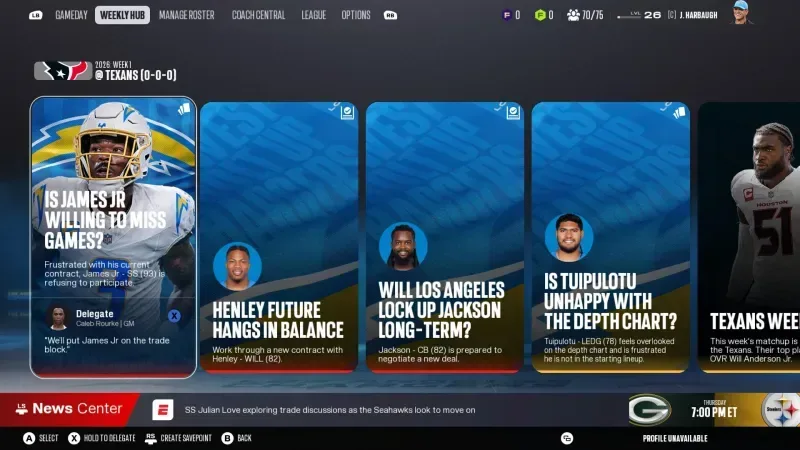
Franchise mode receives the biggest structural push through the new Persona Engine. The idea is appealing: CPU players should behave with more individual character, which in turn should make teams feel less like collections of ratings and more like organizations with recognizable priorities. The mode also expands the negotiation and free-agency conversation between clubs and players. In principle, this is precisely the kind of work Madden needs. A modern franchise mode should not merely track contracts; it should create pressure, competing goals, difficult relationships, and memorable off-field turns.
The problem is that the negotiation systems reportedly feel inconsistent rather than characterful. A player’s DNA tags can shift during negotiations, so a concern that was supposedly vital—such as total salary—may abruptly lose that importance. That does not read as an athlete reconsidering a career choice. It reads as the menu changing the rules while the user is trying to respond.
Each negotiation round provides five possible pitches, but the options arrive in patterns that can prevent the exact response a user wants to make. If the obvious next step is increasing a signing bonus, for example, the game may simply decline to make that pitch available in that round. There is a difference between a negotiation being challenging and a negotiation withholding a sensible action because its internal sequence says not yet. The former creates drama; the latter creates frustration.
More seriously, Franchise’s underlying league management still appears unreliable. CPU teams can mishandle salary caps and drafts, while simulated statistics can produce odd results. Those issues are not cosmetic. They damage the premise of running an NFL universe because the league needs to behave plausibly whether the player is watching a game, managing a roster, or advancing a calendar week. If rival teams cannot make coherent financial or personnel decisions, every carefully constructed dynasty begins to resemble a competition against a room of GMs who left their calculators in the rain.
Free Agent Frenzy, another new component, is meant to make the market more compelling. Instead, it can lose momentum quickly when signings feel opaque. Players may choose other teams regardless of what contract is offered, without enough clarity about why the offer failed. Uncertainty is absolutely part of real free agency, but a game needs to show meaningful cause and effect. A rejected bid can be compelling when a player favors a contender, a scheme fit, a preferred location, or a stronger role. It is much less compelling when the system feels like a sealed box that politely accepts an offer and then disappears into the basement.
There are additional player-focused events and news flashes to keep users informed about the league, and those are steps toward a more active world. But the mode still reportedly struggles to create the ongoing drama that makes the NFL off-season so intoxicating. One notable outcome involved persuading a player not to retire, but such isolated incidents cannot carry an entire multi-year save. Franchise needs its events, contracts, drafts, and rival teams to generate stories naturally—not just occasional headlines between menus.
Superstar adds positions, not enough career texture
The career-oriented Superstar mode is more modestly revised. Players can now take the field as a tight end, safety, or edge rusher, expanding the range beyond the established quarterback and running back paths. The latter two positions are still presented as the mode’s strongest fits, however, suggesting that the new roles do not yet receive the same level of satisfying structure.
Superstar does allow a successful player to gain greater influence within the organization, including eventually affecting free-agent signings. That is a neat expression of growing status: a star should have a louder voice than a rookie trying to remember where the meeting room is. But influence alone is not the same as a career narrative.
The major missing ingredient is evolving context. Position objectives reportedly do not change sufficiently as a career progresses, so the sense of story can stop once the current game’s tasks are completed. A rookie, an established starter, a player chasing a contract, and a veteran in a playoff race ought to confront different pressures. Without that progression, the mode risks reducing an NFL career to a repeating checklist with a larger social standing number attached.
There is also an optional battle pass, along with multiple in-game currencies, in an offline mode within a full-priced game. Optional monetization does not cease to be distracting merely because players can choose not to engage with it. In a single-player career mode, the presence of layered currencies can make the experience feel less like a football journey and more like a storefront that happens to have a locker room nearby.
Ultimate Team embraces customization—and another grind
Ultimate Team arguably sees the most substantial redesign. Borrowing a progression idea familiar from EA FC, Madden NFL 27 allows users to improve players through purchasable Evolutions. Users can select captains to upgrade, while certain players gain improvements by completing their objectives. This has an evident upside: players should have more ways to personalize a roster and preserve the usefulness of chosen cards as the overall progression curve advances.
That added control is constrained by randomness. When a skill point is spent, the particular attributes enhanced are randomized within designated groups. Upgrades can be re-rolled using the free in-game UT Coin currency, but this makes UT Coins a likely resource sink for players pursuing the most desirable results—especially speed. The system can create distinct versions of a roster, yet it also extends the familiar loop of chasing optimized attributes and the prevailing competitive meta.
For players who enjoy card-building systems, captains, objectives, and evolvable athletes could make roster construction more flexible. For those already weary of repeated optimization cycles, randomized outcomes and re-roll costs may feel like another layer separating them from the build they actually want. It is customization with an asterisk: the user has more choices, but not complete control over what those choices yield.
A promising snap count, not a complete drive
Madden NFL 27 seems most persuasive when it trusts football itself. Better-feeling runs, often convincing animation, more receiver-defender interplay, and the optional catch meter all reinforce the core appeal of reading a defense and making a play. For a reminder of why the shared-screen game still matters when football games are at their best, see The Unwritten Rules of Couch Multiplayer, Now Written Down.
But annual improvement is not only about adding named systems. It is about making the old and new pieces cooperate until a season feels like more than a set of games connected by menus. Madden NFL 27 has ideas that point in the right direction: personalities in Franchise, broader Superstar positions, and deeper Ultimate Team customization. Their execution, though, does not yet consistently provide the transparency, credible league behavior, or evolving stakes needed to make those ideas land.
That leaves Madden NFL 27 in a familiar but frustrating position. The on-field product can supply the spark. The deeper modes are still searching for the drive that turns those individual highlights into something fans will want to replay for years.