Content note: This article discusses coercion, abuse, sexual violence, self-harm imagery and suicide themes as they relate to the film Obsession and its reported Fortnite crossover.
Fortnite thrives on collision. Its basic promise is that characters, icons and aesthetics from radically different corners of pop culture can occupy the same bright, competitive arena. A musician, a monster, a superhero and a cartoonish food mascot can share a lobby, perform the same emotes and fight under the same rules. That absurdity is fundamental to the game’s appeal.
But a reported crossover involving Nikki from Obsession presents an unusually thorny version of that formula. The concern is not simply that a horror character is being adapted into a multiplayer game. Horror has long been flexible enough to survive parody, toys, costumes and goofy crossovers. The issue is what Nikki represents within the film: a young woman deprived of agency by someone else’s wish, then treated as a frightening spectacle rather than a person harmed by coercion.
When the character’s most traumatic imagery and objects are repackaged as cosmetics, that context can become difficult to see at all. Fortnite does not have to preserve every layer of a film’s meaning to make a crossover work. Yet there is a meaningful difference between simplifying a masked slasher and turning the physical evidence of a character’s abuse, desperation and lost autonomy into a backpack, harvesting tool or visual gag.
Nikki’s story is not a conventional “obsessed girlfriend” setup
In Obsession, Nikki wants to become a writer and leave the music-store job where she works. Bear, a man who is drawn to her but unable to approach her as an equal person, breaks a One Wish Willow toy and wishes that Nikki would love him more than anyone else. The wish works. Nikki’s resulting attachment becomes volatile and violent, while Bear remains central to the situation he created.
That setup matters because the horror is not merely “a woman becomes dangerously fixated.” The film’s premise ties Nikki’s behavior to a supernatural removal of her free will. Bear’s desire to be loved turns another person into an instrument for fulfilling that desire. Nikki’s frightening actions may be visually memorable, but the story’s underlying power imbalance is the point that gives them weight.
The film also invokes personhood, abusive relationships, rape culture and the way some men can reduce women they pursue to fantasies rather than recognizing them as people with boundaries and ambitions. There is room to debate how effectively any film handles subjects this painful and complicated. That debate is different, however, from treating the entire premise as a joke about a “crazy” woman.
Inde Navarrette’s performance as Nikki helped make the character especially visible online, where clips, poses and dialogue can circulate far more easily than the narrative that surrounds them. That is a familiar path for popular horror: a moment is isolated, then memed, then repeated until its original purpose is overwhelmed by the version that works best as shorthand.
Related coverage includes Fortnite's Reported Obsession Crossover Raises Difficult Questions About Horror Iconography.
What is reportedly included in Fortnite
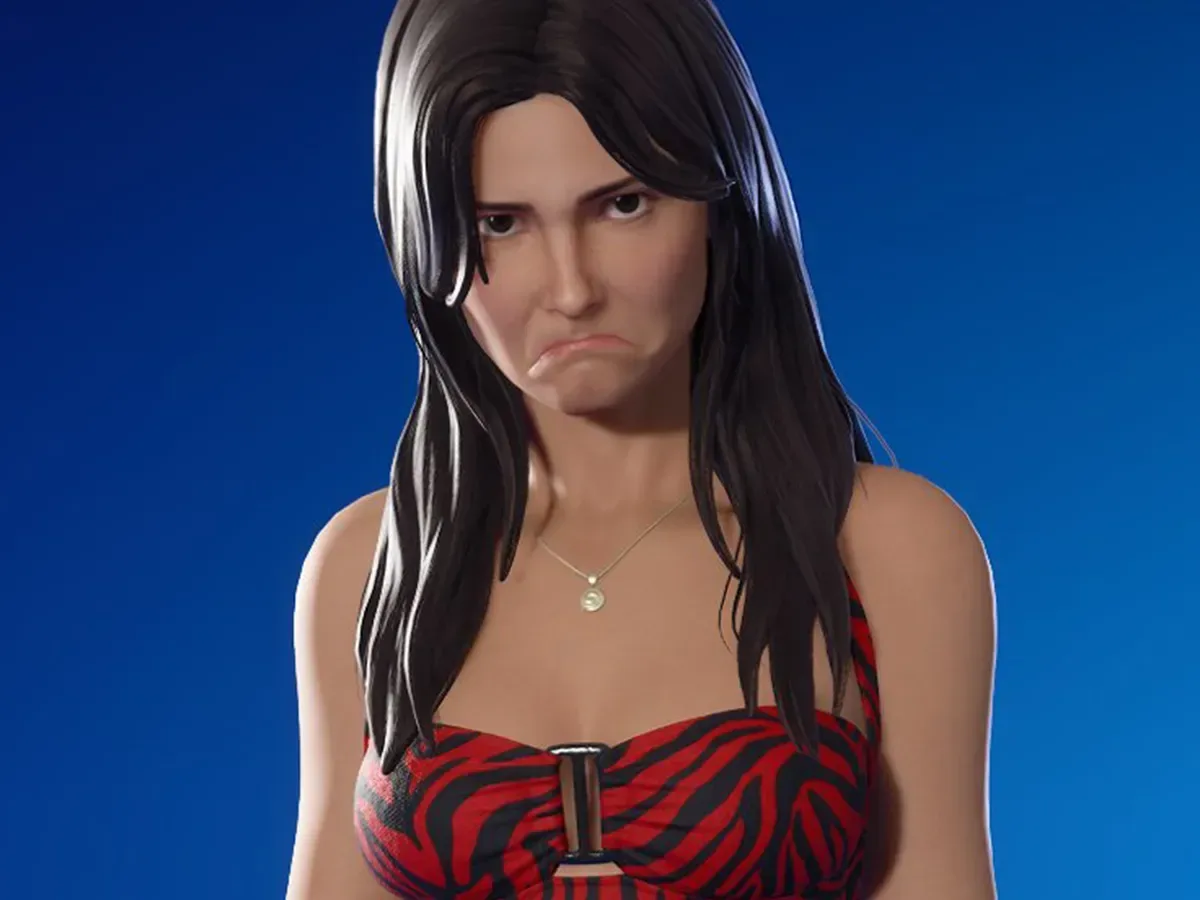
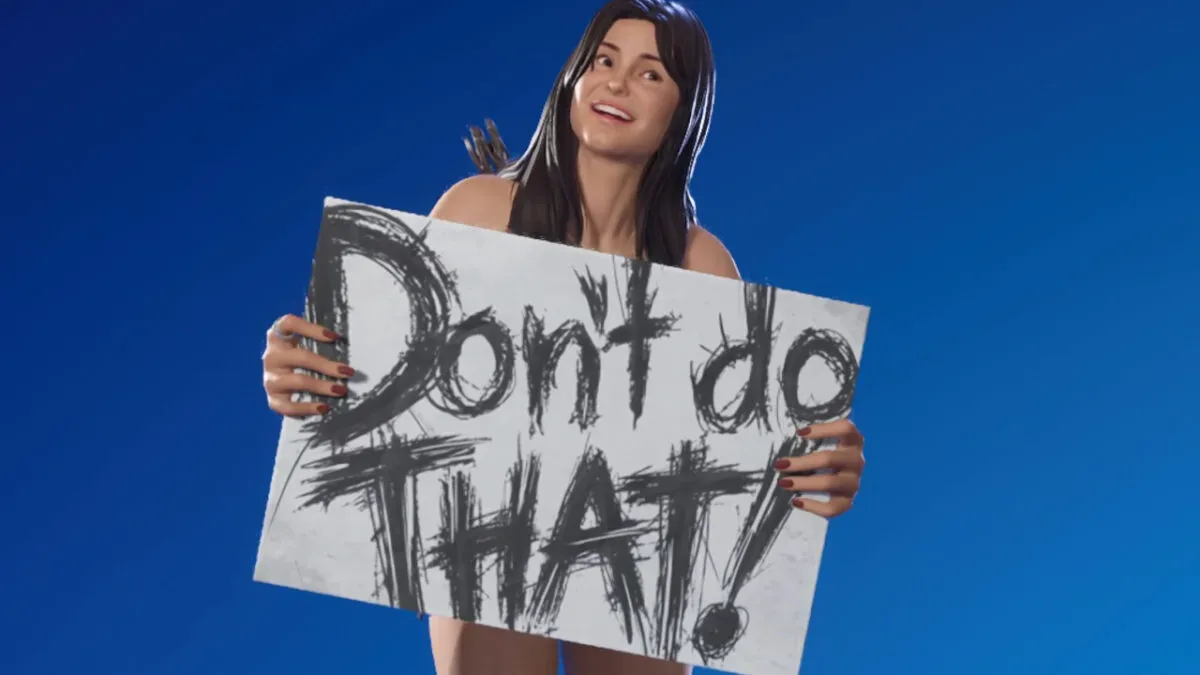
Reported crossover material indicates that Nikki will arrive as a Fortnite skin with black goo replacing the blood associated with a wound in the film. The accompanying cosmetics are said to include cue cards carrying dialogue from the scene in which Nikki realizes the extent of her brainwashing, the One Wish Willow as a back bling, and a broken bottle adapted into a weapon.
Those are not neutral pieces of set dressing. The Willow is the object that enables Bear’s wish and takes Nikki’s autonomy. The cue cards point toward her recognition that she has been controlled. The broken bottle is connected to her attempt to escape the situation through self-harm. Removed from their scenes, each item can read as familiar Fortnite language: a recognizable accessory, an amusing prop, a sharp-looking pickaxe. Together, though, they risk making a collection of trauma markers into purchasable brand identifiers.
That is why this reaction is about more than whether a skin looks faithful. Faithfulness at the surface level can be exactly the problem when the elements being faithfully reproduced come from a character’s violation and suffering. In a battle royale, a player is expected to use cosmetics repeatedly, pair them with unrelated characters and emote after eliminations. The system turns objects into flexible playthings. It is excellent at stripping away narrative specificity because that is what lets everything coexist.
Context collapse is part of the crossover machine
“Context collapse” is a useful term here. It describes what happens when a piece of media, image or statement reaches audiences separated from the setting that originally explained it. A scene that once had a clear narrative role is now a reaction image. A line with a disturbing meaning becomes an audio trend. A tragic prop becomes merchandise.
Context collapse is not automatically malicious. It often happens because online culture rewards brevity, repetition and instantly legible visuals. A full movie asks for attention and interpretation; an isolated image asks only to be recognized. The more an image travels, the more useful it becomes as a general-purpose symbol, and the less likely audiences are to encounter the surrounding story.
Fortnite is an especially powerful endpoint for that process because it makes a symbol interactive. A licensed outfit does not simply appear on a shelf. It becomes an avatar players can control in a space designed around competition, social performance and endless recombination. Nikki can be placed beside characters that have no relationship to Obsession, wield an item whose original meaning is intensely personal, and join dances that make no distinction between grief, terror, comedy or celebration.
That does not mean players who equip a licensed cosmetic endorse every implication of its source material. Nor does it mean a crossover automatically rewrites the film. Players often choose skins because they like an actor, silhouette, franchise or color scheme. The broader concern is industrial rather than individual: a licensing pipeline can reward the most recognizable pieces of a work while leaving behind the reason those pieces were disturbing in the first place.
Horror can be silly, but not every kind of horror is equally portable
There is no blanket rule that horror must remain solemn. Genre characters have always been remixed. The distance between a fictional killer and a dancing in-game avatar can even be part of the fun: it announces that the monster is a performance, a costume and a shared cultural joke. Fortnite has repeatedly shown that a scary icon can become playful without ending the original story’s life.
But not all horror relies on the same emotional machinery. A supernatural slasher is not interchangeable with a narrative structured around brainwashing, sexual coercion and a victim’s loss of control. If the recognizable visual markers of the latter are marketed without the framing that makes them meaningful, the crossover may unintentionally reproduce the perspective the film appears to criticize: Nikki is reduced to an attractive, frightening object for other people to use.
That distinction is worth keeping even when the medium is as unserious as a battle royale. “It is only a game” explains the tone of the adaptation, but it does not automatically answer what has been selected for adaptation or why. A commercial product can be playful and still invite scrutiny over the values embedded in its choices.
The practical question for players and fans
For people considering the reported cosmetics, the most useful response is not necessarily to police one another’s lockers. It is to be precise about what is being sold. Calling an item “iconic” can conceal whether it represents empowerment, villainy, victimization or a mix of all three. The One Wish Willow is not simply a spooky artifact in this story; it is the mechanism through which Nikki’s agency is taken. The bottle is not merely an edgy weapon design; it is connected to an attempt to get out of an unbearable situation.
That awareness also makes room for better conversations about adaptation. A collaboration can introduce players to a film, but discovery is not the same thing as understanding. Anyone whose interest is sparked by Nikki’s appearance will get a more honest picture from engaging with Obsession as a complete story rather than relying on memes, short clips or cosmetic descriptions.
It is also reasonable for fans to ask what a crossover emphasizes. Is it translating a character’s style and presence? Is it celebrating an antagonist? Is it converting a painful plot point into an accessory because that accessory is immediately recognizable? Those questions do not require assigning blame to the film’s director, performers or any particular participant in a licensing process. The available information does not establish who made each decision or how much control any individual had over the final package.
The larger pattern is clearer: popular works are often compressed until they can be sold in fragments. Obsession is especially vulnerable to that compression because its images can be detached so easily from its account of coercion. The reported Fortnite crossover may be commercially logical, but it is a reminder that recognizability and understanding are not the same thing.
For more on the broader ways screen stories move between formats and audiences, see our look at how Cyberpunk: Edgerunners Season 2 relates to Cyberpunk 2077.
Fortnite’s crossover format is built to make every guest character playable, collectible and instantly legible. That strength can become a weakness when the character being made legible is defined by the loss of control over her own body and life. If Nikki’s imagery enters the game as reported, the uncomfortable question will remain: is the collaboration bringing players closer to what Obsession is about, or selling them the very misunderstanding its story warns against?