Content note: This article discusses fictional sexual violence, coercion and possession. It also contains major plot spoilers for Obsession.
Fortnite is built to make wildly different fictional worlds share a dance floor, but its newly revealed Nikki Freeman collaboration has landed with an unusually thorny thud. Epic Games revealed on October 20 that Nikki, the Obsession character played by Inde Navarrette, is coming to the battle royale game. The reveal involved Navarrette herself, and Nikki’s broader pop-culture visibility is clear: she has been among the most-searched Halloween costumes on Google this year.
Yet a vocal group of players and horror fans is objecting not simply to a horror character appearing in Fortnite, but to which character is being adapted and how the adaptation presents her. Some online posts have called for a boycott of Fortnite. Others argue that a crossover does not inherently erase a character’s story, and that treating Nikki only as a victim is its own reductive move.
Both positions arise from the same uncomfortable fact: Nikki’s narrative in Obsession is fundamentally about a loss of control over her own body and identity. Turning that character into a purchasable avatar, complete with expressive cosmetic flourishes, invites questions Fortnite’s customary “everything is a toybox” crossover logic is not especially designed to answer.
Why this particular skin is provoking such a strong response
In Obsession, a malicious entity takes over Nikki’s body after Bear’s wish. Nikki remains conscious but trapped within her own mind, forced to witness the entity’s actions while it uses her physical form. The film also depicts Bear engaging in intimacy with Nikki’s body without the real Nikki’s consent. Bear becomes aware of the truth and chooses not to rescue her.
That background matters because the criticism is not a blanket objection to horror appearing in Fortnite. Horror frequently contains violence, monstrosity and trauma; a game skin can also be a familiar way for audiences to signal affection for a character or a film. The objection here is more specific. Critics argue that Nikki’s central trauma—bodily autonomy being taken from her—makes the conversion of her likeness into a playful, controllable player cosmetic feel especially discordant.
There is an unavoidable irony in the format. In the film, Nikki cannot control herself. In Fortnite, the person who purchases the skin controls her movement, combat actions and emotes. That does not automatically establish malicious intent, nor does it mean every player using the character is mocking her. But it explains why critics see a gap between the gravity of the original story and the cheerful utility expected of a live-service cosmetic.
A skin, in this context, is an optional visual outfit for a player character. It changes appearance rather than the basic competitive rules. Its commercial purpose is also inseparable from its expressive purpose: players obtain cosmetics because they like a design, enjoy a reference, want to represent a favorite character, or simply want something distinctive in a match. The dispute is over whether Nikki can be cleanly separated from the subject matter that made her recognizable in the first place.
Related coverage includes Fortnite's Nikki Freeman Skin Ignites Debate Over Horror, Consent, and Collaboration Culture.
The emote has become a focal point
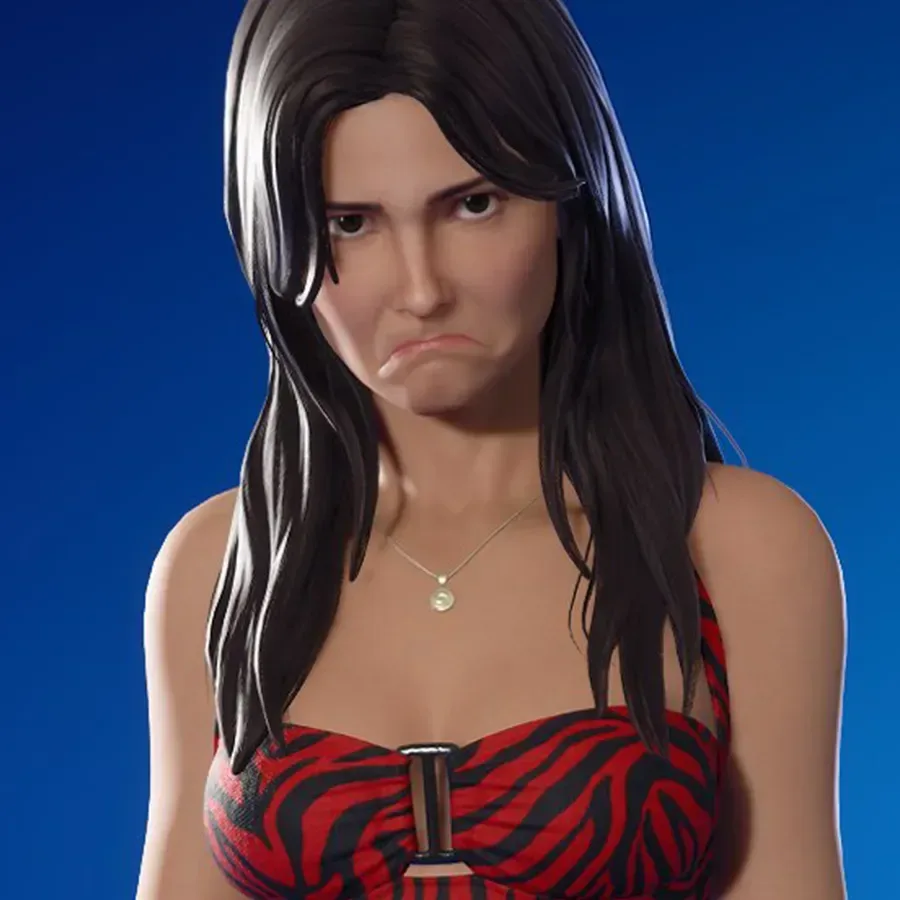
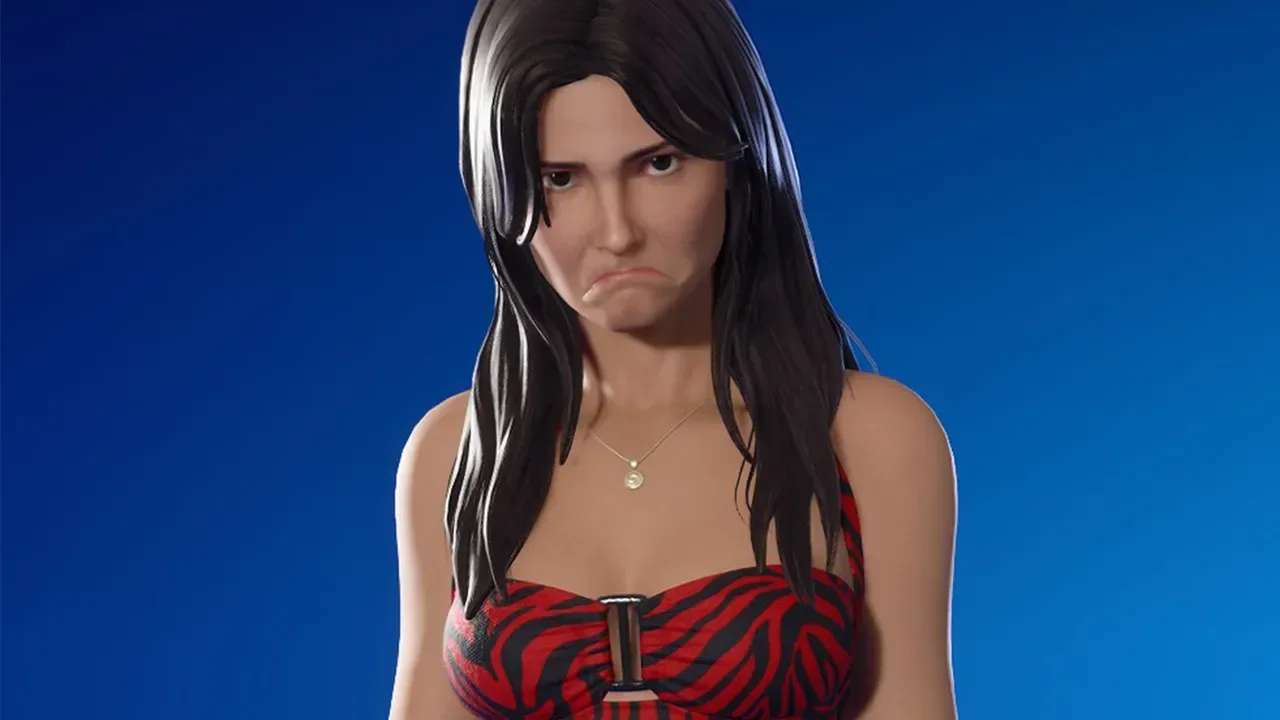
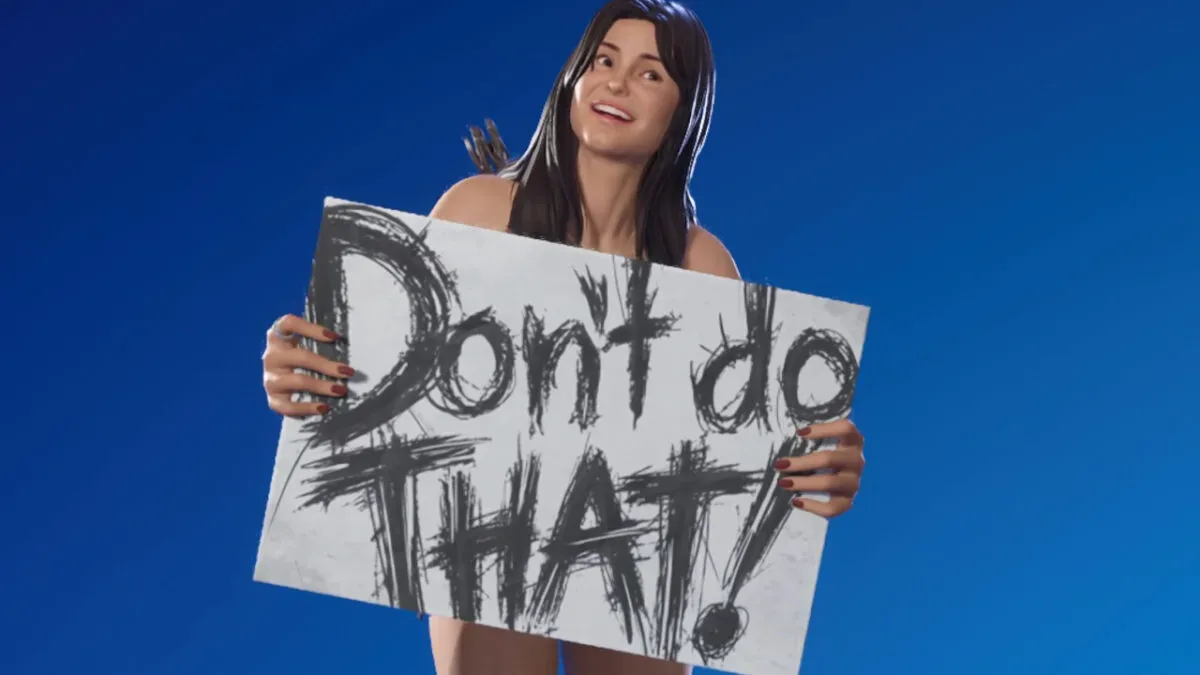
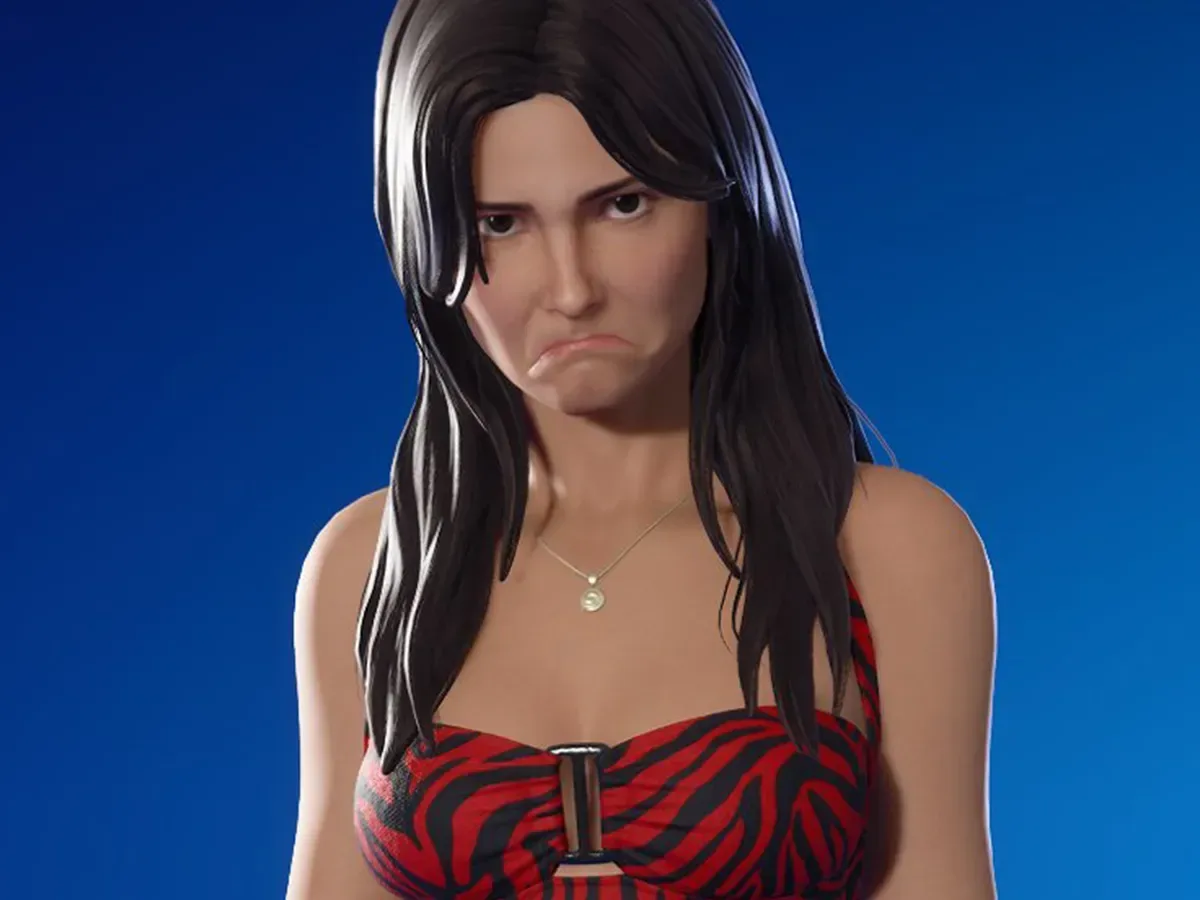
The announced package has intensified the discussion because it goes beyond Nikki’s visual likeness. Her special emote has her hold up cartoon-style signs in a recreation of the film’s well-known dinner confrontation with Bear, while the skin also reproduces her distinctive frown. These choices make the collaboration feel less like a neutral inclusion and more like a selection of recognizable moments and expressions from the film.
For critics, that selection risks turning a scene connected to Nikki’s ordeal into a reaction-image loop: an emotionally loaded sequence repackaged as a repeatable gag or shorthand for player expression. Their concern is not that horror may never be stylized, referenced or merchandised. Rather, it is that context can be lost when a scene is broken into its most meme-ready components and placed in a game whose tone is deliberately elastic.
That is the core of the “meme” criticism around the skin. A meme is not necessarily disrespectful; it can be a form of recognition, shared language or fan celebration. But memes tend to reward immediately legible surface details. In this case, opponents fear the frown and dinner-scene presentation will travel farther than the story’s depiction of coercion, psychological torment and rape.
Fortnite’s format sharpens that tension because cosmetic items are encountered quickly and repeatedly. A player may see the avatar in a match without knowing the film, its plot, or why other people find the pairing painful. That is normal for any broad crossover, but it is precisely why detractors believe the adaptation needs more care than a recognizable face and a reference emote.
The case made by players who reject a boycott
Not everyone accepts the premise that bringing Nikki into Fortnite trivializes her. Players defending the collaboration have argued that fans commonly buy character cosmetics because they care about those characters, not because they see them as punchlines. In that view, a crossover is a form of multimedia presence rather than a claim that a character’s worst experiences are unimportant.
Some defenders also warn against reducing Nikki exclusively to victimhood. Her story is horrific, but they argue that being a survivor of profound fictional abuse should not bar a character from appearing in other media. This argument pushes back on the idea that serious subject matter makes a character untouchable, or that a character’s ability to be recognized, celebrated and reimagined ends at the boundary of the original film.
There is a real distinction worth preserving here. Saying that Nikki’s trauma should be taken seriously is not the same as saying she must never appear outside a serious dramatic context. Likewise, saying that she is fictional does not automatically resolve every question about representation. Fictional characters can carry themes that audiences recognize as meaningful, especially when those themes involve consent and sexual violence.
The disagreement is therefore less usefully framed as “people are overreacting” versus “people hate crossovers.” It is a dispute about what constitutes respectful adaptation. Is it enough that the character is included and recognizable? Does the tone of the skin and emote matter? Should the original actor’s involvement carry weight in how the collaboration is received? Reasonable people can answer those questions differently without denying the story’s content.
Actor participation changes the conversation, but not every concern
Navarrette’s participation in the Fortnite reveal is significant context. It indicates that the performer behind Nikki was involved in promoting the collaboration. Navarrette also visited Universal Studios’ Halloween Horror Nights in October and posed with one of the actors portraying Nikki there.
That does not settle the public debate, but it complicates any attempt to portray the collaboration as automatically opposed by everyone associated with the character. A performer may reasonably see value in a role gaining visibility across formats. Fans may likewise interpret her participation as an endorsement of this particular use of the character.
At the same time, performer approval and audience response answer different questions. A collaboration can have the support of a person involved in a work while still leaving viewers unsettled by its tonal choices. The issue raised by critics is largely about what the final commercial object communicates to players and horror fans, not a claim that an actor must be protected from involvement in her own character’s promotion.
This is not Nikki’s first contested public appearance
Nikki previously appeared as a roaming character at Universal Studios’ Halloween Horror Nights, where her use also prompted discourse within horror circles. That debate included ethical concerns about putting the character’s story into an entertainment setting, as well as worries about performer safety.
The recurrence is revealing. It suggests the friction is not caused solely by Fortnite’s colorful aesthetic or its monetized shop model. Nikki’s narrative is difficult to transplant because the source material’s defining horror involves identity, control and violation. Any public depiction that foregrounds her appearance while compressing or omitting that context is likely to invite questions about whether the adaptation is honoring the character, exploiting recognizability, or doing some uneasy mixture of both.
Fortnite makes the question particularly visible because it is a giant cross-media stage, not a quiet cameo. Its collaborations routinely invite players to treat famous characters as personal avatars. That normal convention works smoothly when the character’s appeal is largely visual, heroic or action-oriented. It becomes more complicated when the character’s body is central to a story about the absence of agency.
What the debate means for crossover culture
There is no universal rule that can decide whether a crossover involving traumatic material is appropriate. A blanket ban would flatten characters into their pain and ignore the possibility of thoughtful reinterpretation. A blanket “it is only fiction” response, meanwhile, overlooks the fact that fiction is where audiences often process real ideas about consent, exploitation and power.
The practical question for licensors and game publishers is not simply whether a character is famous enough to sell. It is whether the chosen elements preserve enough context to avoid transforming trauma into a disposable visual gag. The answer may lie in the specific emote, pose, promotional framing or selection of references—not merely in the character’s inclusion.
For players, the immediate choice remains personal. Some will skip the item or support boycott calls because the adaptation crosses a line for them. Others will see it as a legitimate acknowledgement of a fictional character they value. Neither response changes the underlying reason this has become a flashpoint: Fortnite’s crossover machine is extraordinarily good at making culture playable, but playability can collide with stories built around experiences that should not be made light.
That broader collision is worth keeping in view across games and platforms. Industry conversations are often split between creative collaborations and technical platform priorities, as seen in recent discussion of performance technology reaching Xbox hardware. The Nikki debate is a reminder that games are also cultural platforms: the question is not only what they can render or sell, but what happens when a character’s most painful context is made portable, purchasable and playable.