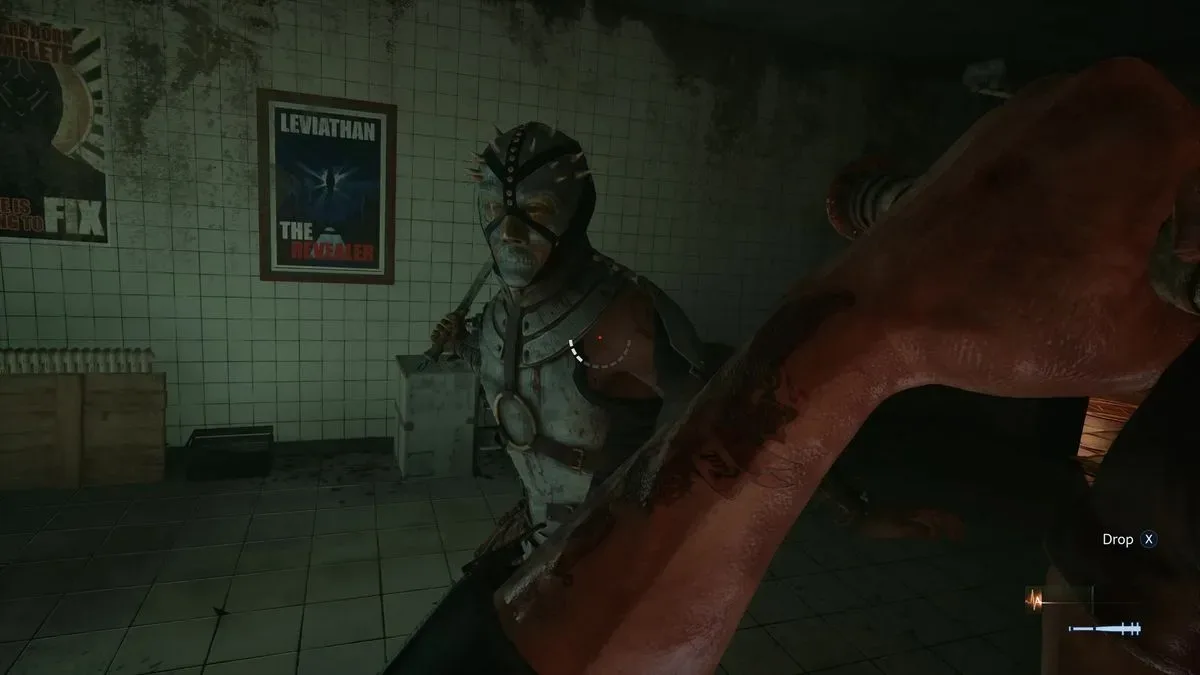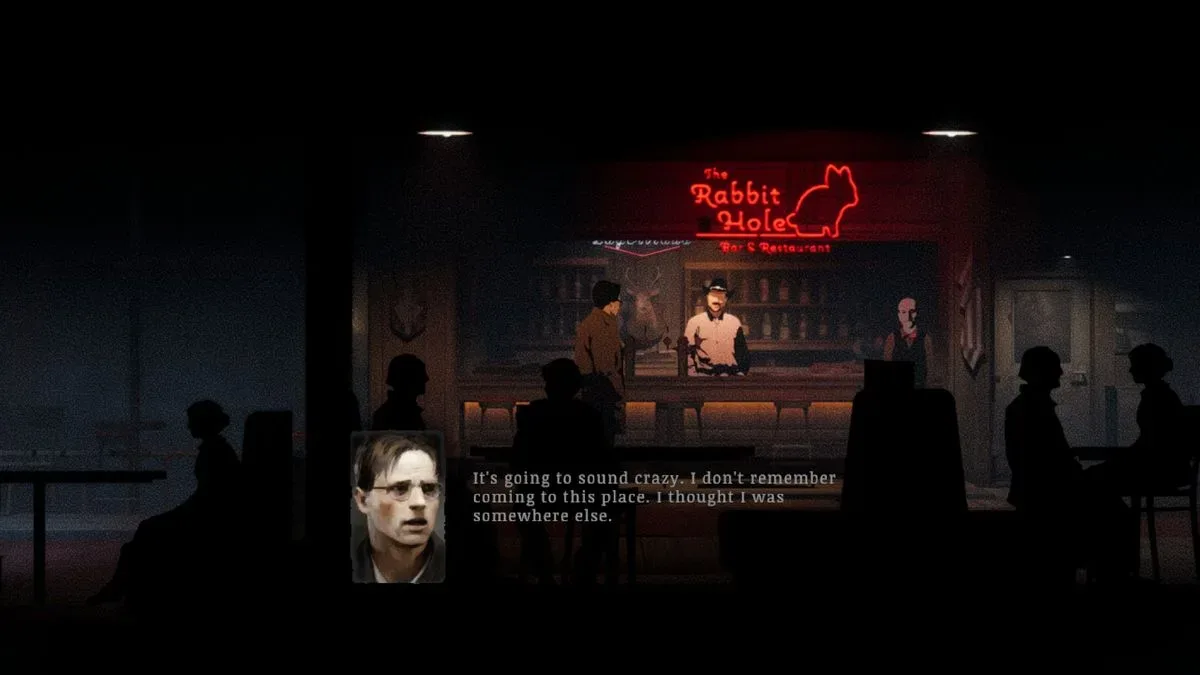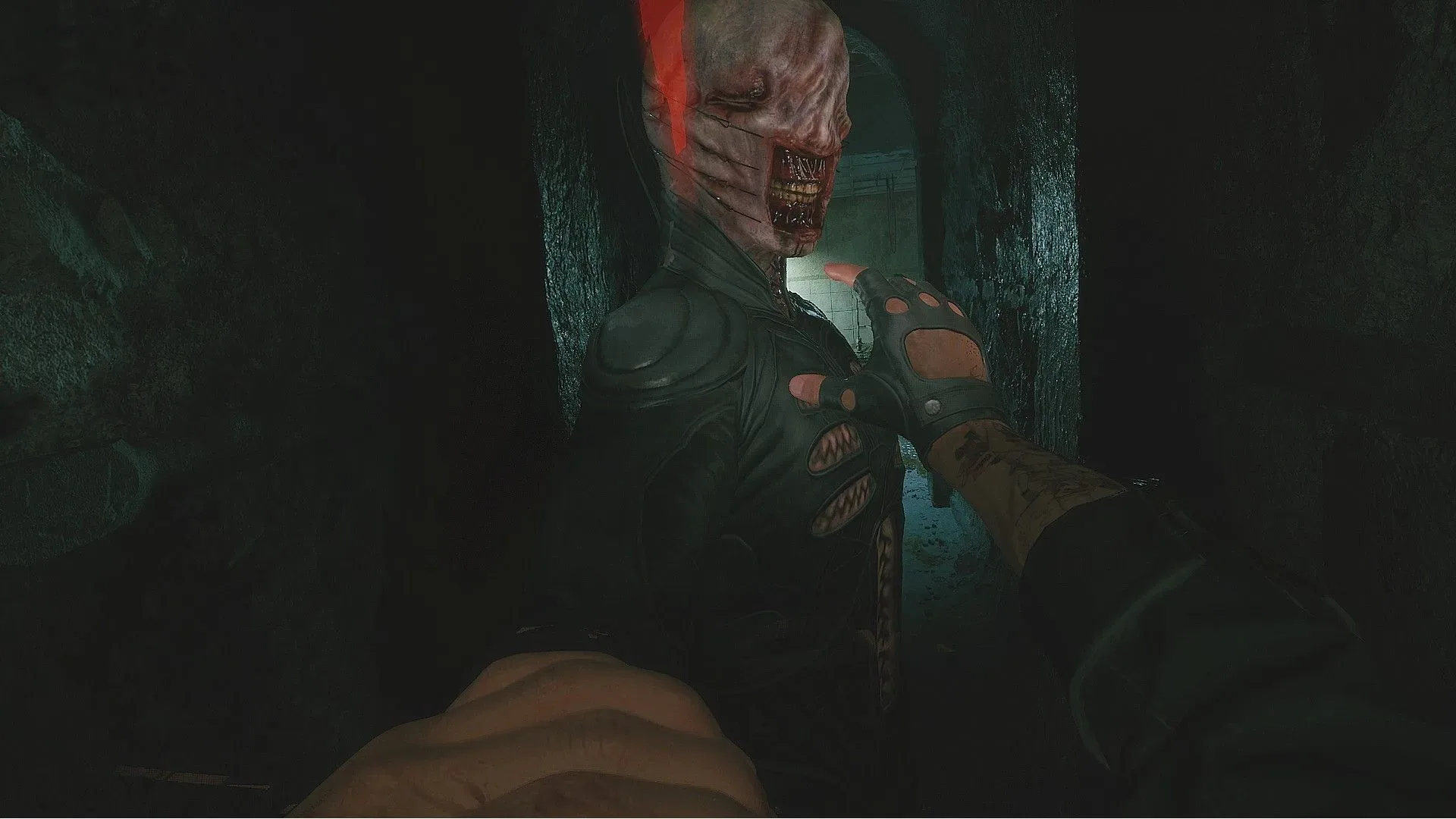
Clive Barker’s Hellraiser: Revival appears to have found fertile ground for its particular strain of horror: blood, latex, cult spaces, the Labyrinth, Cenobites, and a protagonist willing to descend into all of it for someone he loves. The game’s apparent commitment to excess fits the property. Yet one criticism cuts deeper than a simple complaint about controls: its first-person viewpoint may be at odds with the kind of protagonist and story it is trying to build.
The issue is not that first-person horror cannot work. It plainly can. Restricting the player’s field of view, making threats feel uncomfortably close, and placing weapons and hands directly in front of the camera are reliable ways to manufacture dread. The problem is one of purpose. Perspective is not merely a technical camera decision; it tells players how to relate to the person at the center of a game.
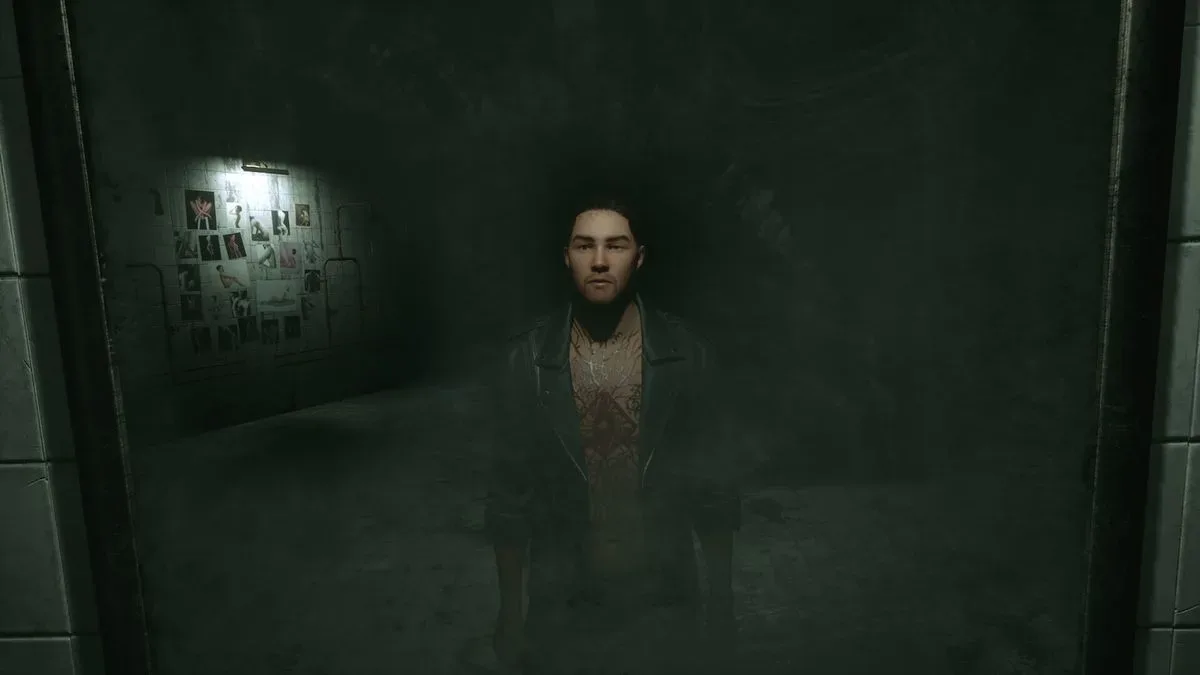
In Hellraiser: Revival, that person is Aiden Lynch. He is not presented as an anonymous blank slate. He has a girlfriend, Sunny, whom he is trying to save; he has a past involving addiction and jail; and early scenes reportedly establish elements of his personality and private life. These are deliberate character details. They suggest a story about Aiden, not simply an invitation for the player to imagine that they have wandered into the Labyrinth themselves.
The character-camera mismatch
First-person games generally ask the audience to identify with a pair of hands, a voice, and a point of view. That does not require a protagonist to have no history, but the format most cleanly supports a character whose face and physical identity are less central to the experience. The player fills in some of the space. Their immediate reactions become part of the dramatic effect.
Resident Evil 7 is an especially useful comparison because Hellraiser: Revival is said to draw on its oppressive first-person survival-horror approach. Ethan Winters was designed differently from Resident Evil’s established icons. His face was kept largely out of view through gameplay, cutscenes, and promotional material until a later third-person option for Resident Evil Village. That visual restraint helped make him an everyman conduit for a story built around immediacy, vulnerability, and uncertainty.
By contrast, characters such as Leon S. Kennedy, Chris Redfield, Claire Redfield, and Jill Valentine carry established visual identities. Seeing them matters. Their posture, expressions, movement, and presence are part of what fans recognize when they play as those characters. A close camera may increase tension, but it also withholds part of the performance.
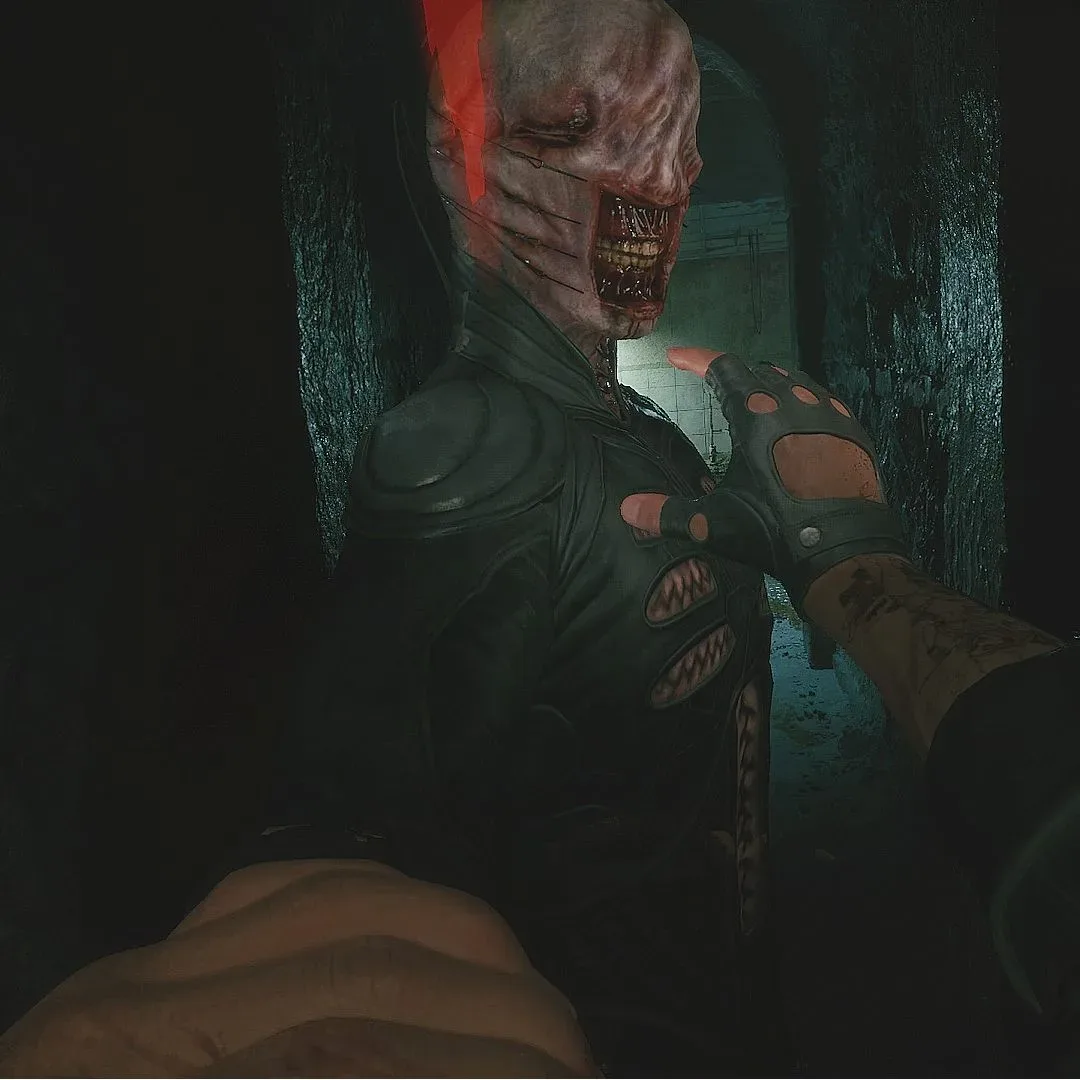
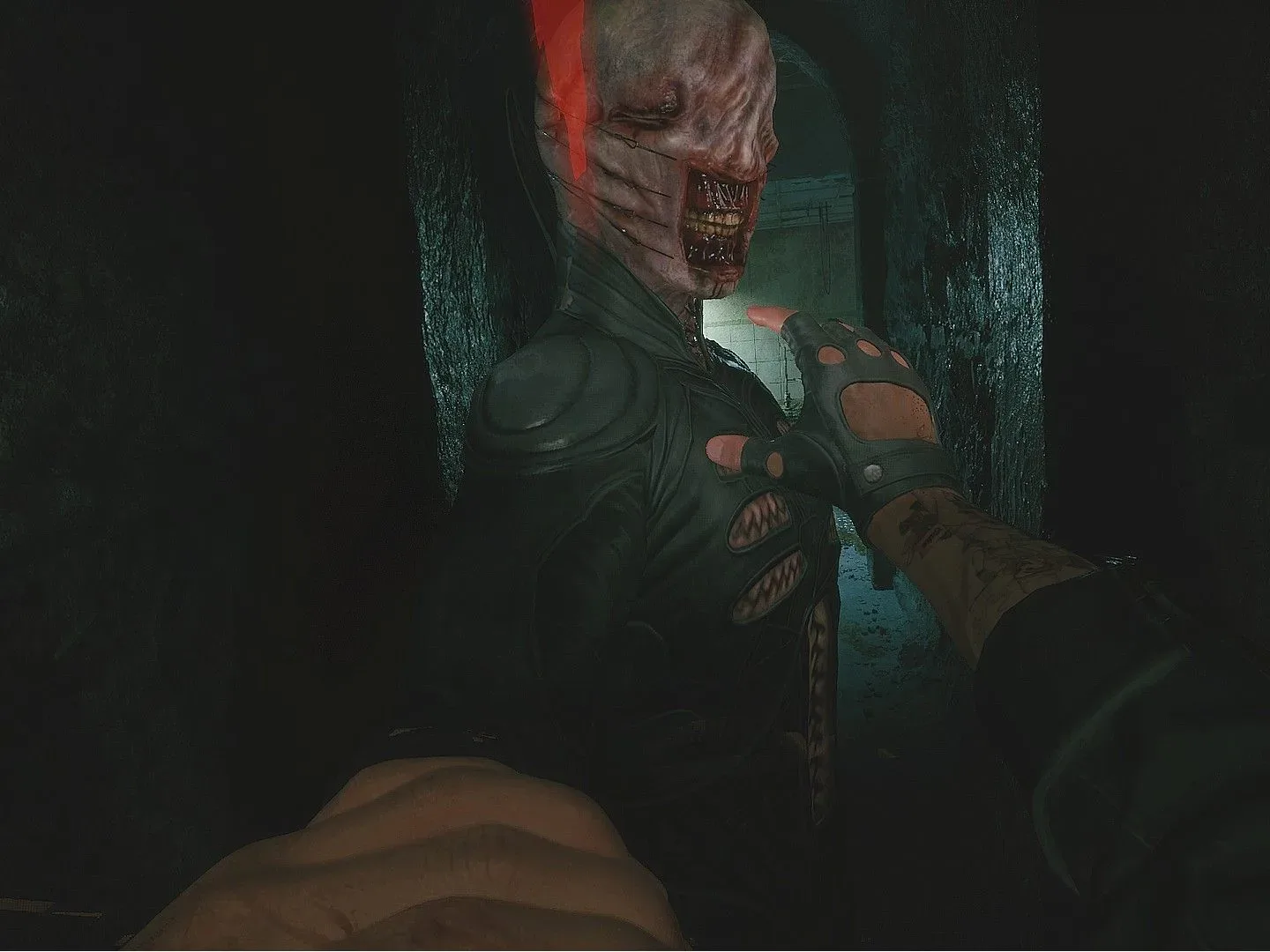
Aiden seems stuck between those two models. Hellraiser: Revival reportedly shows him in third-person cutscenes from the outset, then moves to a first-person view for play. That alone is not an automatic flaw; many games use cinematic scenes to define a lead while employing a more immersive gameplay perspective. But it creates a tougher balancing act. If the narrative asks players to care about Aiden’s specific experiences, then repeatedly removing him from view can weaken the visual connection the cutscenes just established.
The resulting question is simple: is Aiden someone players are meant to be, or someone they are meant to watch? A game can attempt both, but it needs a clear reason for each switch. Without one, the transitions can feel less like an intentional storytelling language and more like two competing design instincts sharing the same body.
Related coverage includes Hellraiser: Revival's First-Person Horror Has a Perspective Problem.
What first-person gives Hellraiser
There is a strong argument for the choice. Hellraiser is a franchise fundamentally concerned with invasive sensation: pain, temptation, transformation, bodily vulnerability, and encounters that are far too close for comfort. First-person framing can make an environment feel claustrophobic because the player cannot simply step outside the character and inspect the room safely. A threat emerging at the edge of the screen is more alarming when the camera is locked to human sightlines.
That closeness can also make gore more confrontational. A first-person view puts blood-slicked hands, improvised weapons, and the immediate aftermath of violence directly in the player’s space. In a game featuring the Cenobites and the Labyrinth, a camera designed to deny emotional distance is thematically understandable.
There is a further practical benefit. First-person perspective makes it easier to create the sensation that the player is personally trespassing in a hostile location. The cult hideout, BDSM club, and chambers of torment described in the game’s early hours are not simply places Aiden visits; through the camera, they become spaces the player feels trapped inside. That is a meaningful survival-horror tool, especially when evasion and uncertainty are more important than heroic mastery.
None of that guarantees success, though. Immersion is not the same thing as proximity. A camera can put the player inches from the action while still making the action feel abstract, awkward, or disconnected from the character on screen.
Combat is where the argument becomes physical
The sharpest complaint surrounding the first-person approach concerns melee. The reported early combat options give Aiden no block and little defensive expression beyond ducking away from attacks. This can make fights feel airy and imprecise rather than desperate and brutal.
Melee readability is the term for how clearly a player can understand the range, timing, direction, and impact of close-range attacks. In third-person action games, the camera shows the player character’s full body as well as the opponent’s position. That wider view makes it easier to judge whether a swing is going to connect, whether an enemy is flanking, and how a dodge changes spacing. It also lets animation sell force: the wind-up of a machete swing, the recoil after a missed hit, or the stagger of a character absorbing a blow.
First-person melee can achieve a different kind of intensity, but it has to communicate that information through weapon animation, sound, screen movement, enemy reactions, and carefully tuned collision. When those elements are not sufficiently weighty, the player sees a weapon move in front of the camera without feeling the force of the person wielding it. Violence becomes a floating arm motion rather than a physical performance.
That is why the perspective dispute is not just about whether players would prefer to look at Aiden. It is about whether the game’s systems and its camera reinforce each other. If Hellraiser: Revival wants Aiden to feel outmatched, ungainly, and exposed, limited defense could be an intentional survival-horror choice. But intended vulnerability still needs to be legible. Feeling weak can support horror; feeling unable to interpret an encounter generally does not.
The difference matters for a licensed horror game, where spectacle and tension must coexist. Players may welcome being forced to flee a Cenobite, but they also need close-quarters combat to communicate why they lost, escaped, or survived. The camera is a major part of that communication.
Third-person scenes raise the stakes
Hellraiser: Revival reportedly uses third-person cutscenes prominently when Cenobites are involved, while other scenes remain in first-person. Those sequences may provide a useful opportunity to showcase major figures such as Pinhead and The Chatterer. The Cenobites are not incidental monsters; their designs, movement, and ritualistic presence are crucial to the appeal of Hellraiser.
But this selective third-person treatment makes the game’s split identity more conspicuous. If the external camera is reserved mainly for the franchise’s famous faces, Aiden risks becoming a functional lens through which players view the brand’s attractions rather than a lead whose presence matters in its own right. That may be a defensible choice for a licensed game, but it makes the personal stakes around Sunny harder to foreground.
A more consistent third-person presentation could potentially have put Aiden’s facial reactions and physical decline at the center of the experience. It would also allow the game to frame the Cenobites and the environments as part of a shared image: victim, tormentor, and impossible architecture occupying the same shot. Such composition is one reason third-person horror can be so effective. The player does not only fear what is ahead; they see how small, damaged, or trapped the protagonist looks within the space.
Conversely, a first-person structure could work more cleanly if the game consistently embraced the idea that the player is occupying Aiden’s senses. That would mean making his identity primarily audible and emotional rather than visually interrupted by scenes that suddenly insist he is an external character to observe. The present criticism is less a demand that every horror game pick third-person than a request for stronger commitment.
Why framing matters beyond Hellraiser
Camera perspective shapes nearly every part of a game’s emotional contract. It affects combat clarity, environmental exploration, cinematics, character attachment, and even what a player understands a failure to mean. A death in first-person can feel like immediate personal danger. The same death in third-person can feel like the loss of a character the player has been guiding and watching.
Neither reaction is inherently superior. The best choice depends on what the game wants its hero to be. A silent or lightly defined survivor can make first-person feel intimate. A protagonist with a history, relationships, recognizable style, and an arc that depends on expression may benefit from visibility. Hybrid structures can succeed when they give gameplay and cutscenes distinct but complementary jobs, rather than asking them to make conflicting statements about whose story is being told.
That is also why debates around a shooter’s presentation are rarely just cosmetic. As the framing of a shooter can matter as much as its weapons, horror framing can matter as much as its monsters. The viewpoint determines what players are invited to feel responsible for, what they are allowed to see, and how much of the hero’s humanity survives the chaos.
Hellraiser: Revival’s core setup gives it a potentially compelling human anchor: Aiden enters a nightmare to save Sunny, bringing a troubled past into a realm that thrives on obsession and suffering. The Cenobites may be the draw, but the story still needs a person for those horrors to happen to. If Aiden is meant to be that person rather than an interchangeable camera mount, the game’s strongest version may be the one that lets players see him endure it.