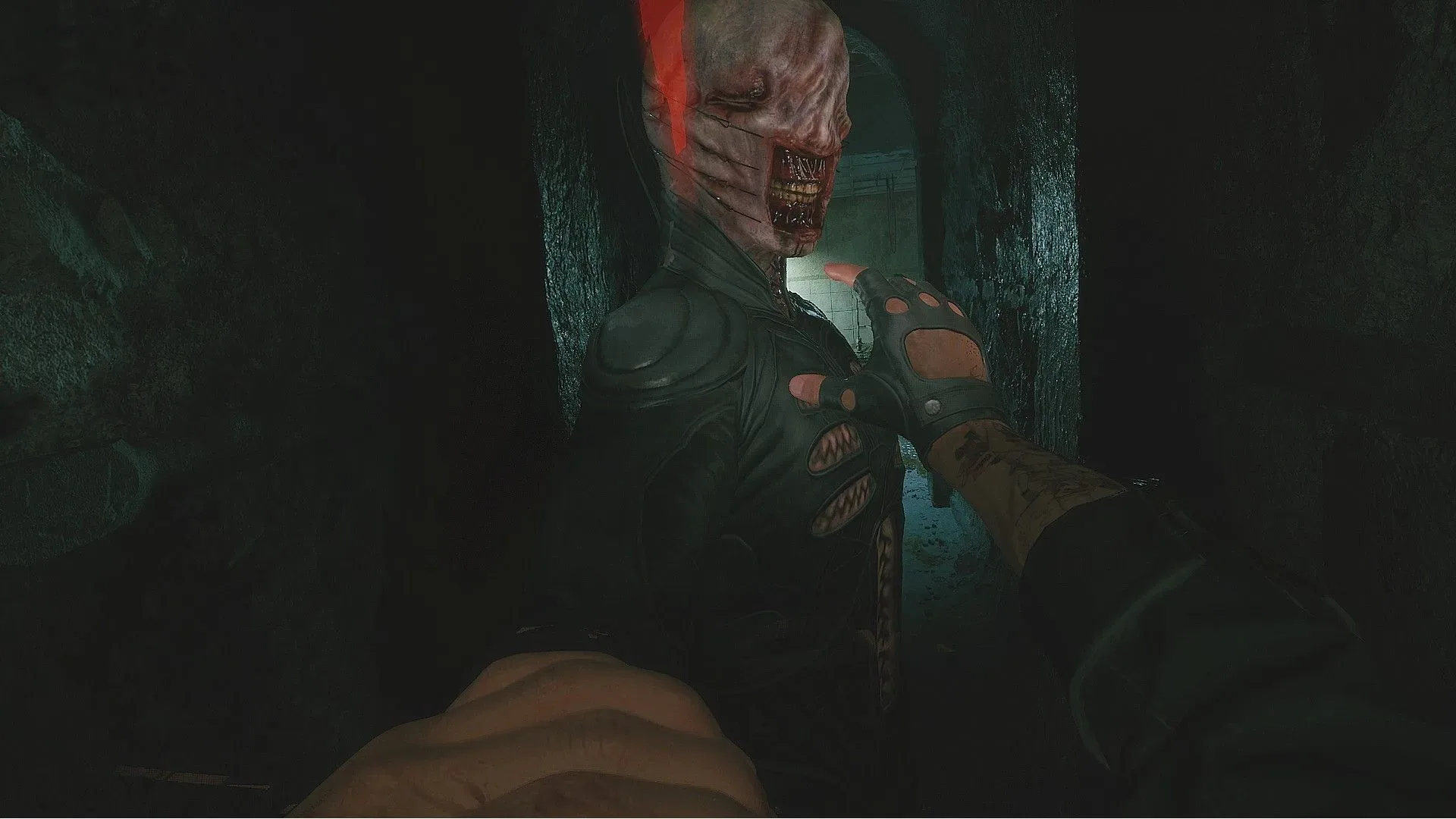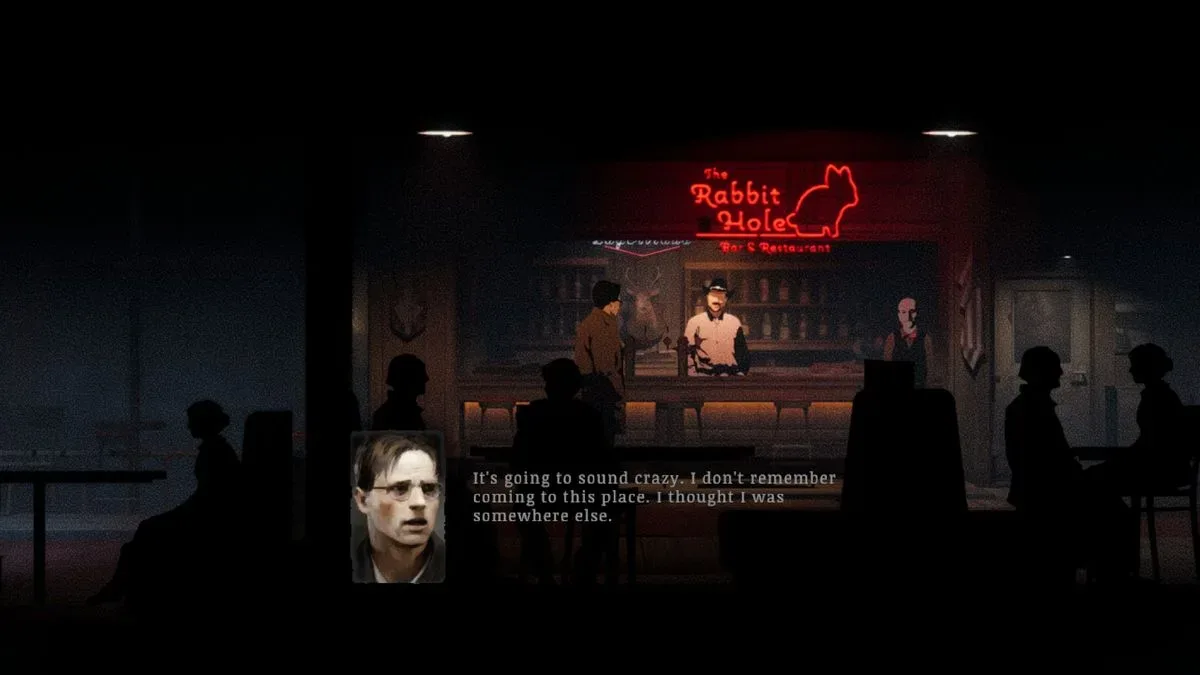
Silver Pines is built around a very effective horror proposition: wake up somewhere unsettling, take the role of Detective Walker, and follow a missing-musician case into a town that appears forgotten, abandoned and increasingly hostile to ordinary explanations. It is a survival-horror Metroidvania, a description that can sound like two very different design traditions forced into the same trench coat. Here, though, the pairing is the point.
The survival-horror side makes every tool, weapon, heal and empty bottle matter. The Metroidvania side turns the town into a dense, revisitable puzzle box, where a new item can redraw the meaning of an old route. Silver Pines uses both structures to make investigation feel active rather than decorative. Walker is not simply told that an area is important; he is encouraged to catalogue it, return to it, bring the right equipment, and notice what previously seemed insignificant.
That combination supports a game that is absorbing from beginning to end. Its biggest caveat is not that the mystery fails to create intrigue. Quite the opposite: Silver Pines raises so many compelling questions about its town, its imagery and its story that its endings can feel as though they stop just before the most satisfying revelations arrive. For players who enjoy horror that leaves room for interpretation, that may be part of the appeal. For players hoping that completing every ending will neatly account for every strange detail, it may feel frustratingly incomplete.
A town designed for suspicion
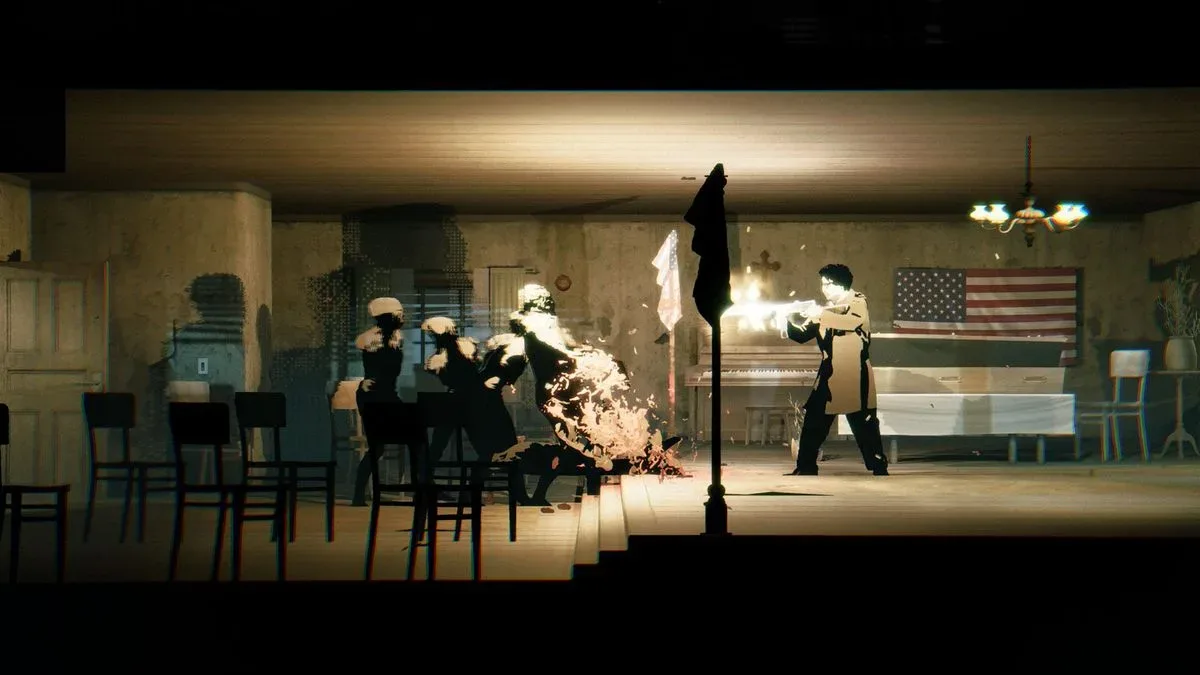
Silver Pines has a deliberately dreamlike mood. Its painterly visual style supplies a notable contrast to the ugliness and danger of the setting, while ambient tracks from radios and jukeboxes break up the quiet of exploration. That contrast matters. The calm sounds and attractive presentation do not make the town safe; they make its sinister turns more disorienting.
The game’s psychological-horror approach also complements Walker’s investigation. Reality is placed in doubt, and the town’s broader mysteries become as compelling as the immediate missing-person case. The result is not just an environment full of obstacles. It is a place that invites players to question what they have seen, what they have missed and whether seemingly mundane details might be clues.
That atmosphere is supported by good pacing. Silver Pines moves its narrative and its exploration forward together: as the story provides reason to press deeper into town, new traversal options reveal additional portions of the map. The sense of steadily reaching the boundaries of the known space is especially important in a Metroidvania.
Metroidvania is shorthand for an exploration-focused structure in which progress is often gated by abilities or tools acquired elsewhere. Instead of moving through a purely linear chain of levels, players revisit a connected world with fresh capabilities. In Silver Pines, that means previously visited areas can become useful again when Walker obtains the equipment needed to access their blocked-off corners.
The design does not treat returning as filler. Revisits create a detective-like rhythm: recognize an obstacle, acquire a potential solution, then test that solution against the map. Vents, inaccessible spaces and routes that initially seem like dead ends become invitations to keep poking at the town’s edges. Players who enjoy searching every overlooked passage will find plenty of reason to circle back.
Related coverage includes Silver Pines Review: A Tense Horror Mystery With Smart Metroidvania Design.
Inventory pressure is part of the investigation
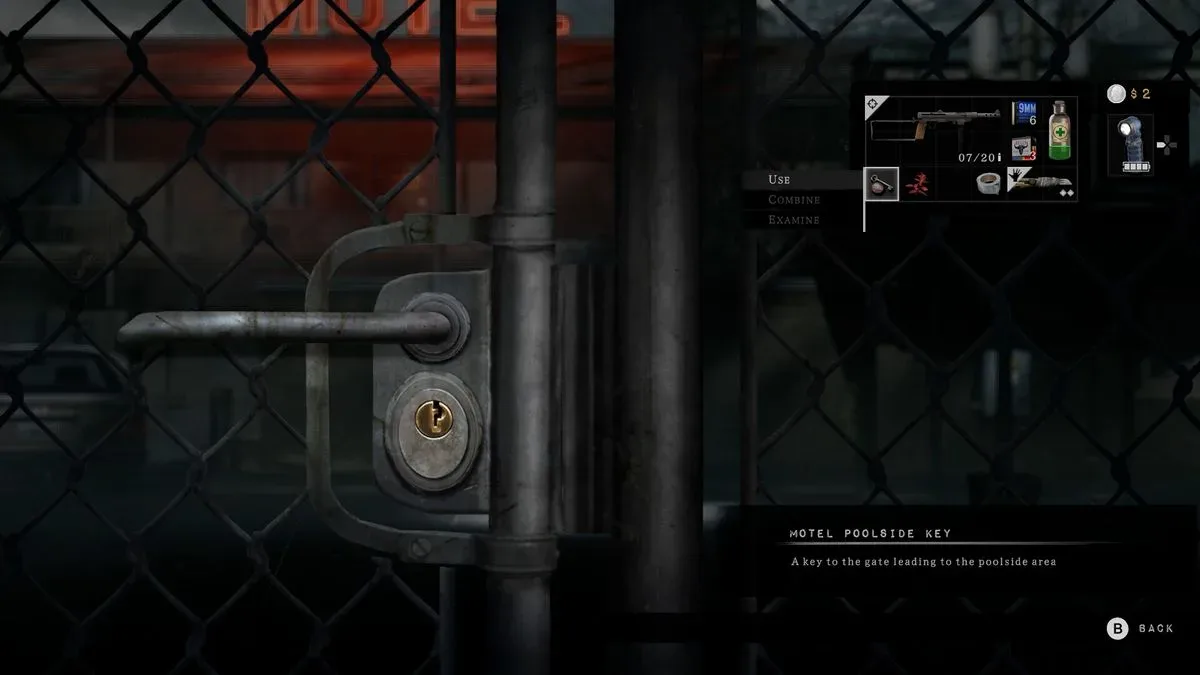
Silver Pines also understands a basic survival-horror truth: an inventory is more interesting when it creates decisions. Walker’s carrying capacity asks players to move, transfer, combine and rotate items to make the most of available space. This is not a game where collecting equipment automatically means becoming comfortable. A useful item can still be inconvenient, and an inconvenient item can be too valuable to leave behind.
The crowbar shows how the game gets mileage out of that tension. It can remove wooden panels and doubles as a melee weapon, making it broadly useful. But it occupies more inventory space than the box cutter. In practical terms, the player is constantly weighing flexibility against capacity. A larger tool earns its footprint by solving several problems, yet it can limit room for other supplies.
Not every persistent item feels equally elegant. The manhole-cover key is identified as a particular annoyance because key items remain in the inventory more often than players may expect from other survival-horror games. Such objects can become dead weight after their immediate purpose is fulfilled, shrinking the space available for supplies and forcing more management.
Silver Pines gives players several ways to work within that pressure. Items can be combined, and gun upgrades can reduce the inventory space occupied by firearms. Puzzle components may be left at the puzzle where they belong rather than carried indefinitely while the remaining pieces are located. Storage boxes provide a way to exchange equipment and prepare for the next objective.
Those systems make the inventory demanding without making it purely punitive. Still, preparation matters. Bottles may look plentiful until the moment a player needs one for healing supplies after committing it to a Molotov cocktail. The lesson is appropriately survival-horror: resources are not merely objects to accumulate, but options that can be prematurely converted into something else.
Practical implications for cautious players
- Keep multi-purpose tools in mind: equipment that both opens routes and handles threats can justify its larger inventory footprint.
- Use storage boxes as planning tools: swap in what the next excursion actually requires rather than carrying every weapon or puzzle item at once.
- Leave puzzle pieces where they will be used: if the game allows it, this reduces clutter and makes the destination memorable.
- Treat bottles as limited capacity, not background loot: their potential uses can make an apparently disposable container important later.
The camera is Walker’s real detective kit
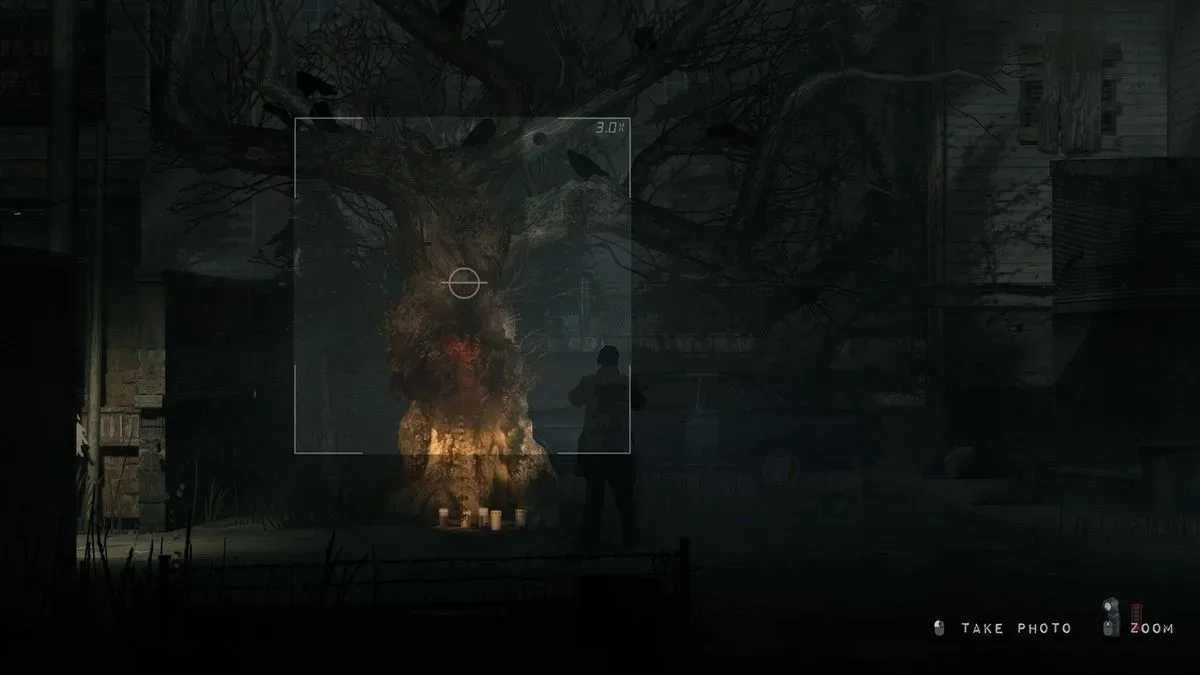
One of Silver Pines’ smartest features is its camera system. The game encourages players to photograph points of interest while examining objects or encountering important locations, but the feature is more useful when treated as an ordinary investigative habit rather than a prompt-only mechanic.
A photograph can preserve a number on a sign, a detail that might make sense after another discovery, or the precise location of an item that cannot currently be carried. The game’s world is dense enough that trusting memory can turn a quick return trip into an extended search. Saving visual evidence reduces that friction while fitting the role-playing fantasy of a detective keeping a case file.
There is a valuable distinction here between a map marker and a photograph. A marker says that something is located at a coordinate. A photo can preserve why it looked suspicious: a phone number, a price, a piece of environmental detail or a contextual clue. Silver Pines leverages that difference to make note-taking feel like part of play rather than a chore imposed from outside the game.
Players who plan to pursue the town’s secrets and endings should use the camera generously. Photograph uncertain details even when they look trivial. A number that seems like set dressing, or an item that seems easy to revisit, can become much more difficult to locate once the town opens further and the player’s attention is divided among new routes, enemies and inventory constraints.
Pay phones give progress a price
Pay phones serve two jobs in Silver Pines: saving progress and advancing the story. Walker checks in with his client, Mr Jackman, during these calls, which gives saves a narrative role beyond a menu function. The reports can help players regain their bearings when returning to a file and confirm whether they remain on the right path.
The catch is that phone use costs coins. That turns the save system into another measured resource decision, but it does not appear to be needlessly harsh. Players are encouraged to search coin slots, and calls from Jackman after significant story beats—often following boss fights—can create free save opportunities when funds are low.
It is a small but effective piece of worldbuilding. A vending machine and a pay phone are everyday objects, yet in this town they become part of the survival loop. The phone is not just a checkpoint: it is a place to reassess the case, preserve progress and worry about whether there are enough coins left for the next call.
That makes the game’s machinery feel unusually cohesive. Exploration yields supplies, supplies affect inventory choices, inventory choices shape readiness for combat and puzzles, and progression loops back to calls that provide story orientation. None of those features is unprecedented in isolation. Their strength comes from how directly they reinforce the idea that Walker is trying to work through an unknowable place with limited space, limited resources and incomplete information.
A mystery that refuses to close the file
The desire to keep investigating is Silver Pines’ greatest achievement. The game supports repeated endings, and completing one does not necessarily settle the player’s curiosity. Instead, it encourages more map-scouring: unopened vents, untested drops, remaining enemies and hints that could change the reading of earlier events.
That persistence speaks to the strength of its worldbuilding. Silver Pines makes its town matter beyond the initial missing-musician objective. The unanswered significance of television programming and a callable Conmag number, among other dangling details, creates the impression that the town contains more than any single route through the story can explain.
There is a delicate line between ambiguity and incompleteness, however. Horror frequently benefits from unresolved questions. The unknown can be more disturbing than a direct explanation, and a mystery can survive in the imagination long after the credits. Silver Pines occasionally seems to cross from evocative uncertainty into the feeling that something essential was missed, even after every available ending has been found.
That is why the game’s unresolved material lands as a genuine criticism rather than a rejection of ambiguity itself. The construction is strong enough, and the clues are choreographed carefully enough, that players may reasonably expect a more decisive payoff. When closure remains out of reach, the lingering feeling is less “forbidden knowledge has eluded me” and more “is there another piece somewhere?”
Even so, that dissatisfaction exists beside a clear admiration for the journey. Silver Pines is polished, atmospheric and mechanically thoughtful, and its mystery has enough pull to motivate continued experimentation long after an ending appears. In a busy horror season, players looking for more spooky game energy can also see October’s replay challenge for spooky gaming clips.
Release information
Silver Pines is developed by Wych Elm Games and published by Team17. It is scheduled to release on October 8, 2026 for PC, PlayStation 5, Xbox Series X, Nintendo Switch 2 and Nintendo Switch.
The game was assessed using PC code played via Steam Deck. Based on that assessment, Silver Pines stands out as a confident fusion of survival-horror resource management and Metroidvania exploration. Its camera and pay-phone systems give its detective premise mechanical weight; its visual and audio design sell an unnerving town worth studying; and its inventory asks players to make meaningful choices. The ending structure may leave its case file messier than some players will want, but the hunt for answers is compelling enough that the red string may stay on the board for a while.