Castlevania: Belmont’s Curse arrives on October 15, 2026 for PC, PlayStation 5, Xbox Series X and Nintendo Switch, with Evil Empire developing and Konami publishing. It is a Metroidvania built around an unusually demanding idea: the map is not merely a record of places visited, but part of a larger riddle that players are expected to actively solve.
That design makes note-taking a practical tool rather than a nostalgic affectation. Markers on a map may not be enough when clues, remembered patterns, obscure characters and concealed key items all matter to progression. Belmont’s Curse appears happy to ask its audience to retain information outside the immediate room, turning exploration into an exercise for the memory as well as the controller.
For a series with a long association with labyrinthine castles and secret-laden progression, that emphasis makes thematic sense. It also establishes the game’s central tension. A mystery is satisfying only when players can turn its fragments into forward motion. Belmont’s Curse reportedly gets close to that ideal often, but its most opaque directions and limited fast travel can make the search for the next destination more exhausting than the combat waiting there.
A Metroidvania map with Paris at its center
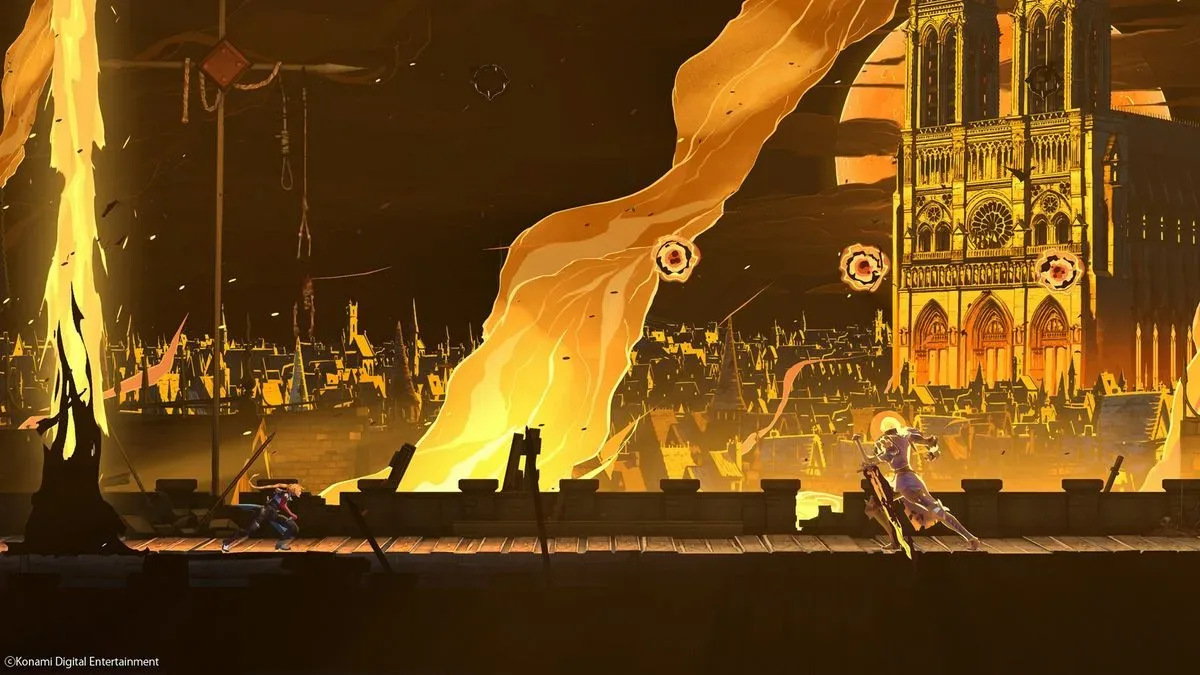
A Metroidvania is generally defined by an interconnected world in which new abilities, routes and discoveries reshape previously visited spaces. Belmont’s Curse takes that familiar structure across Gothic interpretations of Parisian landmarks, including Notre Dame and the Catacombs, before eventually bringing players to Dracula’s Castle.
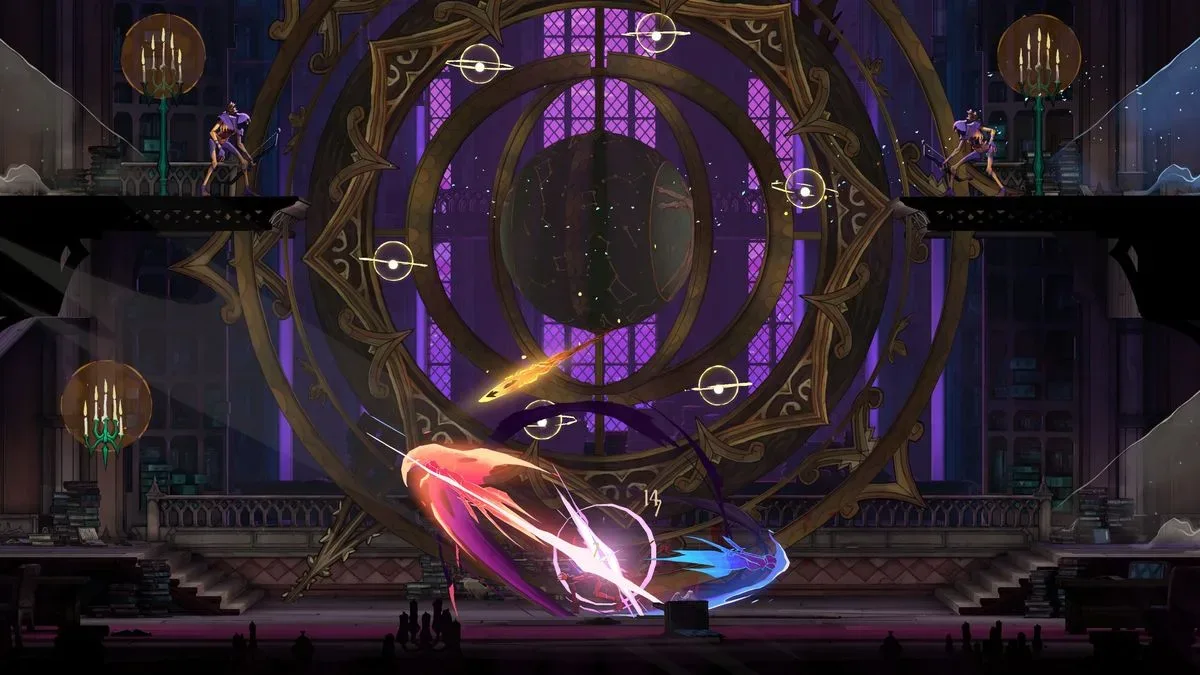
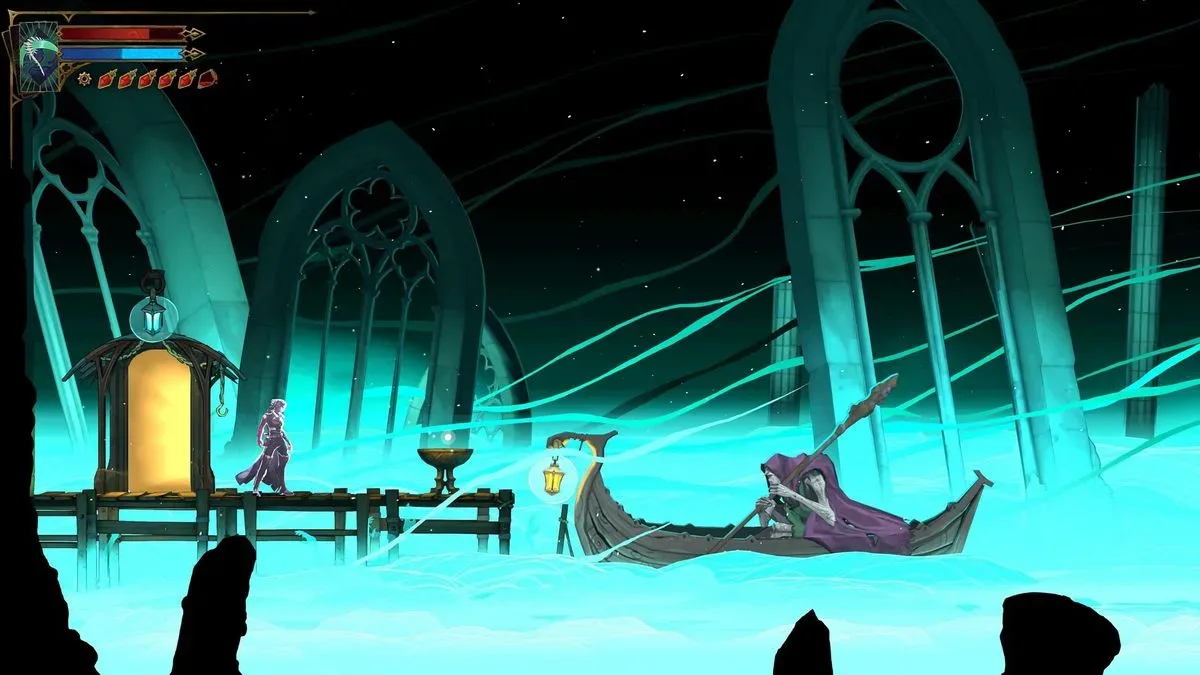
The environments are presented as grand, painted spaces: lightning cuts through arched windows, flames illuminate the city, and recognizable architecture is rendered with more reverence than the monsters occupying it might deserve. Those visuals do important work beyond simple scenery. A giant, maze-like game needs spaces that are memorable enough for players to mentally sort, revisit and associate with clues. Distinct landmarks can make a sprawling map more legible, even when the route through it is intentionally tangled.
Dracula’s Castle itself is said to emerge after a chain of investigation that seems to be leading toward a major boss confrontation. Instead, the expected fight is replaced by a cutscene. That is a meaningful midgame reversal: it asks the player to accept that a pursuit can have a narrative payoff rather than a mechanical one. The reveal reportedly earns that trust through strong animation and a suitably dark presentation, transforming a potential anticlimax into a statement of intent.
The larger point is that Belmont’s Curse does not treat exploration as downtime between objectives. Searching, reading the world and revising assumptions appear to be the objective. That will likely delight players who enjoy mapping a world in their heads. It may prove less welcoming to anyone who wants a clear quest line pointing from one encounter to the next.
Rose Belmont’s whip carries the movement system
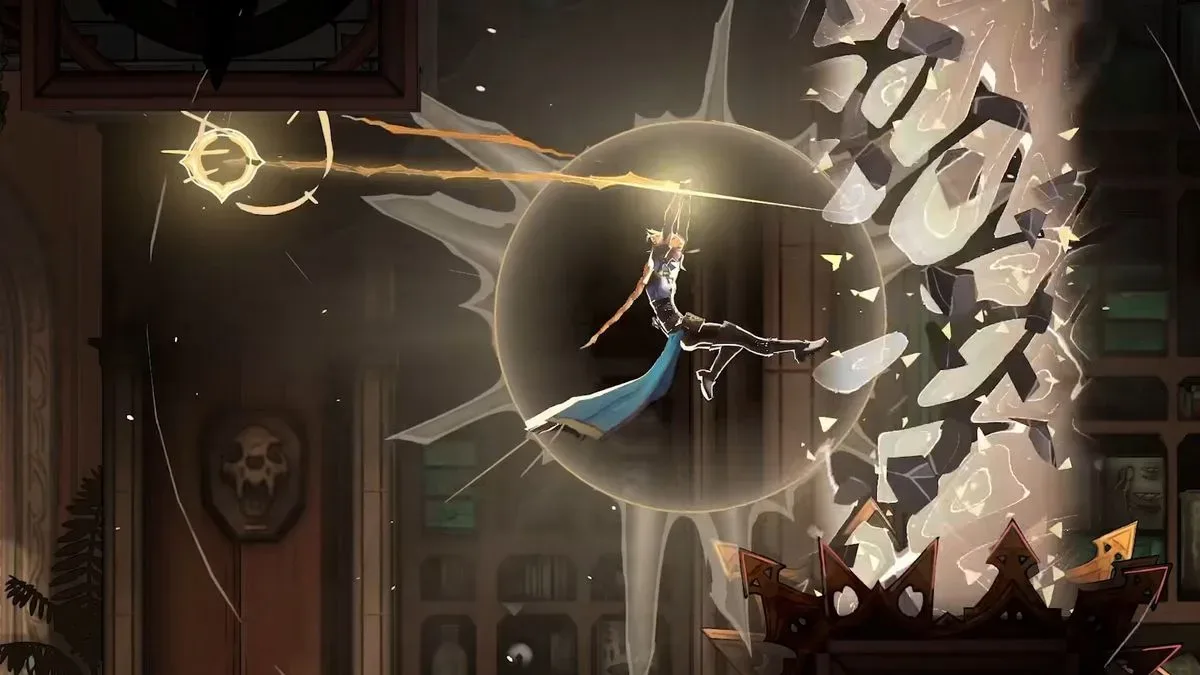
The game’s action is centered on Rose Belmont and the Holy Whip. It is not only an attack tool: it can connect to hooks, seize enemies and pull Rose away from hazards such as spikes. In practical terms, that gives traversal a responsive, improvisational quality. A whip that serves both combat and movement can make a room feel less like a sequence of platform jumps and more like a space to be manipulated.
Related coverage includes Castlevania: Belmont's Curse Review -- A Gothic Metroidvania That Rewards Curiosity.
The movement is described as having deliberate weight rather than effortless float. That is a significant distinction. Weight can make every jump, slide dodge and grapple feel committed, with more tension at the edge of a platform. It can also make a successful route feel earned. The design reportedly lands on the satisfying side most of the time, particularly during sequences where Rose can grapple an airborne enemy and descend into enemies below in one continuous attack.
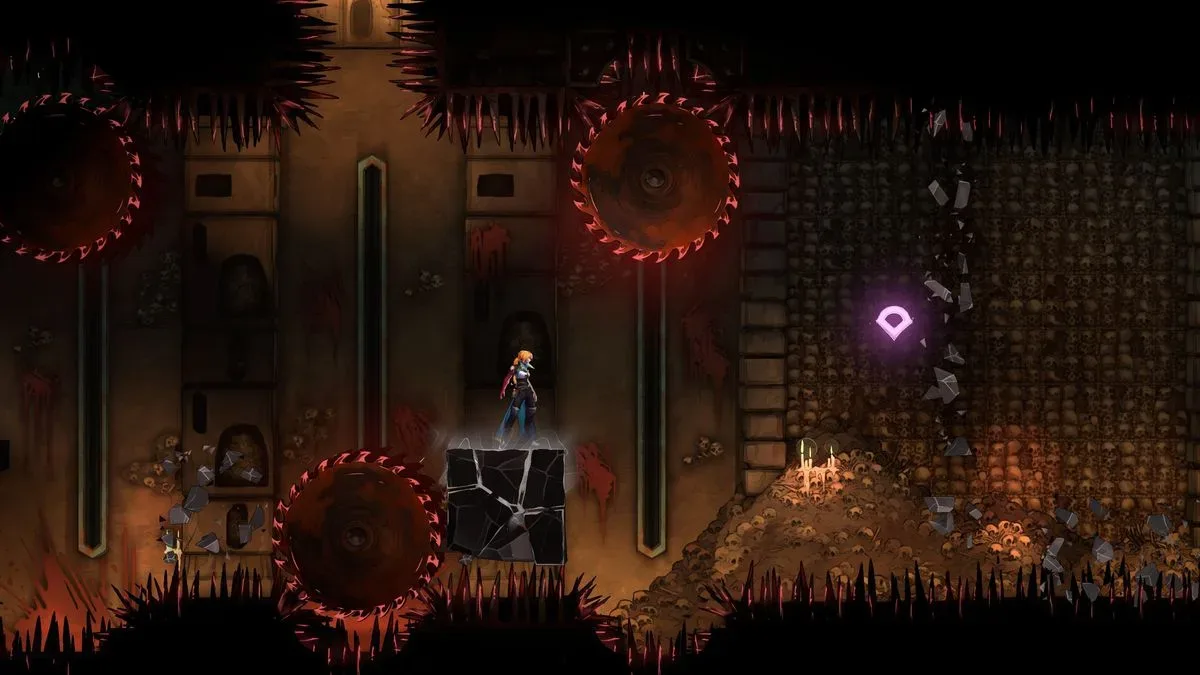
Traversal challenges are sharp enough to demand patience and precision, especially while pursuing hidden paths, but shortcuts provide an essential release valve. Shortcuts are more than convenience in this genre. They acknowledge that a difficult sequence has been mastered and prevent repeat visits from becoming chores. That rhythm—an intimidating route, then a permanent reduction in friction—is one of the clearest ways an exploration game rewards learning.
Belmont’s Curse also has ambush rooms and trap-filled areas, so the whip’s flexibility has to support survival as much as spectacle. The game is described as challenging without becoming needlessly punishing, a balance helped substantially by its systems for saving, clearing rooms and retrying encounters.
Combat is broad, and exploration supplies the arsenal
There are seven weapon families, each with four weapons, alongside an Arcana System that allows abilities and spells to be swapped to meet different enemy types. “Arcana” here refers to the game’s configurable magical or ability layer, not simply a fixed spell list. The benefit of a system like this is choice: a player can adapt an approach to a particular room, enemy group or boss rather than relying on a single favored weapon throughout the adventure.
One reported example is a sword-and-shield pairing that enables a charged dash through enemies. It sounds especially valuable for a runback, the repeat journey from a save point to the place where a player previously died or needs to try a boss again. Runbacks are often one of the most divisive parts of difficult action games. A tool that clears routine enemies quickly can reduce the irritation of retrying without reducing the pressure of the boss itself.
Importantly, weapons, magic and relics are earned through exploration rather than random enemy drops. That decision puts rewards under the player’s control. Instead of defeating ordinary enemies repeatedly in hope of a rare item, players are encouraged to investigate chests placed after demanding traversal sequences. It reinforces the game’s basic bargain: curiosity and mechanical skill are rewarded with additional options.
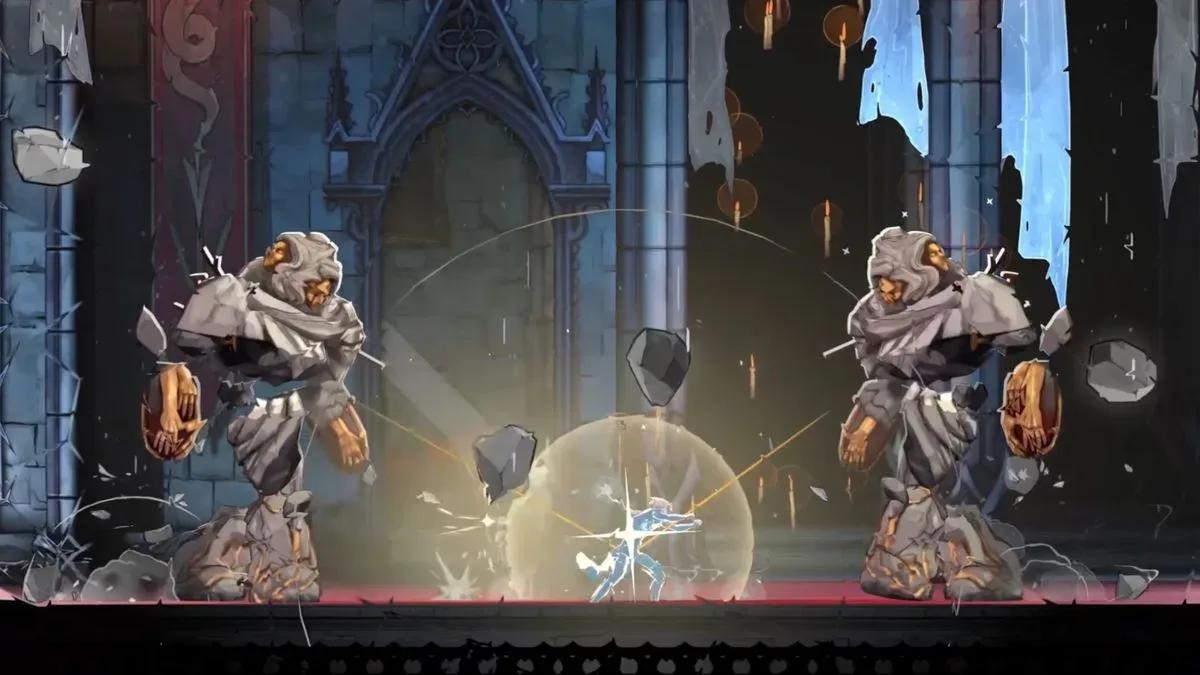
Enemies fill the rooms, but the available tools are reportedly plentiful enough that crowd control rarely becomes a dead end. This is a useful complement to the game’s denser puzzle design. If navigation is already asking the player to think carefully, combat benefits from offering several credible answers rather than demanding a single narrow build.
The boss hunt is the game’s boldest and riskiest puzzle
Progression relies on interpreting cryptic clues that lead to Tarot card bosses. The concept gives boss discovery its own dramatic texture; locating a confrontation can become as meaningful as winning it. But it also introduces the game’s most conspicuous rough edge. The clues are sometimes so unclear that searching for a boss may be harder than the boss fight itself.
That is not a trivial complaint in a game whose world is already large. Hours spent checking library walls or retracing routes can feel like authentic detective work when a clue eventually clicks. Without that click, the same activity can become friction: the player knows there is an answer but lacks a reliable way to distinguish a missed detail from an incorrect interpretation.
Talos stands out as an example of the more successful side of the formula. The fight reportedly combines evasive boss combat with timed traversal. After avoiding powerful attacks, Rose must race through another room’s traps against a countdown in order to find Talos again. The encounter uses the game’s platforming mechanics as part of the boss challenge instead of separating combat and exploration into isolated modes. That is an effective expression of what Belmont’s Curse is trying to be: a game where movement knowledge, environmental awareness and battle execution all matter at once.
Players who expect direct navigation should approach the clue system with clear expectations. Keeping brief notes on names, symbols, locations and unusual environmental details may be genuinely useful. Map markers still help, but the game’s design seems to reward recording why a place looked suspicious, not only where it was.
Accessibility tools soften the cost of experimentation
For all its demanding wayfinding, Belmont’s Curse includes several accessibility options: health potion capacity can be increased, attack damage can be boosted, and bosses can be retried without repeating the runback. Numerous Mirror of Life save points further reduce the penalty for failure. Enemies also remain defeated when a cleared room is revisited; they respawn only after death.
These options matter because they separate different kinds of difficulty. A player can preserve the challenge of solving a clue while reducing repeated combat cleanup, or maintain demanding platforming while giving themselves greater survivability in boss attempts. This is not the same thing as removing challenge; it gives players more control over which part of the challenge they want to engage with.
It is a useful reminder that options menus can be as consequential as weapon menus. Players preparing for a complex game should spend time reading them rather than assuming the default configuration is the only intended experience—an approach also worth considering whenever a game’s settings contain meaningful quality-of-life choices, as seen in this discussion of why players should read a game’s settings menu.
The caveat is that these tools do not automatically solve Belmont’s Curse’s navigation problem. More health or faster boss retries can reduce fatigue after the destination is known. They cannot clarify a riddle whose intended interpretation remains elusive. With fast travel reportedly limited despite the size of the map, players who dislike extensive backtracking may still find the structure demanding.
Castlevania identity beyond the familiar silhouette
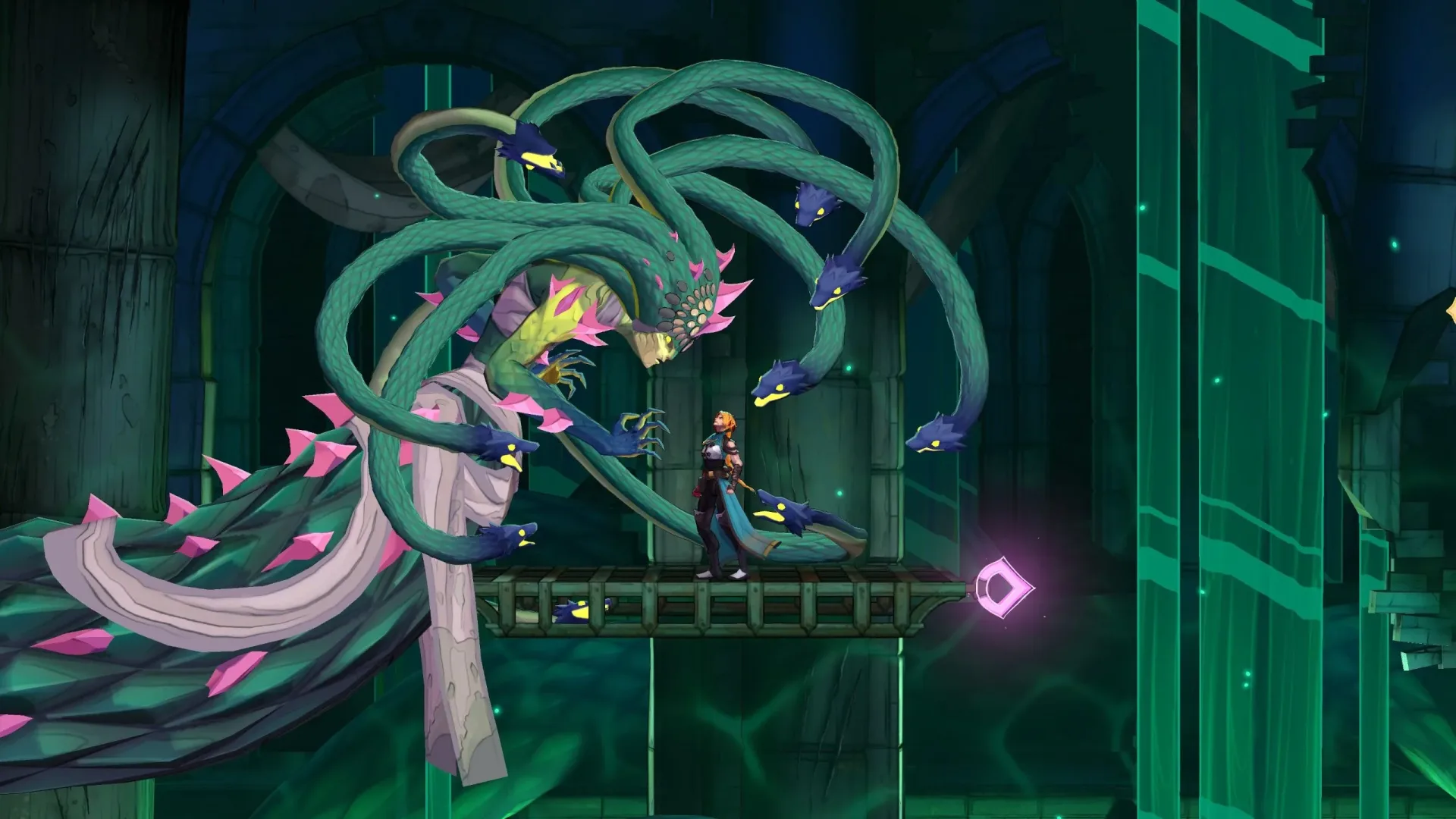
Belmont’s Curse continues the family drama from Castlevania 3: Dracula’s Curse. Leon Belmont returns, while Rose’s curse supplies a sense of impending danger. The game also uses recognizable series elements in ways designed to reward established fans: Alucard paintings point through Dracula’s Castle with directional swords, and Death, Medusa and Carmilla are among the returning foes.
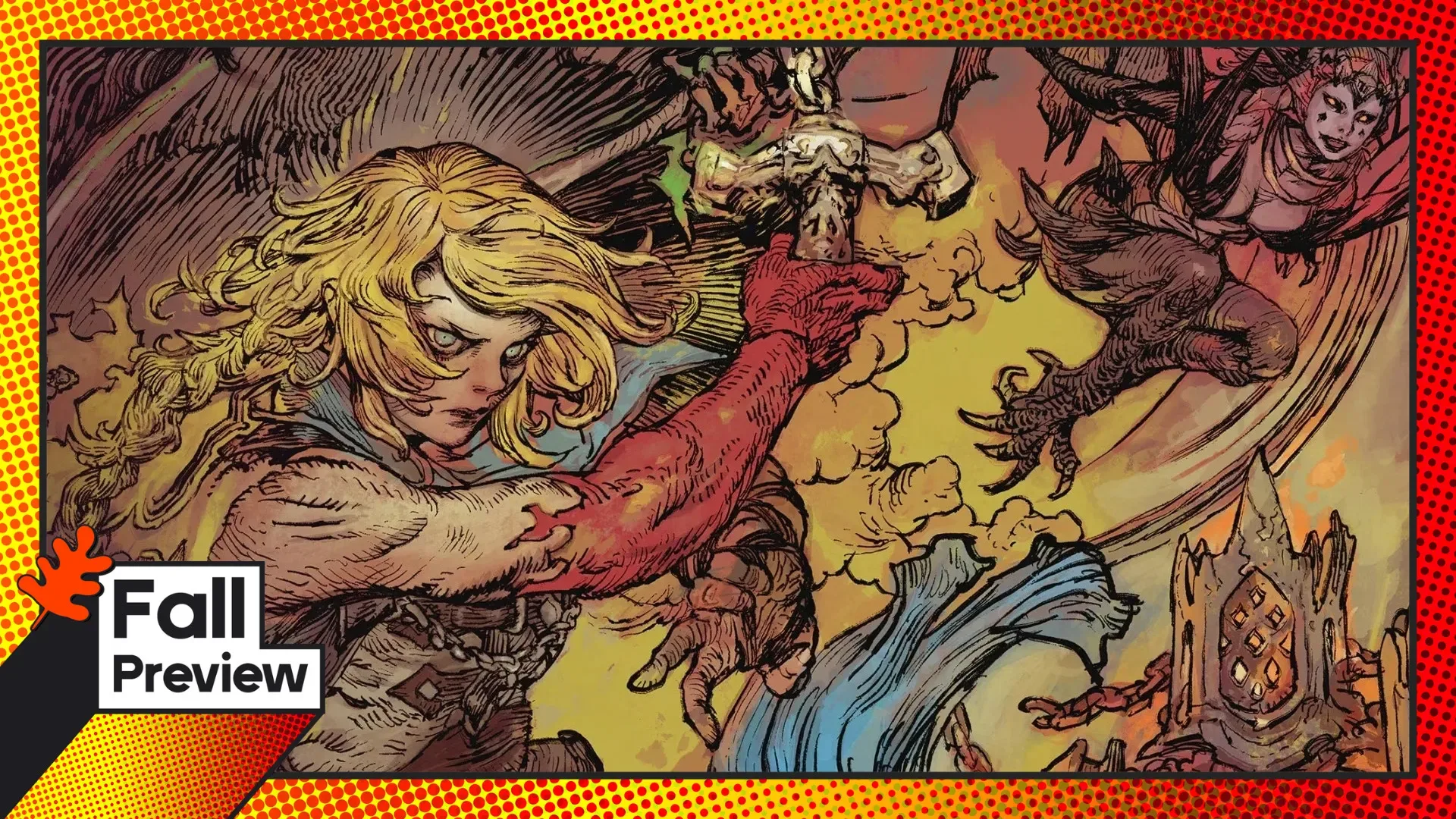
The visual style can be colorful and flashy enough that it may not immediately resemble the series’ older image. Yet the more important ingredients remain intact: a doomed Gothic atmosphere, family stakes, monsters behind beautiful architecture, secrets that demand another look, and a castle built as much for confusion as conquest.
The weakest reported area is the soundtrack. Its main motif is appropriately brooding, but much of the in-game music is said not to match the standard established by the visuals and story. Music is especially important in a Metroidvania because players spend long stretches revisiting areas; it needs to sustain atmosphere through repetition. A merely serviceable score therefore stands out more sharply beside lavish scenery and a high-stakes narrative.
Still, Belmont’s Curse sounds like a confident return shaped around active curiosity rather than nostalgia alone. It gives players a substantial combat kit, an expressive whip, dramatic locations and a set of accessibility tools that respect different thresholds for punishment. Its real wager is the cryptic clue structure. For players eager to take notes and embrace uncertainty, that may be exactly what makes the adventure memorable. For everyone else, it is the warning carved into the castle gate: bring patience, and perhaps a pen.