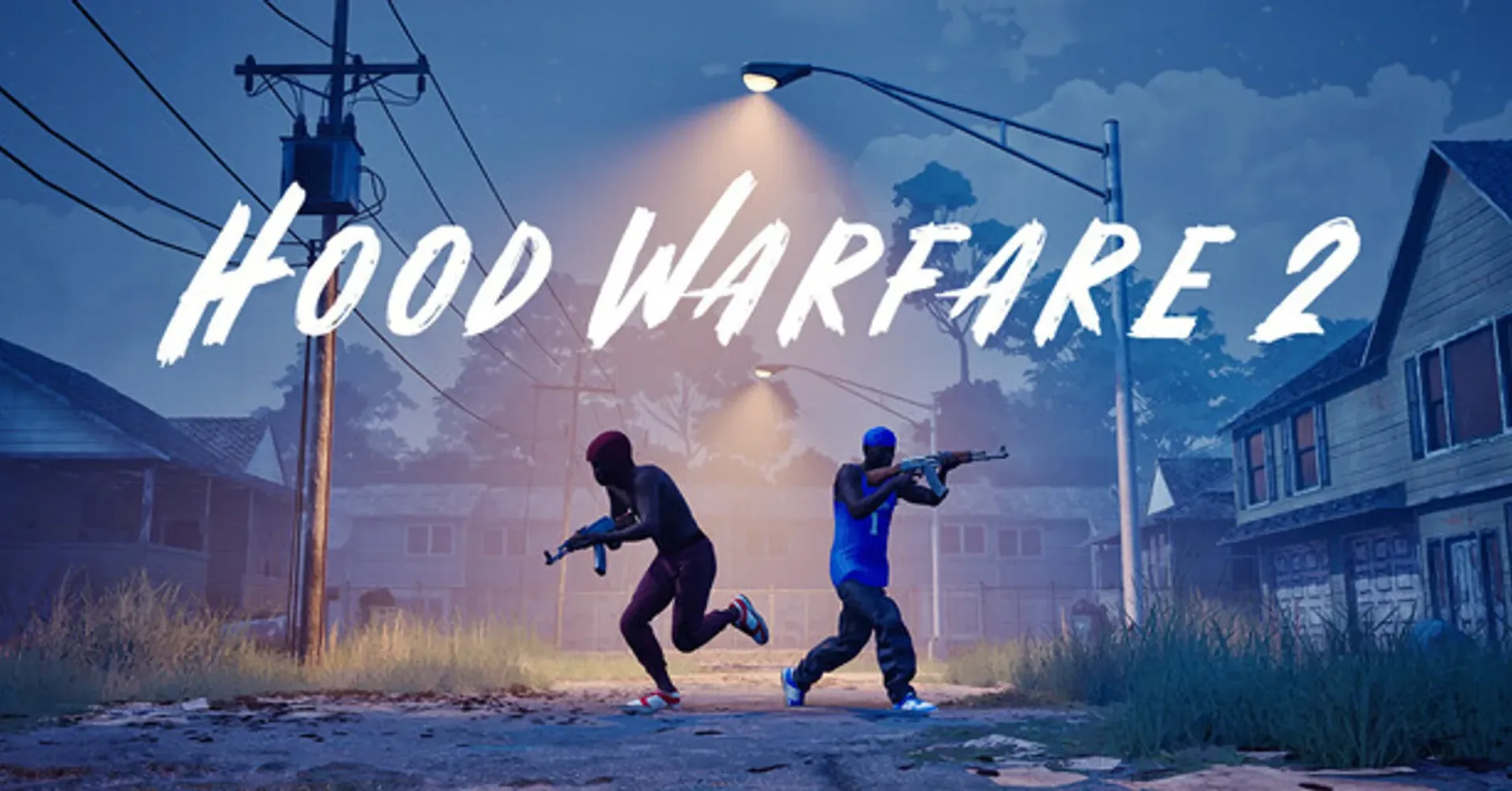
Hood Warfare 2, a multiplayer shooter attributed to Trapstar Games, has gone viral amid sharp criticism of its Chicago gang-war premise, dialogue and weapon naming. The game is described as borrowing the broad structure of a military-style online shooter while substituting familiar genre tools with references to policing, informants and drive-by shootings.
That substitution is the heart of the backlash. A UAV, short for unmanned aerial vehicle, is a common shooter-game support ability that reveals opponents on a map. Hood Warfare 2 reportedly replaces that device with a “snitch” mechanic. Likewise, a powerful aerial attack is reportedly reworked into a drive-by shooting. Those may sound like cosmetic changes in a genre built on exaggerated combat systems. But critics argue that they make real social harm, racialized stereotypes and a city’s experiences of violence into disposable multiplayer flavor.
The conversation is not simply that games contain guns, crime or fictional violence. Those elements have been part of the medium for decades. The more pointed objection is that Hood Warfare 2 appears to build its central joke out of recognizable cultural shorthand tied to Chicago and Black urban life, rather than using those references to support characters, conflict or a considered setting.
What the criticism is actually about
Online reaction has focused especially on reported voice lines, gun names and the game’s overall tone. The concern is that these details do not just depict a dangerous fictional world; they invite players to laugh at a collection of stereotypes. That distinction matters.
Depiction means showing something. Endorsement means presenting it as admirable. Satire means using exaggeration, irony or parody to criticize an idea or system. Mockery, by contrast, can reduce a person, community or real-world experience to the object of the joke. A game can include crime and still be critical of it. It can use humor and still give the people within its world interiority. The criticism directed at Hood Warfare 2 is that its reported mechanics and presentation land closer to mockery than satire.
That is also why an argument of “it is only a game” does not fully answer the complaint. Games are systems as well as stories. When an ability is named and rewarded, it is not merely placed in the background; it becomes part of the player’s repeated action loop. In multiplayer design, a killstreak is typically a reward earned through consecutive successful eliminations or similar performance. It exists to make a player feel momentum and power. Recasting that reward through real-world social labels changes the meaning of the power fantasy, even if the moment-to-moment mechanics remain familiar.
Critics are therefore responding to a design choice: turning loaded references into a progression reward, a tactical callout or a punchline. A setting is not neutral just because it is wrapped in competitive shooter rules.
Chicago is not interchangeable scenery
Using Chicago specifically raises the stakes. The city is presented in Hood Warfare 2 as the backdrop for a gang war, which critics say makes the game’s use of violence feel less like broad fictional action and more like commercialized caricature. A real place carries residents, neighborhoods and histories that cannot be reduced to one category of sensational imagery without consequence.
Related coverage includes ‘Hood Warfare 2’ Draws Backlash Over Chicago Gang-War Shooter Premise.
No game has to function as a documentary to be responsible. Fiction regularly compresses, invents and dramatizes. But creative license does not erase the question of what a work chooses to emphasize. If a game identifies a real city and then treats that city primarily as a container for gang-war spectacle, it asks players to recognize an existing place while withholding much of the humanity that makes the place real.
This is a practical issue for developers, not just an abstract cultural debate. Names, maps, character barks and reward labels are often treated as finishing touches during production. They are not. They communicate the game’s values quickly and repeatedly. A single line of dialogue may tell players whether a fictional setting is intended as a lived-in world or a costume assembled from references.
The reported criticisms of Hood Warfare 2 also include allegations from commenters about the company’s leadership and its relationship to the culture being depicted. Those claims should be treated carefully: the available information here does not independently establish Trapstar Games’ ownership or leadership. Even so, the larger question raised by players does not depend on proving any individual’s identity. It is reasonable to ask whether a team has approached a real community with care, researched perspective and meaningful context—and whether the final work demonstrates that care.
Why comparisons to Grand Theft Auto: San Andreas do not settle the issue
Some commenters have compared the dispute to long-running debates around major crime games, including Grand Theft Auto: San Andreas, or to military shooters such as Call of Duty. The comparison is understandable at a surface level. All can involve shooting, crime, violence and stylized depictions of dangerous places. Yet matching ingredients does not make works equivalent.
Context changes meaning. San Andreas is often cited in this discussion because it is a narrative game with named characters, a sustained story and a broader fictional world. It also employed voice talent from Los Angeles, adding lived cultural context to its presentation. None of that makes every element of the game beyond criticism. It does show why “both games have gangs” is an insufficient analysis.
A work can be heightened, comedic and violent while still allowing characters to have motives, relationships, contradictions and agency. It can let a location feel like a place rather than a target. Conversely, a game may have no explicit slur and still rely on demeaning shorthand if its only apparent use for a community is a narrow bundle of catchphrases and violent clichés.
The difference is not whether one title is “allowed” to depict a subject while another is forbidden. The difference is artistic framing: what the game wants the audience to notice, reward and laugh at. The strongest version of the criticism against Hood Warfare 2 is not that a Chicago-based action game is impossible. It is that this reported execution does not appear to offer enough texture to justify the references it borrows.
Viral attention is not the same as approval
Hood Warfare 2’s spread online illustrates a difficult modern reality for game makers. A provocative premise can become visible very quickly, but visibility is not necessarily consumer support, critical respect or durable interest. A game can be shared because people are amused, outraged, confused or concerned. Those are very different forms of attention.
For players, this is a useful reason to look beyond a short clip or an eye-catching label before amplifying a title. Short-form posts often strip out context, while outrage can make an obscure project appear more significant than its actual reach. At the same time, dismissing criticism as engagement bait can obscure the genuine issue: players are entitled to question why a game turns familiar stereotypes into systems designed for repeat use.
For studios, the lesson is more concrete. If a project uses a real city, a real social condition or a culture that has often been reduced to stereotypes, every layer of the design deserves scrutiny. That includes:
- the names used for weapons, perks and score-based rewards;
- the language characters repeat during play;
- what the game asks the player to find funny or satisfying;
- whether the setting has people and perspectives beyond its most marketable clichés; and
- whether outside cultural feedback is sought early enough to change the work rather than merely defend it afterward.
These are not constraints that make games less creative. They are tools for making a game’s ideas more deliberate. A shooter can be intense, ridiculous or satirical without treating a real community’s pain as an interchangeable prop.
The design language behind the dispute
It is worth paying attention to terminology because it reveals why Hood Warfare 2 is drawing a different response than a generic competitive shooter. Multiplayer games commonly rely on a clear language of incentives: players perform an action, receive a score or streak reward, then gain an advantage. Designers call this an incentive loop. The loop is powerful because it teaches players what the game considers valuable.
When that loop is connected to a loaded cultural reference, the reference becomes functional rather than decorative. It is no longer simply a scene-setting detail a player can ignore. It is a button press, an alert, a map marker or a reward for success. That is why the reported “snitch” and drive-by replacements have drawn attention. They allegedly place stereotypes inside the game’s core grammar of competition.
There is also a difference between specificity and stereotype. Specificity gives a fictional place texture: distinct people, perspectives, routines, language and conflicts that do not all point to one predetermined image. A stereotype shortcuts that work. It uses a ready-made signal because audiences already know the assumption it is trying to invoke. The latter can be efficient, but it is not neutral—and a game that relies on it may find its audience questioning who the joke serves.
As coverage of games continues to include both major releases and smaller projects—such as this recent report on Deep Dish Dungeon’s launch across Xbox, PC and cloud—the Hood Warfare 2 debate is a reminder that a game’s scale does not determine whether its creative choices deserve examination. Small projects can reach large audiences once clips circulate, and large arguments can begin with a single mechanic or line that reveals an entire approach to a setting.
What remains unclear
The available details establish that Hood Warfare 2 has drawn online condemnation for its premise and presentation, but they do not provide a complete account of its platforms, business model, development process or the intentions of its creators. They also do not establish the ownership claims made in some social-media criticism. Those gaps matter, and they should not be filled with assumptions.
What is clear is the nature of the public objection: critics see a multiplayer shooter using Chicago gang-war imagery, reported stereotyped dialogue and gamified references to real violence in a way that feels exploitative rather than observant. Whether the title’s makers respond, revise elements or provide more context may shape the next phase of the discussion. For now, the backlash is a useful prompt to evaluate games not only by what they let players do, but by what they ask players to treat as entertainment.