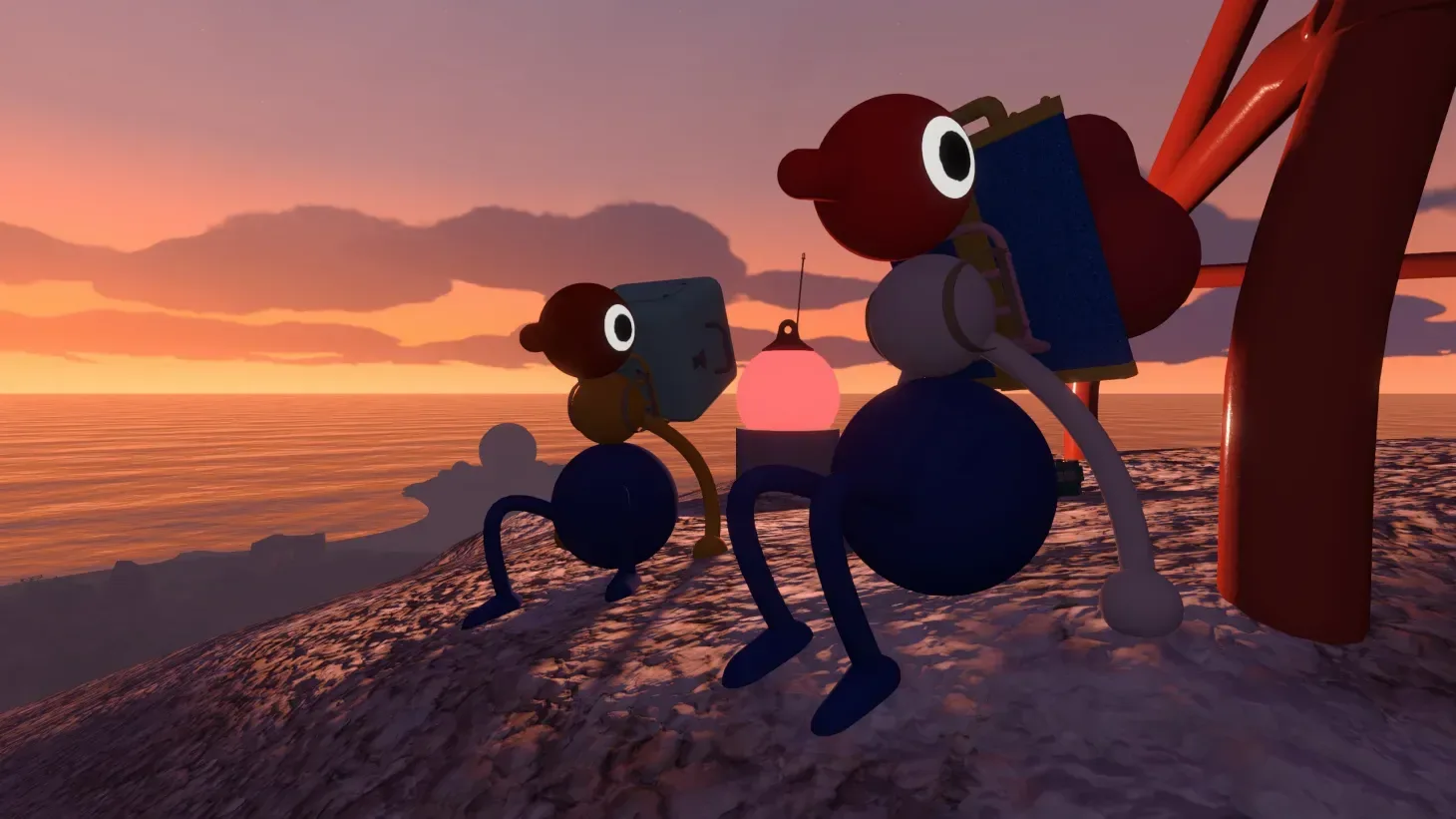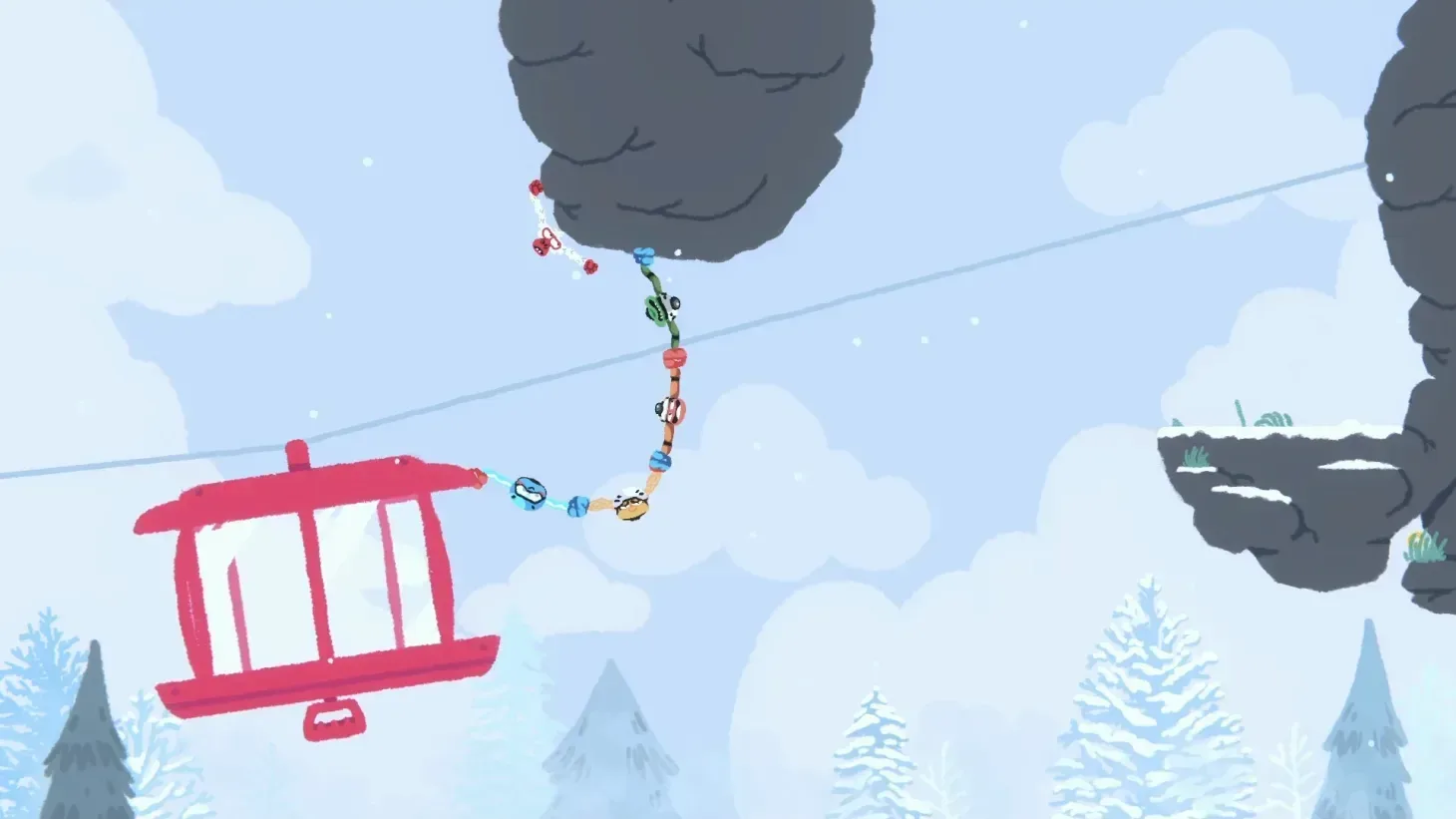
There are co-op games that turn a missed jump into a disaster, and then there are co-op games that turn it into the evening’s best joke. Heave Ho 2, from Le Cartel Studio, firmly belongs in the second camp. Its players are floating heads with two extremely grabby arms, and the simple act of getting anywhere can become an improvised circus act: one person dangles from a ledge, another is holding on for dear life, and a third confidently swings into a gap that was never remotely makeable.
That absurdity is the sequel’s immediate appeal. Yet it works because the underlying controls appear to be much more dependable than the spectacle suggests. Each hand can latch onto nearby terrain or objects with its own button, so progress comes from timing, coordination, and the willingness to trust that a teammate understands the difference between “pull me up” and “launch me into the horizon.” Failures are frequent, but the low cost of a setback keeps frustration from becoming the defining mood. Instead, the mess is part of the game’s social machinery.
As a multiplayer-only experience, Heave Ho 2 is built around shared problem-solving rather than individual heroics. Sometimes a group must make a long living chain of arms to cross a space. Other stages let players advance in sequence, handing off momentum and footholds as they go. Either way, communication matters, and the ridiculous animations make even a competent plan look like it was devised by a committee of panicked cartoon sea creatures.
That is a pretty fine recipe for a sofa session. It also fits remarkably well with the survival etiquette explored in The Unwritten Rules of Couch Multiplayer, Now Written Down: patience is useful, blame is usually funny only in moderation, and the person yelling “I’ve got you!” should be assessed by results rather than confidence.
A campaign that keeps changing the assignment
The campaign spans roughly 60 levels spread across eight worlds. Its strongest quality is that it does not settle for one basic traversal idea and repeat it until everyone’s hands metaphorically cramp. Reaching an exit is still a common goal, but the setting-specific twists give the campaign a broader range of challenges.
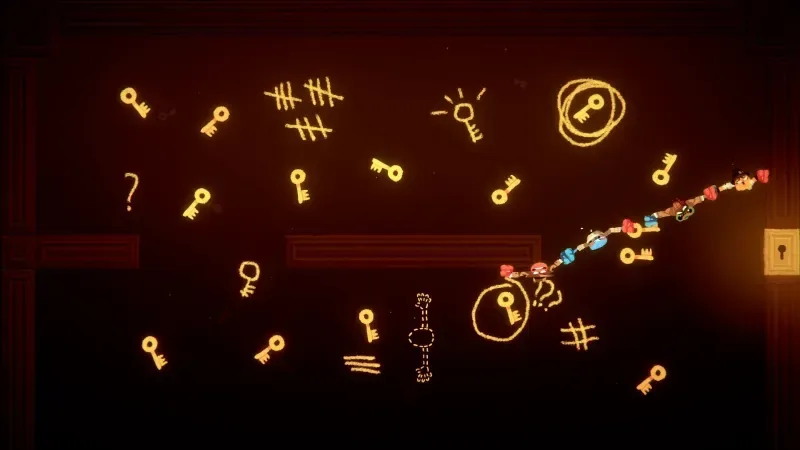
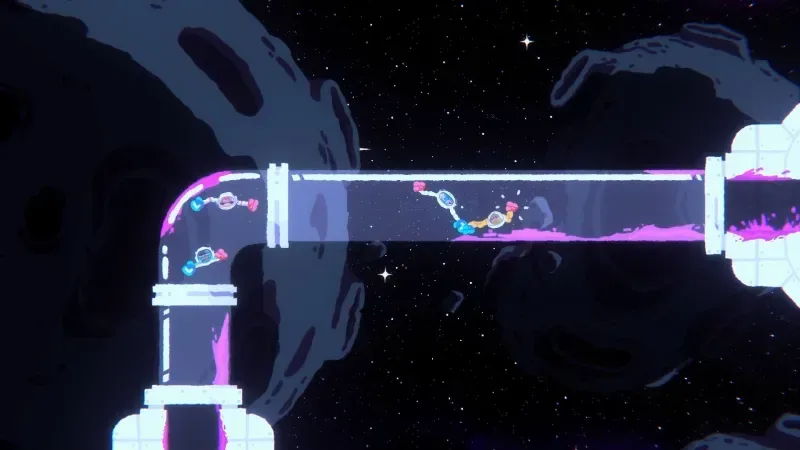
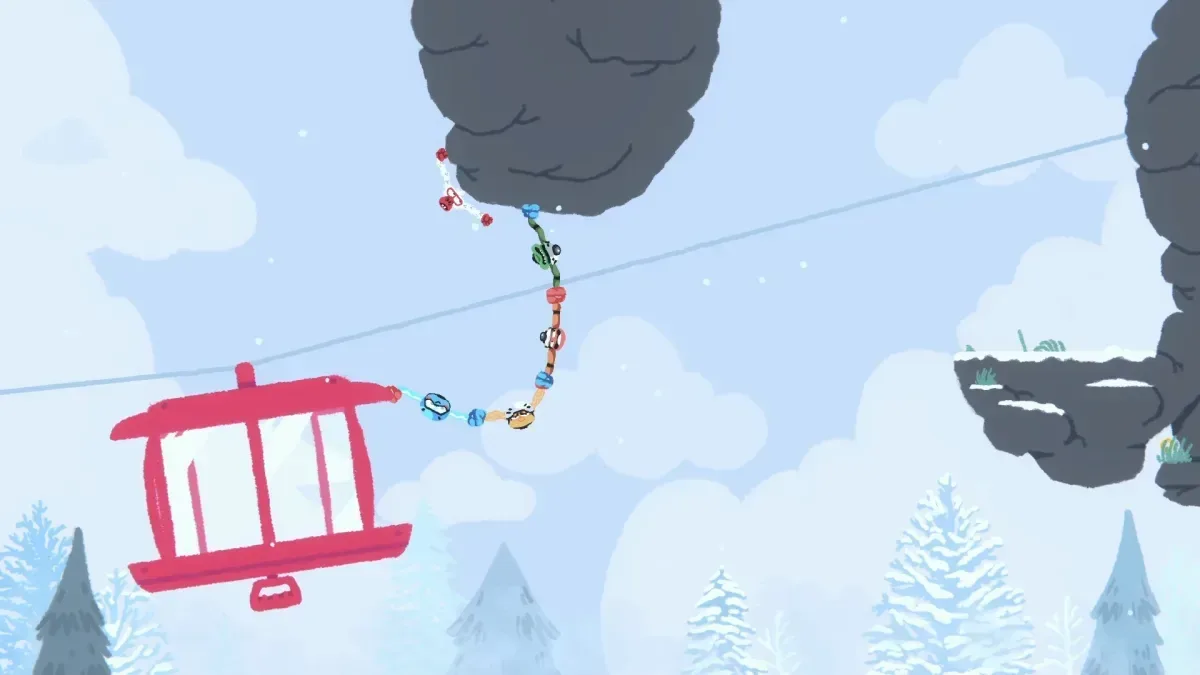
Flying High sends players through icy mountain spaces involving ski lifts and gondolas. Manor Mysteries changes the rhythm by hiding keys needed to open an exit. Spacebound Squad introduces zero gravity and, at points, asks the group to cooperate while piloting a spaceship. Those concepts are a significant advantage for a physics-driven co-op game: the central grabbing system remains recognizable, while the group has to rethink how to use it.
The result is a campaign that can regularly produce the wonderful “wait, what are we supposed to do here?” moment before the puzzle clicks. Heave Ho 2’s best ideas ask a team to learn a new kind of shared movement without burying that learning under complicated controls. The challenge is not memorizing a massive command list. It is understanding spacing, weight, swing direction, timing, and the deeply unreliable human beings currently attached to your arms.
When experimentation becomes awkward
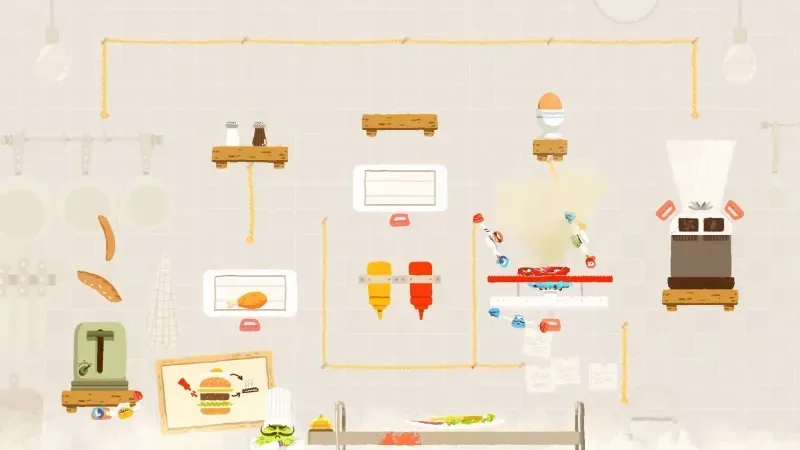
Not every detour works as smoothly as the game’s core climbing and swinging. Chef’s Orders has players stack ingredients on a plate, and its use of larger objects can feel at odds with a system that is more naturally suited to moving bodies or smaller items. Physical comedy can become physical inconvenience when an oversized ingredient demands too much fiddly positioning.
Medieval Travels presents a related issue in stages built around transporting a king seated on a throne without tipping him. It is an inventive premise, but apparently not always an intuitive one. The game can eventually offer help through a cat drone after a group has struggled for a prolonged stretch, essentially supplying an escape hatch when the intended solution refuses to reveal itself.
Those weak spots do not erase the value of trying unusual objectives. In fact, they point to a sequel willing to risk a few awkward experiments instead of simply serving a longer sequence of familiar swings. The trade-off is that a group may find itself longing for a clean platforming problem after trying to delicately manage something unwieldy. Heave Ho 2 is at its best when its strange physics are a tool for movement; it is less convincing when the same physics become the entire obstacle.
Optional goals make the short route less final
A straightforward campaign completion takes around eight hours, but the level structure leaves a lot of room for a group that wants more than a trip to the credits. Stages include two or three optional goals. These can involve beating a target time, locating unusual hands to grab, or squeezing into concealed silhouettes. There is also an equippable camera used for additional photo tasks, often asking the party to set up deliberately silly scenes.
That extra layer is important. Physics co-op games can be excellent in the moment yet easy to abandon once a group has seen every stage. Here, the objectives and extensive achievement list give players a reason to revisit old levels with new priorities. A stage that was once a barely controlled scramble to reach the finish can become a coordinated speedrun attempt, a scavenger hunt, or an excuse to engineer an oddly specific photo.
It is a smart answer to the campaign’s modest scale. Completionists may find substantially more to do than players who merely clear each route, while more casual groups can ignore side goals until they want an excuse to come back. This kind of replay-friendly structure is particularly welcome in a party game, where a new mix of friends can make the same obstacle play out very differently.
Unlocks designed to help the team
Objectives feed an unlock system that includes both cosmetics and useful equipment. The cosmetic lineup contains crossover looks including an Among Us Crewmate and Henry from Kingdom Come: Deliverance II. They are a natural match for a game where visual nonsense is a feature, not a side effect.
The more interesting rewards are the tools that change how teammates can assist each other. The Ima Rock can freeze a player in midair, allowing that player to function as a temporary platform. Arm spray extends an ally’s reach, helping them catch a distant surface. An umbrella supports a Mary Poppins-style float. These are not simply personal power-ups aimed at making one player look clever; many of them encourage groups to create opportunities for one another.
That design choice reinforces the co-op identity at the center of Heave Ho 2. A great rescue is more satisfying when it happens because someone set up the rescue, not because one player activated an all-purpose get-out-of-trouble button. The one notable pacing concern is that some of these mechanical unlocks arrive relatively slowly. The umbrella, in particular, may not appear until players revisit earlier stages, even though it sounds like the sort of toy many groups would enjoy experimenting with during an initial campaign run.
Showdown is a lighter distraction
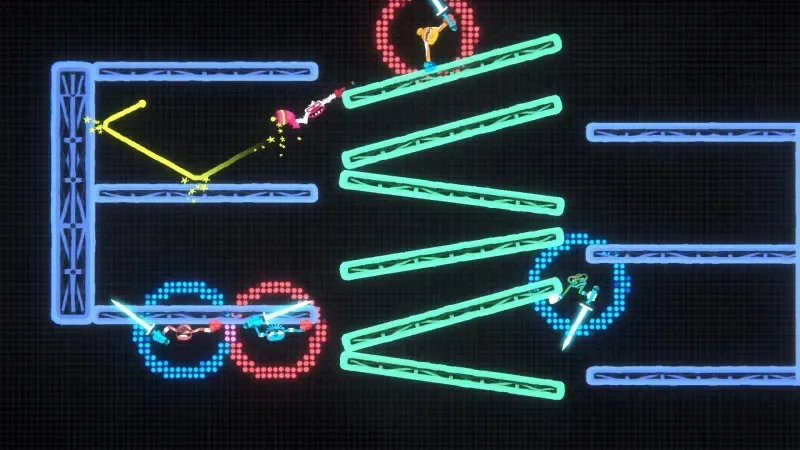
Beyond the campaign, Showdown offers competitive matches on a rotating selection of maps. Its three objective types are races, survival contests, and a dash to grab a handle first. The first player or team to earn five wins takes the match.
It is a serviceable change of pace, especially for a group wanting to turn cooperative competence into friendly sabotage. Still, its rules seem limited compared with the campaign’s broad selection of scenarios. The handle-grab objective is effectively another race, and Showdown does not provide the same incentives to return repeatedly as the main levels’ optional challenges and unlock progression. It is best viewed as a brief palette cleanser rather than a second pillar of the package.
Built for the stories groups tell afterward
Heave Ho 2 succeeds because it recognizes that a party game needs more than slapstick. The slapstick gets people laughing; clear, responsive control and thoughtfully varied level design give that laughter somewhere to go. A team can improve, devise strategies, chase optional tasks, and pull off a rescue that feels genuinely coordinated, even if the screen image suggests a pile of heads attempting competitive gymnastics.
There are frustrating worlds, a few design gambles that do not land cleanly, and a competitive mode unlikely to dominate anyone’s schedule. But the core campaign sounds well equipped for several afternoons with friends or family. It makes failure quick, makes cooperation meaningful, and makes a bad plan entertaining enough that players may immediately attempt it again. That is the special strength of goofy co-op: disaster is not a detour from the fun. Disaster is the fun, provided everyone can grab on before the next cliff.