Minecraft Dungeons II is not trying to turn itself into Minecraft proper, and that remains both its defining oddity and, mostly, its strength. The action-RPG sequel retains the blocky visual language and familiar hostile mobs of its parent game, but it still has no mining or crafting—the two systems many players most closely associate with Minecraft. Rather than correcting that mismatch, the sequel leans harder into its own identity: an accessible, quest-driven dungeon crawler built to make local co-op feel welcoming.
Released September 29, the game follows the original Minecraft Dungeons with a larger structure, more equipment choices and a more tangible sense of place. It appears especially well suited to an adult-and-child pairing, where one player can help keep momentum moving while both still have meaningful decisions to make in combat and gear selection. That is a narrower ambition than competing for the attention of veteran action-RPG players who live for intricate build spreadsheets, but it is a sensible one.
The important question is not whether Dungeons II has the dense systems of a genre heavyweight. It does not seem designed to. The more useful question is whether its new ideas give two people enough shared goals, discovery and light strategy to sustain a campaign together. On that front, the sequel’s expanded world, separated armor slots and complementary ability setups point to a notable step forward—though technical issues observed in a pre-release Xbox build make caution sensible.
A sequel built around approachable co-op
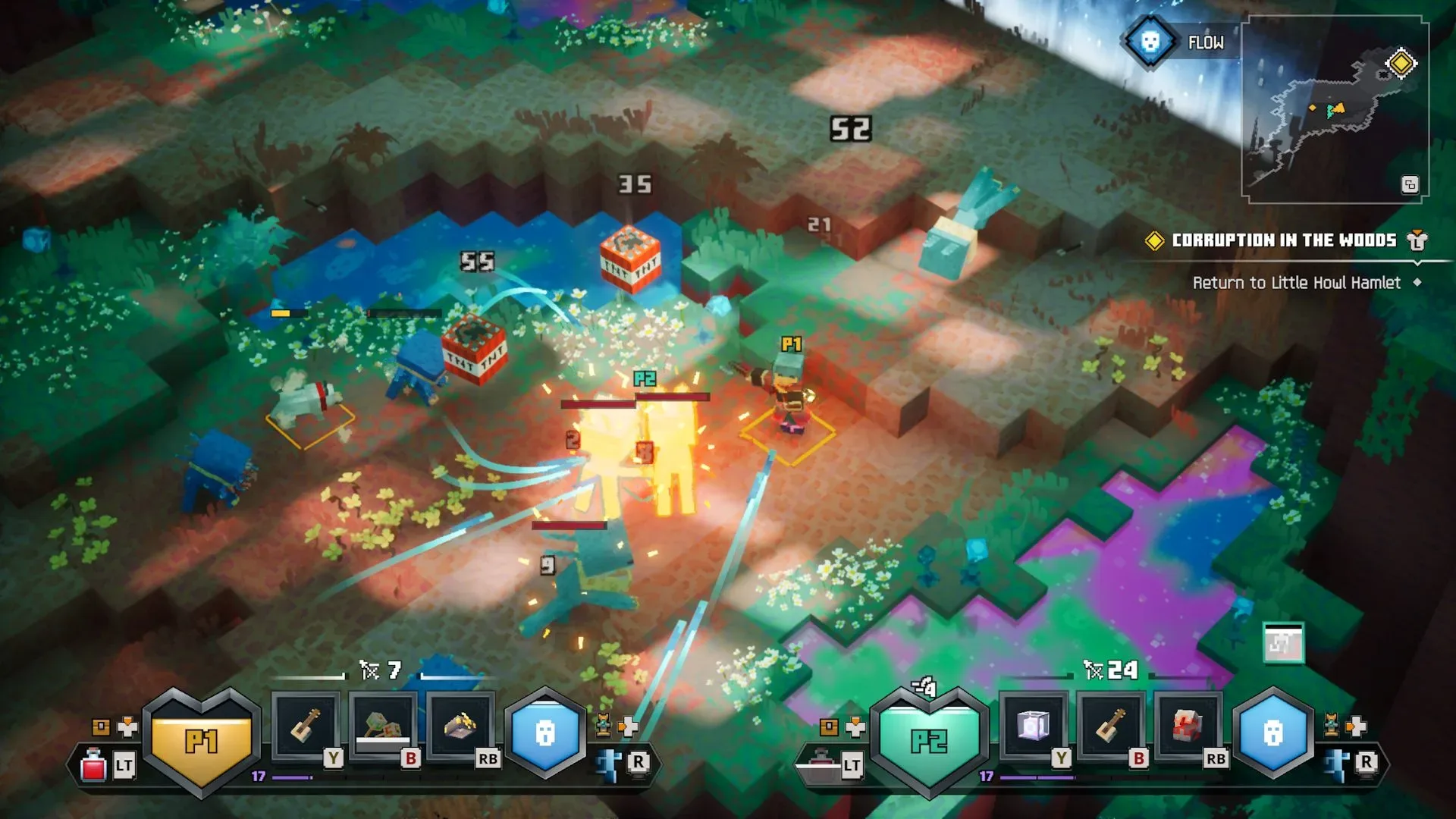
An action-RPG, or ARPG, generally centers on real-time combat, enemy-filled environments, equipment drops and incremental character improvement. Minecraft Dungeons II uses that framework in a deliberately uncomplicated form. Its interface is straightforward, its route guidance keeps objectives visible, and its difficulty settings can apparently make the flood of enemies either forgiving or demanding.
That scalability matters in a family setting. A younger or less experienced player can have room to enjoy charging through mobs without being constantly punished, while a group looking for more pressure can raise the difficulty and make positioning, revivals and coordinated abilities matter more. This is not complexity for complexity’s sake; it is flexibility around a shared activity.
Its cooperative appeal also comes from the kinds of small negotiations that emerge naturally in a loot game. Who gets the better boots? Does one player equip an attack tool while the other chooses a supportive effect? Which route looks more likely to hide a chest? None of those questions demands a guide or an advanced grasp of RPG theory, but they encourage players to talk, react and celebrate each other’s discoveries.
For people considering the game as a household co-op option, that distinction is practical. A more elaborate ARPG can create a knowledge gap when one player understands every stat interaction and the other is simply trying to follow the action. Dungeons II seems to keep the barrier low while offering enough room for partners to settle into useful roles.
Brave Haven gives quests a broader home
The biggest structural change is Brave Haven. The first game’s hub was primarily a compact launching point for missions. Brave Haven is presented as a much broader, explorable map: a place to locate main quests, side activities, secrets, loot chests and characters across several villages. Players can also enter longer dungeons from this area.
Related coverage includes Minecraft Dungeons II Builds a Bigger, Better Co-Op Adventure.
That shift may sound subtle, but it changes the rhythm of an ARPG substantially. Selecting an isolated mission from a hub is efficient, but it can make the journey between battles feel abstract. Letting players meet people who need help gives individual tasks a clearer setup, whether the request involves rescuing someone important to them or helping bees find better hive-building space. The goal becomes more than a marker on a menu.
Brave Haven also includes a generous tram system for reaching quest markers. That should be helpful for a mixed-skill group: players can move quickly toward the next activity when attention is waning, or choose to travel on foot and fight through enemies for extra loot. The latter choice reinforces a core ARPG loop—risking more encounters to gain more drops—without imposing it on everyone at all times.
In other words, the larger hub does not necessarily mean an exhausting open world. It sounds more like an “open-ish” connective space, providing exploration and a sense of continuity while keeping the game’s purpose clear. That is a good fit for a family-focused adventure, where the next goal needs to be easy to understand even if players have not returned for a few days.
The Sift is a colorful detour with a limited role
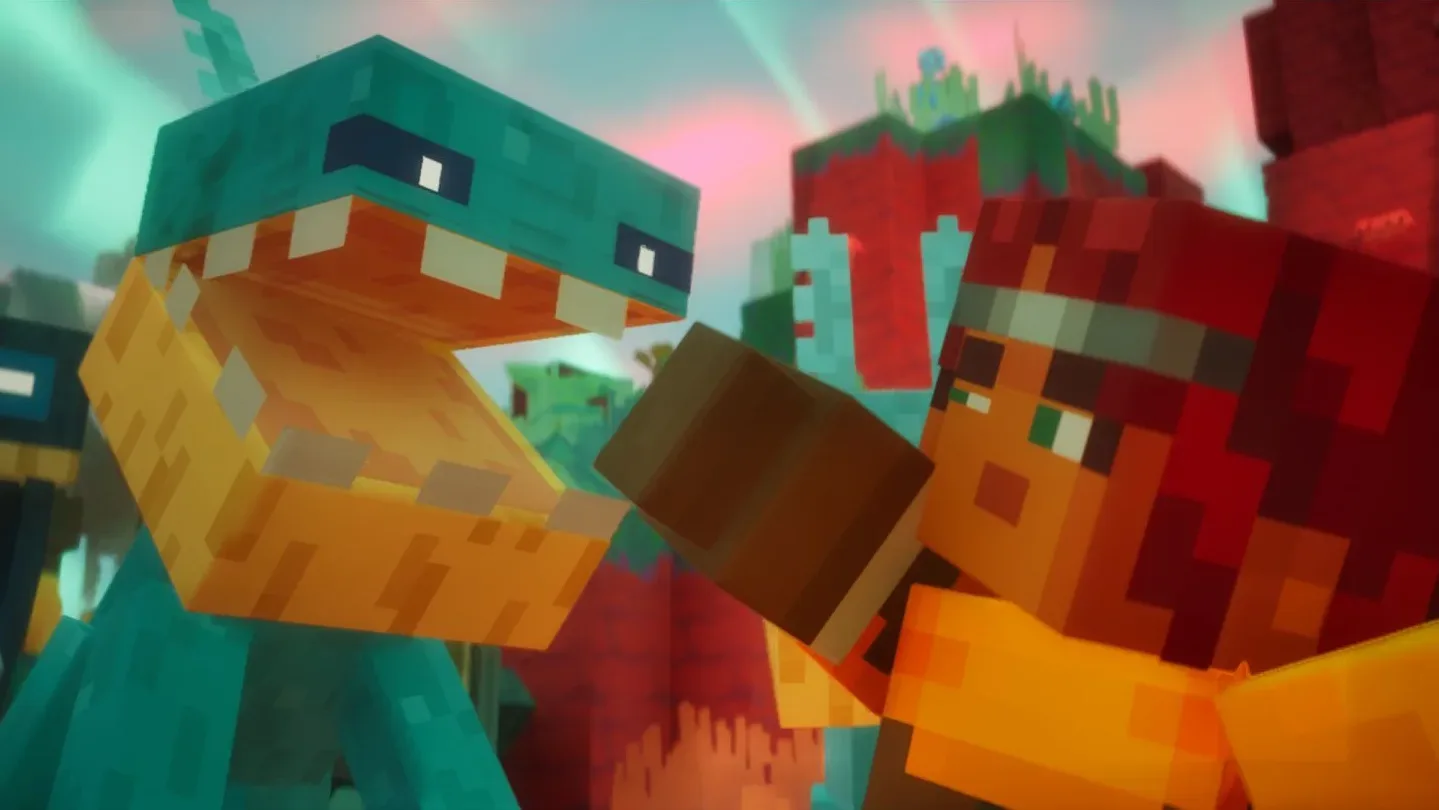
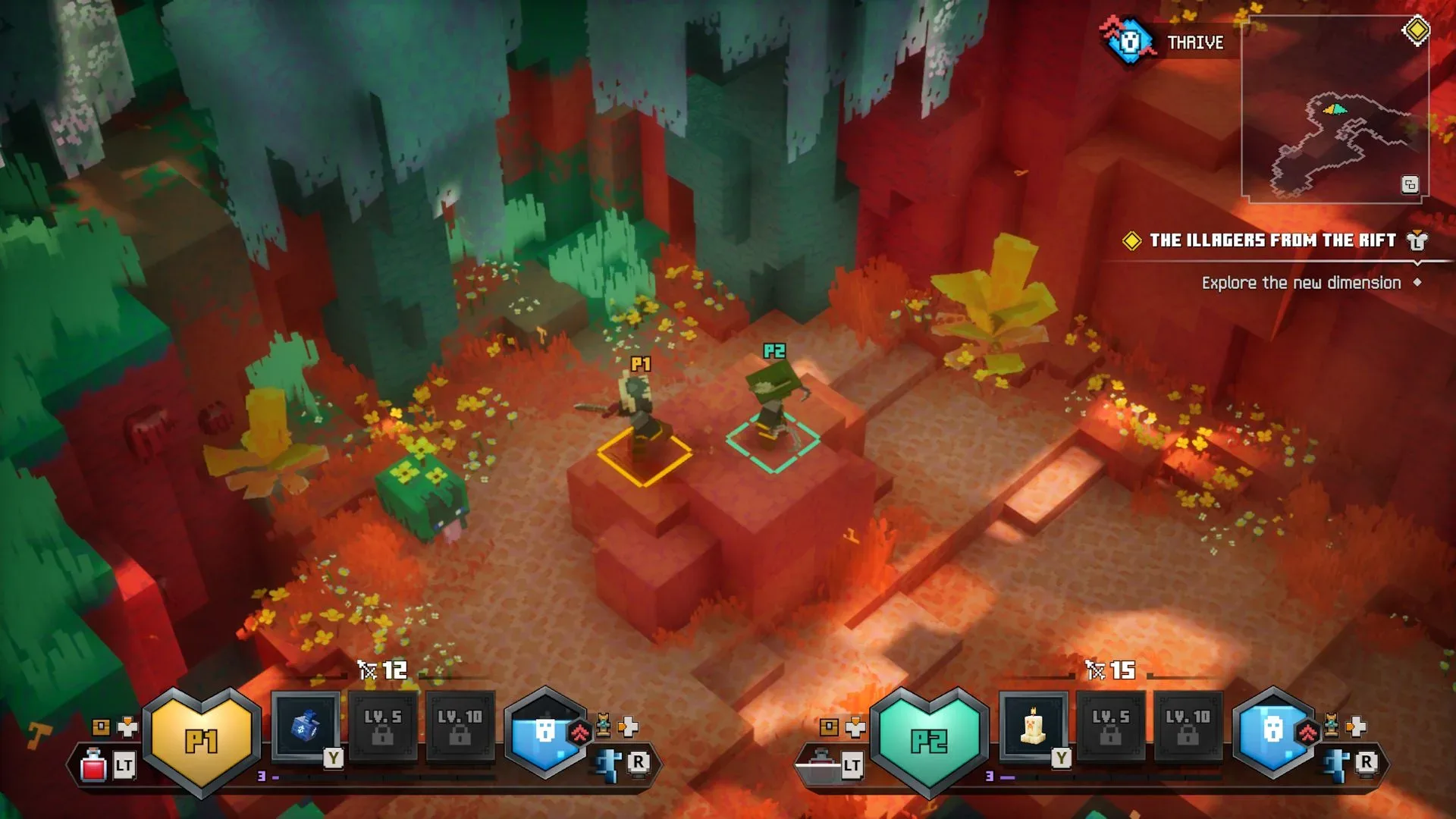
Brave Haven is also where players find rifts into The Sift, a new dimension linked to the story’s spreading soul corruption. The Illager High Council has opened portals and threatens the Squid Coast, driving the creation of Brave Haven and setting players on a mission to close these rifts. Familiar Minecraft enemies—including zombies, skeletons, slimes and Endermen—remain part of the opposition, while the Harmonizer is identified as a new Eldritch threat.
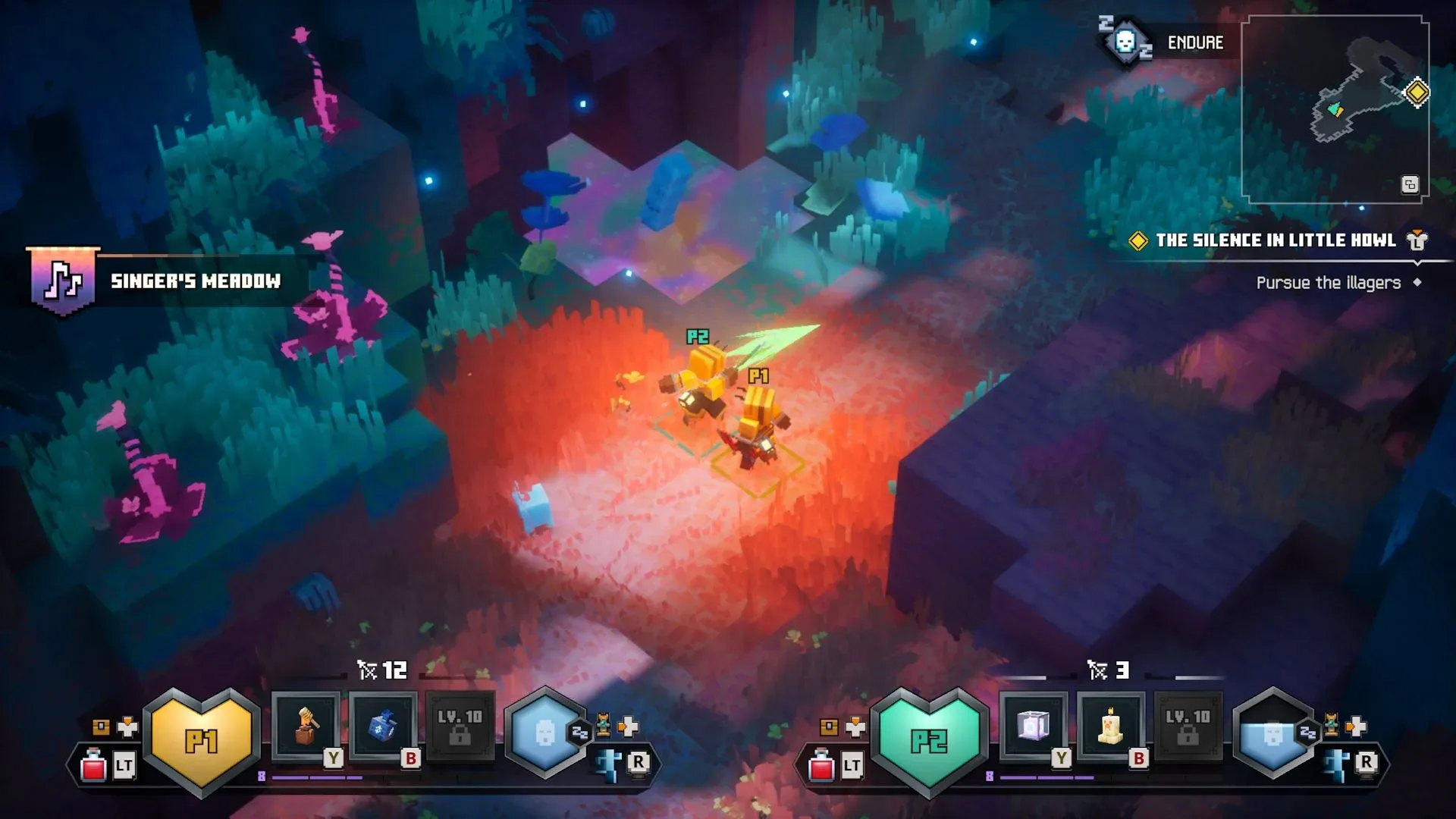
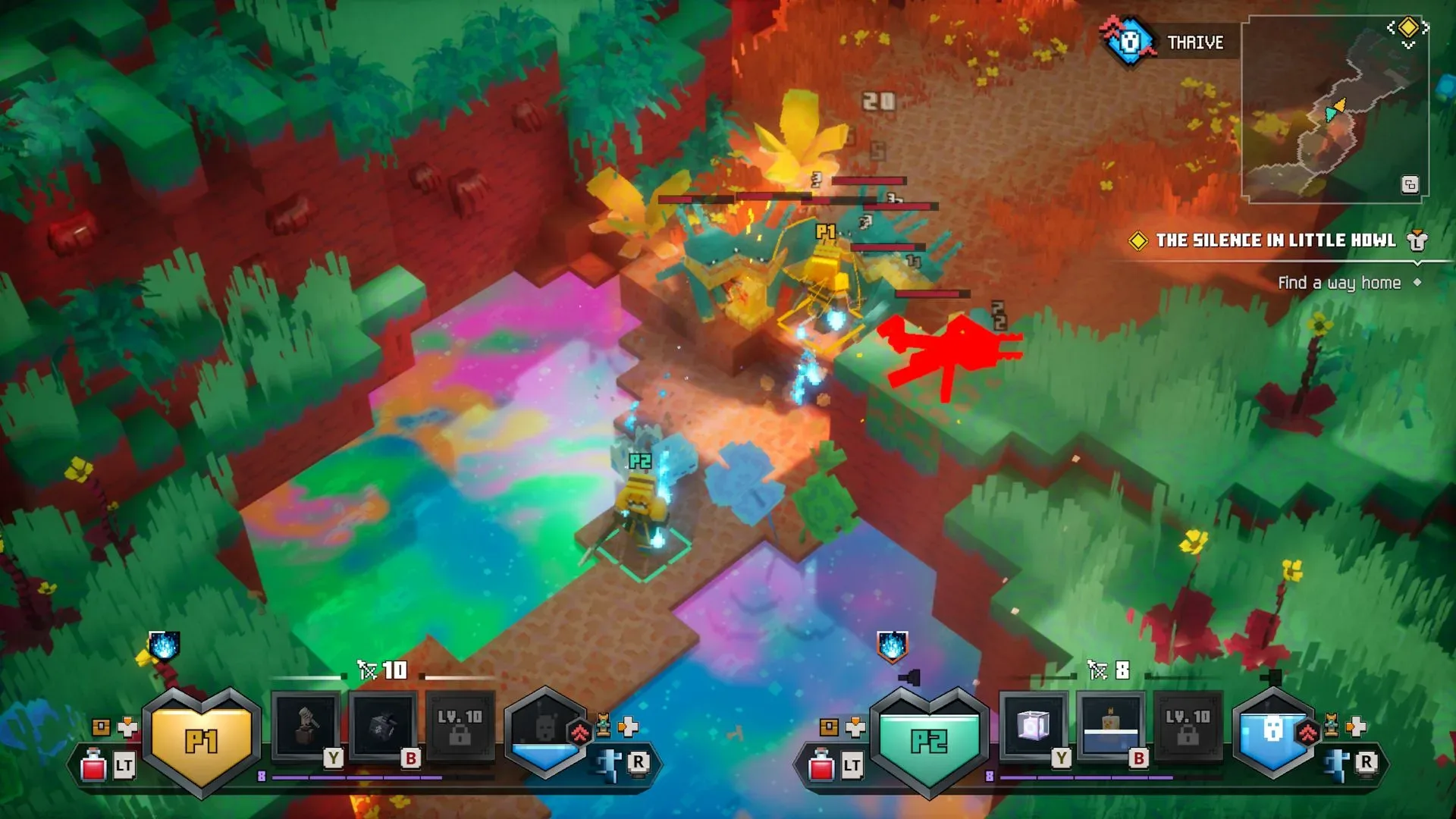
The Sift’s visual identity is its most immediately distinctive feature. Rather than matching the gloomier atmosphere associated with the Nether and the End, it is described as a blue-and-pink fantasy space with rainbow streams, bluish grass and unusual creature designs. It includes both friendly and aggressive inhabitants, as well as blue rabbits that can stack themselves into precarious towers.
The visits are reportedly short: enter a rift, battle through a brief section, emerge on the other side and close it. That means players should not expect The Sift to function as a massive second campaign region within Dungeons II. Still, short excursions can work well in the game’s structure. They offer a visual change of pace and a compact side challenge without disrupting the wider quest flow.
There is an intriguing wider connection: The Sift is expected to arrive in Minecraft sometime in 2027. Its appearance here first does not, by itself, establish why the timing differs or what it means for either game’s plans. What is clear is that it lets Dungeons II introduce a colorful, unusual setting while remaining a very different kind of game from the survival-and-building original.
More armor and talismans add choice without demanding a dissertation
The sequel’s equipment changes are where its progress is easiest to quantify. Armor was previously a single item in Minecraft Dungeons. It is now divided into four separate pieces: helmet, chest, leggings and boots. Because each part drops independently and carries its own specialties, abilities and advantages, players have more chances to improve a loadout and more opportunities to choose between competing benefits.
This should make upgrades feel more frequent and specific. Finding a higher-level pair of boots does not require replacing an entire armor package, while separate slots give players more ways to tune a character around what the group needs. The system still sounds legible: a higher item level is an easy signal that a newly found piece could be useful, even before considering the finer details.
Players can rescue merchants as they move through the story, opening upgradeable stores where equipment can be purchased. Spellbooks found during adventures can be used for enchanting, while a blacksmith eventually allows favored items to be upgraded rather than immediately discarded whenever a larger number appears. Together, those systems soften the usual loot-game frustration of finding something enjoyable only to abandon it almost immediately.
Character identity is further shaped by up to three special-skill slots and three talisman slots. The skills can include offensively focused options such as lightning strikes or special arrow types, along with effects such as deploying bees to assist in battle or placing area-of-effect buffs. Area of effect, often shortened to AoE, means a power affects a zone rather than a single target. Talismans provide tailored buffs, or beneficial modifiers, that further adjust how a character performs.
This is where co-op can become more than two people attacking the same screen. One player can favor damage, while another takes tools that protect, enhance or otherwise support the group. The game does not appear to demand rigid classes, which is valuable for younger players who may simply want to use a fun-looking power. But its slots encourage teamwork when encounters get harder.
The Minecraft-shaped absence remains conspicuous
For all its new gear and enchantment options, Minecraft Dungeons II still does not add even a lightweight version of mining or crafting. That remains a conspicuous omission for a spin-off carrying the Minecraft name. The game is free to be its own genre, of course, and forcing a full survival-crafting loop into an action-RPG could dilute its pace. Yet the sequel’s expanded hub and merchant systems make the missing connection feel more noticeable than before.
A modest gathering-and-crafting layer could have offered a bridge without transforming the game. Ore gathered in the field might have supported blacksmith upgrades; unwanted drops might have become materials for a chosen armor type. Those are possibilities rather than confirmed systems, and their absence does not erase the sequel’s improvements. But they illustrate why the divide between the two Minecraft experiences still invites questions.
Players who want streamlined combat may see that restraint as a benefit. Players hoping for the two branches of Minecraft to feel more connected are likely to find it disappointing. The game’s apparent success depends on accepting that it is a companion experience with a familiar aesthetic, not a block-breaking adventure viewed from an isometric angle.
Pre-release Xbox issues are the major warning sign
The encouraging design changes come with an important qualification. A pre-release Xbox build reportedly had recurring problems with inventory and online/offline mode handling. In co-op, an inventory slot could become impossible to select, forcing a restart and leaving players stuck with a particular item or talisman until then. After restarting, another issue could cause one player’s controller to buzz repeatedly while the other adjusted inventory items.
Online and offline character behavior was more concerning. Switching to offline play reportedly made characters appear to disappear, even though progress ultimately remained intact. The choice between modes did not consistently appear, and returning online could require selecting a character that had previously been used online. These are exactly the kind of problems that can turn a relaxed couch-co-op session into an evening of menu troubleshooting.
Because these observations concern a pre-release build, they should not be treated as a final statement on the shipped game. They do, however, identify areas prospective players should watch closely. Families in particular benefit from games that can be launched and resumed without account-state mysteries, controller oddities or worries that save data has vanished.
For Xbox players weighing other subscriptions and ways to play, our look at Xbox Game Pass Ultimate in 2026 provides separate context on its cloud-play limits and the kinds of players it may suit.
What Dungeons II seems to understand
Minecraft Dungeons II seems to understand that excellent co-op does not need to be overloaded with systems. It needs clear direction, room for each person to contribute, adjustable pressure and enough surprises to prompt conversation. Brave Haven gives the sequel a stronger sense of adventure between dungeons. The revised equipment setup offers more ownership over a character. Skills and talismans create an approachable foundation for teamwork. The Sift supplies an imaginative burst of color and novelty.
Those strengths will not make it the best choice for players seeking deep theorycrafting, granular optimization or a major infusion of Minecraft-style crafting. But its lack of interest in those pursuits is not automatically a flaw. There is real value in an ARPG that understands the goal is not to master a compendium of systems, but to share an adventure, grab exciting drops, revive one another and laugh at the occasional confusion of keeping track of which on-screen character is yours.
If its technical rough edges are resolved or minimized, Minecraft Dungeons II looks positioned as a meaningful upgrade to the original’s formula: not a reinvention of Minecraft, but a more confident and better-equipped co-op game for players separated by age or experience level.