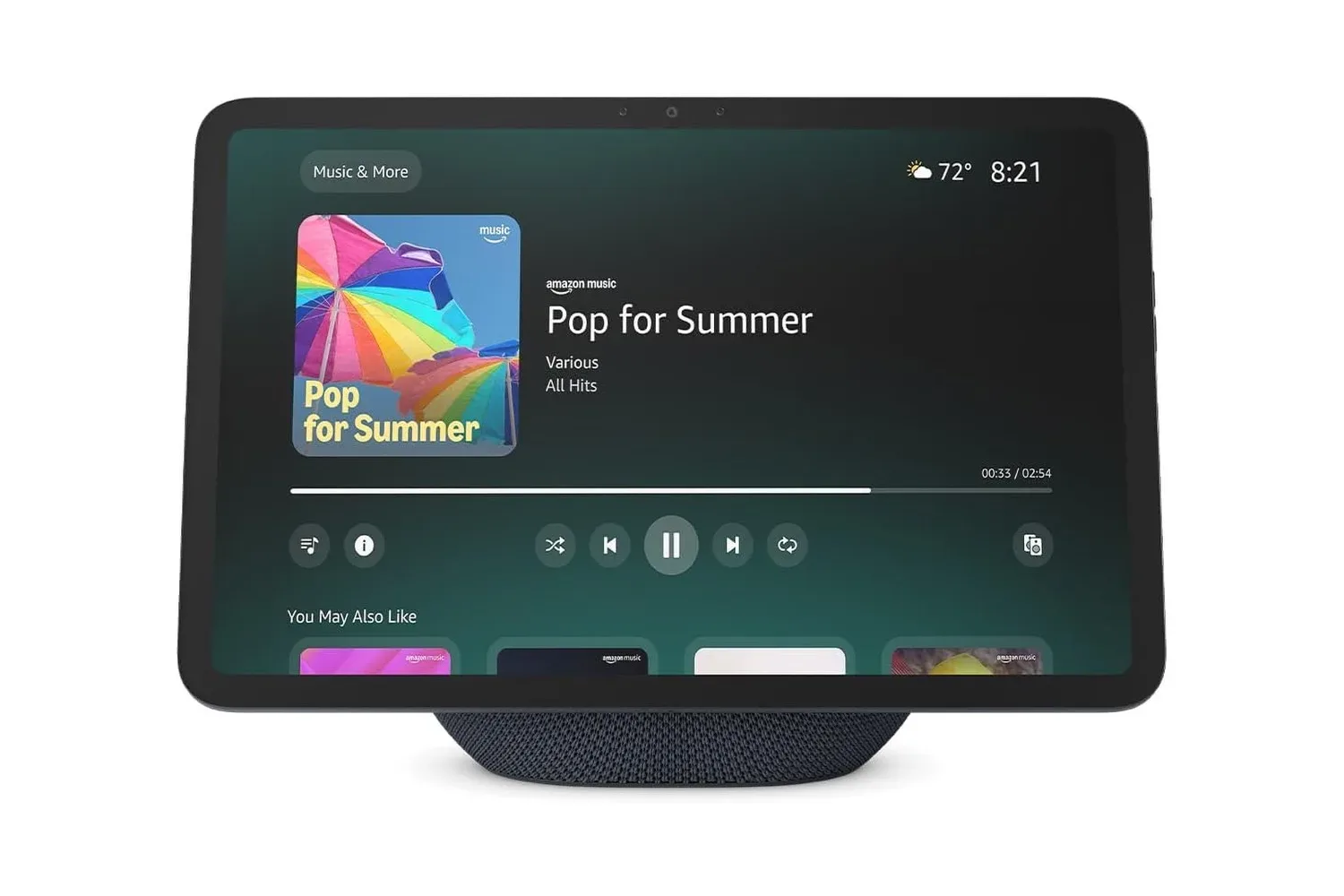
The Amazon Echo Show 11 is listed for $150, reduced from $250. That is a $100 difference, or 40%, for a smart display designed to take on several jobs from one countertop or table: media screen, household calendar, video-call device and controller for compatible connected-home gear.
Its proposition is less about replacing every screen in a home than giving everyday information and controls a shared, visible place. The 10.95-inch touchscreen has a 1920 x 1200 resolution, while Alexa+ provides the voice-assistant layer. A built-in smart-home hub, 13MP auto-framing camera, custom woofer, two full-range drivers, camera/microphone kill switch and physical volume buttons round out the headline hardware.
For a household already considering a smart display, the reduced price changes the calculation. The important question is not simply whether an 11-inch screen is attractive at $150; it is whether the people in the home will use its screen, voice features, camera and connected-device controls often enough for a fixed shared device to make sense.
What the Echo Show 11 is meant to do
An Echo Show 11 combines functions that are often spread among a phone, speaker, tablet and smart-home app. Its touchscreen can show photographs, recipes, weather, calendars, shopping lists and reminders. It can also be used to stream video, play music, conduct video calls, view compatible security cameras or video doorbells, and manage compatible lighting and thermostat controls.
That mix makes placement particularly important. A kitchen or living room is the natural fit because those are spaces where a glanceable calendar, a recipe on screen, music playback or a quick doorbell-camera check may be useful. The display is large enough to make information visible from farther away than a phone, while still being a single-purpose home device rather than a computer someone carries away.
The screen measures 10.95 inches and runs at 1920 x 1200. In practical terms, that resolution is Full HD-class and gives the Echo Show 11 room for video, photos and split-second reference tasks such as checking a list or a schedule. It should not be treated as a substitute for a television-sized display, but its role is different: it puts a compact visual interface where household routines happen.
Alexa+ is central to the value proposition
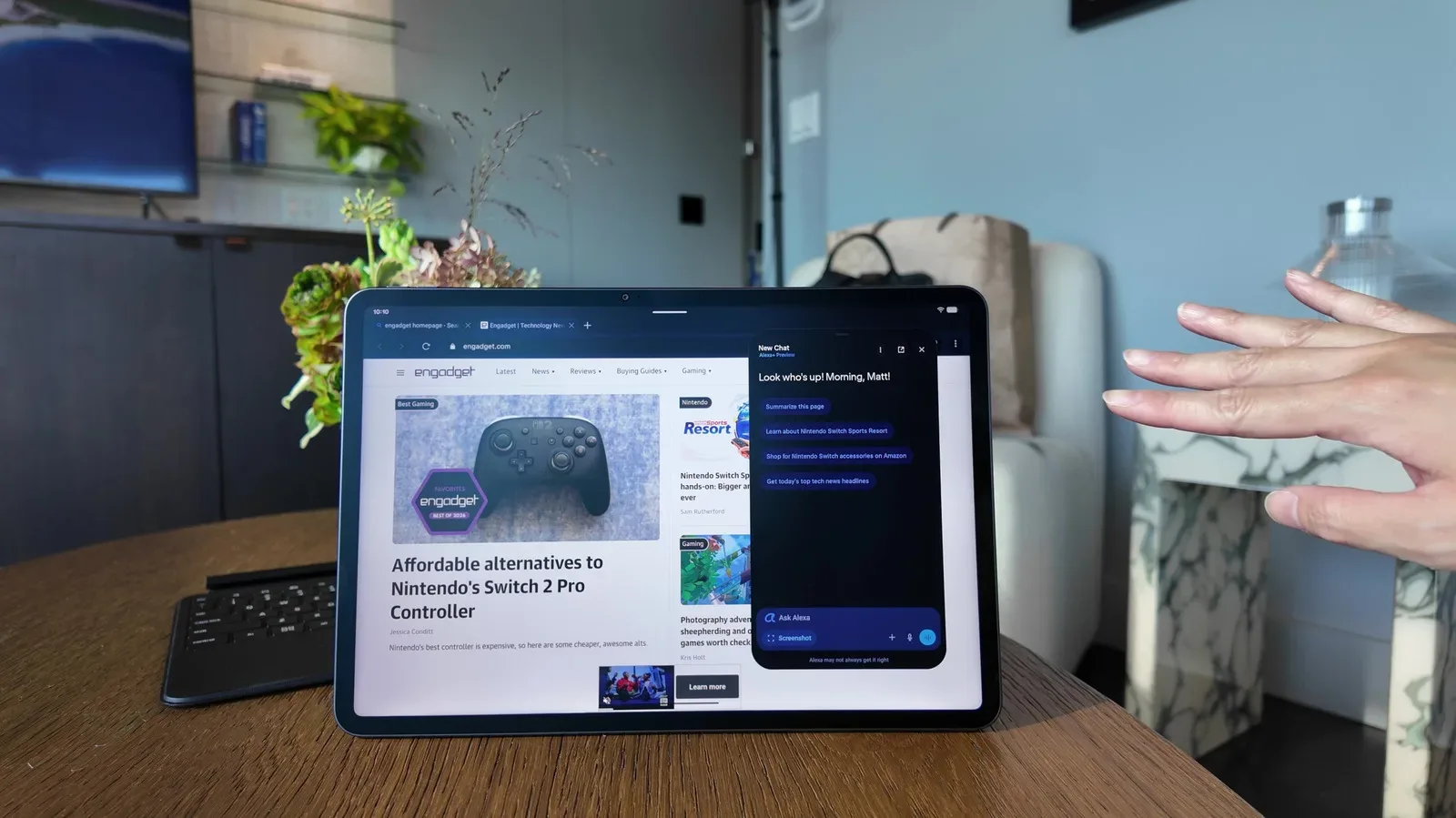
The Echo Show 11 was designed for Alexa+, Amazon’s next-generation assistant. Alexa+ is included with an active Prime membership; people without Prime can subscribe to Alexa+. That distinction matters because buyers should understand that the device’s assistant experience is tied to either an active membership or a separate subscription.
The described Alexa+ features include meal planning, managing family schedules and suggesting something to watch based on previous viewing habits. Those are examples of an assistant attempting to help organize a household rather than only answer one-off questions or operate a timer.
There is a useful practical difference between a voice assistant and a smart display. A voice assistant can handle a request without visual feedback, but a display can surface the associated information: a calendar entry, a recipe step, a shopping list or media options. The Echo Show 11 is intended to combine both methods, letting someone use the touchscreen when that is faster and voice commands when their hands are busy.
That can be especially relevant in the kitchen. Reading a recipe, asking for music or adding an item to a list without stopping to unlock a phone is the kind of narrow convenience that can add up. Conversely, anyone who does not want a voice-connected device in a common room, or who already prefers controlling everything from a phone, may find that the extra display does not solve a meaningful problem.
A smart-home hub without another box
The Echo Show 11 includes a built-in smart-home hub. A smart-home hub is the central device used to connect and control compatible smart-home products. Putting that function inside the display means users can connect compatible devices without needing separate hub hardware for this purpose.
Once compatible devices are connected, the Echo Show 11 can control lights and thermostats, display live video from security cameras and video doorbells, and provide a visual point of access for those systems. Voice control is one option, but the screen may be more useful for tasks where seeing the result matters—such as checking a front-door camera feed.
Its Omnisense system uses the device’s camera and sensors to tell whether someone is in the same area and can also detect temperature. Those inputs can be used for routines. A routine is an automated action or sequence of actions initiated by a condition rather than a direct request. The stated example is lights turning on when somebody enters an area.
That capability is potentially convenient, but it also shows why compatibility and configuration should be considered before purchasing. The hub is useful only with compatible devices, and an automation is valuable only if its trigger and result suit the household. A light that turns on when someone walks into a space is straightforward; more elaborate automation depends on a person’s devices, routines and tolerance for background technology making decisions.
Visual ID and personalized shared-screen use
Visual ID is another feature aimed at a household with multiple users. It can recognize people in the home and show their personal content, such as their calendar, when they enter the room. The intended benefit is clear: a common display can become more relevant to whoever is standing in front of it, rather than always presenting the same shared view.
It also makes privacy settings and comfort with camera-based features part of the buying decision. The device includes a physical microphone and camera kill switch, which offers a hardware method to disable those components. Physical volume controls on the side provide another direct control that does not depend on a voice instruction or a mobile device.
For prospective buyers, those physical controls are more concrete than a menu setting because they are accessible at the device itself. They do not eliminate the need to decide whether camera, sensor and recognition functions fit the home, but they give users an immediate way to turn off the microphone and camera when they prefer not to use them.
Video calls, sound and everyday media
The Echo Show 11’s 13MP camera automatically centers the caller during video calls. Auto-framing means the camera adjusts its framing to keep the person in view as they move, which is especially suited to a kitchen or another room where someone may not remain seated in a fixed position.
Its audio system includes a custom woofer and two full-range drivers, with spatial audio support. A woofer is a speaker driver designed to reproduce lower-frequency sound, while full-range drivers handle a broader span of audio frequencies. The stated goal is stronger bass and clear vocals for background music and video playback.
This combination positions the product as a capable casual media device, not only a calendar panel. Users can stream movies through Prime Video or Netflix, listen to music and use it as a shared screen for photos. Anyone prioritizing a much larger movie-viewing screen will naturally still look to a television, but the Echo Show’s value is that entertainment is one element of a device that also stays useful between viewing sessions.
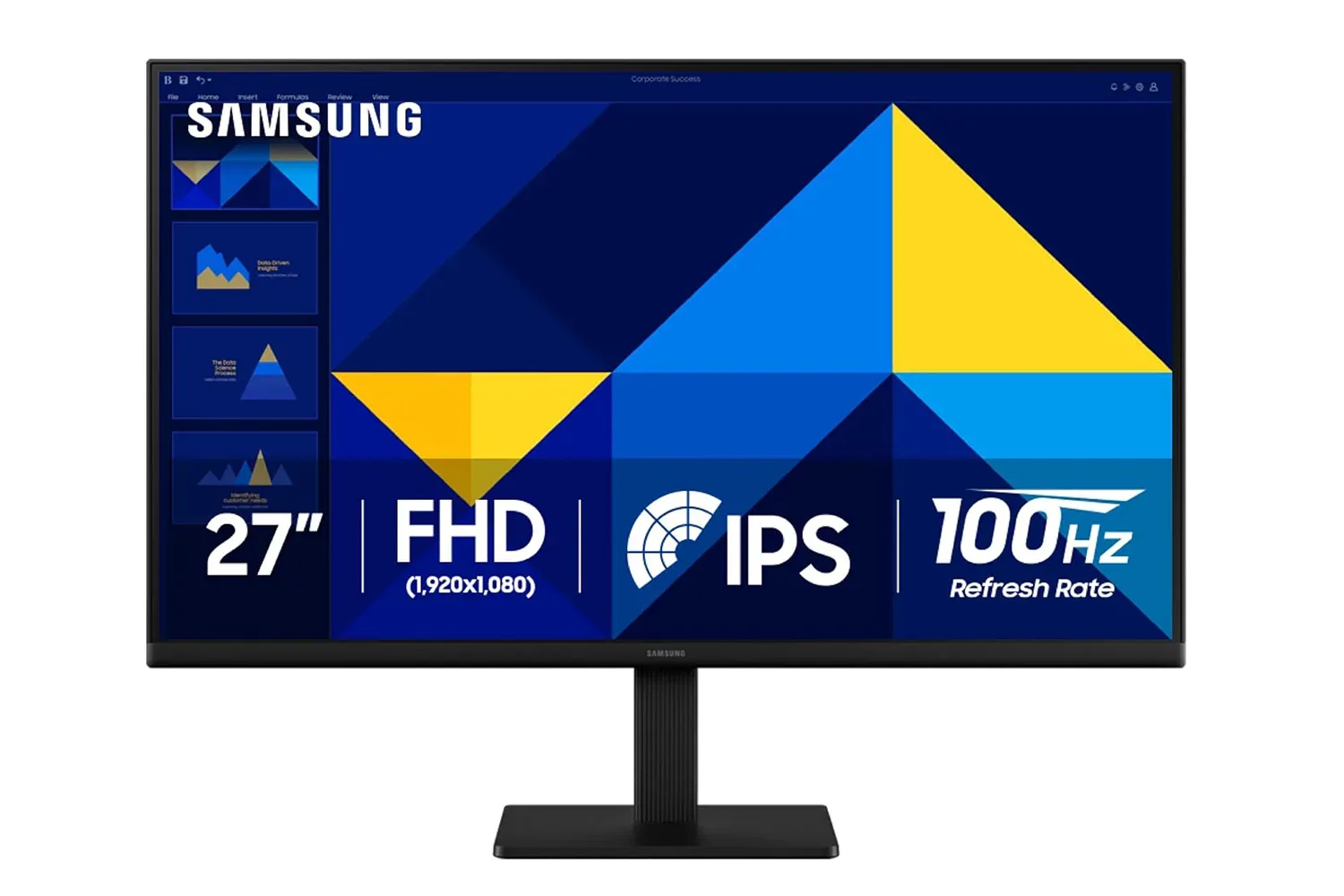
People comparing connected screens may also want to consider whether they need a display at all. A discounted monitor can make more sense for a desk-bound setup, while a smart display emphasizes hands-free assistance and household controls. For a different kind of screen deal, see our coverage of the Samsung 27-inch S30GD offer.
What buyers should weigh before jumping on the discount
The $150 listing is a substantial reduction from the stated $250 price, but it is best considered alongside the requirements of the setup. Alexa+ is complimentary for active Prime members, while non-members need an Alexa+ subscription. People considering the device primarily for Alexa+ should account for that difference rather than treating the assistant as universally included with no ongoing consideration.
There is also a distinction between capability and usefulness. The Echo Show 11 can act as an entertainment center, organizer and controller, but it does not have to perform every role to justify its place. A household may value it chiefly as a recipe and calendar screen. Another may care most about doorbell-camera feeds, smart lighting and voice requests. A person who only wants music may find a display and camera unnecessary.
- Best fit: homes that want one visible location for schedules, lists, reminders, recipes, video calls and compatible smart-home controls.
- Useful for connected homes: users with compatible lights, thermostats, cameras or video doorbells who want voice and touchscreen access in a shared room.
- Worth considering carefully: buyers who do not have Prime, since Alexa+ has a subscription consideration outside an active Prime membership.
- Privacy check: households should decide whether they are comfortable using the camera, sensors, Omnisense and Visual ID, while noting the presence of a physical microphone/camera kill switch.
- Placement matters: the device’s advantages are strongest where people regularly need information or controls without reaching for a phone.
The practical case for the Echo Show 11 at $150
At its listed sale price, the Echo Show 11 is most compelling as a consolidation device. The screen, speaker system, video-call camera, Alexa+ support and built-in hub are not isolated features; they support the same idea of a shared household interface. Someone can check a calendar, ask for a song, consult a recipe, see a visitor at the door and adjust compatible lighting from the same device.
The hardware also reflects that shared-room role. The 10.95-inch 1920 x 1200 display provides enough room for readable visual information, the 13MP auto-framing camera supports standing or moving video calls, and the speaker arrangement is intended for music and streaming rather than merely confirmation chimes. Graphite and Glacier White are the available color options.
Ultimately, the discount makes the Echo Show 11 easier to evaluate on its actual utility instead of its full $250 price. It will be most useful to buyers who want a screen-based Alexa+ experience and compatible smart-home control in a high-traffic room. Those who prefer a simpler speaker, do not need a shared display, or would rather avoid camera and presence-related features should assess those priorities before treating the 40% reduction as reason enough on its own.
Shop the products
Check current price, model and availability at the retailer.