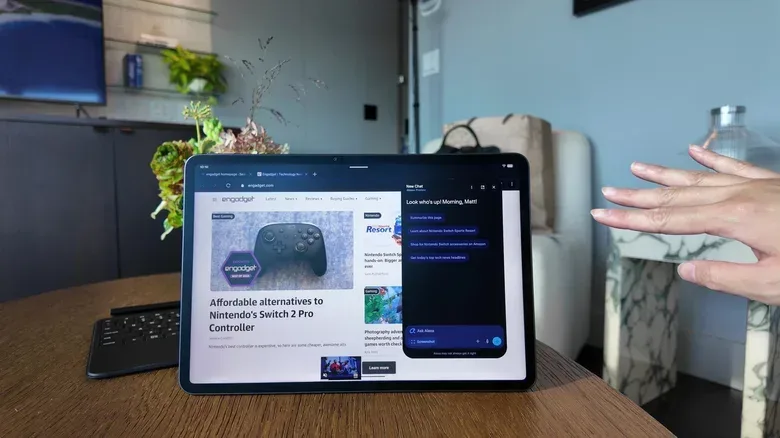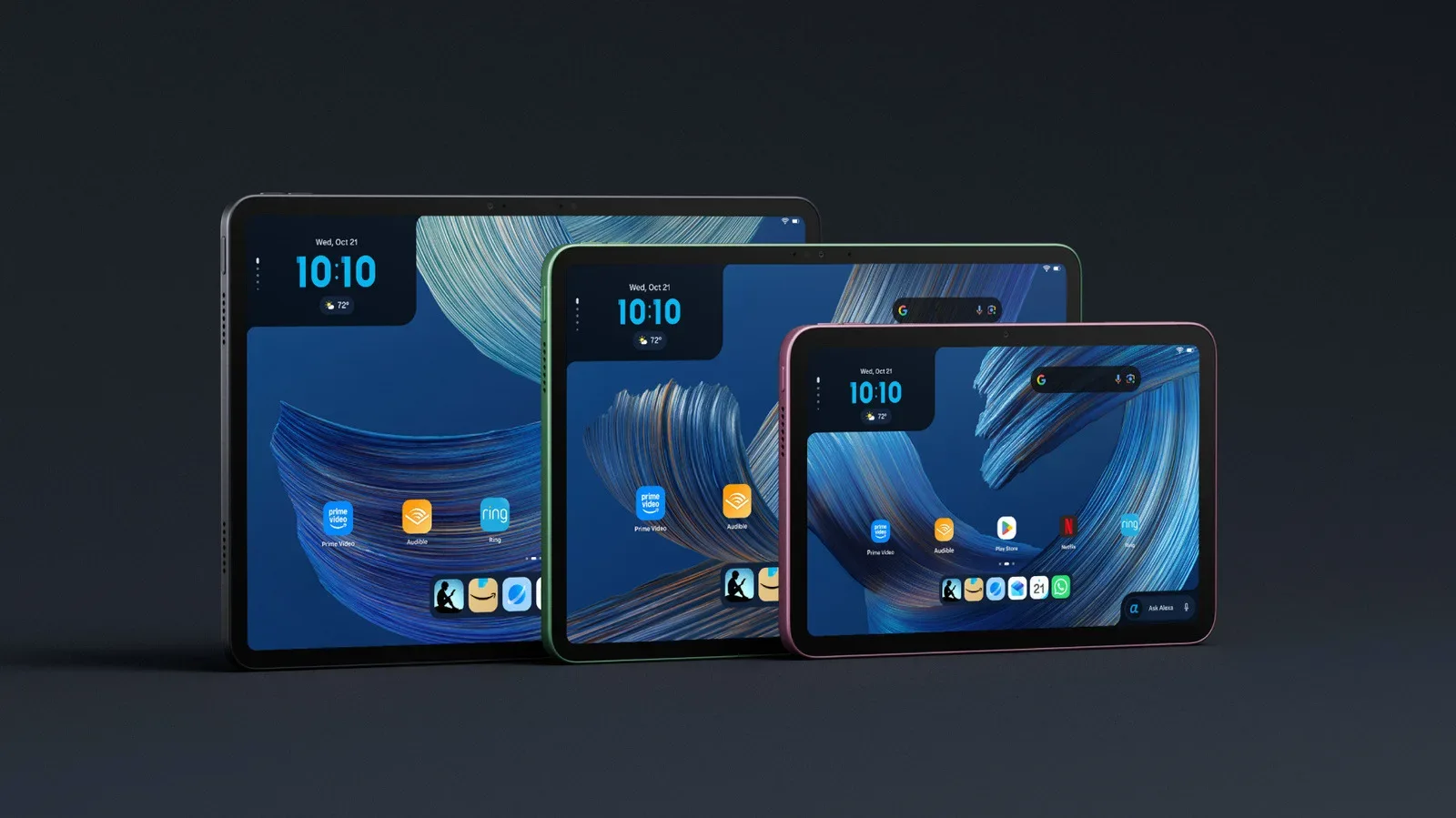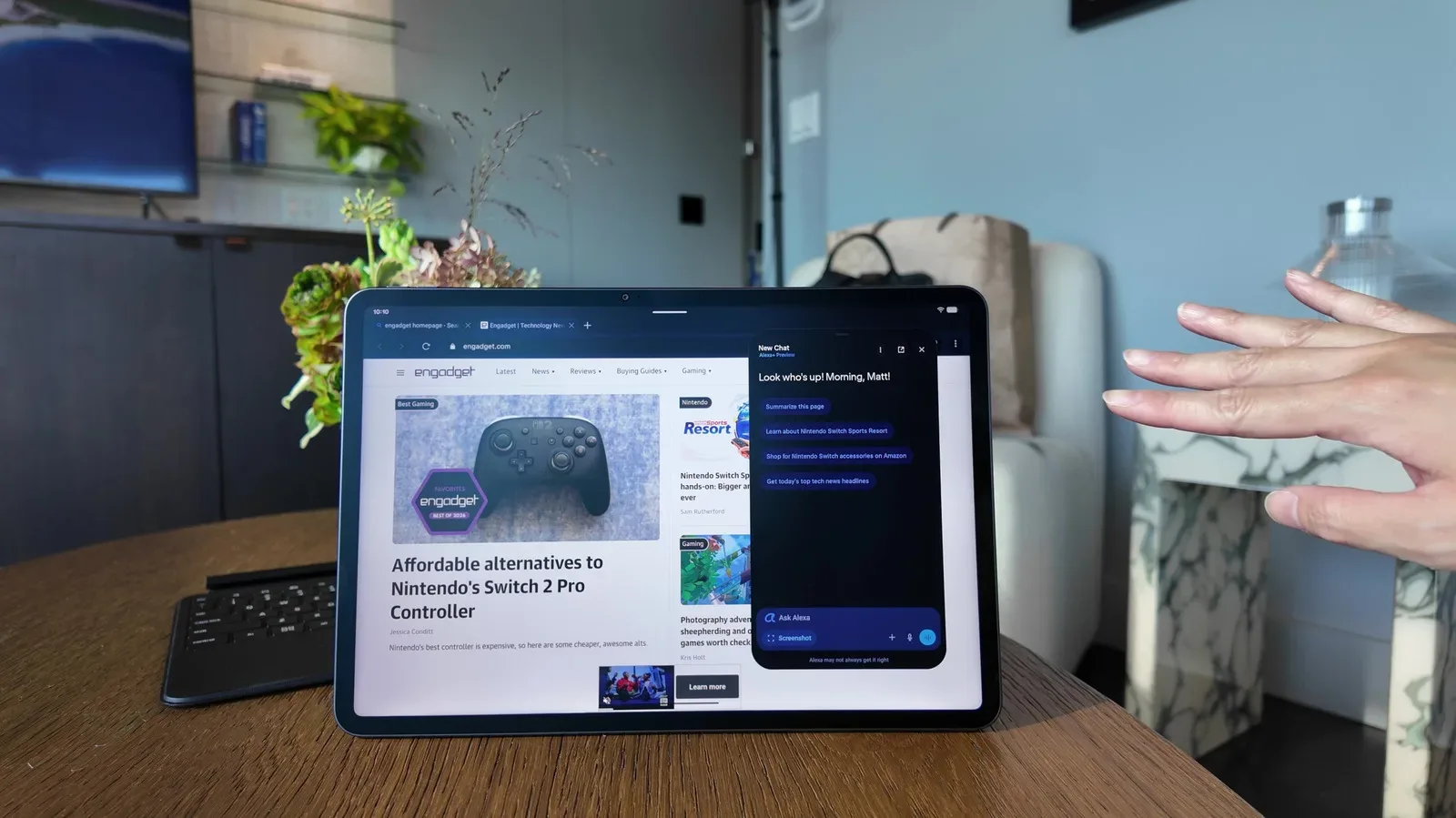
Amazon’s newly introduced Alexa Tablet line may be doing more than replacing the Fire tablet name. Comments from Panos Panay, the company’s senior vice president for Devices and Alexa, suggest the tablets could be an early piece of a wider plan: make Alexa the connective tissue between screens, speakers, televisions and the many small tasks people now scatter across AI apps.
The key clue is a name: Neo. Panay said Ralf Groene, who leads design for Amazon Devices & Services, is developing what he called a “Neo design language.” He was notably cautious about revealing it, but he did explain its intended purpose in broad terms: a structure for moving information to people and helping them get back to it based on where they are.
That sounds less like a single device feature and more like an attempt to solve a growing interface problem. People may ask one AI a question on a phone, begin a task in another app, and later need to find a result that is now buried in an entirely different place. Amazon’s apparent pitch is that Alexa can provide continuity instead of making every device and app feel like a fresh start.
Alexa is now on the hardware label
The new Alexa Tablet series is significant before Neo even enters the picture. It replaces Amazon’s Fire tablet family and puts the company’s assistant directly in the product name. Panay confirmed that this is Amazon’s first hardware product branded with Alexa’s name, a meaningful shift for a company whose major consumer-device labels have typically been product lines such as Echo, Fire TV and Kindle, or distinct brands including Ring, Blink and Eero.
Panay did not plainly confirm that Alexa branding will be stamped across an incoming run of hardware. When asked whether the tablet marks the start of a wider naming push, he initially said it would happen only when appropriate, then added a teasing “not that you’ve seen.” That is far from a product roadmap. It does establish, however, that Amazon sees value in making Alexa more visible as a product identity rather than treating it solely as software sitting behind other device brands.
For shoppers, naming is not a trivial detail. A Fire tablet name told buyers what kind of Amazon screen they were considering. An Alexa Tablet name instead emphasizes the assistant and its role in the experience. It is a change in framing: the device is not merely a portable display that happens to accept voice commands, but potentially one endpoint in an assistant-led system.
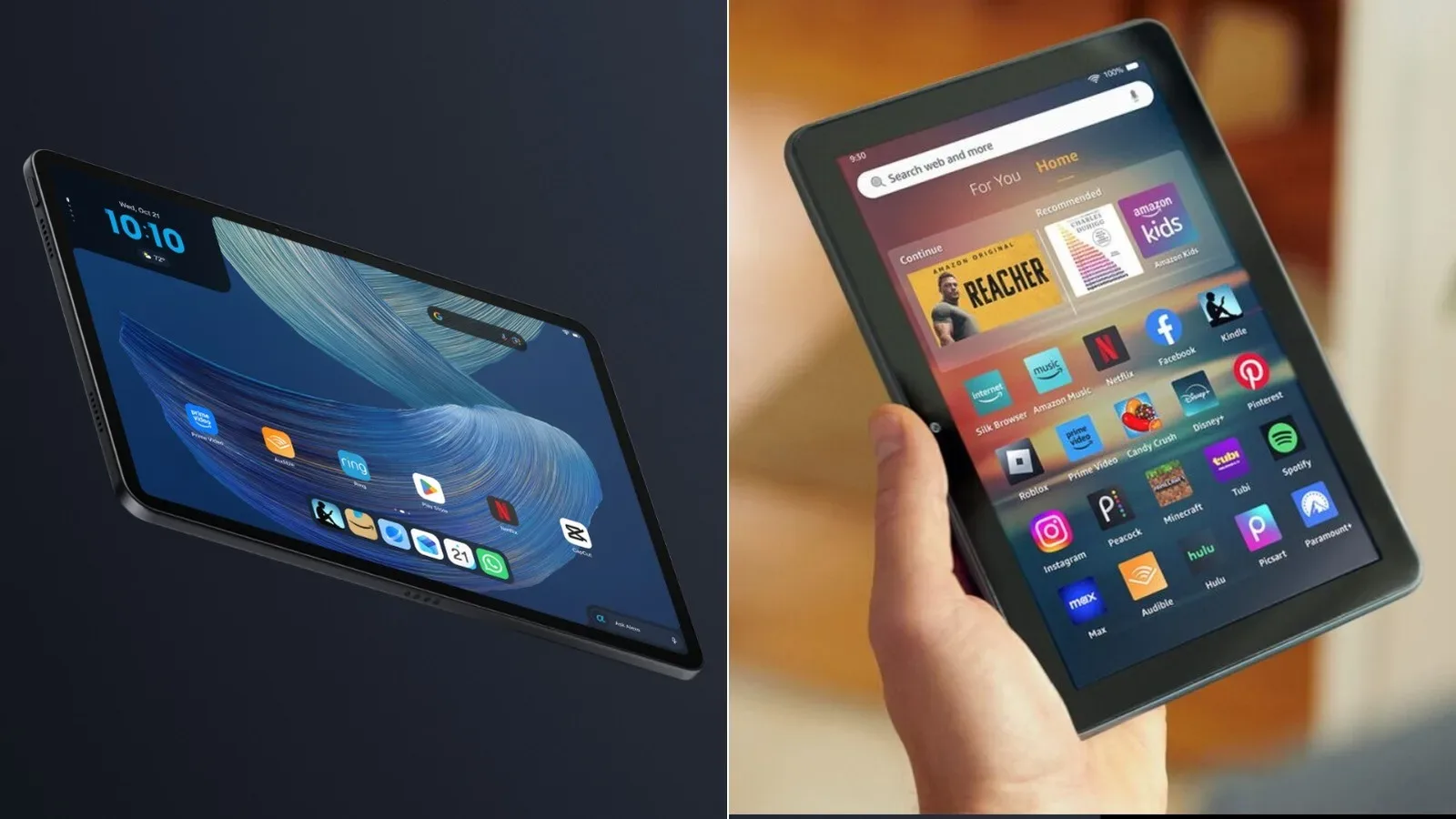
Anyone weighing the newest tablet hardware against an older model can also read our comparison of the Alexa Tablet 12 Pro and Fire HD 10, which covers the major shift in screen size, apps and positioning.
What a design language means here
A design language is the shared system that determines how products look and behave. It can include typography, colors, iconography, layouts, motion and the rules that decide where information appears. In a multi-device environment, it can also mean that an action begun on one screen is presented in a familiar, understandable way on another.
Neo, based on the limited description available, appears to reach beyond visual consistency. Panay characterized it as a framework for moving information and making it retrievable depending on the user’s location or device. That distinction matters. A matching set of icons is helpful, but it does not by itself answer the practical question of where an AI-generated answer, an unfinished request or a relevant recommendation goes after a user leaves one device.
The company has not disclosed Neo’s interface details, supported products, controls, privacy settings or rollout schedule. It would therefore be premature to call it a finished platform or promise capabilities that have not been specified. Still, the language about connecting information is consistent with a cross-device ambition rather than a cosmetic refresh.
The clues already visible in Amazon’s ecosystem
Some continuity features already exist across Amazon hardware. The Ember Artline Fire TV can recognize a paused Prime Video program from one room; a person can then ask Alexa in another room to resume and pick the program back up on a different television. That is a focused example of device handoff: the content and playback position matter more than the particular screen on which viewing began.
Amazon also says the new Alexa tablets can continue a conversation started on an Echo Show. That is arguably a more revealing case. Video playback has long been suited to resuming across devices. Carrying an assistant conversation from a smart display to a tablet raises harder questions about context: what was already asked, what answer was given, what follow-up is being attempted and how much of that history should remain visible.
The Alexa app provides another important component, because it works on iOS, Android and the web. Even when someone is away from an Amazon-branded screen, the app gives the company a possible bridge back to Alexa services and information. In theory, this is how an ecosystem avoids becoming limited to the room where an Echo speaker happens to be located. In practice, the usefulness will depend on whether the handoff feels clear and reliable instead of like another place where users must hunt for an old answer.
The problem Amazon says it wants to address
Panay described the current AI landscape as increasingly fragmented. His point was straightforward: users can solve one problem in one app, receive a separate answer elsewhere, then try another AI service and lose track of where the first useful response lived. In the traditional app model, that inconvenience was often accepted as the cost of using separate tools. AI assistants make it more frustrating because interactions can be conversational, temporary and spread across devices.
This is the difference between an AI agent and a conventional static app in everyday use. An AI agent generally refers to a system that accepts requests in natural language and helps generate, retrieve or act on information. The term can cover a wide range of capabilities, but the user-facing challenge is familiar: chats and task histories can become an unruly collection of separate threads.
Amazon’s proposed “frame” for connecting these experiences is still undefined. But the core design challenge is easy to understand. A useful system would have to preserve context without becoming intrusive, let people find prior information without forcing them through endless menus, and make it obvious which device or service supplied an answer. A system that silently guesses too much could be confusing. One that requires repeated confirmation and manual searching would not really cure fragmentation.
Context comes with privacy questions
The wider Alexa strategy also has an important data dimension. Amazon’s “About You” dossiers, announced in May, have recently drawn more attention after users shared surprising and sometimes amusing deductions made about them. The feature remains in beta. Alexa+ is also still labeled a preview.
These status labels are worth taking seriously. Beta typically means a feature is still being tested and may change before a final release. A preview similarly signals that a product or service is not necessarily complete. For prospective users, that means any interpretation of Amazon’s long-term cross-device vision should be held lightly until the company explains the experience in more detail.
At the same time, the fact that Amazon is developing user-oriented profiles is relevant to the Neo discussion. Delivering the right information at the right moment across multiple screens generally requires some understanding of history, preferences or context. The practical trade-off is clear: continuity can be convenient, while the information that enables it can feel personal. The eventual quality of Amazon’s controls, explanations and user choice will be as important as the visual design.
Echo is the obvious next place to watch
Panay indicated that he will return later in the month with more to share about Echo and Neo. That makes Echo the most immediate brand to watch, especially because smart speakers and displays are a natural home for an assistant-first interface. A tablet can show a persistent history and provide touch controls; an Echo speaker has to make continuity work through voice, while an Echo Show can blend voice with a screen.
No new Echo hardware or Neo-specific functions were detailed. The important takeaway is simply that Amazon has signaled a forthcoming Echo-focused moment, and it has attached Neo to that conversation. Whether the reveal involves hardware, interface changes, service integration or all three remains unconfirmed.
A crowded smart-home AI race
Amazon is not trying to make the assistant the center of a home in a vacuum. Google has been incorporating Gemini AI across products including speakers, televisions, thermostats and cameras. Apple is reportedly preparing an October event around a smart-home ecosystem with a lock, thermostat and camera, with Siri AI at its center; the report also says the company has been working with LG.
Those efforts underline why Amazon’s emphasis on continuity matters. Smart-home competition is no longer just about whether a speaker can set a timer or whether a display can show a camera feed. The bigger contest is over which company can make many devices feel like parts of one coherent environment.
Amazon enters that contest with considerable history in the category. Alexa and Echo were early, influential names in voice assistants and smart speakers, while Amazon also has adjacent device brands across home security, networking and entertainment. The fresh Alexa Tablet branding, the existing examples of TV and conversation handoff, and the Neo terminology now point in the same direction: Amazon is trying to make that collection of products feel less like a collection.
For now, Neo is a name accompanied by an intentionally incomplete sketch. What is concrete is the change in branding and the company’s stated concern about AI fragmentation. The next Echo presentation should show whether Amazon can turn those ideas into an interface people can understand, control and actually use across the devices already in their homes.