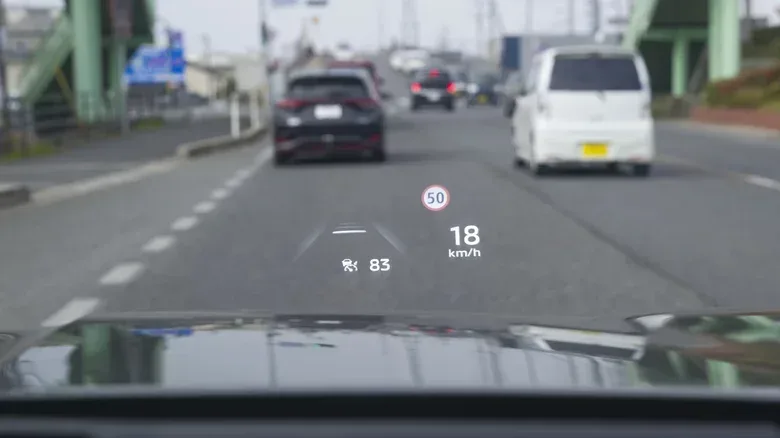
Adaptive cruise control can feel like one of those quietly futuristic features that makes a long drive less tiring: choose a speed, choose a following distance, and let the vehicle ease off the accelerator or brake when traffic ahead slows. But the essential job is much narrower than the experience can suggest. The system is chiefly managing a set speed and a gap to the vehicle in front. It is not a substitute for an attentive driver, and it is not inherently a collision-avoidance system.
That distinction matters because the hardware at the center of many systems is remarkably straightforward. A radar sensor hidden in the front of the vehicle, often behind the grille or emblem, is paired with a camera mounted high behind the windshield. Together, they provide the car with information about what is ahead. Software then decides how to use the pedals to maintain the driver-selected speed and following interval.
The resulting behavior can look considerably more sophisticated than the underlying mission. A vehicle notices a slower truck, reduces throttle, and settles back into the selected spacing without the driver touching a pedal. In traffic, some versions can stop behind a queue and resume after the driver confirms it is appropriate. That is useful automation, but it is still conditional automation: the driver must understand what the system is tracking, what it may miss, and when the conditions have moved outside its intended use.
Radar supplies distance and closing speed
The radar unit is normally located low at the front of the car. Rather than seeing the world as a person does, it sends out radio energy and measures the returning echo from an object ahead. The timing of that echo provides a distance estimate. By watching how that measured distance changes, the system can determine closing speed: whether the car is gaining on the vehicle ahead, falling back, or keeping a stable interval.
That is the core information adaptive cruise control needs. If the selected speed is 70 mph but radar shows that the gap ahead is closing, the car can reduce power and, where necessary, brake. Once the leading vehicle moves away or leaves the lane, the system may accelerate back toward the selected speed.
Millimeter-wave radar, used in a typical Honda implementation, refers to radar operating at very short radio wavelengths. For the driver, the crucial point is its function rather than the label: it measures range and the relative motion of traffic ahead. Radar can work in darkness and fog, conditions that are difficult for an ordinary camera alone. Bosch said its long-range radar could reach around 250 meters in 2014, while a successor was described as reaching 530 meters.
Range, though, is not the same thing as judgment. A long-range sensor may have more opportunity to register an object, but the vehicle still needs to classify what it detects and decide whether it is the object relevant to the lane and driving situation. Modern progress is therefore not solely a matter of sensors looking farther down the road. It is also about software interpreting their inputs and selecting a response.
The camera helps the car choose the right target
The windshield-mounted camera has a different but complementary job. It can monitor lane markings, which helps establish which vehicle ahead is in the same lane and therefore the likely target for adaptive cruise control. Lane information also helps make sense of a cut-in, when a vehicle moves into the gap in front of the car.
This pairing is important. Radar is useful for measuring the distance and relative movement of an object, while the camera contributes contextual information from the roadway. Neither fact means the combination possesses human-like awareness. Lane markings can be less clear than expected, and traffic can change more abruptly than a system can comfortably resolve. A car entering close ahead may be detected late; Volvo specifically cautions that this can happen.
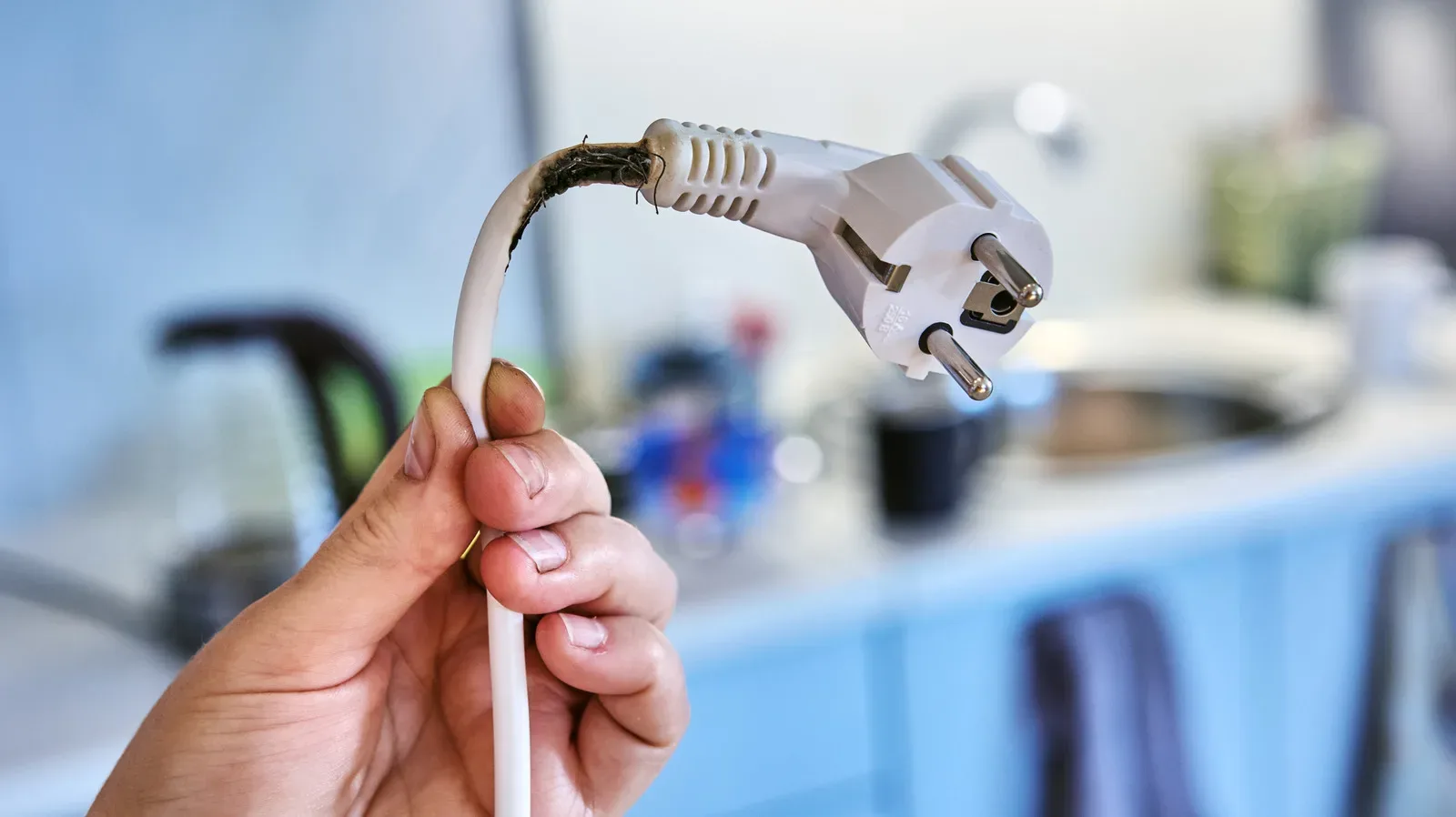
Drivers should also remember that sensors are physical components, not invisible magic. The front radar’s placement can make it vulnerable to obstruction or damage. Add-ons such as stickers and number-plate frames, as well as minor parking impacts, can interfere with the sensor area. The camera has an easier location behind the windshield, but it still relies on a usable view of the road.
The practical lesson is pleasantly unglamorous: keep the relevant areas clear and take warnings or changes in system behavior seriously. An assistance feature whose ability to sense traffic has been compromised is not something to “test” on a busy road.
Software has expanded what the basic sensors can do
Adaptive cruise control emerged in the late 1990s, but its newer capabilities increasingly come from software layered over the radar-and-camera foundation. Honda’s Low Speed Follow is one example of a meaningful usability improvement. It can bring the car to a stop behind queued traffic, then pull away again after the driver taps a button or presses the accelerator. That makes the feature more useful in stop-and-go situations than a system that gives up at very low speed.
Other systems add data beyond the immediate sensor view. Ford’s BlueCruise can use map data to slow the vehicle before a bend. Ford’s Predictive Speed Assist can reduce the selected speed in advance of a curve and lower it to match a new posted speed limit before the vehicle reaches the sign. These functions illustrate a major difference between reacting to what is directly in front of the bumper and anticipating a mapped stretch of road.
That anticipation still should not be confused with complete autonomy. Map-supported speed adjustment can make a drive feel smoother, but it does not eliminate the need to watch the road, assess weather and traffic, or be ready to brake and steer. A posted limit is not automatically a safe speed for every downpour, bend, traffic queue or road surface.
Hyundai introduced an adaptive cruise control approach in 2019 that uses machine learning to imitate the driver’s style. In plain terms, machine learning here means software finding patterns in driving behavior and using those patterns to shape its own responses. That may make acceleration or following behavior feel more familiar to an owner. It does not transform the system’s operating limits. Mimicking a person’s habits is not the same thing as acquiring the broad situational judgment a human driver is expected to exercise.
GM has taken a different route for some Super Cruise road coverage, using LiDAR scans of roads. LiDAR is a sensing technique that uses light to build detailed distance measurements. GM’s expansion added 750,000 miles of rural roads. The detail reinforces a point that is easy to lose amid feature names: different driver-assistance systems can use different combinations of road data and sensors, and a feature’s capability depends on its particular design and conditions of use.
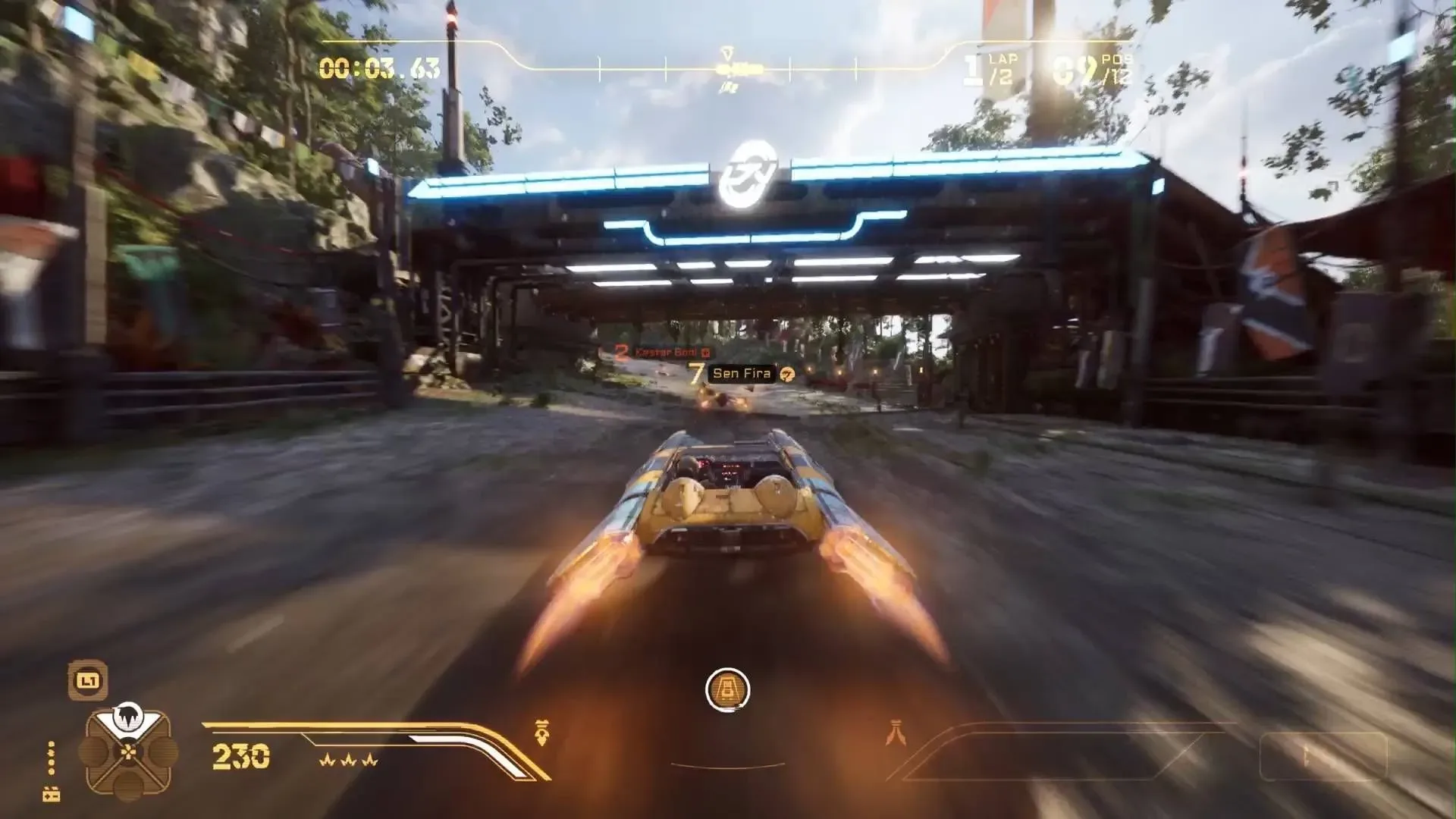
It is a little like the difference between a driving game’s dependable racing line and an actual road. A game can define the environment and its rules with precision; public roads contain weather, faded markings, unexpected stops and people making unpredictable choices. Even the crash-focused philosophy behind Star Wars: Galactic Racer is a useful reminder that consequences belong in games, not in casual experiments with assistance systems on real streets.
Why weather, traffic and road shape still matter
Manufacturers’ instructions set firm boundaries around adaptive cruise control use. Toyota says its radar cruise control should not be used in rain, fog or snow; on slippery surfaces; in heavy traffic; on sharp curves; or on steep downhill sections. Honda advises use on relatively straight roads that require little braking. Volvo says not to use adaptive cruise control in dense traffic or at junctions.
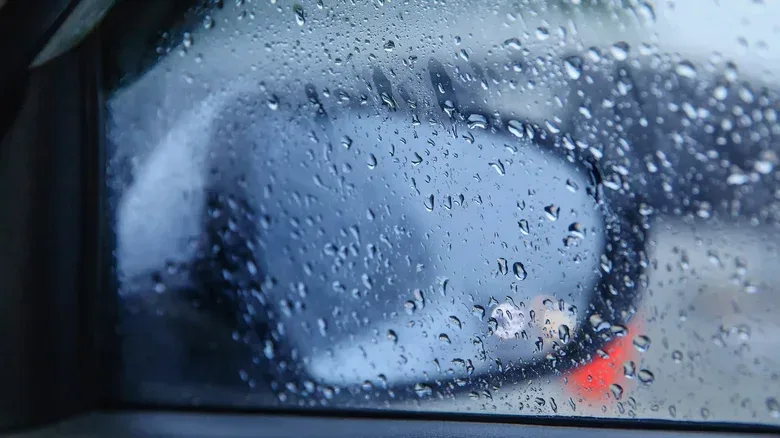
These cautions are not boilerplate. Heavy rain can significantly reduce a radar system’s ability to detect the vehicle ahead, as Volvo notes. Rain also changes the driving problem even when a lead car remains detectable. Standing water raises the risk of hydroplaning, where the tires lose effective contact with the road surface. A system trying to maintain a selected speed does not remove that hazard. It can only apply its programmed speed-and-gap logic; it cannot make a wet road behave like dry pavement.
Sharp bends create another mismatch between a simple following system and the real road. The vehicle being followed may move out of the sensor’s best view as the road curves. A different vehicle, roadside object or lane may complicate the picture. Steep descents can require more deliberate speed management than a driver expects from an automated throttle-and-brake response. And junctions bring cross-traffic, turns and merging behavior that do not neatly fit the task of following a single lead vehicle.
Dense traffic is similarly deceptive. It can seem like the perfect setting for a system that maintains a gap, particularly if it supports low-speed following. Yet close spacing, frequent lane changes and sudden cut-ins reduce the time available to detect and react. The point is not that the technology has no value in traffic; it is that its assistance is conditional, and manufacturer guidance should set the boundary.
What it may not brake for is the critical limitation
The most consequential misunderstanding is assuming that adaptive cruise control will identify every hazard in the lane and prevent a crash. Volvo explicitly describes its system as something other than a collision-avoidance system. Its stated limitations include not braking for people or animals, small vehicles such as bicycles, oncoming vehicles, slow-moving vehicles and stationary vehicles.
That final category deserves emphasis. A car already stopped in the lane, including the rear of a traffic jam, may not be registered in time because the system is principally following moving traffic. A driver who assumes the car will always recognize a stationary obstacle could continue at speed toward it. This is why hands, eyes and attention must remain where they belong, regardless of whether the pedals are being managed momentarily by the vehicle.
It also explains why marketing language and feature names should never be used as a substitute for reading the vehicle-specific manual. “Adaptive,” “smart,” “predictive” and similar terms describe functions, not a promise that the car understands every road scenario. The sensible approach is to know the exact feature installed on the vehicle, the conditions its maker permits, and the ways it says the feature can fail.
The human-factor problem: confidence can outrun capability
Research cited by the Insurance Institute for Highway Safety and MIT’s AgeLab suggests that the behavioral risk is not merely theoretical. In a month-long study involving 20 volunteers, participants using adaptive cruise control with lane centering became more likely over time to interact with a phone or center console. By the end of the study, they were more than three times as likely to do so as they had been in the first week. They were also 17 times as likely to drive with both hands off the wheel as at the start.
An earlier IIHS study found that drivers with adaptive cruise control activated were 24% more likely to speed on highways, and that the speeding margins were greater when they did speed. Neither finding means every driver will behave that way. They do show how quickly a convenience feature can encourage misplaced confidence, especially when it performs smoothly for long stretches.
That is the paradox of good driver assistance: when it works repeatedly, it can make the driver less prepared for the moment it does not. The correct mental model is not “the car has taken over.” It is “the car is temporarily handling a limited speed-and-spacing task while I remain responsible for everything.”
- Use adaptive cruise control only in the conditions the vehicle maker permits.
- Keep the radar area and windshield camera area unobstructed and address damage or warnings.
- Stay alert for stationary traffic, cut-ins, vulnerable road users, junctions and changing weather.
- Keep hands on the wheel and attention on the road, even when the vehicle is managing speed.
- Do not let a smooth stretch of assisted driving redefine what the system is actually designed to do.
Radar, a camera, and increasingly sophisticated software can take some strain out of a journey. They cannot take responsibility out of the driver’s seat.