Andrew Haigh’s A Long Winter begins in a place that appears built to preserve a family forever: a remote Rocky Mountain farm in the early 1950s, ringed by pine trees, steep valleys and severe, snow-ready peaks. Yet this is not a pastoral about rugged contentment. It is a patient and increasingly painful drama about the way an isolated household can turn love into obligation, protection into control, and silence into a legacy handed down to the next generation.
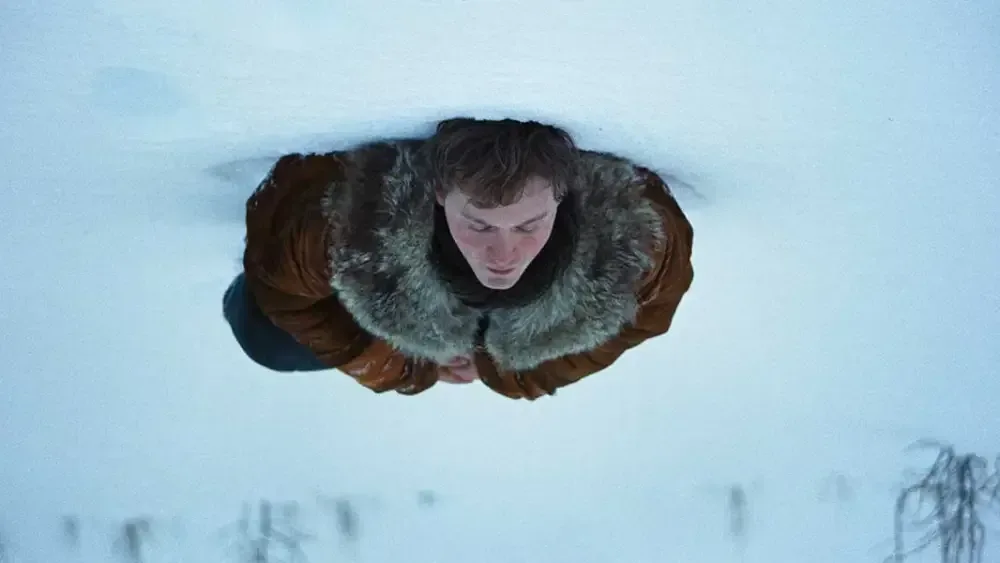
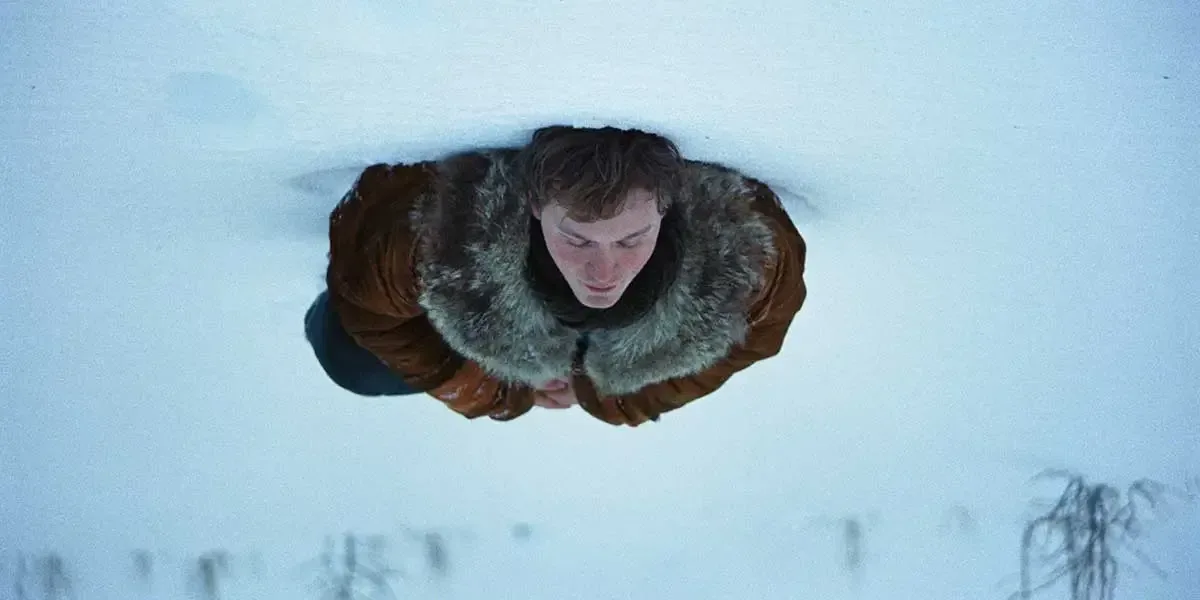
At 117 minutes, the film moves with an intentionally measured rhythm. Its surfaces are handsome but never merely decorative. Cinematographer André Turpin gives the mountains, the hard-packed roads and the creaking farmhouse a weight that helps tell the story: this is a landscape both magnificent and enclosing. The camera’s attentiveness turns the terrain into emotional architecture. Every distance looks harder to cross once the family at the center of the film begins to come apart.
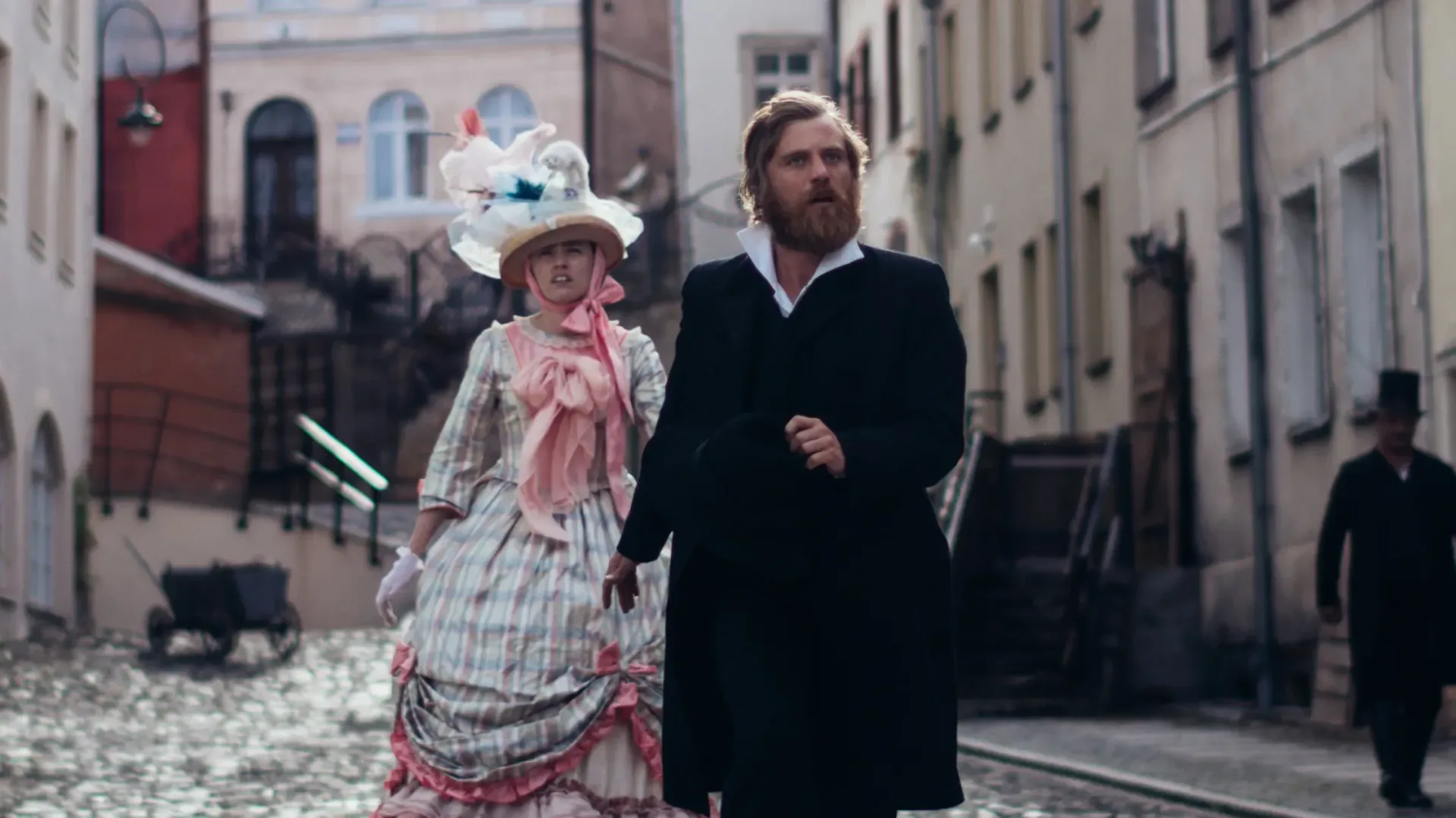
Written and directed by Haigh and adapted from a novella by Colm Tóibín, A Long Winter was screened at the Telluride Film Festival on September 4, 2026. It shares a certain seriousness of purpose with other intimate literary-minded screen stories, including a recent look at a Dostoevsky biopic that thrives on its own unruliness. Haigh’s approach is very different: restrained, chilly and deliberate, willing to leave viewers in uncertainty rather than rush toward explanation.
A household before the fracture
The opening establishes the farm’s daily routine through two adult brothers. Mikey, played by Fred Hechinger, is settled into the life he knows. He raises chickens and rabbits with his family and seems comforted by the steadiness of the work, even after a brief earlier attempt to live in Idaho. His brother Tom, played by Kit Connor, is restless. He is preparing to leave for Army service in Korea, and the contrast between the brothers is clear without being overstated: one sees the farm as a refuge, while the other recognizes it as a limit.
Their parents are Lester and Louise, portrayed by Ebon Moss-Bachrach and Caitríona Balfe. A family dinner initially has the warmth of an old-fashioned domestic tableau. The brothers’ close, respectful relationship and the farmhouse’s rustic rhythms suggest a protected world operating outside modern culture. But Haigh allows discomfort to seep into that picture. The family’s apparent self-sufficiency has not removed conflict; it has simply given conflict fewer places to go.
Louise is bright, alert and visibly strained. Her drinking is first observed through small acts of concealment and denial, including a supply trip down the mountain to a struggling local town. The setting carries its own quietly dispiriting detail: a shuttered movie theater still advertises The Snake Pit, the 1948 film. Louise’s secret afternoon drink is not treated as a twist, but as a fact Mikey has only recently learned to see.
Lester has long known. His response is to take command. After a delivery that brings household fuel as well as wine, he discards Louise’s bottles and insists that she stop drinking immediately. The scene does not offer the comforting simplicity of a villain and a victim. Lester’s actions are harsh and controlling, but they also grow out of fear, disappointment and an inability to understand what Louise needs. Louise, meanwhile, is not reduced to a symbol of suffering. Balfe gives her a forceful presence: a woman who chose this life and now feels stranded inside it.
The disappearance at the center of the film
When Louise leaves as a winter storm approaches, A Long Winter changes shape. The ensuing months become a search story, a family mystery and a study of absence. Lester and Mikey work with local police and relatives, but Louise seems to vanish with unnerving completeness. Haigh does not turn the premise into a conventional procedural. The question of where she has gone matters, but the greater subject is what her disappearance reveals about the people who remain.
That gives the film the atmosphere of a ghost story despite its grounded reality. Louise persists in memory, in resentment, in guilt and in the frozen expanses around the farm. The narrative gradually fills in the history behind the household’s fractures. Lester came from New York City and imagined that farming, and the marriage that brought Louise across the mountain, would provide a kind of ideal life. Louise increasingly longed for a more comfortable middle-class existence, glimpsed in the pages of her Cosmopolitan magazines. His answer to her unhappiness was to tighten his grip; hers was to drink. Neither is excused, and the consequences land most painfully on Mikey.
Moss-Bachrach makes Lester an imposing, difficult man of few words, with a severe frontier exterior that can feel almost impenetrable. The performance is effective because it never begs for the audience’s forgiveness. Balfe has less screen time once Louise is gone, yet her work continues to define the movie. The character’s absence gains power precisely because the film has made clear that she was not just a problem to be solved. She was the family member who represented tenderness, aspiration and a possible connection to a world beyond the farm.
Mikey’s awakening is the film’s quiet heartbeat
For all its mystery, the film belongs to Mikey. Hechinger gives him an open, tentative quality that suits a young man beginning to notice feelings for which he has no vocabulary. An early exchange of looks with a young police officer points toward Mikey’s attraction to men. Later, his developing awareness is also shaped by images in Louise’s magazines and by Jimmy, a biracial Native American man who arrives to work as cook and housekeeper, played by D’Pharaoh Woon-A-Tai.
This is not framed as a conventional romance. The film’s interest is more elemental: what it means for a person raised far from social reference points to discover an inner life. Mikey is not depicted as immediately horrified by what he feels, nor is he given an easy route toward fulfillment. Haigh, whose work has repeatedly explored queer lives, finds a particularly unusual register here. Mikey’s desire is shaped by innocence, loneliness and curiosity rather than a ready-made identity narrative.
That choice will likely divide audiences. Anyone expecting a complete love story may find the film withholding. Its emotional energy comes from suggestion, glances and possibilities that remain unfulfilled. But that restraint is central to the tragedy. Mikey’s awakening happens amid a family catastrophe, as though the space opened by Louise’s loss becomes the painful route through which he can first imagine a self beyond inherited expectations.
Woon-A-Tai’s Jimmy is presented with an enigmatic, solemn presence, and the film uses him less as a simple romantic answer than as another figure who disrupts the farm’s closed system. Connor’s Tom, meanwhile, embodies the more obvious escape route: enlistment and departure. These characters make Mikey’s remaining stillness feel increasingly complicated. Staying is not the same thing as belonging.
Landscape as pressure, not postcard
Turpin’s photography is one of the film’s defining achievements. The Rocky Mountain setting is full of imposing beauty, but A Long Winter understands that grandeur can become oppressive. The snowbound vistas do not promise freedom. They underline the hazards of being isolated, especially when roads close, communication is limited and emotional problems have been confined to one house for too long.
The production’s visual discipline aligns with a larger conversation about how image-making technology and storytelling shape one another, a subject also explored in coverage of evolving immersive storytelling spaces. Haigh is working in a far more traditional mode, but the principle remains recognizable: images matter most when they guide attention, build feeling and clarify the human stakes rather than simply announce their beauty.
Editor Jonatham Alberts supports the film’s slow accumulation of dread, while Paul Haslinger’s music fits its somber, suspended mood. The supporting cast also includes Anthony Timpano, Manuel Garcia-Rulfo, Camille Sullivan and David Furr. Across the ensemble, the performances keep the period setting from becoming a museum piece. The film is carefully situated in the early 1950s, but its concerns—addiction, marital disappointment, parental control, grief and the difficulty of naming one’s desires—remain immediate.
A severe drama that rewards patience
A Long Winter is austere enough that some viewers may resist its controlled pace and its refusal to resolve every emotional strand in direct terms. It is not designed as a crowd-pleasing mystery, nor does it seek the sweeping romantic release suggested by its period setting and isolated western landscape. Instead, Haigh constructs a drama where the central loss casts a shadow over every frame and where self-knowledge arrives through pain rather than liberation.
Its finest achievement is the way it holds several perspectives at once. Louise’s yearning is real. Lester’s fear is real, even when his conduct is damaging. Mikey’s love for his mother is real, as is the possibility that he needs to step outside the family story to survive it. By the time winter begins to loosen, the film has transformed the farm from a picture of safety into a site of haunting memory—and made Mikey’s first movements toward a fuller inner life feel hard-won.