Voltaire: The Vegan Vampire is an upcoming console game, not a reviewed Xbox release. Digitality Games is developing the game, while JanduSoft is publishing it on consoles. It is currently announced for Xbox and PS5 on September 30, 2026. This is therefore an unscored preview based on the stated design, rather than a verdict drawn from controller time, console performance testing, or a finished build.
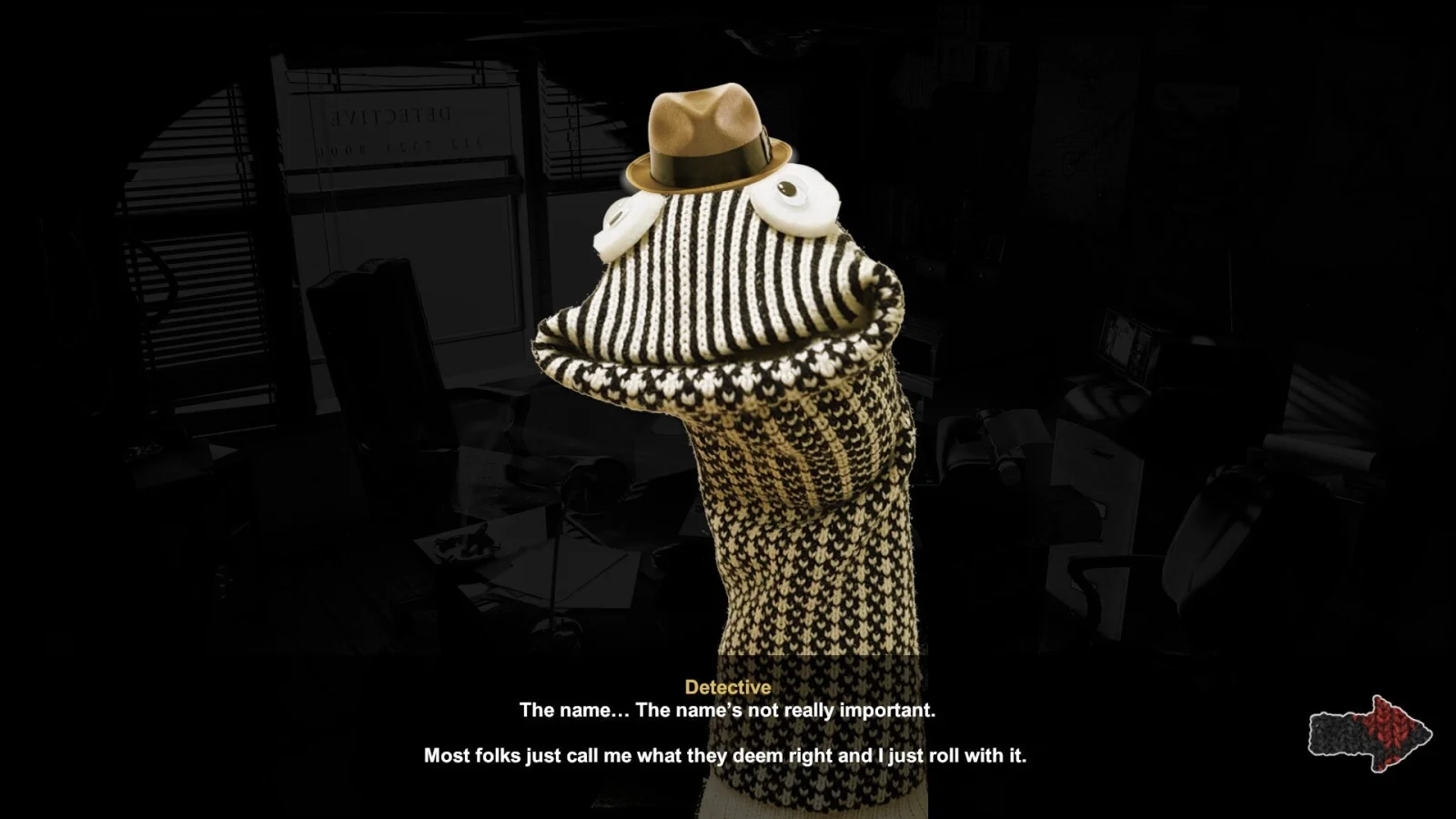
The premise is immediately more specific than its title’s cheerful chaos suggests. Voltaire is Dracula’s rebellious lastborn son, and his break with the family is rooted in his adoption of a plant-based diet. He is aided by Frank and Stein, while the wider setup places him in opposition to Dracula’s minions. The game’s central tension is not simply that a young vampire has enemies; it is that the enemies are positioned to threaten the crops that sustain him.
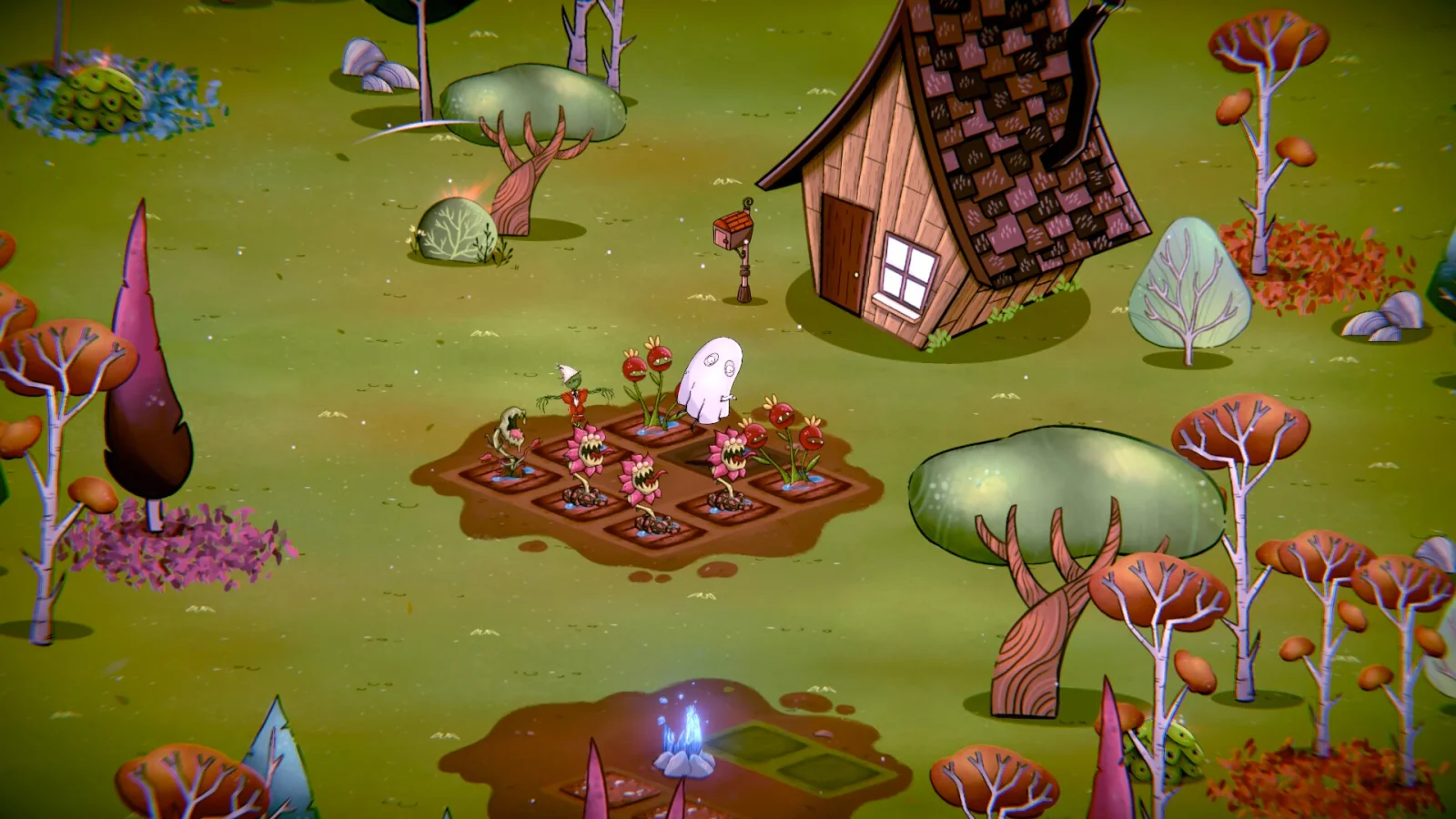
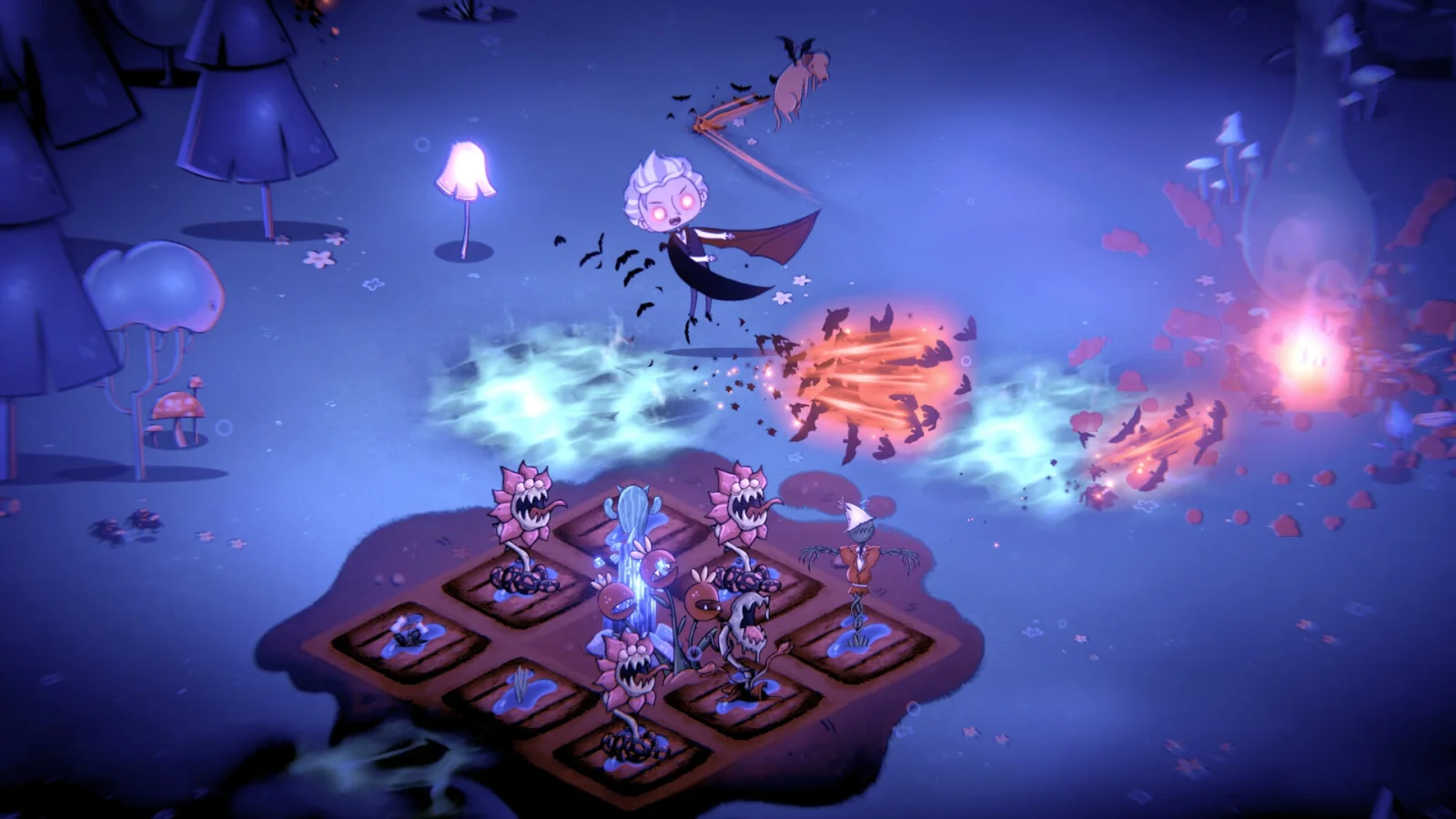
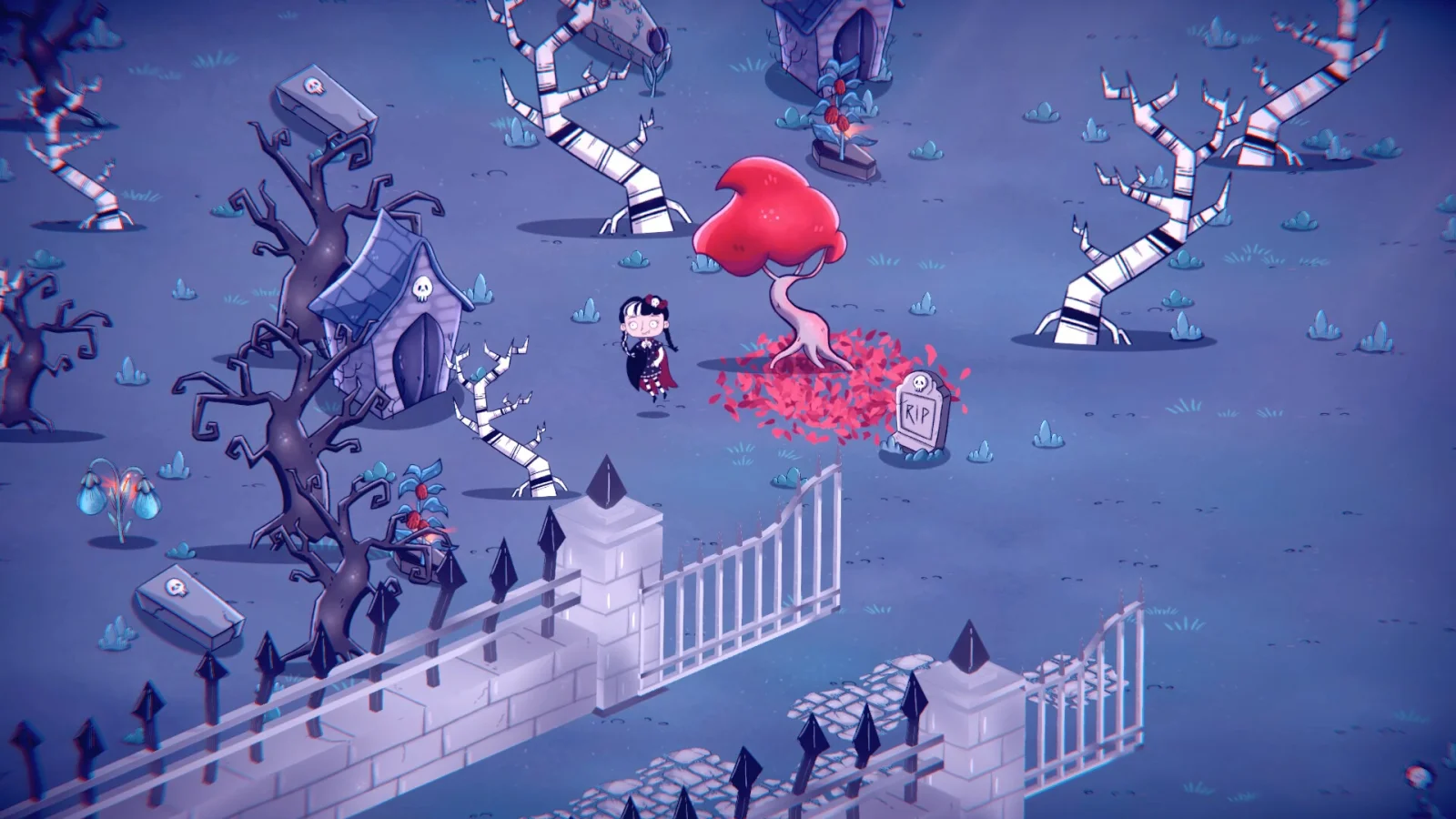
That gives the announced structure a useful clarity. During the day, Voltaire farms magical seeds to nourish himself and expand his farm across biomes. At night, Dracula’s minions attack the crops. Vampire powers, bosses, bounties, higher forms, and new abilities are all part of the announced package, as are roguelite retries that involve knowledge and abilities. The game is also set to use hand-drawn “creepy-cute” art.
Those are promising ingredients, but ingredients are not a meal, even when the kitchen belongs to Dracula’s child. The unknowns matter. There is no current firsthand Xbox evidence regarding performance, control feel, difficulty, co-op, runtime, or how the announced systems will ultimately connect in play. There is also no basis to state precisely what persists between failed runs, beyond the official indication that knowledge and abilities are involved. The preview question is not whether Voltaire has already proven itself. It is whether its announced structure has the potential to turn a broadly familiar roguelite loop into a more personal kind of pressure.
A farm makes every night attack more legible
Farming and combat often sit near each other in games without fully speaking to one another. A player grows supplies, then separately fights monsters, with each activity serving a different checklist. Voltaire’s announced day-and-night setup could avoid that separation because the crops appear to be the vulnerable object at the heart of the conflict. Farming magical seeds is not merely a quiet interlude before action if the nighttime attackers are coming for the results of that work.
That potential connection is the strongest part of the pitch. Cultivation could give combat tangible stakes. Instead of defending an abstract health bar, a generic base, or a score counter, the player may be defending the farm that was personally established during the day and that nourishes Voltaire. If the finished game makes those links clear through its rules and feedback, a night attack could carry a useful kind of tension: the player would be protecting tomorrow’s possibilities as well as surviving the immediate danger.
Equally, the daytime farming could acquire a different mood because it happens under a deadline. Gardening can be restful, but a known nighttime threat may make each planting choice feel less passive. That does not guarantee depth; the eventual significance of individual crops, biome expansion, and seed choices has not been detailed. Still, the announced framework creates room for anticipation. The player may spend the day preparing for a danger they know is coming, rather than simply waiting for a random encounter to interrupt a separate activity.
This is where the game’s vampire premise could do more than supply a costume. Voltaire’s need for nourishment places food within the stated progression loop, contrasting with the passive role farming sometimes has in lighter simulations. The eventual game will need to explain that relationship through play, not premise alone. Yet having a protagonist whose personal needs are tied to the garden creates a straightforward thematic bond between the domestic and the monstrous. In the right implementation, harvesting a magical crop and fending off a minion would feel like two sides of one problem rather than two genres taking turns at the microphone.
Roguelite retries need a clear reason to return
The game is announced as a roguelite, with retries involving knowledge and abilities. That tells us there will be an iterative structure, but it does not establish the exact shape of a run, what failure costs, or precisely how progression is retained. Those distinctions should remain open until the console version can be played. A preview should not turn the word “roguelite” into a blank cheque for systems that have not yet been demonstrated.
What can be said is that Voltaire’s theme gives retries an opportunity to feel narratively and mechanically coherent. Knowledge is a natural fit for a character learning how to survive outside Dracula’s expectations, while new abilities and higher forms could provide a visible sense of escalation. If learning across attempts helps players make better use of farming time, choose how to meet attacks, or approach bosses with greater confidence, then the retry loop could reinforce the fantasy of an underestimated vampire building a life of his own.
The crucial word is if. A satisfying roguelite does not depend solely on repeated attempts or unlock language. Its returns need to generate new decisions, not simply ask for the same work with a larger set of numbers. Voltaire’s crop-defense premise could supply that decision-making through preparation: what to cultivate, how much to risk, which powers to bring to bear, and how to treat an incoming night as a problem to solve. But the announced information does not yet establish the breadth, balance, or consequences of those choices.
For readers interested in another unscored look at an announced roguelite concept, Joking Joystick’s Star Conflict: Burrownauts Preview is available separately. Voltaire should still be judged on its own eventual execution, especially because its farming-focused stakes suggest a substantially different framing for repetition.
Bosses and bounties are also announced, but their function remains undefined. They may provide focal challenges, optional objectives, rewards, or some mixture of these possibilities; the available information does not justify choosing among them. Their presence nonetheless suggests that the game intends to give its nighttime conflict identifiable points of escalation beyond ordinary minion attacks. Whether that escalation complements the cultivation loop or pulls attention away from it will depend on the final design.
Comedy has to survive the bite
“Creepy-cute” is an effective description of a tonal balancing act, not a substitute for one. The hand-drawn art direction is announced, and it is easy to understand why it suits a tale about Dracula’s rebellious son becoming a magical farmer. The combination invites a visual contrast between spooky family iconography and the comparatively domestic concern of keeping a garden alive. Frank and Stein further signal a world that may approach classic horror imagery with playful irreverence.
Whether the comedy lands will depend on how carefully the finished game balances sinister imagery with Voltaire’s domestic motivation. The joke is not merely “a vampire grows plants.” It is the friction between inherited expectations and an earnest attempt to do something different, with Dracula’s minions turning a family disagreement into a crop-threatening conflict. That conflict could be charming if the game preserves the sincerity of Voltaire’s goal while allowing the horror trappings to remain recognizably spooky.
There is a risk inherent in any heavily themed hybrid: the joke can be front-loaded. A memorable pitch earns attention, but it needs play, art, and progression to keep finding fresh expressions of the idea. The announced biomes, powers, higher forms, bosses, and bounties offer several possible places for that personality to develop. At present, though, it would be speculative to claim how varied the biomes are, how powers operate, or whether the humor sustains itself across the full experience.
The same caution applies to the game’s apparent emotional shape. Voltaire’s rebellion against Dracula could potentially make for a warm comic undercurrent, but no verified details here establish the story’s scope, delivery, or resolution. The premise is strong enough to invite curiosity without pretending that curiosity is evidence.
What Xbox players should wait to learn
The September 30, 2026 console launch announcement gives Xbox players a date to watch, but the details that determine a console recommendation remain unresolved. There is no verified information here about Xbox performance, image quality, input response, accessibility options, platform-specific features, or controller feel. There is likewise no evidence about co-op, total runtime, or the game’s difficulty. None of those absences should be treated as faults in the game itself; they are simply questions that this announced-design preview cannot answer.
The most important future test is likely the relationship between day and night. If farming supplies meaningful preparation, if defending crops meaningfully changes the player’s priorities, and if roguelite learning makes later attempts more interesting rather than merely more familiar, Voltaire could carve out an appealing identity. Its core appeal would then come from consequence: a garden is not decorative scenery but something worth planning around and protecting.
If those links are thin, the same concept could feel more divided, with cultivation, action, and progression competing for attention. That is not a conclusion about the game; it is the central design challenge implied by the announcement. Hybrid games are often at their best when each half complicates the other. Voltaire has a clean opportunity to do exactly that, because its farm is explicitly tied to its hero’s nourishment and explicitly endangered by its enemies.
For now, Voltaire: The Vegan Vampire stands out on premise and on the possible stakes created by its day-and-night cycle. A rebellious vampire tending magical crops while evading the family business is a strong comic foundation. The announced roguelite structure, powers, bosses, bounties, farm expansion, and hand-drawn art give that foundation several directions in which to grow. Until there is Xbox hands-on evidence, however, the most honest conclusion is also the simplest: this is one to watch, not one to score.