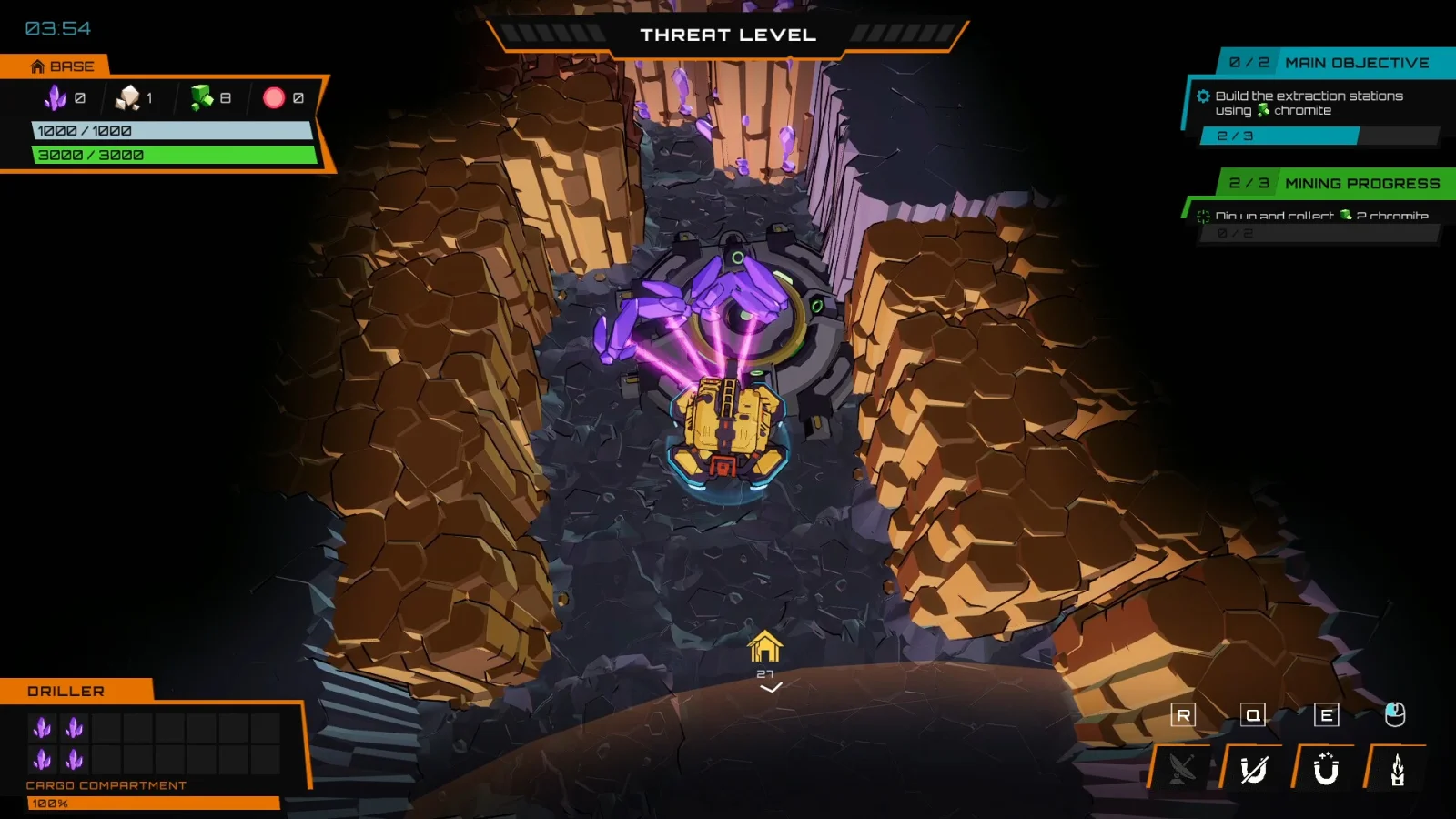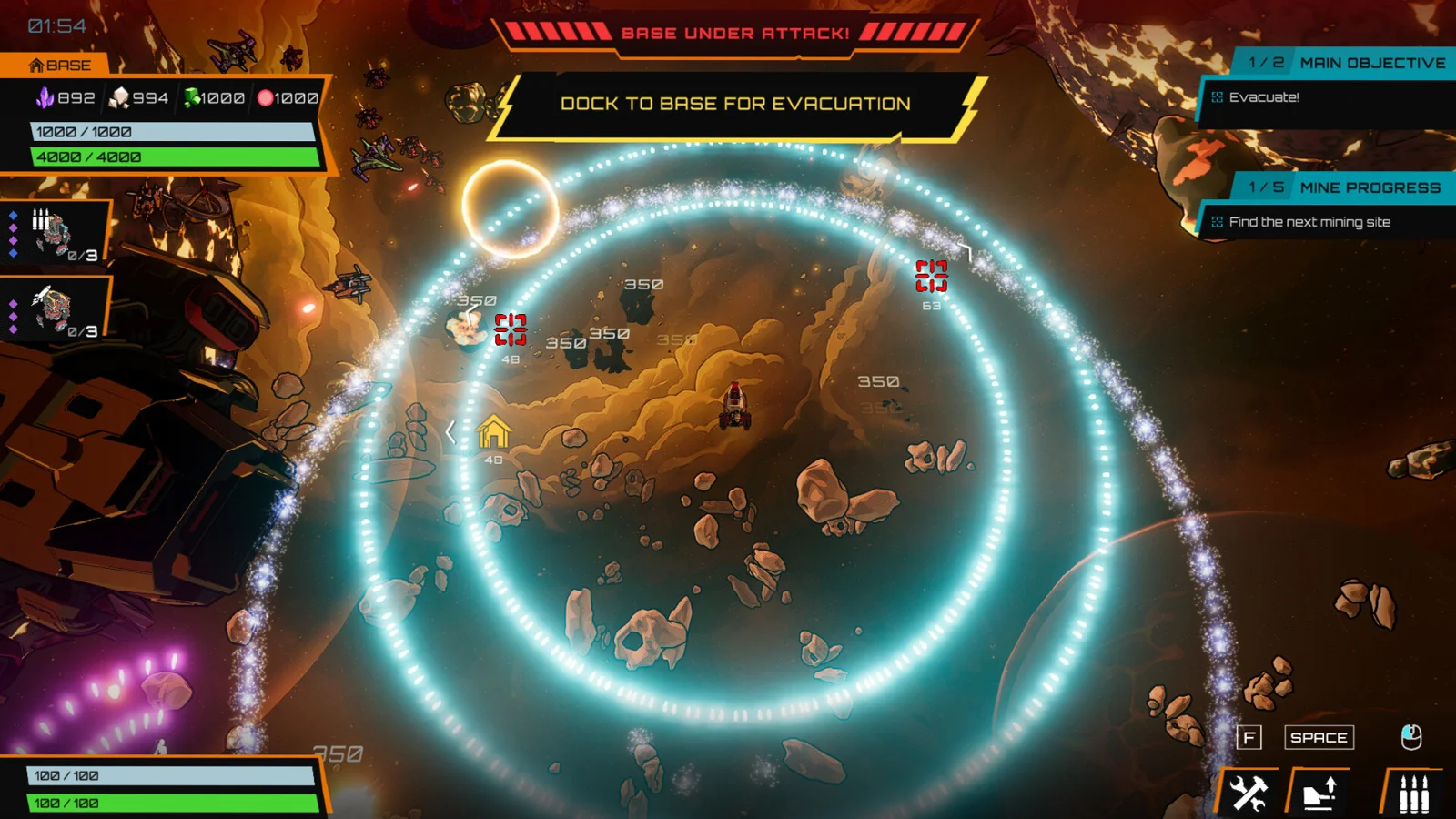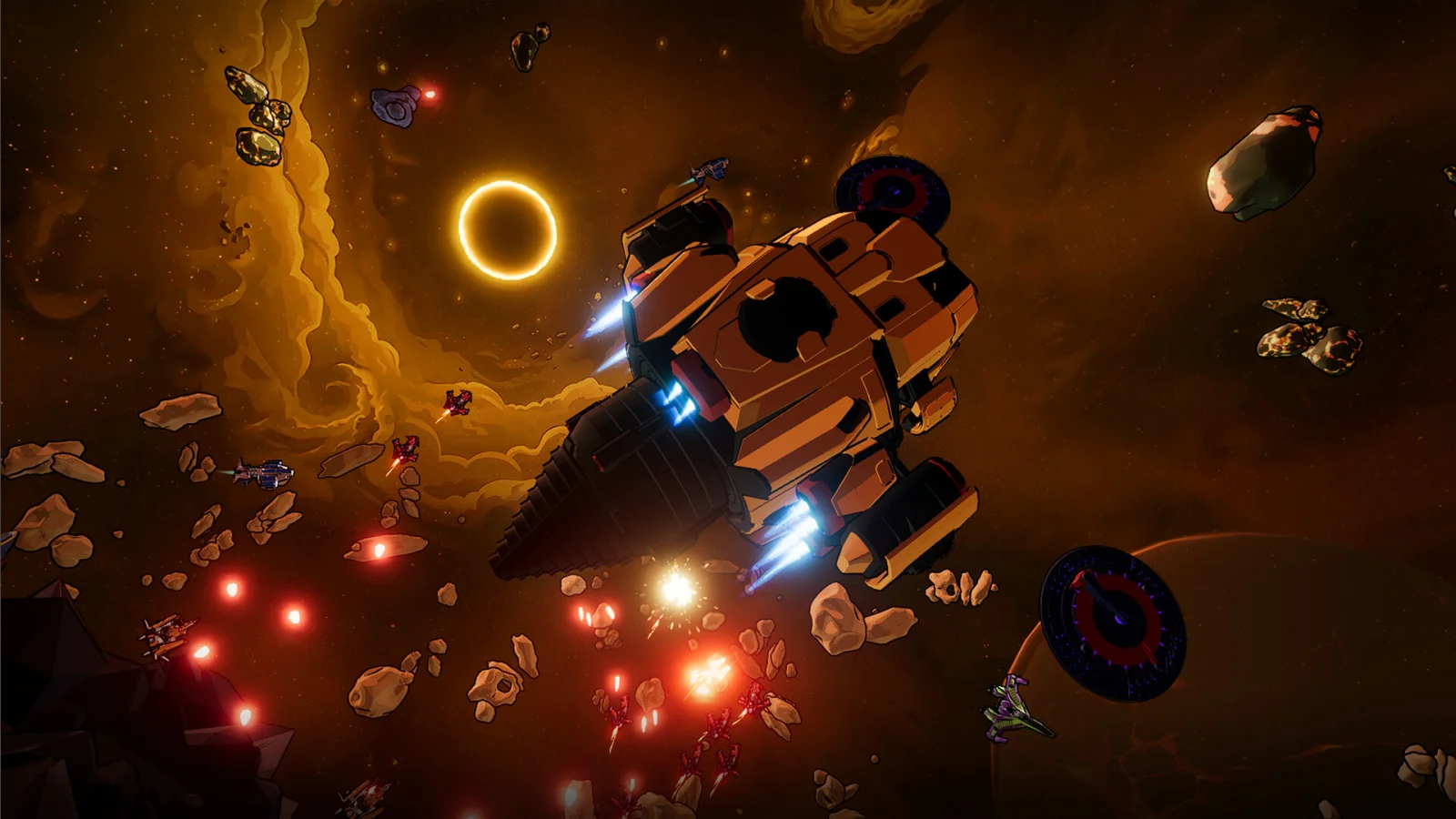
Star Conflict: Burrownauts is an announced single-player PC action roguelite that moves through the broader Star Conflict setting with a notably different focus: miners venture into ancient planetoids, search for deposits and rare materials, and bring those resources home to improve their operation. The announced loop also includes bullet-heaven combat, ship upgrades and base defense, with space bandits capable of attacking while exploration is underway.
That is a coherent starting point for a roguelite. Mining is usually about accumulation, while defense is about interruption, triage and risk. Putting them in the same loop could produce a useful kind of pressure: every extra moment spent looking for materials may be a moment in which a base, a ship or a critical system needs attention. The idea is not simply to shoot through swarms or vacuum up resources, but to decide what is worth protecting and when it is time to leave.
Still, this is a pre-release preview, not a verdict on a finished game. Steam currently lists the game as coming soon and accepts requests for playtest access, while the stated target is early 2027 rather than a fixed launch date. There are no published hands-on impressions or independent reviews to establish how its controls, difficulty, variety or progression work in practice. The headline is promising; the execution remains an open question.
A mining loop with something to lose
The core announced structure is easy to understand. Expeditions go into old planetoids for valuable deposits. The haul can be returned to base, sold and turned into equipment improvements. Those improvements apply to the drilling rig as well as mining and combat ships, creating a direct link between gathering resources and becoming more capable on later expeditions.
For players who enjoy action games with a material purpose behind their fights, that is an appealing pitch. Resource collection can give moment-to-moment combat a reason beyond survival, while upgrades can make a successful return feel meaningful even if the surrounding narrative stays light. The setting’s traces of forgotten civilizations add exploration context, suggesting that these expeditions are not framed as mining empty rock alone.
The more interesting ingredient is the threatened base. A straightforward gathering loop can become routine if every decision points toward collecting the next pile of materials. Base attacks could interrupt that habit. A player may need to weigh a promising deposit against a growing threat elsewhere, with ship condition and important systems demanding attention as the situation changes. If the game makes those competing priorities readable and consequential, the loop could turn mining from passive collection into an ongoing series of gambles.
That potential does not automatically mean frustration-free tension. A defense mechanic succeeds when players can understand why a problem emerged, judge their available responses and learn from a loss. It becomes draining when alerts arrive without useful counterplay or when vital systems demand attention so often that exploration feels constantly cancelled. Burrownauts’ announced ingredients support either outcome; the distinction will depend on pacing, feedback and balance that have not been demonstrated publicly.
Bullet-heaven combat needs a role beyond noise
Bullet-heaven combat is another natural fit for a game built around expeditions and escalating danger. Large-scale action can create the feeling that a mining trip is becoming unstable, particularly when materials, ship condition and a vulnerable base all compete for attention. The format may also suit players looking for brisk, repeatable runs rather than a heavily scripted space campaign.
But “bullet-heaven” describes a broad territory, not a guarantee of satisfying action. The key questions are practical ones: how clearly attacks and threats read amid busy encounters, whether the available combat choices encourage different approaches, and whether upgrades change decision-making rather than merely enlarge numbers. No particular weapons, enemy types or encounter structures have been announced, so there is no basis to predict build depth or tactical breadth.
The relationship between mining and combat will matter just as much. Ideally, gathering materials, maintaining systems and fighting bandits reinforce one another. A valuable find might tempt a player to stay in danger; an equipment improvement might make a future expedition safer or open a more deliberate defensive plan. If combat instead operates as a detached obstacle between resource pickups, the game could lose the distinctive identity suggested by its premise.
There is also a tonal opportunity in making industrial work feel adventurous without making it trivial. Space mining carries an inherent fantasy of making do with specialized machinery far from safety. The announced drilling rig and ship-management elements could serve that fantasy well, provided they create understandable choices rather than a pile of upkeep tasks. The game does not need simulation-level complexity to make equipment matter, but it does need enough connection between equipment, danger and reward for upgrading to feel earned.
Progression could be the connective tissue
Burrownauts places resources at the center of its announced advancement: collect them, return to base, sell them and improve the operation. That makes the upgrade economy more than a background reward screen. It is meant to be the bridge between one expedition and the next.
A strong roguelite progression system gives players reasons to reassess priorities after every run. Perhaps a safer route is worthwhile because it supports an overdue rig improvement; perhaps a riskier push makes sense because a combat upgrade could change the next attempt. Burrownauts has the ingredients for that kind of decision-making because it includes both mining and combat ships alongside the drilling rig. Different categories of investment could make the question of what to improve genuinely interesting.
Yet the crucial structure is unknown. There is no detail on failure penalties, permanent unlocks, run length, campaign duration or the degree of map generation. Those omissions matter because they determine whether setbacks create productive adaptation or simply erase momentum. They also determine whether upgrades offer meaningful specialization, an overly obvious best path, or only incremental maintenance.
Players drawn to long-term optimization should keep expectations measured until the game explains those systems in more detail. Those who mainly want action should similarly wait to learn whether its economy supports the combat or repeatedly pulls focus away from it. The game’s promise lies in connecting those pleasures, not forcing fans of one to tolerate the other.
What prospective players should watch for
The best reason to keep Burrownauts on a watchlist is that its announced loop has a clearer identity than a generic “space roguelite” pitch. Mining ancient planetoids, defending a base during exploration and upgrading an industrial operation all point toward a game about managing opportunity under pressure. For more background on the initial announcement, see Star Conflict: Burrownauts’ mining-focused action roguelite announcement.
The clearest caution is equally simple: virtually every measure of execution is still unproven. There is no confirmed information on co-op, console versions, controller support, price, technical performance, enemy variety, difficulty, narrative quality or the completeness of the launch feature set. The listed minimum PC requirements are Windows 10 64-bit, 8 GB RAM and a GTX 1050 or RX 560, but those specifications are compatibility guidance rather than evidence of performance quality.
It is also important not to mistake playtest availability for a finished product or a public quality signal. Access requests and activated keys establish that testing is part of the current pre-release process; they do not answer whether the eventual game will have satisfying controls, fair losses or lasting replay value.
Preview outlook
Star Conflict: Burrownauts has an understandable hook: mine for the resources that make future excursions stronger, while danger pushes back against every impulse to linger. The combination of collecting, upgrading, combat and defense could create a tense, purposeful action loop for players who like their roguelite runs tied to a tangible operation.
For now, though, it is a design worth monitoring rather than a game that can be confidently recommended on performance. The next meaningful details should show how a run is structured, what failure costs, how the base-defense pressure is communicated, and whether the upgrade paths create genuinely different priorities. Until then, Burrownauts is best viewed as a potentially distinctive PC action roguelite with its hardest questions still buried beneath the surface.