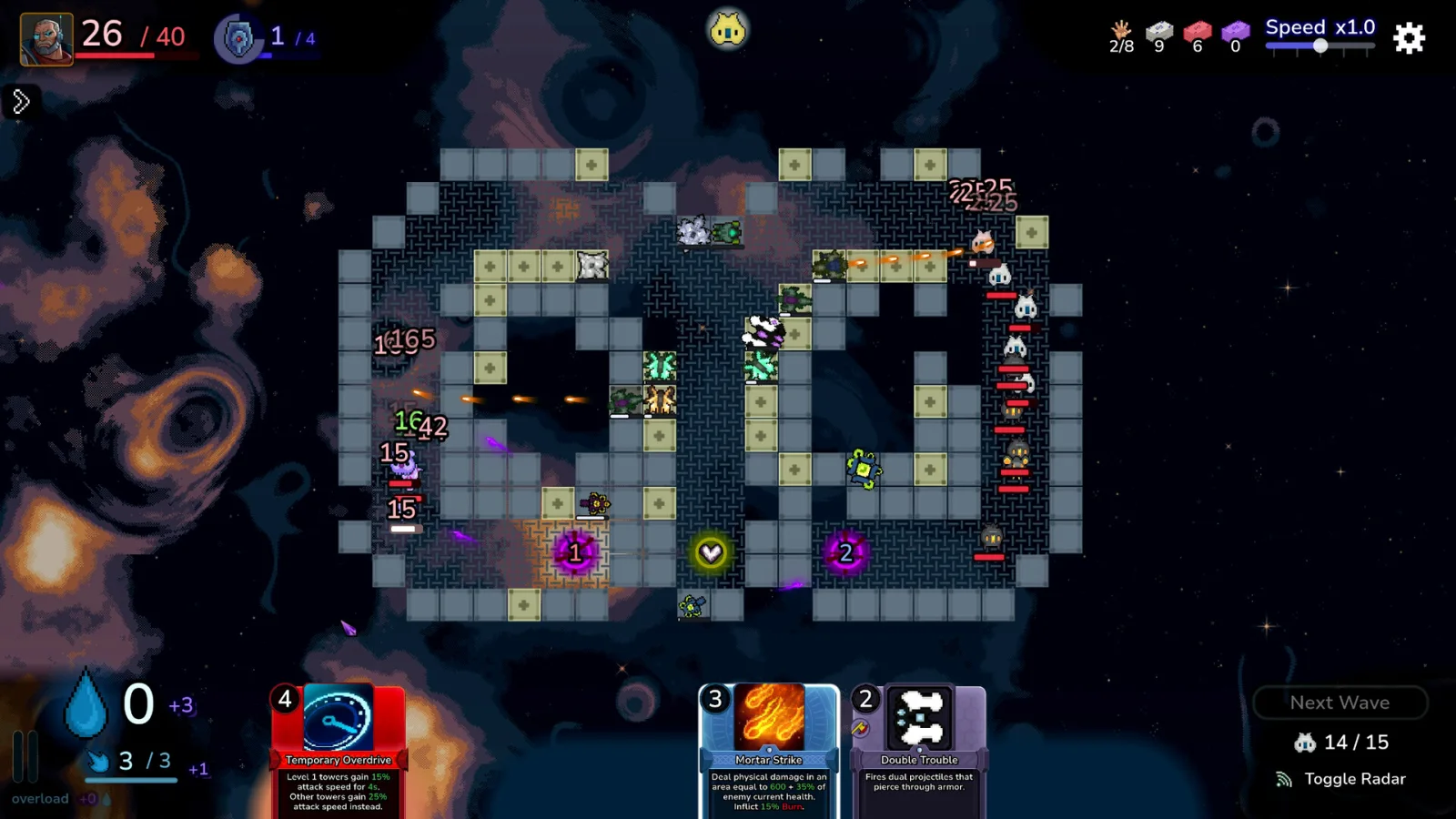
Tower Tactics II is scheduled to enter Steam Early Access on PC on October 8, 2026. As of October 3, 2026, it has not launched in Early Access. Developer asraworks and publisher Assemble Entertainment describe it as a combination of tower defense and roguelike deckbuilding, where card choices determine the towers and abilities available while placement and path management determine how those tools protect a map.
A public demo is separately available. The developer says it includes two playable characters and roughly four to five hours of content, an estimate that may vary by player. The announced systems provide a useful starting point for examining the design questions that the October 8 build will need to answer.
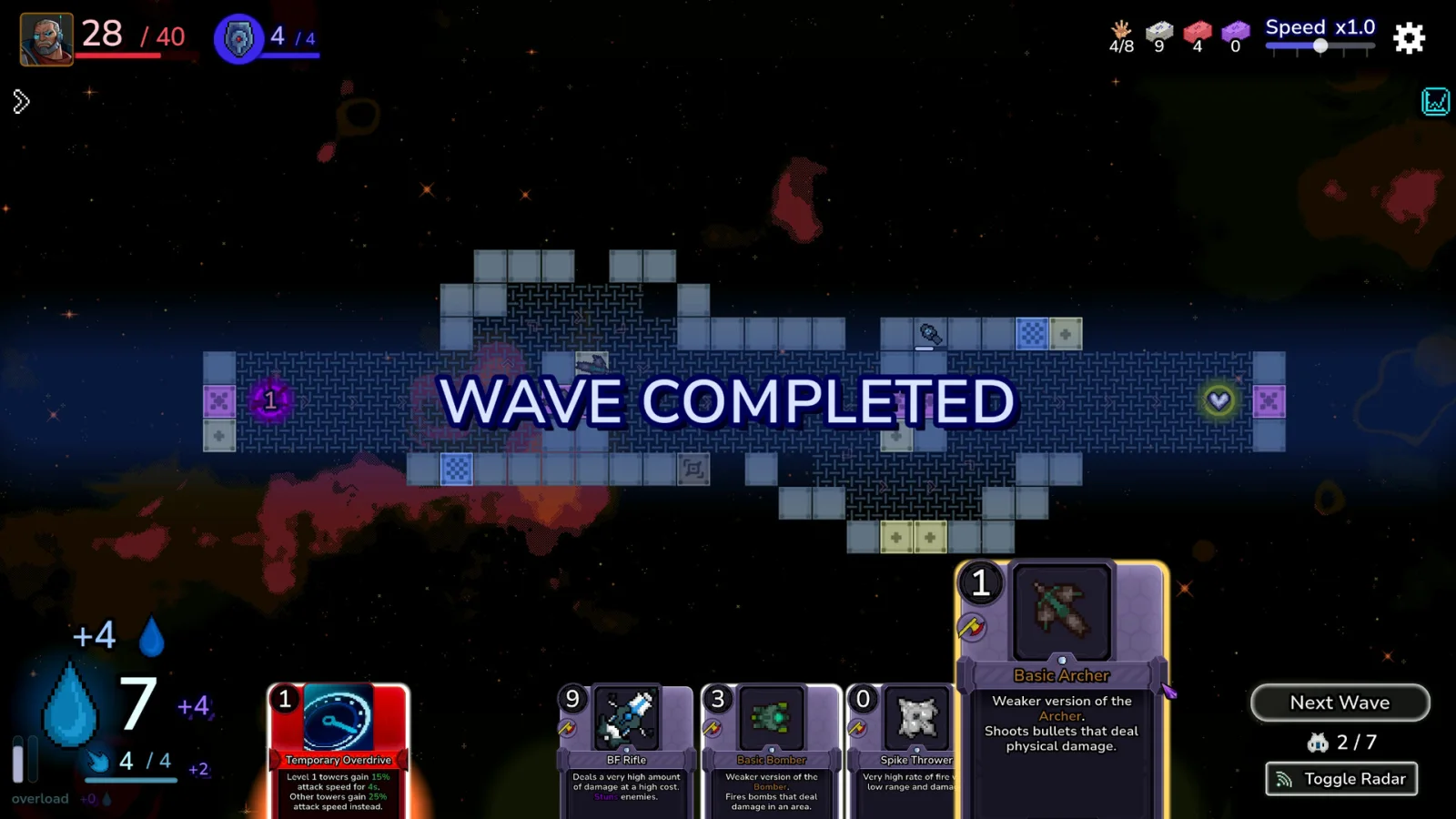
There is nevertheless a useful design question in Tower Tactics II’s stated premise. Tower defense typically asks players to make spatial decisions under pressure: where does a defensive tool go, what route will threats take, and which locations create the most value? Deckbuilding adds a separate layer of uncertainty and curation: which options can appear, which ones should be selected, and how can a collection of individual effects become a coherent plan? The promise is not simply towers plus cards. It is a game in which the menu of spatial tools is itself shaped by earlier card decisions.
That is potentially a productive split, but it also creates a demanding standard for readability. The October 8 Early Access build will need to show whether players can understand both the immediate board decision and the longer-term deck consequence without one layer obscuring the other.
What is established ahead of Early Access
The official listing identifies Tower Tactics II as a tower-defense roguelike deckbuilder. Card selection is said to govern which towers and abilities become available. Placement and path management are identified as the means by which players use those resources to defend the map. Those are the central announced pillars, and they establish two distinct categories of choice: acquiring capabilities and applying them to a layout.
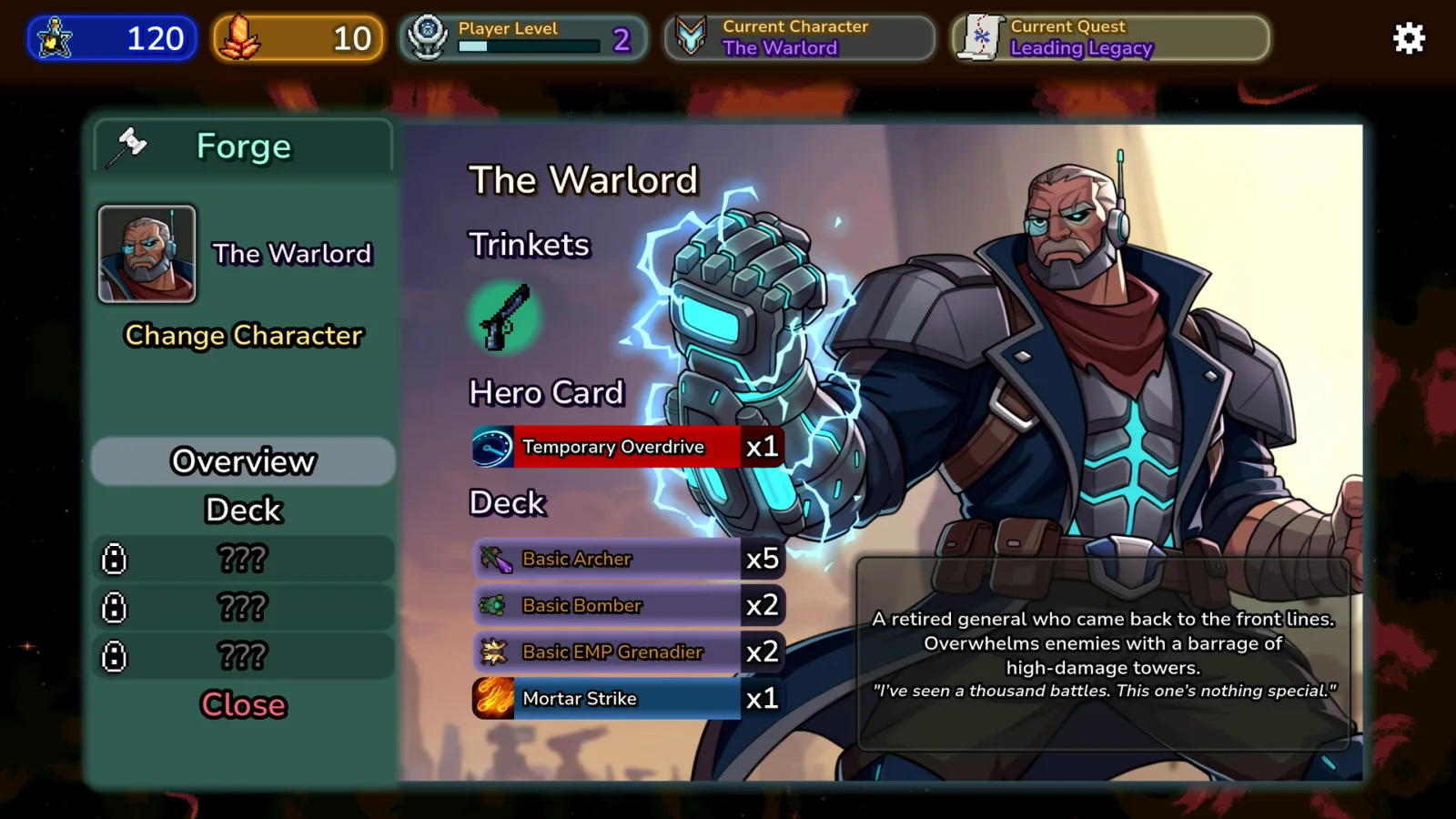
The listing also advertises more than 180 cards and 150 trinkets. Those are developer-listed counts rather than independently verified inventories. Hero cards, temporary effects, card items, and status effects are among the stated components. Burn, Poison, and Frail are named as status effects, although the supplied official information does not specify their exact rules, durations, stacking behavior, targets, or interactions.
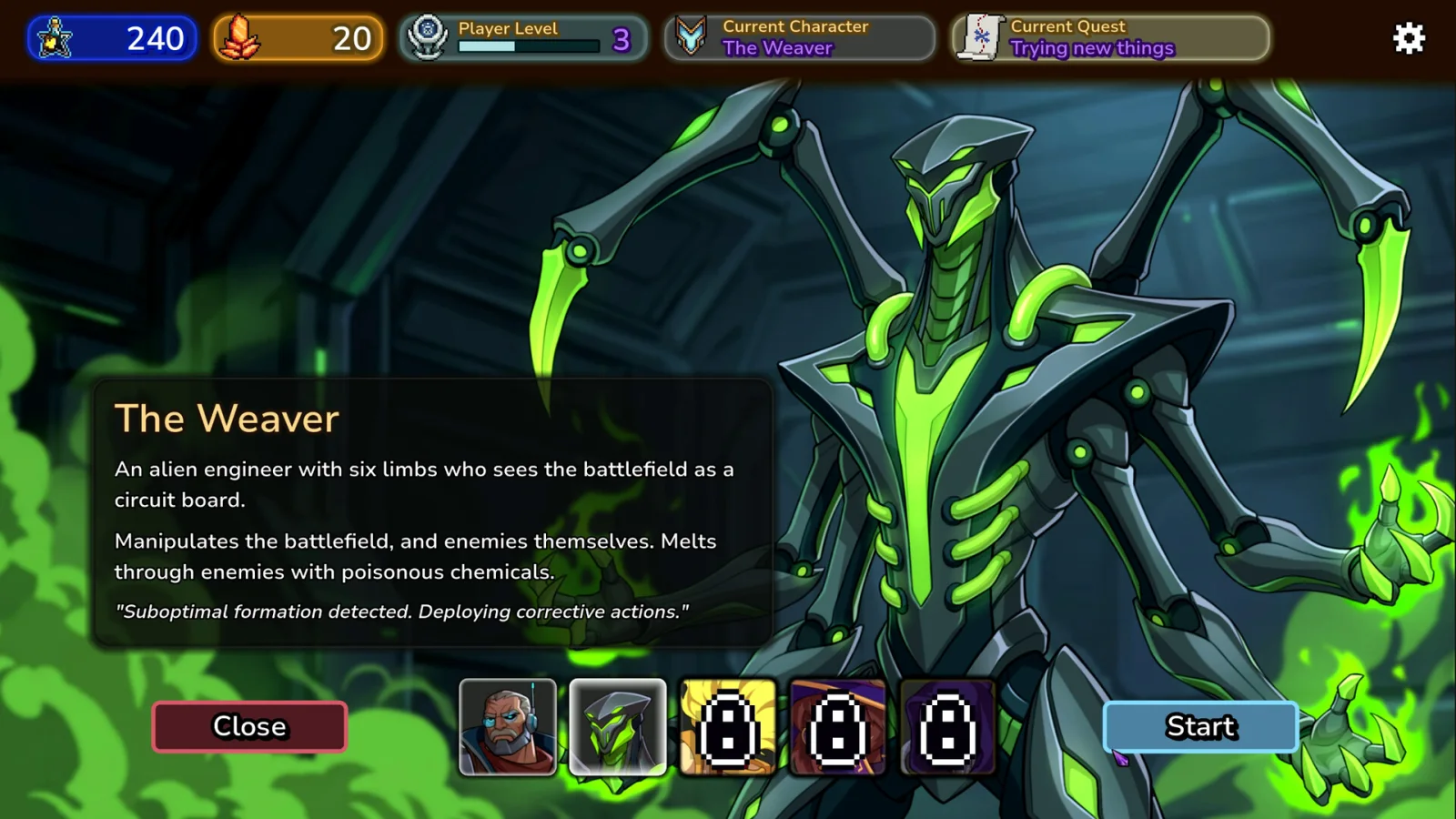
asraworks plans five playable characters for Early Access. The public demo reportedly has two playable characters. That difference matters: the demo should not be treated as a complete representation of the character roster planned for the initial Early Access release, and the planned Early Access roster should not be treated as a guarantee of how varied or finished every character will be on October 8.
The listing describes a quest-driven storyline and four additional modes planned for Early Access. It also names metaprogression, a map editor, Steam Workshop support, controller support, and Steam Deck support. These are announced features and support targets, not proof of their implementation quality, scope, usability, or availability in every build. The developer currently expects Early Access to last about one to two years, while making clear that timeline may change.
For readers tracking other games that use cards to influence tactical planning rather than treating deckbuilding as a detached reward screen, our design assessment of pre-run deckbuilding offers a separate, neutral point of discussion. It is not a tested comparison with Tower Tactics II.
Deck construction and placement are different decisions
The most interesting announced feature is not any individual tower or card. It is the proposed handoff between deck construction and map play. A placement system asks a local question: given the terrain, route, and tools currently available, what location makes the best use of this resource? A deckbuilding system asks a portfolio question: which tools should belong in the pool at all, and what future options become more or less likely after this selection?
If Tower Tactics II makes those questions meaningfully connected, each decision could reshape the significance of the other. A card choice might matter because it establishes a future placement pattern, rather than merely increasing an abstract measure of power. Conversely, an awkward map or route could make a normally attractive card less desirable because its value depends on a positional condition that is not present. That possibility is where the hybrid could find its identity.
There is a countervailing risk inherent in any system with several decision layers. If deck choices determine the useful options too rigidly, placement may become an execution step with little real discretion. If board decisions dominate to the point that almost any deck can solve the same situation, then the deck may feel incidental. Neither outcome can be assigned to Tower Tactics II before the build is evaluated, but they explain why the game’s announced architecture deserves closer scrutiny than a simple feature list.
Path management could provide the bridge. The official materials say that it matters, but they do not establish precisely what actions path management permits. At a broad design level, route-related choices can make range, timing, coverage, and targeting relationships matter differently from one map state to another. A card that seems modest in isolation may become strategically central when a player can build around the route conditions it favors. Equally, a strong effect may demand tradeoffs if its best placement leaves other areas less protected. Whether Tower Tactics II actually produces those tensions is an open practical question, not a conclusion.
Why the announced card and trinket counts could matter
More than 180 cards and 150 trinkets is an ambitious announced catalogue. Quantity alone does not establish depth, but a large pool can support several kinds of variation if its pieces create distinct decisions. The relevant issue is not whether the total looks large in a store description. It is whether the cards change priorities: whether a player is choosing between different kinds of spatial plan, different ability timing, different status-effect emphasis, or genuinely incompatible routes through a build.
Trinkets could be particularly important because they may alter the value of cards already chosen. In a deckbuilding framework, an item that changes the payoff of a category can turn a previously ordinary selection into a centerpiece. A temporary effect can similarly create a short-term reason to deviate from a preferred plan. Hero cards and card items add further announced categories that may make a collection of cards more than a flat list of tower unlocks.
That possibility depends on clarity. If a trinket, status effect, or temporary modifier changes how an existing card functions, players need to be able to identify the consequence before a decision becomes irreversible or expensive. Clear communication is not merely a quality-of-life concern in this type of design. It is what lets players distinguish a calculated adaptation from a surprise they could not reasonably plan around.
Burn, Poison, and Frail provide recognizable status-effect labels, but their names do not reveal their exact tactical role here. They may support differentiated strategies, or they may overlap substantially; official information supplied for this preview does not settle that question. The important thing to examine after launch will be whether status effects create distinct incentives in card drafting and positioning, rather than serving only as alternate visual labels for a similar result.
Map editing could extend the conversation beyond the launch maps
The announced map editor and Steam Workshop support have implications beyond a conventional promise of more content. In a game where placement and paths are central, a map is not merely a backdrop. Its geometry and route logic can determine which cards, towers, and effects are attractive. Community-made maps could therefore test the system from unusual angles, asking players to reconsider established assumptions about coverage and deck priorities.
That is the optimistic design case, not a claim about what the tools will deliver. The practical value of an editor depends on its accessible feature set, the clarity of its publishing flow, the discoverability of Workshop creations, and the extent to which custom maps interact cleanly with the game’s other systems. None of those implementation details are established by the feature announcement alone. Still, editor support is especially relevant to this particular premise because it may allow the spatial half of the game to keep changing after players understand the basic card pool.
Workshop support may also create a useful distinction between authored progression and player-made challenges. The planned quest-driven storyline could provide a developer-structured context, while additional modes and custom maps could potentially foreground repeatable mechanical experiments. The official material does not detail how these components connect, or when they will be available during Early Access, so it would be premature to assume a particular progression flow or mode structure.
The metaprogression question
Metaprogression is another announced system that needs careful evaluation once Early Access begins. It can give repeated play a wider sense of continuity, offer long-term goals, and introduce new strategic possibilities over time. In a tower-defense deckbuilder, however, persistent advancement can also change the meaning of tactical success. If permanent unlocks mainly expand options, they may widen the field for experimentation. If they substantially alter starting strength or access to crucial tools, they may make it harder to separate a sound tactical decision from an advantage earned outside the current attempt.
This is not an argument that metaprogression is inherently beneficial or harmful. Its effect depends on the specific unlock structure, pacing, and relationship to the cards and maps. The key question is whether the persistent layer gives players more interesting decisions without diluting the importance of map reading, deck construction, and placement. Tower Tactics II’s official announcement establishes that metaprogression exists; it does not establish which side of that balance it reaches.
Questions for the October 8 Early Access build
The immediate issue is not whether the announced ingredients sound plentiful. It is whether they form a legible tactical language when the Early Access version is available. Run variety is the first major unknown. A broad card and trinket catalogue may generate substantially different approaches, but variety must be evaluated through actual interactions and decision patterns rather than item counts.
Difficulty curve is equally unresolved. The game will need to communicate what went wrong or right when a plan succeeds or fails. That does not mean every outcome must be simple, but players should be able to learn whether the problem involved card selection, placement, route management, status interactions, or a mismatch between several of those factors. Without that feedback, a layered strategy game can feel opaque rather than demanding.
Card clarity will be central to that learning process. The more hero cards, temporary effects, card items, trinkets, and status effects intersect, the greater the need for explanations that make consequences understandable. Controller and Steam Deck support are also announced, but their ergonomics remain untested. A hybrid built around selecting cards and placing defenses has potentially different input demands from a game focused on only one of those tasks, so the layout and navigation deserve direct evaluation rather than assumption.
Finally, the first Early Access build will clarify the relationship between tactical choices and metaprogression. It will also establish the real scope of the quest-driven storyline, the four additional planned modes, the editor, and Workshop integration at that point in development. The developer’s one-to-two-year Early Access expectation provides a broad development horizon, but it is explicitly subject to change and should not be read as a fixed roadmap promise.
Tower Tactics II has an announced design worth watching because it puts deck access, defensive placement, and route management into the same decision space. At present, that is the proper scope of the assessment. The public demo and the upcoming October 8 Early Access release offer opportunities for later hands-on evaluation; this preview does not substitute inferred outcomes for tested ones.