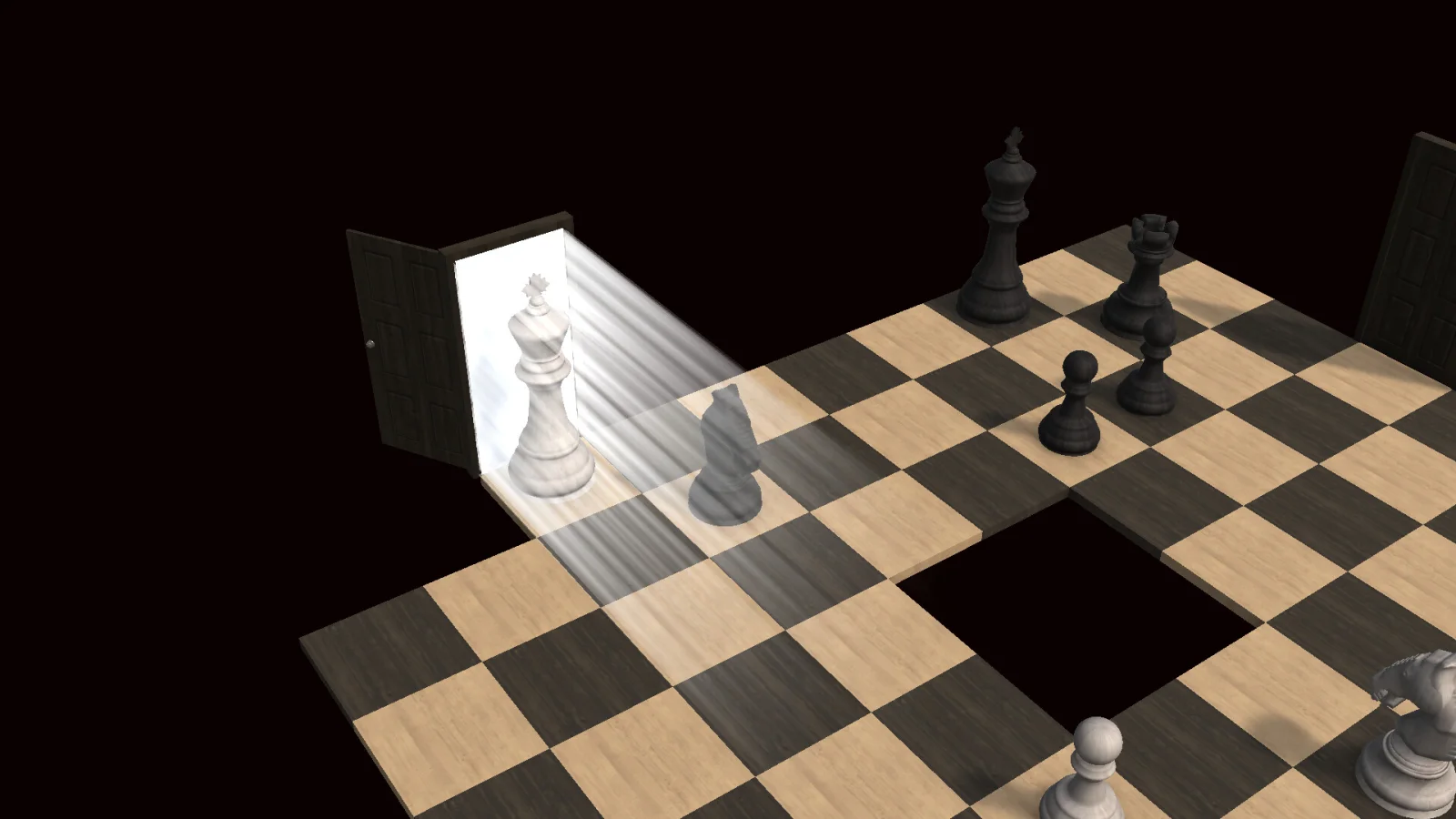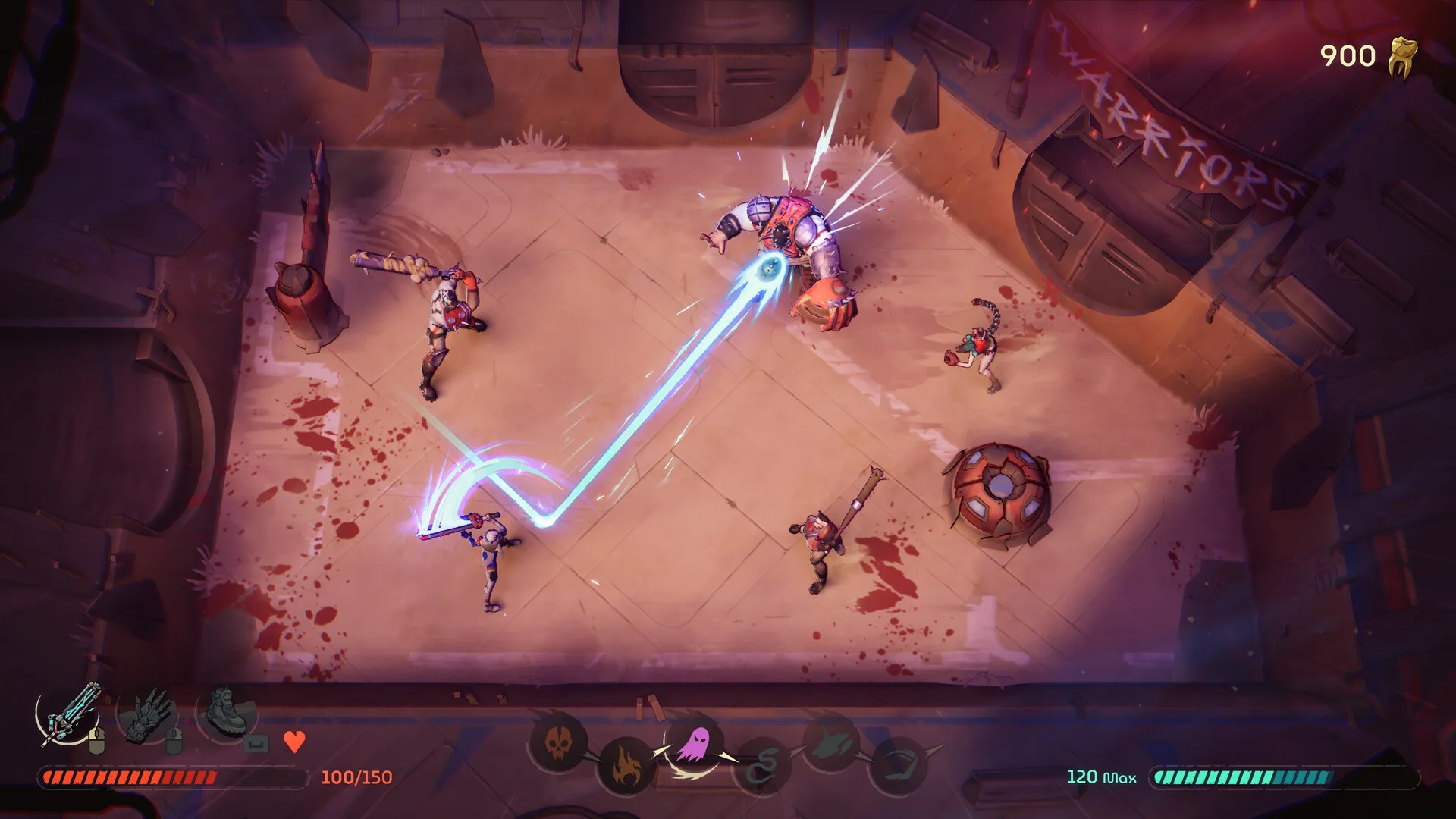
Furyball: Rogue Revenge arrives in PC Early Access with a premise that is easy to state and considerably harder to execute: its central weapon is a ricocheting Furyball, and successful combat is meant to depend on where that ball is launched, when it is sent out, and how the player uses the surrounding arena. Rebound’s game places an outsider in Neo-Arcadia, a sun-scorched city controlled by sports-themed gangs, with the Furydome as the stated destination. On paper, that journey combines action-roguelite structure with pinball-like collision design. The question is not simply whether a bouncing projectile can damage enemies. It is whether each rebound can turn space into something the player reads, plans around, and potentially exploits.
This is an Early Access preview, not a full-release assessment. The current Steam description identifies ricochet combat and roguelite progression as part of the available foundation, while content, progression, build variety, and replayability are all intended to grow during development. Rebound estimates roughly 12 months in Early Access, although that estimate is a target rather than a guaranteed release date. Planned 1.0 additions include more gangs, enemies, bosses, upgrades, and story material. Those boundaries are important: Furyball’s core idea is present, while much of the variety that could determine its long-term range remains part of the game’s announced future.
The ball is a weapon, but it is also a spatial problem
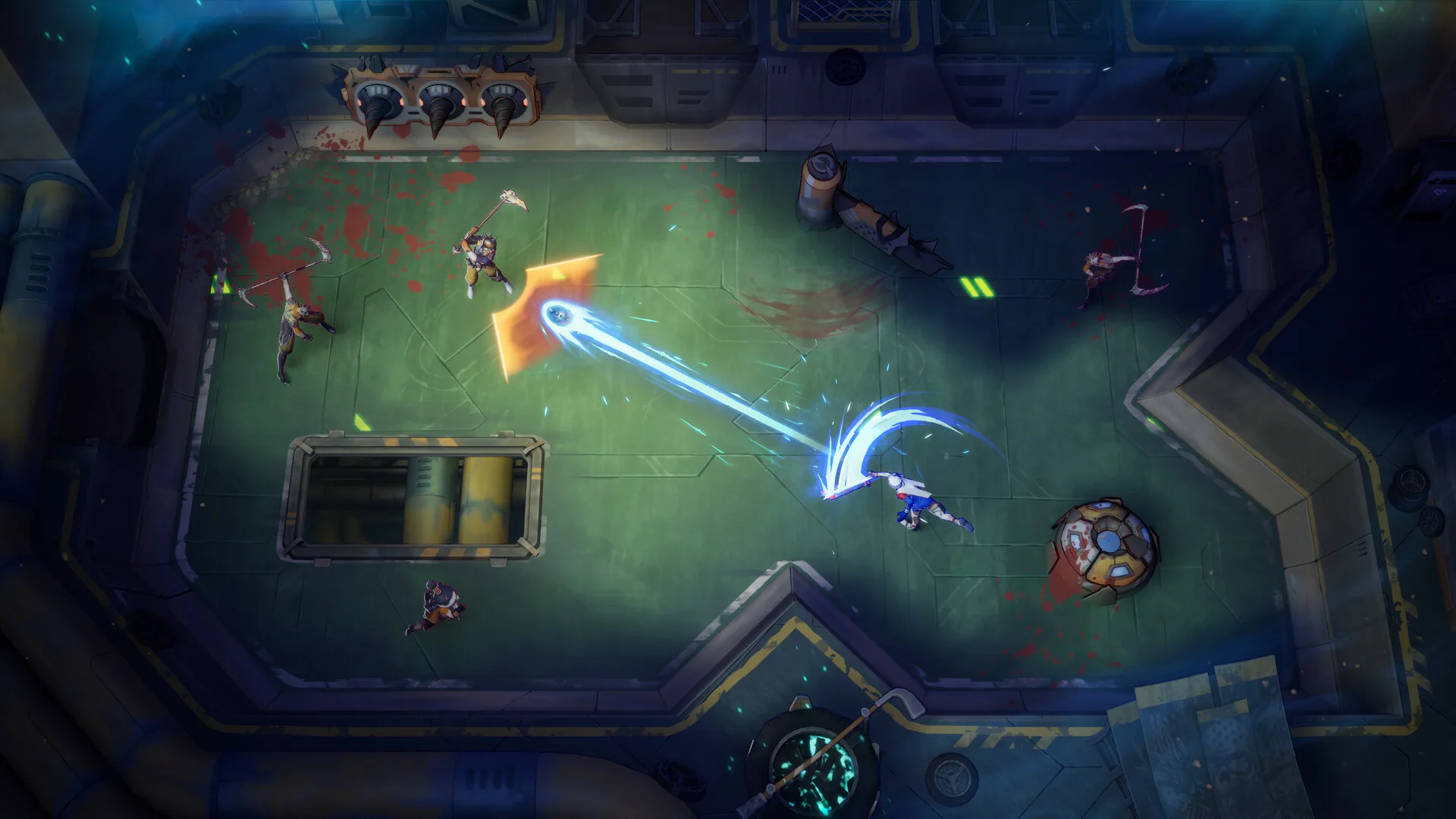
That distinction gives Furyball a potentially strong identity. The official pitch emphasizes positioning and timing when launching the ball, and those terms imply that player movement should matter alongside aiming. A safe position may not offer an especially productive angle. A narrow portion of an arena may create more rebound opportunities but also expose the player to danger. A wall can become more than a limit around the playfield; it can become a useful surface in an attack route.
Pinball-inspired arenas and traps complicate this further. The confirmed presence of traps establishes that the environment is intended to be an active component rather than a blank combat backdrop. Their exact behavior should not be assumed, but their inclusion points toward a useful possibility: arenas could ask players to assess hazards, routes, and incoming threats at once. The best version of this framework would make a promising ricochet line feel like a small tactical discovery rather than an accidental chain of collisions.
That is where Furyball could distinguish itself from games that simply make a conventional shot bounce. The bounce must carry meaning. If arena geometry changes the value of a launch, then the player has a reason to study the room before acting. If the ball’s continued route creates pressure that requires repositioning, then a single decision can unfold over several moments rather than being instantly replaced by the next attack. The intended combat rhythm becomes one of commitment, adjustment, and renewed opportunity.
Readability is the foundation beneath the spectacle
Ricochets are compelling because they sit between predictability and surprise. Complete certainty could make the Furyball feel like a line-drawing tool rather than a lively object moving through an arena. Total unpredictability, however, would undermine the stated importance of timing and positioning. If players cannot tell why a route succeeded, then the game risks making its deepest decisions look indistinguishable from luck.
Furyball therefore has demanding readability requirements. Arena boundaries need to communicate where they are and how they function. Enemies need to remain understandable while a fast-moving ball crosses the same space. Traps must be visually distinct enough that players can judge their relevance in a moment of action. Any effects added to the Furyball need to preserve the visibility of its route and impacts. These are not claims about the current build’s presentation. They are the practical conditions required by a game built around a rapidly moving object whose angle and contact points are central to player choice.
Control precision belongs in the same conversation. A ricocheting projectile naturally magnifies small ambiguities in aiming because an imprecise launch can become a dramatically different route after several impacts. The meaningful test is not whether every bounce can be calculated in advance. It is whether the player can form an intention, express it reliably through the controls, and understand the broad reasons a trajectory unfolded as it did.
Build variety should alter decisions, not only damage
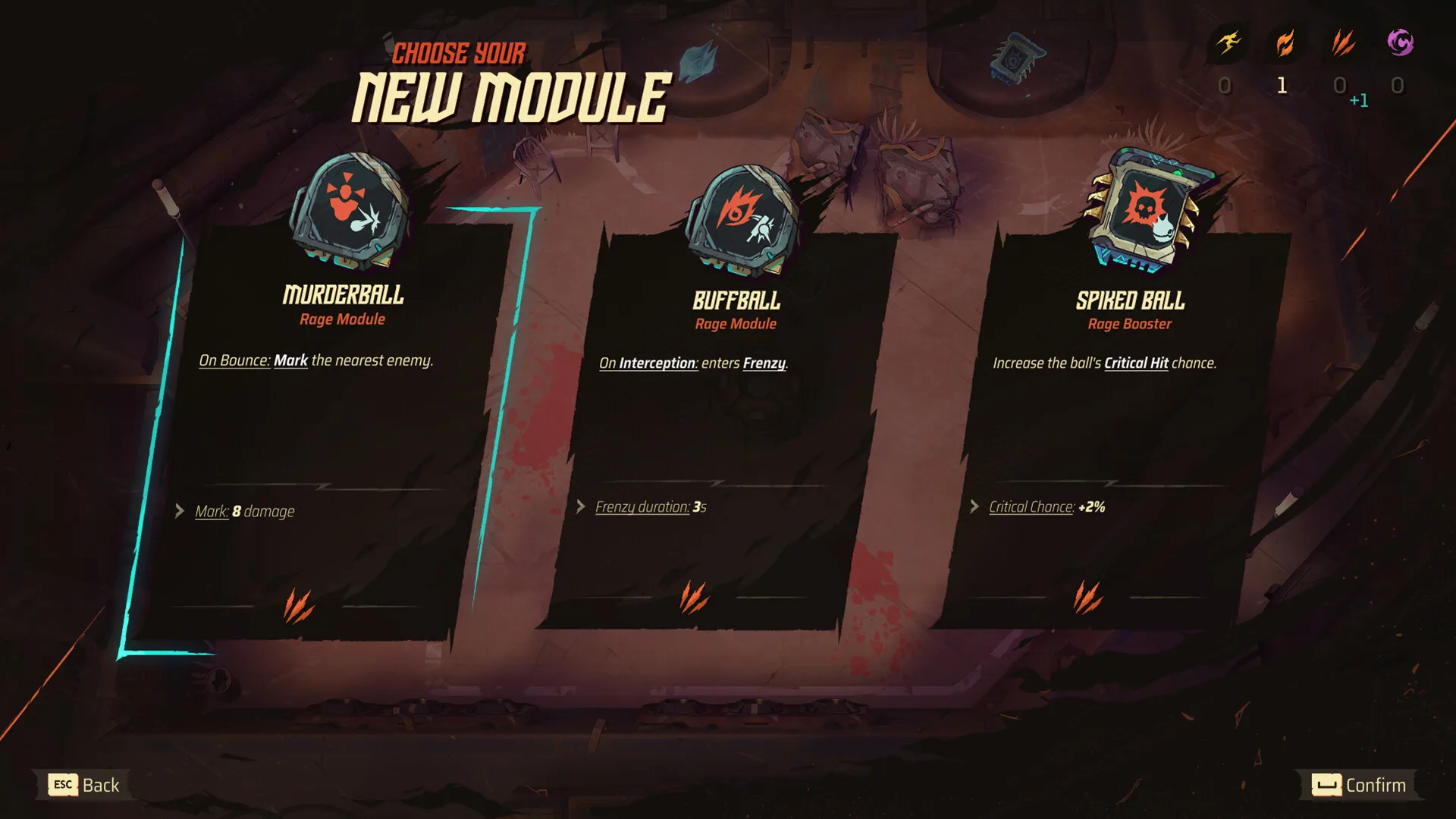
The roguelite layer is where Furyball’s central idea could gain lasting range. Official descriptions say runs can provide ball modules, upgrades, and build synergies, with fire, crushing, and bleed among the named effect types. That establishes an intention to make the Furyball mutable rather than fixed. The important design issue is how far those modifications change the player’s relationship with rebound geometry.
An effect can be rewarding while still being shallow. If a fire, crushing, or bleed upgrade only changes damage output, it may make an existing strategy more efficient without creating a distinct approach. Damage growth has a place in a run-based game, but it does not automatically create a memorable build. A more transformative system would give the player new reasons to value certain angles, layouts, target positions, or degrees of risk.
For example, a meaningful build system could make one run favor long ball routes, another reward particular environmental interactions, and another change whether close positioning or distance appears more valuable. These are analytical examples of useful differentiation, not descriptions of current Furyball upgrades. The confirmed information establishes categories of effects and the presence of synergies; it does not define the exact rules of individual modules.
That distinction matters because Furyball has an unusually promising base for build design. Every modification sits on top of a weapon whose motion already depends on space. Even a relatively modest change could alter the best line through an arena, the best moment to launch, or the kinds of rebounds worth pursuing. If later upgrades lead to genuinely different spatial habits, the game’s roguelite layer could deepen rather than merely decorate the core loop.
Early Access scope and the replayability tension
Rebound is direct about the present state of the project: core combat and progression are in the Early Access build, while replayability, content breadth, progression, and build variety are expected to expand. That creates a familiar but significant tension for a roguelite. A compact starting selection can help establish a system’s fundamental language. Repeatedly encountering the same basic principles can be useful when the central skill is learning how angles, timing, and placement interact.
At the same time, repetition exposes limited variation quickly. Run-based games ask their main loop to remain engaging through return visits, and that durability is often carried by changing encounters, different enemy demands, new boss pressures, and builds that produce distinct priorities. The planned additions of gangs, enemies, bosses, upgrades, and story may address those areas, but they should be understood as future intentions rather than current-build guarantees.
An earlier launch announcement described targets of two districts or gangs, two weapons, two ball tunings, two handgears, more than 50 items, ten skills, and 24 challenges. Those were announced targets, not confirmation that every listed element is present in the current version. They nevertheless clarify the intended shape of the Early Access opening: a comparatively focused arrangement intended to expand rather than a finished catalogue of possibilities.
Neo-Arcadia’s pulp-sport identity
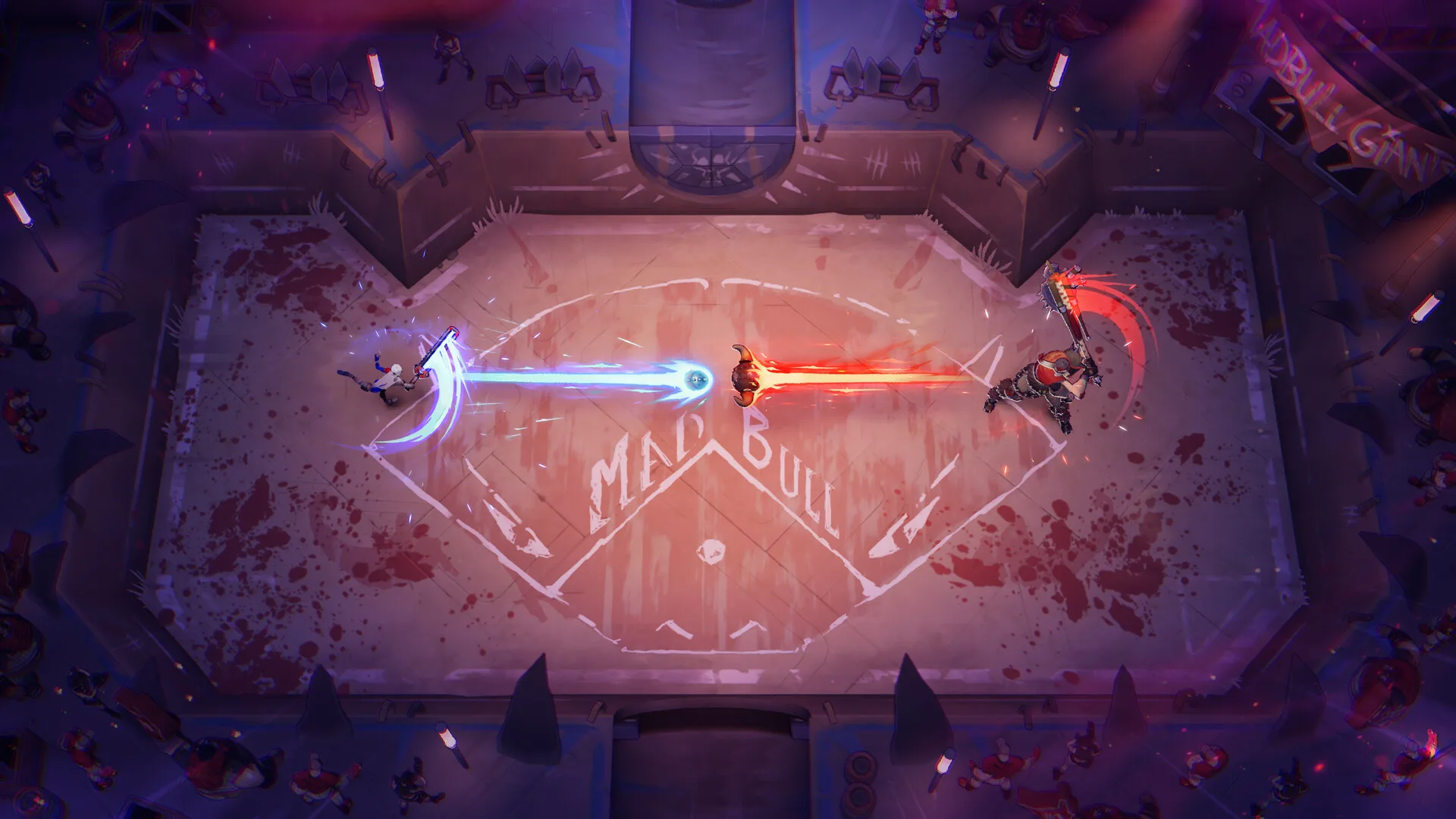
Furyball’s fiction is deliberately heightened. Neo-Arcadia is described as a sun-scorched city of sports-themed gangs, district bosses stand in the path toward the Furydome, and the player character is an outsider crossing that hostile setting. Rebound has also defined the game’s audiovisual identity through 1970s grindhouse and retrofuturist influences, with music by The Toxic Avenger.
Those facts establish an aesthetic direction rather than a conclusion about atmosphere or execution. Conceptually, though, the mixture has a logical cohesion. Sports, pinball, gang spectacle, and arena combat all share an interest in impact, rules, showmanship, and physical contest. A world built from those ideas could make the Furyball feel integral to its setting rather than like an arbitrary mechanical gimmick.
The planned story expansion leaves the outsider’s larger journey open. At present, the established narrative frame is lean: cross Neo-Arcadia, contend with its gangs and bosses, and reach the Furydome. That is enough to give the action a stated direction without assuming a narrative structure beyond what has been announced.
An unusual foundation with clear obligations
The announced design treats room geometry as part of the attack plan: identify a route, commit to a launch, and adapt as the ball keeps moving. That focus is most relevant to players drawn to arcade-like spatial improvisation and repeatable runs. Those seeking a wider selection of gangs, bosses, upgrades, and story should note that much of that breadth belongs to the planned 1.0 path rather than the confirmed Early Access foundation. The central analytical question is how much variety that evolving foundation can support.
For now, Furyball’s defining proposition is also its central responsibility. The Furyball needs to be satisfying not only because it can strike enemies, but because it asks players to interpret and reshape an arena through angles, placement, and timing. If Rebound expands the game while preserving clarity and building upgrades that meaningfully transform decisions, Neo-Arcadia could develop into a distinctive meeting point between pinball logic and action-roguelite structure.