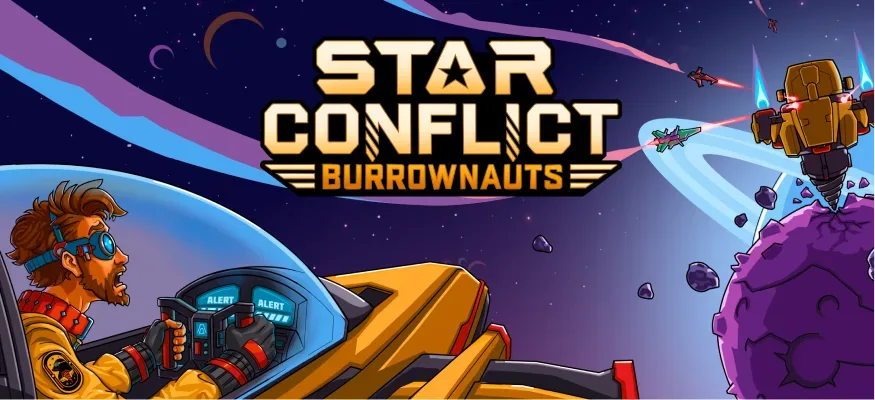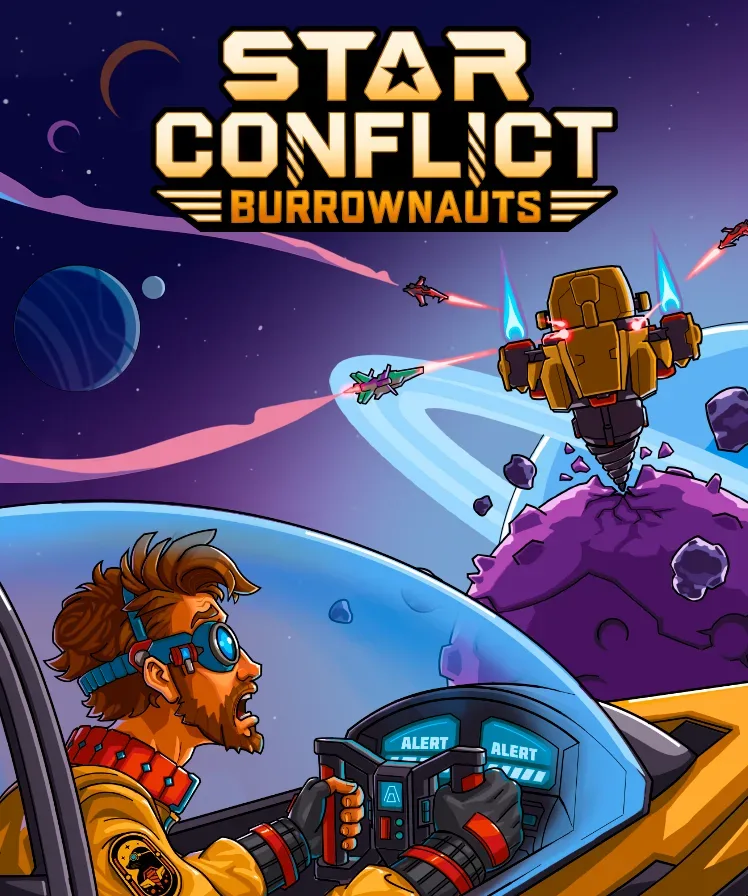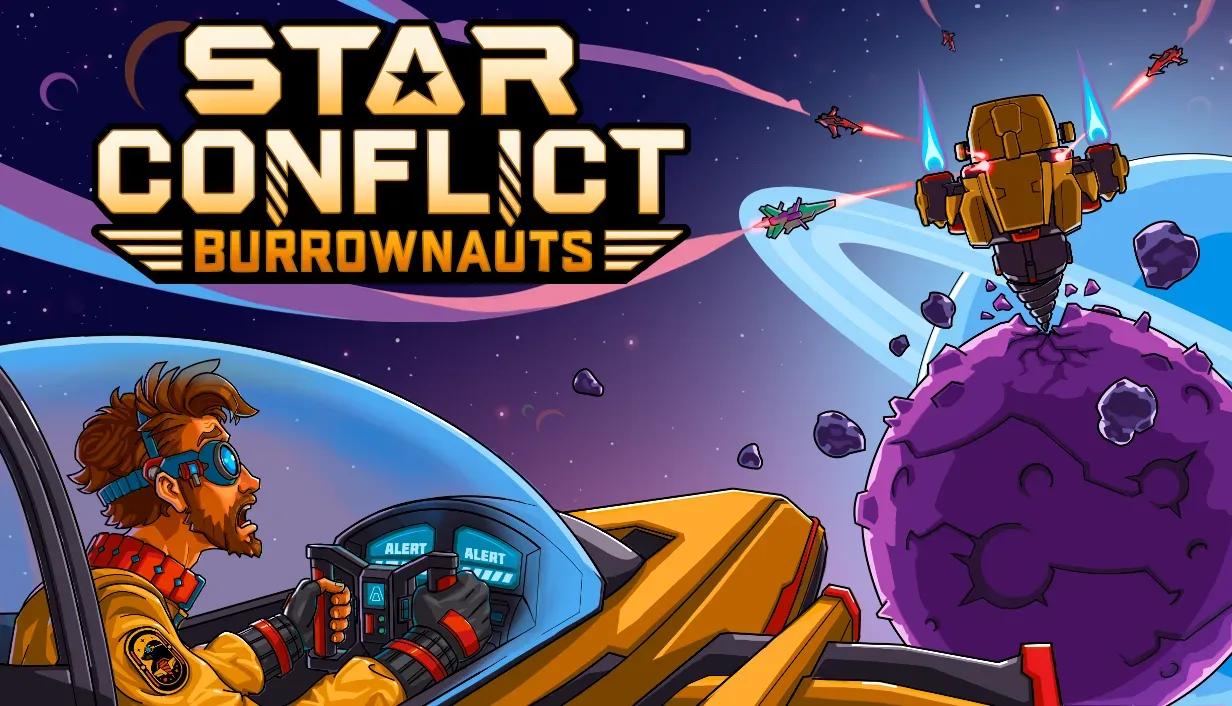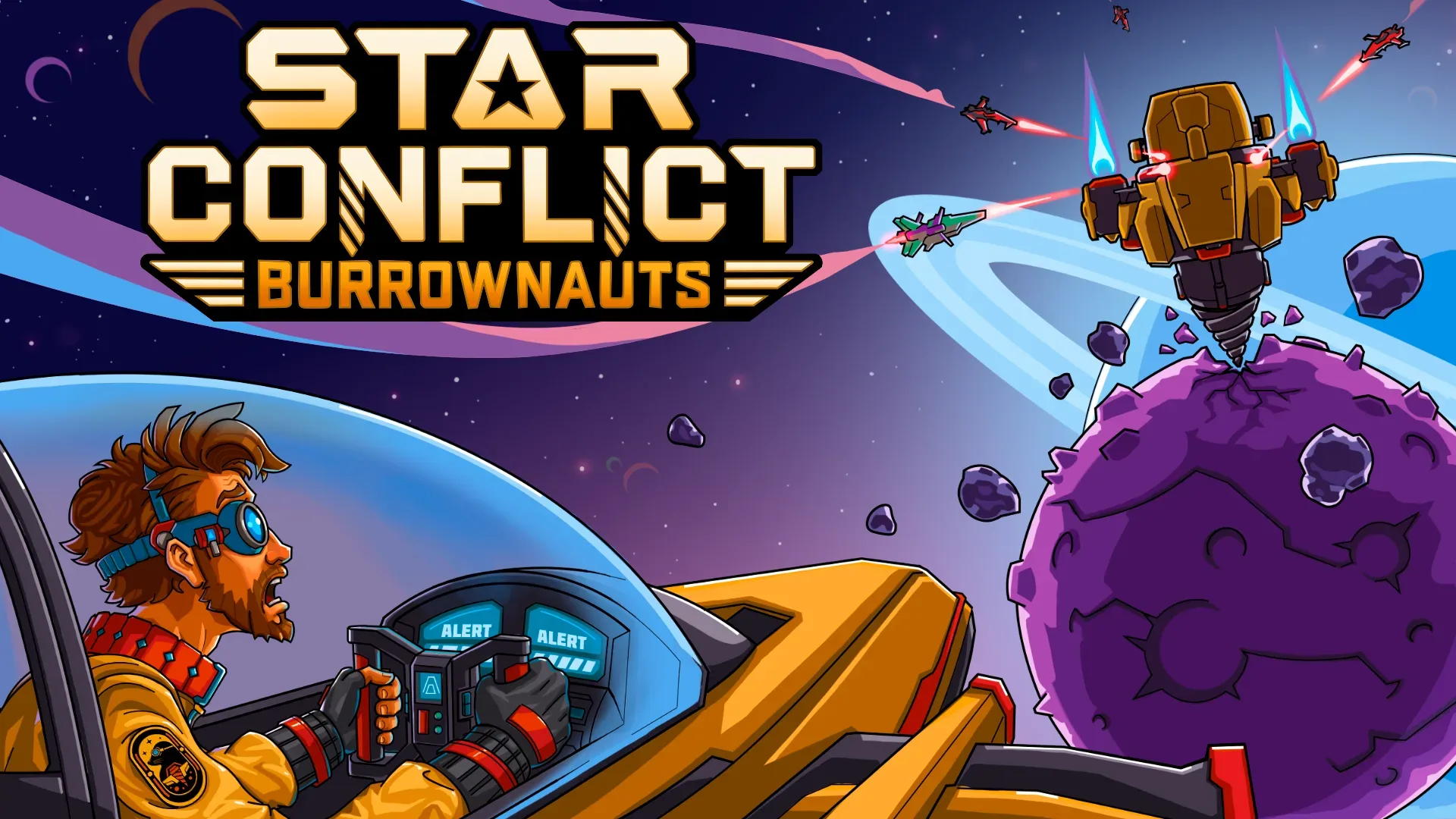
Targem Games has announced Star Conflict: Burrownauts, an action roguelite set in the universe of Star Conflict. The new game shifts the focus to a space miner’s dangerous working day: land on ancient planetoids, dig toward valuable deposits, bring rare resources aboard, improve the ship, and keep an expedition from collapsing when hostile forces close in.
Its central pitch is a deliberate change of pace. Exploration and mining inside planetoids are presented as the quieter half of the experience, while enemy assaults turn those expeditions into frantic survival encounters. Players will need to defend a base against waves of space enemies and protect the loot gathered during a run.
An early-player playtest is already running. Participants are permitted to stream and record gameplay and to publish reviews. A separate Steam playtest is planned to open soon, and sign-ups are being collected. That distinction matters for anyone watching the project: access is not yet described as broadly available on Steam, even though a Steam test is on the way.
A new kind of job in the Star Conflict universe
Burrownauts uses the wider Star Conflict setting but frames its action around mining operations and expeditions rather than simply placing a ship into combat. The player is a miner travelling to distant, ancient planetoids. Each trip involves pushing through interiors to locate rich resource deposits, extracting what can be carried, maintaining the vessel, and dealing with hazards before getting the haul to safety.
The stated objective is not merely to wipe out enemies. It is to survive and secure the loot. That makes resource collection part of the pressure rather than a side activity detached from combat. A valuable run can still be threatened by mounting damage, a deteriorating system condition, hazardous surroundings, or an attack by space bandits.
The game also promises familiar ships, technologies and other recognizable elements from the existing universe. They will appear in a different context: one built around excavation, risky journeys and a search for remnants of lost civilizations. The announcement does not detail which ships or technologies return, nor does it explain the nature of those lost-civilization traces. For now, they establish the backdrop for the planetoids and their deposits rather than a confirmed story structure.
What “action roguelite” and “bullet heaven” mean here
Roguelite generally describes a game built around repeated attempts or expeditions that feed into longer-term progression, rather than one uninterrupted campaign where every setback is permanent. In this case, the confirmed progression hook is ship improvement through collected resources. The announcement does not specify exactly what carries over after a failed or completed expedition, how upgrades are selected, or whether planetoids are procedurally arranged. Those are important details still to be clarified by the playtest or future updates.
The phrase bullet heaven signals the combat side’s emphasis on large enemy waves. It is a useful reversal of “bullet hell”: instead of defining the experience chiefly by a player threading through dense projectile patterns, bullet-heaven games are often associated with fighting swarms and escalating offensive capability. The confirmed description for Burrownauts is straightforward: the miner faces hordes of space bandits and other space enemies while defending a base. It does not yet establish specifics such as weapon types, aiming controls, upgrade drafting, co-op support, or the number of enemies that can appear at once.
That restraint is worth keeping in mind. “Bullet heaven” gives a sense of the intended intensity, but it is not a complete mechanical blueprint. What is confirmed is the contrast: measured resource work gives way to high-pressure defensive battles.
The expedition loop: gather, improve, defend
The revealed gameplay loop has three connected jobs. First comes navigation and discovery. Players land on planetoids and travel through their interiors toward profitable deposits. Second comes extraction and preparation: rare resources are gathered and used to improve the ship while the player monitors its condition. Finally comes defense, as waves of enemies threaten the base and the resources attached to the run.
- Explore: enter ancient planetoids and work toward resource-rich areas.
- Mine: collect rare materials from deposits during an expedition.
- Maintain: watch the ship’s systems and make improvements with resources.
- Defend: repel attacking hordes and prevent a resource run from being lost.
- Secure: survive the hazardous conditions long enough to preserve the loot.
That structure makes the base-defense element more than a standalone arena sequence. The base is tied to the expedition’s economic stakes. Time spent reaching a deposit and mining it can create more to lose when the attacks arrive. Conversely, the promise of better ship upgrades gives the resources a practical purpose beyond a score counter.
The calmer excavation sections could also serve as an important pacing tool. Wave-based combat can become exhausting when every moment carries identical intensity. By separating exploration from emergency defense, Burrownauts is aiming for a rhythm in which players can search and prepare before the danger spikes. Whether that balance works will depend on factors not yet detailed, including how long mining takes, how attacks are triggered, and how much control players have over when they take risks.
Why system condition may be a key layer of tension
One particularly notable part of the announcement is the instruction to monitor system condition. It suggests the ship is not only a vehicle for upgrades but an operational concern during expeditions. The precise systems, consequences of failure and repair options have not been outlined. Still, the idea reinforces the mining-fiction premise: the player is running equipment far from safety, not just chasing enemies through a space setting.
In practical terms, this could make decision-making during a run more interesting than a simple question of whether to keep mining. A player may need to judge whether the haul justifies continuing under worsening conditions. But that is analysis based on the described ingredients, not a confirmed feature breakdown. The playtest will be the first meaningful opportunity to see how much attention the game asks players to give ship management amid its combat.
What prospective playtest players should watch for
Because the project is at the playtest stage, the most useful questions are about the relationship between its individual systems rather than final content volume. Does gathering feel like a strategic preparation phase or a pause before combat? Are ship upgrades meaningful choices? Do base assaults force players to adapt, or are they simply endurance checks? And how clearly does the game communicate the state of a ship and the security of its resources?
Another question is how strongly the Star Conflict connection is felt for newcomers. Existing fans may recognize returning ships and technologies, while players unfamiliar with the universe will be looking for a self-contained reason to care about the planetoids, their ruins and the work of the miner. The announcement positions lost civilizations as part of the expedition fantasy, but does not say how those discoveries will be delivered.
Players interested in upcoming PC test periods can also keep an eye on other Steam-focused test announcements, including the AION 2 launch scale test. For Burrownauts, however, the confirmed status is narrower: early-player testing is active, Steam access is planned, and registrations are being gathered.
What is confirmed—and what remains open
Confirmed: Star Conflict: Burrownauts is an action roguelite from Targem Games in the Star Conflict universe; it combines mining on ancient planetoids with fast-paced wave combat; players gather rare resources, upgrade a ship, manage its condition and defend a base from enemies; an early playtest is running; and a Steam playtest is planned.
Not yet detailed: a release date, supported platforms beyond the planned Steam test, pricing, a final release window, precise upgrade systems, combat controls, multiplayer options, run structure, and the full role of the returning universe elements. The announcement establishes a clear high-level identity, but the depth and balance of its mining, maintenance and survival systems remain for testing to reveal.
For now, Star Conflict: Burrownauts stands out less as a conventional space-combat continuation and more as an attempt to put extraction work at the center of a hostile sci-fi expedition. The pitch is simple: mining is peaceful until it is not, and the best haul only matters if the miner survives long enough to bring it home.